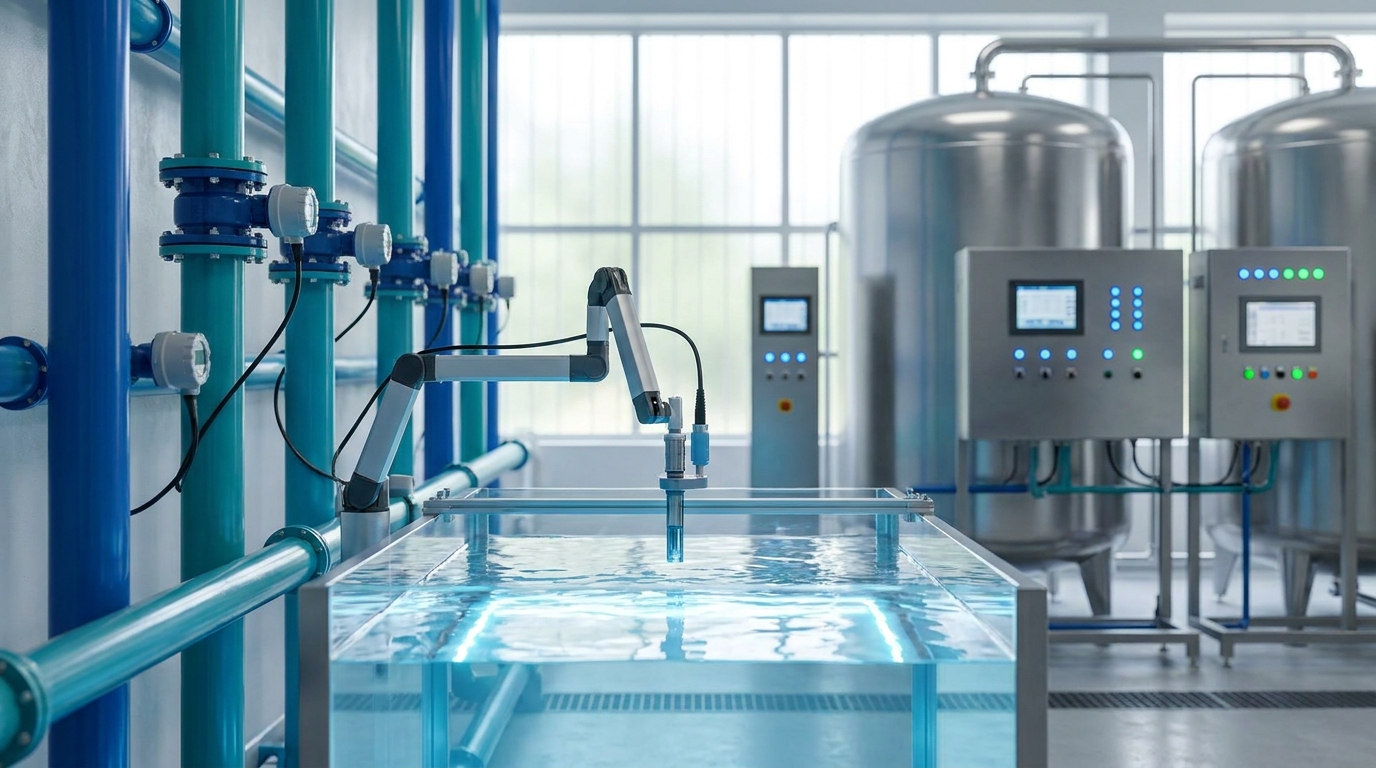
Dual-Track Water Innovation: Treatment Tech Meets Recreational Resilience
Dual-track water innovation is redefining the global water sector—merging advanced municipal treatment technology with climate-resilient recreational water infrastructure. This convergence reflects a strategic shift where regulatory compliance and public engagement no longer operate in silos, but co-evolve through shared instrumentation, data architecture, and human-centered design.
Two Fronts, One Fluid Future
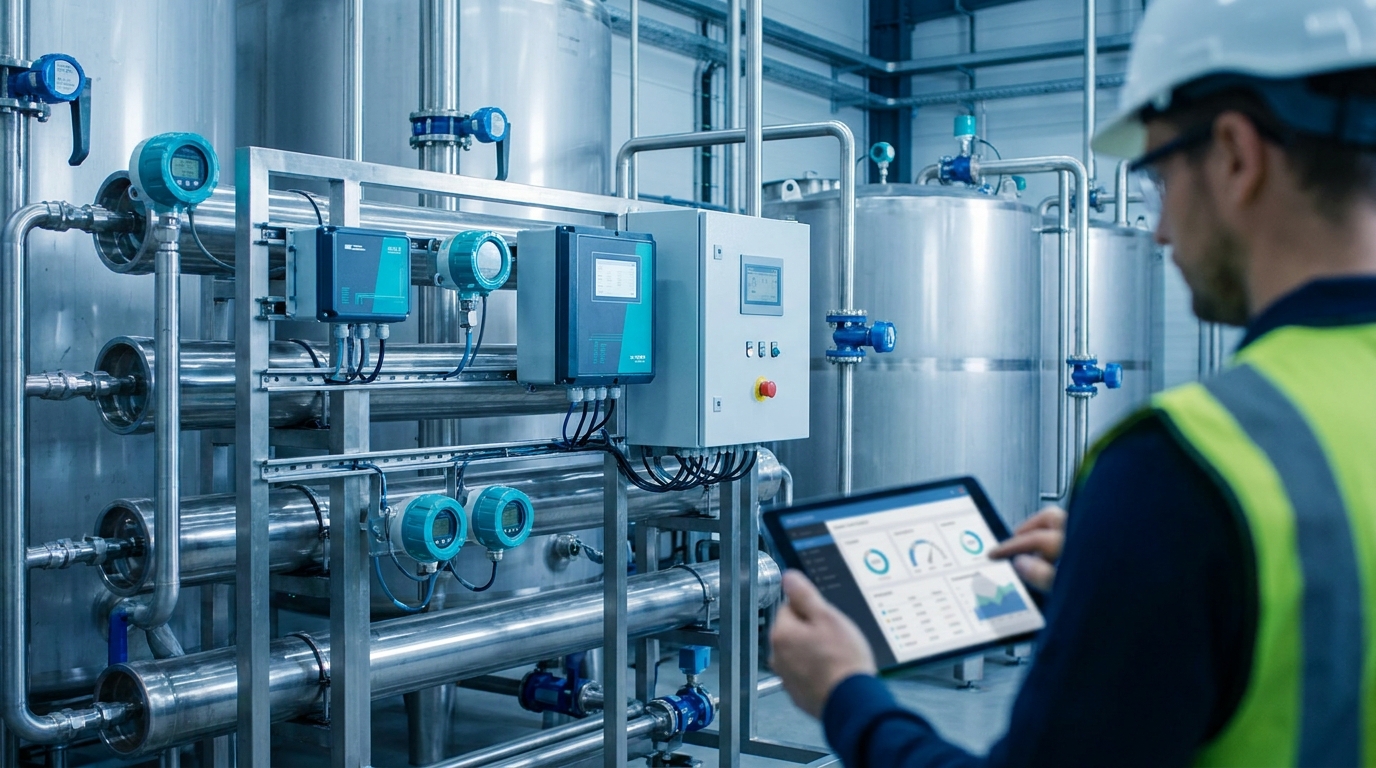
In Bastrop, Texas, VVater’s $5 million contract marks a decisive move toward modular, sensor-integrated water treatment platforms—designed for drought adaptability, regulatory compliance, and lifecycle flexibility.
Meanwhile, 1,000 miles north, Colorado’s Water World—the nation’s top-five water park—is rebuilding its operational DNA for summer 2026. Its new Summit Canyon attraction integrates next-generation water recycling, real-time flow analytics, and AI-optimized recirculation.
These are not isolated upgrades. They represent parallel accelerations: one securing municipal water resilience, the other transforming leisure spaces into living labs of efficiency, education, and embodied sustainability.
The Infrastructure Track: From Compliance to Adaptive Intelligence
Aging infrastructure, tightening EPA and EU Water Framework Directive (WFD) standards, and recurring droughts have elevated advanced treatment from optional to essential across North America and Europe.
Utilities now prioritize systems that scale, reconfigure, and integrate with digital twins—not just treat water, but anticipate demand shifts, chemical dosing variances, and source-water volatility.
This demands precision sensing at every node: inflow, filtration stages, disinfection zones, and distribution interfaces. Flow accuracy within ±0.5%, foam-immune level sensing, and Doppler-based velocity profiling in buried conduits are no longer “nice-to-haves”—they’re foundational enablers of adaptive operation.
The Experience Track: Where Public Engagement Drives Technical Rigor
Water parks like Water World face unprecedented scrutiny over consumption, discharge quality, and energy intensity—especially as climate stress reshapes recreation patterns and extends summer aquatics demand.
Being “among the best in the U.S.” now means being among the most water-responsible—embedding closed-loop filtration, UV-AOP hybrid disinfection, and real-time turbidity feedback loops into high-traffic attractions.
This creates a pressure-cooker environment for sensor reliability: electromagnetic flowmeters must withstand chlorinated slurry and thermal cycling; radar level sensors must ignore steam and vibration; underground pipe monitoring must detect micro-leaks before they cascade into system-wide losses.
Convergence Points: Where Tracks Intersect
The dual-track water innovation framework converges at three critical nodes—each revealing how utility-grade rigor and experience-driven design reinforce one another.
Unified Data Architecture
Both Bastrop’s treatment plant and Water World’s control center rely on integrated SCADA—using edge RTUs like Ecolor’s HERO V9 to aggregate data from LGF flowmeters, 80GHz radar sensors, and multi-band Doppler radars.
Resilience Economics
Municipalities justify CAPEX via avoided penalties and deferred infrastructure costs; water parks do so through guest retention, insurance savings, and ESG reporting credibility.
Human-Centered Design
Intuitive visualization, predictive alerts, and camera-augmented diagnostics reduce cognitive load—whether for a plant operator in Texas or a technician in Federal Heights.
Chinese Innovation in Context: Precision Without Precedent
Global supply chains for water instrumentation are quietly recalibrating. While legacy Western OEMs dominate traditional specs, China-based engineering firms like Ecolor Technology are gaining traction—not by undercutting price, but by solving unaddressed field constraints.
Their LGF electromagnetic flowmeter delivers metrology-grade accuracy without grounding rings or isolation joints—ideal for retrofit projects in space-constrained urban plants. The 80GHz visual radar level sensor combines millimeter-wave precision with onboard imaging, enabling simultaneous level measurement and surface condition analysis—perfect for clarifiers prone to scum or foam.
And their world-exclusive multi-band Doppler flow radar visualizes flow profiles inside live, buried pipes—a blind spot long accepted as unsolvable. These aren’t drop-in replacements; they’re purpose-built responses to the exact challenges emerging in both Bastrop’s control room and Water World’s pump house.
What Comes Next: Beyond Dual Tracks
The frontier lies in cross-pollination. Imagine Bastrop using anonymized, aggregated water usage patterns from local recreational facilities—including Water World—to calibrate seasonal demand forecasts.
Or imagine Ecolor’s HERO V9 RTU deployed in both settings, feeding identical telemetry formats into shared cloud analytics platforms—enabling benchmarking across sectors and building unified hydrological accountability.
As water scarcity intensifies, every drop measured, every leak detected, every cycle optimized—whether in a membrane bioreactor or a wave pool—becomes part of a single, instrumented framework. That framework won’t be built by policy alone. It will be verified and sustained by the tools now being stress-tested across Texas treatment plants and Colorado water parks.
Sources:
- VVater secures $5M contract for advanced water treatment in Bastrop | WaterWorld
- Water World in Denver is Making Some Big Changes and it’s Very Out With the Old and in With the New
- This Colorado water park is considered among the best in the US
- The Iconic Colorado Water Park That's Reopening In Summer 2026 With Brand New Attractions – Islands
Recommended Products
Ecolor Technology provides professional instruments for smart water, environmental monitoring & industrial automation: