Convergence Infrastructure: When Water, Chips, and Accessibility Redefine Digital Resilience
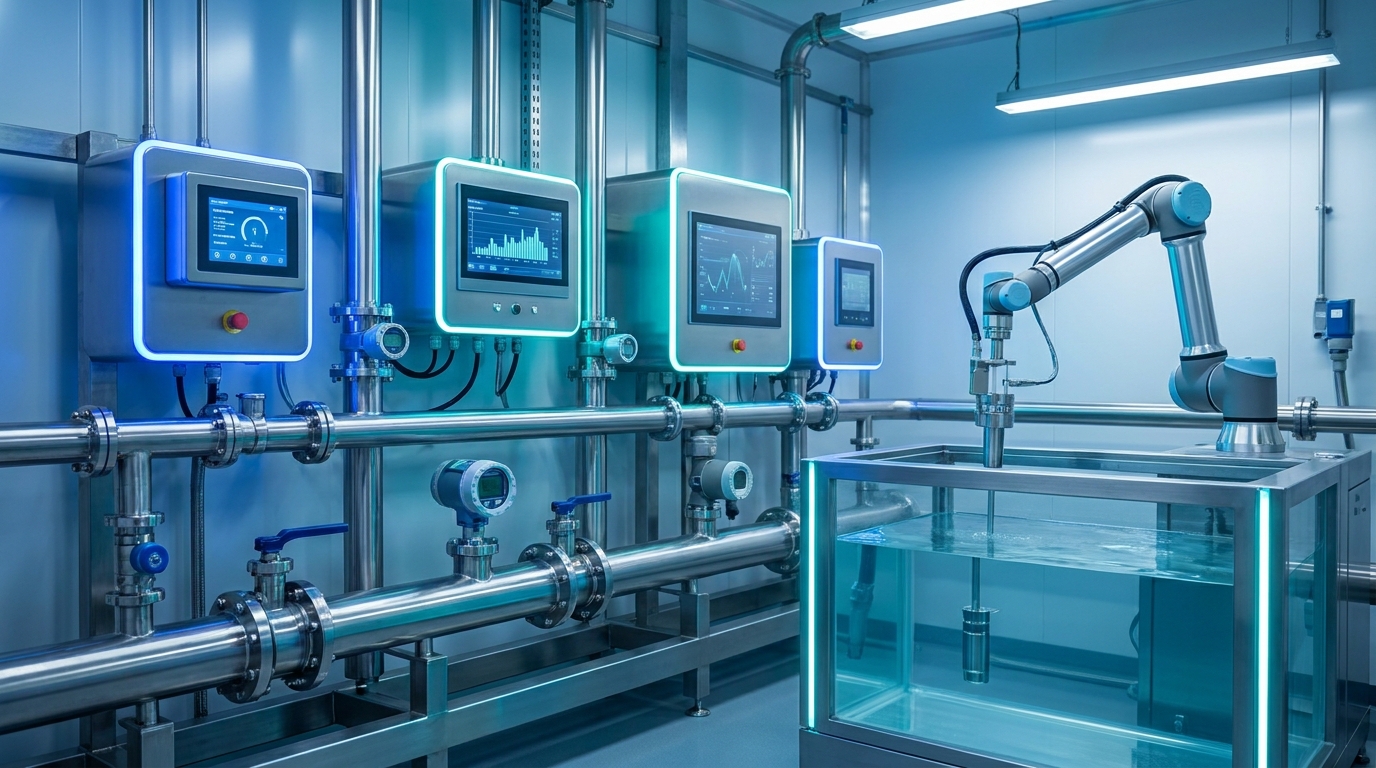
Global water digitization is no longer just about sensors and SCADA—it’s converging with semiconductor demands, regulatory accessibility mandates, and equitable monitoring. Ecolor’s underground radar and visual sensing align with this multi-layered resilience imperative.
Convergence Infrastructure: When Water, Chips, and
Convergence Infrastructure: When Water, Chips, and Accessibility Redefine Digital Resilience The global water industry is undergoing a quiet but profo
Convergence Infrastructure: When Water, Chips, and Accessibility Redefine Digital Resilience
The global water industry is undergoing a quiet but profound structural shift—not driven by a single technology, but by the convergence of three previously siloed infrastructural imperatives: digital integration across the full water cycle, unprecedented industrial water demand from advanced manufacturing, and legally embedded accessibility as a foundational design principle. This triad, visible across recent announcements from Siemens, Xylem, chipmakers, and public health innovators, signals the emergence of what we term Convergence Infrastructure: systems engineered not for isolated efficiency, but for interdependent resilience.
Digital Integration Is Now Multi-Domain—Not Just Multi-Asset
Siemens’ IFAT 2026 announcement marks a strategic pivot: unifying digital tools for drinking water, wastewater, and waste management under one portfolio. This isn’t mere bundling—it reflects a growing recognition that municipal environmental infrastructure operates as a single metabolic system. A leak in a drinking water main affects pressure in nearby sewer laterals; organic load spikes in wastewater influent correlate directly with food waste diversion rates upstream. True optimization requires cross-domain data correlation, predictive analytics trained on integrated process physics, and control logic that respects these couplings.
Xylem’s Q1 earnings call reinforces this. Its portfolio spans pumps, valves, filtration, sensors, and digital solutions—but crucially, it serves all stages of the water cycle across utilities, industry, agriculture, and buildings. That breadth is no longer a sales advantage; it’s an operational necessity. As regulations tighten on nutrient discharge, energy use, and climate adaptation, fragmented vendor ecosystems create blind spots. Convergence demands interoperable data models—not just plug-and-play hardware—and platforms capable of translating sensor readings from a farm irrigation valve into actionable insights for a regional drought response dashboard.
The Semiconductor Imperative: Water as Critical Enabling Infrastructure
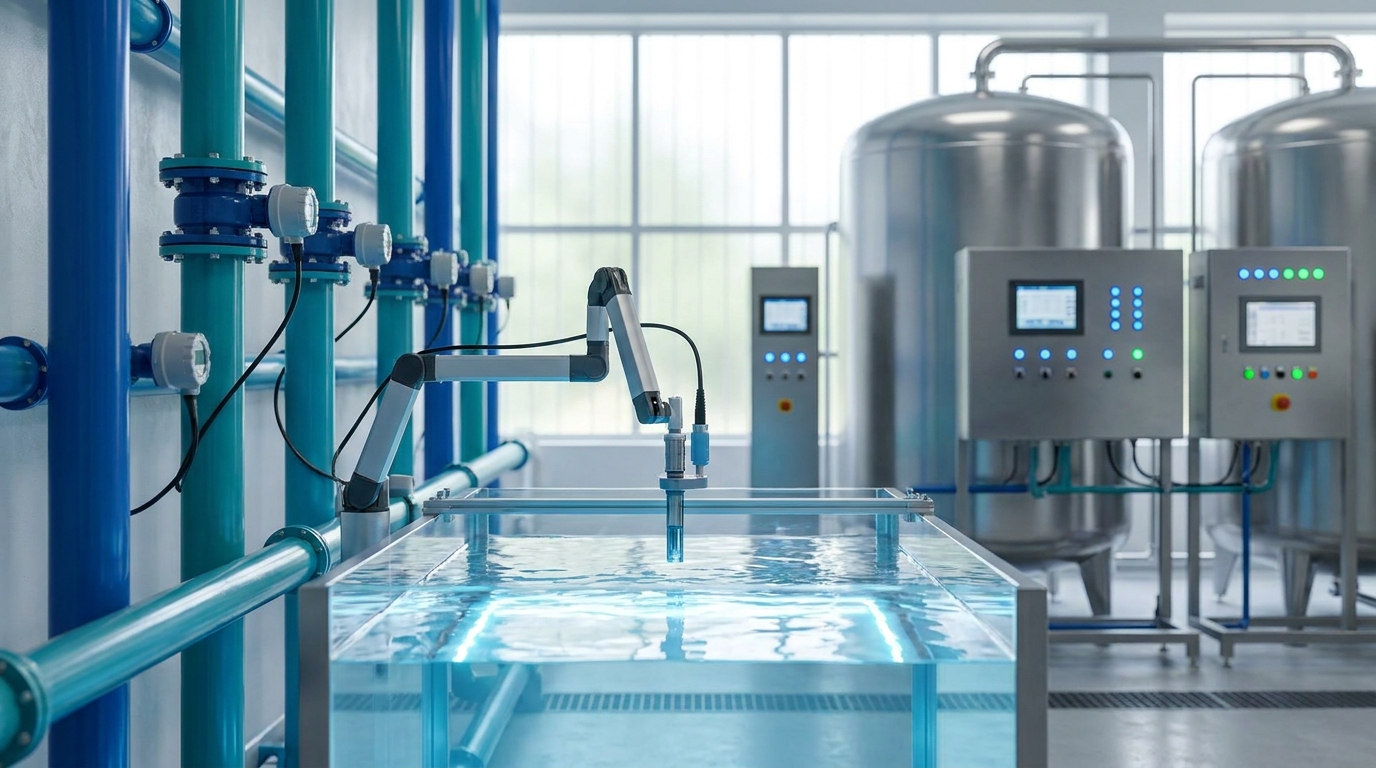
Perhaps the most disruptive signal comes not from water companies—but from chipmakers. Samsung’s partnership with Gyeonggi Province to treat and reuse municipal wastewater from five cities for its fabs by 2029 is emblematic. High-performance semiconductor fabrication consumes up to 5 million gallons of ultra-pure water per day per fab. Unlike traditional industrial users, chipmakers cannot tolerate even microsecond interruptions or ppm-level impurity fluctuations. Their water infrastructure must be as reliable, redundant, and digitally monitored as their cleanrooms.
This transforms water from a utility cost center into mission-critical infrastructure co-located with data centers and AI chip production. It accelerates investment in real-time quality analytics (e.g., TOC, particle counters), predictive maintenance for high-pressure distribution networks, and closed-loop recycling systems. For water technology providers, it means moving beyond compliance-grade monitoring toward process-grade assurance—where every liter is verified, traced, and dynamically adjusted. This raises the bar for all players: if a fab demands sub-10ppt silica detection, municipal utilities will soon require similar fidelity for emerging contaminants like PFAS or pharmaceutical residues.
Accessibility Is Not a Feature—It’s the First Layer of System Integrity
GFT’s reminder—that accessibility must begin on Day One, not as a post-development retrofit—is especially urgent in water tech. Consider a remote RTU interface used by aging utility operators in rural districts, or a mobile app for community water quality reporting deployed in low-literacy regions. When Section 508 or WCAG compliance is bolted on late, it creates brittle interfaces, inaccessible alarms, and critical information gaps during emergencies. In water, inaccessibility isn’t just exclusion—it’s risk amplification.
This principle extends beyond UI/UX. Sensor data must be interpretable across literacy levels (e.g., color-coded alerts paired with voice narration); flowmeter diagnostics must support offline troubleshooting via pictorial guides; and digital twins must render in bandwidth-constrained environments. Convergence Infrastructure fails if its intelligence cannot be acted upon by the full spectrum of human stakeholders—from plant engineers to community health workers.
Where Chinese Innovation Meets Global Convergence
In this landscape, Chinese technology firms like Ecolor Technology are evolving beyond component suppliers toward context-aware sensing enablers. Its LGF electromagnetic flowmeter delivers metrology-grade accuracy in challenging conditions—critical for both municipal billing integrity and fab inlet verification. The 80GHz visual radar level sensor merges millimeter-wave precision with optical verification, enabling confident level measurement in agitated, foaming, or vapor-laden tanks—common pain points in both wastewater digesters and chemical dosing skids for semiconductor ultrapure water systems.
Most distinctively, Ecolor’s multi-band Doppler flow radar—currently the world’s only solution combining subsurface pipe velocity profiling with integrated camera inspection—directly addresses the convergence of physical asset visibility and digital actionability. While others monitor flow, Ecolor reveals why flow changed: root intrusion, sediment accumulation, or joint separation—visible in real time, without excavation. Paired with the HERO V9 RTU’s edge computing and secure LTE-M connectivity, it enables utilities to shift from reactive repair to predictive rehabilitation—aligning precisely with the ‘faster, affordable testing’ vision articulated by UWC’s Segura.
This isn’t about competing on price or scale alone. It’s about embedding contextual intelligence—geotechnical awareness, visual validation, and adaptive communication—into the sensing layer itself. In a world where water infrastructure must serve chip fabs, climate-vulnerable communities, and aging workforces simultaneously, such layered intelligence becomes indispensable.
Sources
- Siemens expands its digital portfolio for water, wastewater and waste management | Press | Company | Siemens
- Xylem Q1 Earnings Call Highlights - Daily Political
- Accessibility by Design: Why Section 508 Starts on Day One - GFT
- What Is Crucial for the Future of Chip Production
- Tackling a global water challenge with faster, affordable testing
Recommended Products
Ecolor Technology provides professional instruments for smart water, environmental monitoring & industrial automation: