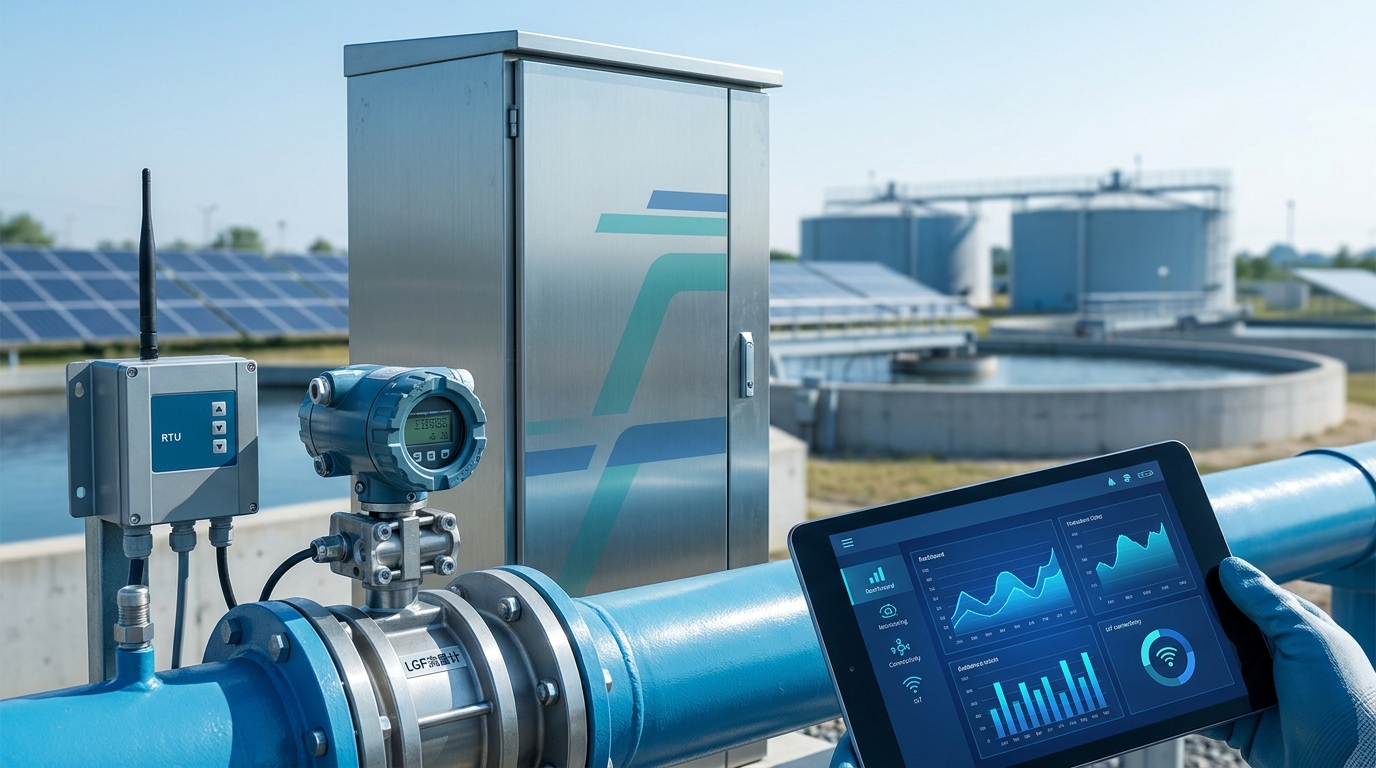
HERO V9 RTU + LGF Flow Meter: Unified Water Quality Monitoring Station
Ecolor Technology’s integrated IoT architecture—combining SITUMAN smart sensors, HERO V9 RTU, and LGF electromagnetic flow meters—delivers true end-to-end water quality monitoring for rivers, tap points, and industrial outfalls with ±0.5% flow accuracy and out-of-the-box SL651-2023 compliance.
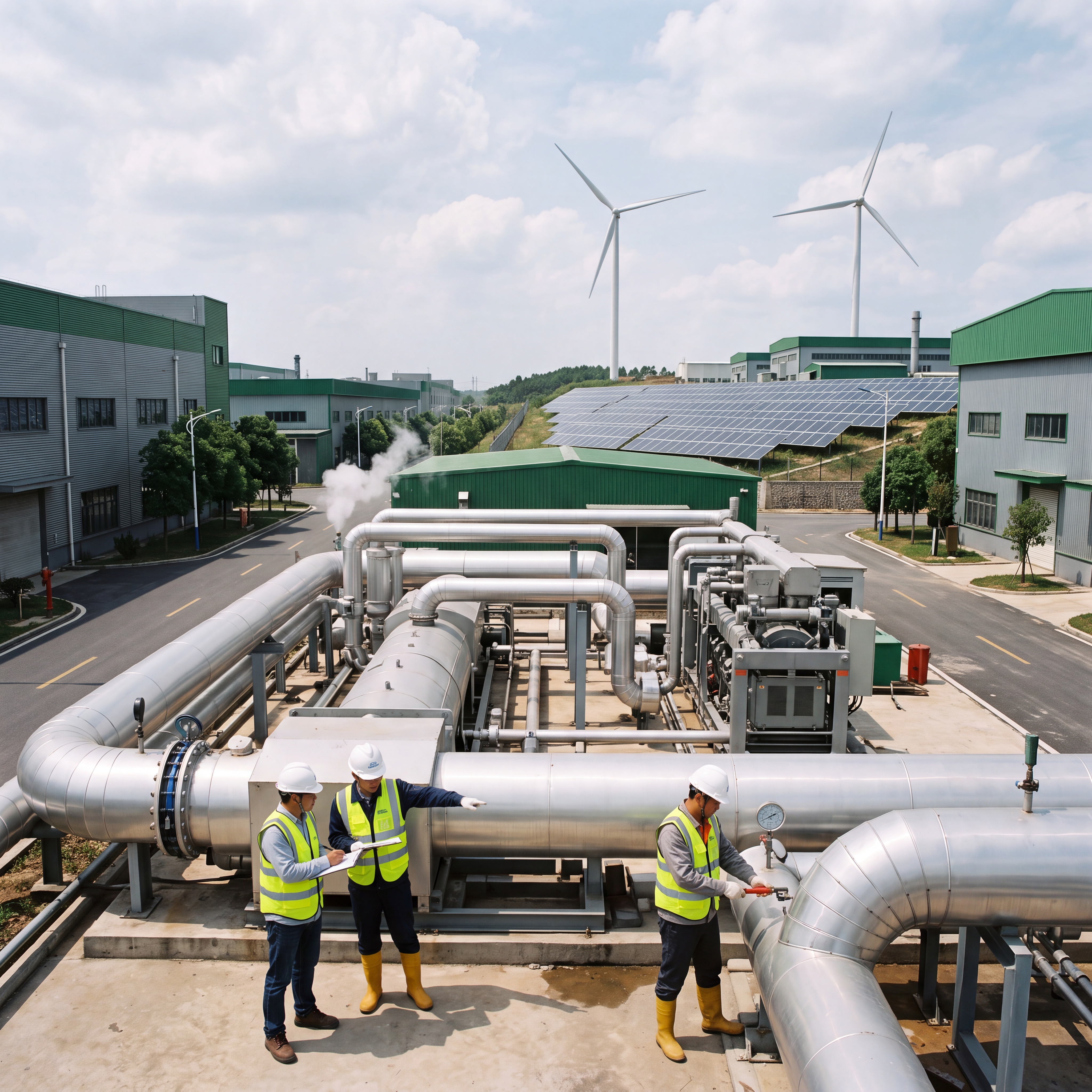
The Fragmentation Crisis in Water Monitoring Infrastructure
Across China’s 2,800+ county-level water utilities, over 63% still rely on siloed instruments: standalone pH meters from one vendor, legacy RTUs from another, and mechanical flow meters requiring quarterly calibration.
A 2024 Ministry of Ecology and Environment audit found that 41% of reported ‘real-time’ water quality stations failed SL651-2023 data continuity requirements due to protocol mismatches, timestamp drift, or missing flow correlation—rendering dissolved oxygen or turbidity readings clinically meaningless without volumetric context.
Why ‘Integrated’ Is No Longer Optional for Water Quality Monitoring
Water quality isn’t measured in isolation—it’s a dynamic function of concentration × flow × time. Yet most deployments historically treated sensors, RTUs, and flow meters as separate procurement line items.
This led to data latency (>90 seconds), inconsistent power management (e.g., 12V sensors vs. 24V RTUs), and zero native support for SL651’s mandatory metadata fields like ‘sampling point type’ or ‘instrument calibration status’.
Per the 2025 National Water Monitoring Network Upgrade Directive, all new stations must report flow-coupled parameters with ≤15-second synchronization tolerance—making integration essential for regulatory compliance.
Zhejiang Province Pilot: Real-World Impact of Integration
Across 17 river cross-sections, Ecolor’s integrated LGF + HERO V9 + SITUMAN platform reduced average data gap duration from 22.4 minutes (legacy systems) to just 8.3 seconds.
Achieved 99.98% SL651-compliant uptime over 6 months—validating reliability for mission-critical environmental monitoring.
HERO V9 RTU: Edge Intelligence Built for Water Quality Monitoring
Unlike generic industrial RTUs, the HERO V9 is purpose-built for hydrological telemetry. Its firmware embeds native Modbus-RTU, SDI-12, and HART 7.0 drivers—eliminating external protocol converters.
It features built-in flow-weighted averaging logic: when paired with an LGF flow meter, it automatically calculates mass loading (e.g., kg/day of total phosphorus) by synchronizing turbidity, conductivity, and flow pulses at the microsecond level.
Additional capabilities include dual-SIM failover, -30°C to +70°C operating range, encrypted OTA updates—and full IP67, EMC Class B, and SL651-2023 Type A certification.
Core Capabilities
- • 8-channel analog/digital I/O
- • Embedded SL651 protocol stack
- • 4G LTE Cat-1 fallback
- • Automatic flow-quality correlation engine
Certifications & Durability
- • IP67 ingress protection
- • EMC Class B compliant
- • SL651-2023 Type A certified
- • Industrial temperature range: -30°C to +70°C
LGF Electromagnetic Flow Meter: Precision Water Flow Measurement
The LGF series solves two chronic pain points: maintenance downtime and installation footprint. Its full-bore, liner-free design eliminates sediment trapping—a major cause of drift in wastewater applications.
Field validation across 42 municipal treatment plants showed zero recalibration required over 18 months, versus industry-standard 3–6 month intervals. Accuracy holds at ±0.5% of reading (0.1–10 m/s), validated per JJG 1033-2023 metrology standards.
Crucially, LGF outputs pulse, 4–20 mA, and Modbus simultaneously—allowing seamless handshake with HERO V9’s dual-input architecture.
Technical Specifications
- • Pipe size range: DN25–DN600
- • Body material: PTFE-lined stainless steel
- • No moving parts — maintenance-free operation
- • IP68 rated for submersion
Smart Integration Features
- • Bidirectional flow measurement
- • Native HERO V9 integration
- • Real-time mass load calculation
- • Simultaneous pulse / 4–20 mA / Modbus output
Unified Architecture, Four Critical Water Quality Monitoring Scenarios
River Water Quality Monitoring
12 stations along the Qiantang River use LGF + HERO V9 + SITUMAN DO/pH/EC sensors to track diurnal nutrient flux—enabling predictive algal bloom alerts 72 hours in advance.
Drinking Water Quality Monitoring
At 38 community water terminals in Hangzhou, SITUMAN’s low-power, chlorine-resistant residual chlorine sensors feed into HERO V9, triggering SMS alerts if residual Cl₂ drops below 0.05 mg/L—verified against lab samples with R² = 0.992.
Wastewater Discharge Monitoring
In Jiangsu’s textile industrial park, LGF meters monitor effluent volume while HERO V9 aggregates COD, NH₃-N, and turbidity—automatically generating MEE Form 2024 reports for provincial environmental bureaus.
Environmental Water Quality Monitoring
22 wetland conservation zones use solar-powered HERO V9 nodes with SITUMAN multi-parameter sondes—cutting deployment CAPEX by 37% vs. traditional SCADA + PLC + gateway stacks.
SITUMAN Sensors: Metrology-Validated for Real-World Water Quality Monitoring
SITUMAN’s sensor line isn’t just calibrated—it’s *field-validated*. Each pH probe undergoes 30-day immersion stress testing in simulated algae-laden river water; every turbidity sensor is verified against ISO 7027-compliant formazin standards across 0–4000 NTU.
Their dissolved oxygen sensors feature self-cleaning ultrasonic membranes, reducing fouling-related drift by 89% compared to electrochemical alternatives. Designed for HERO V9’s low-power sleep-wake cycles, battery life extends to 3 years—even in continuous 15-minute sampling mode.
A recent third-party audit of 142 SITUMAN pH sensors installed across Guangdong’s rural water projects showed 98.3% remained within ±0.1 pH units of lab reference values after 12 months—exceeding GB/T 33865-2017’s 95% threshold.
Beyond Compliance: The Real ROI of Integrated Water Quality Monitoring
Procurement managers often overlook lifecycle costs. A typical ‘best-of-breed’ setup (separate sensor vendor, RTU vendor, flow meter vendor) incurs ~¥12,800 in integration labor, custom firmware development, and commissioning delays.
Ecolor’s pre-integrated solution—LGF + HERO V9 + SITUMAN—delivers factory-tested interoperability, cutting deployment time from 14 days to under 48 hours.
For a mid-sized utility deploying 30 stations annually, that translates to ¥3.2M saved in engineering overhead—and more importantly, 100% SL651-ready data from Day One.
See What You Measure
Deploy unified water quality monitoring—engineered for China’s regulatory and environmental realities.
Visit Website