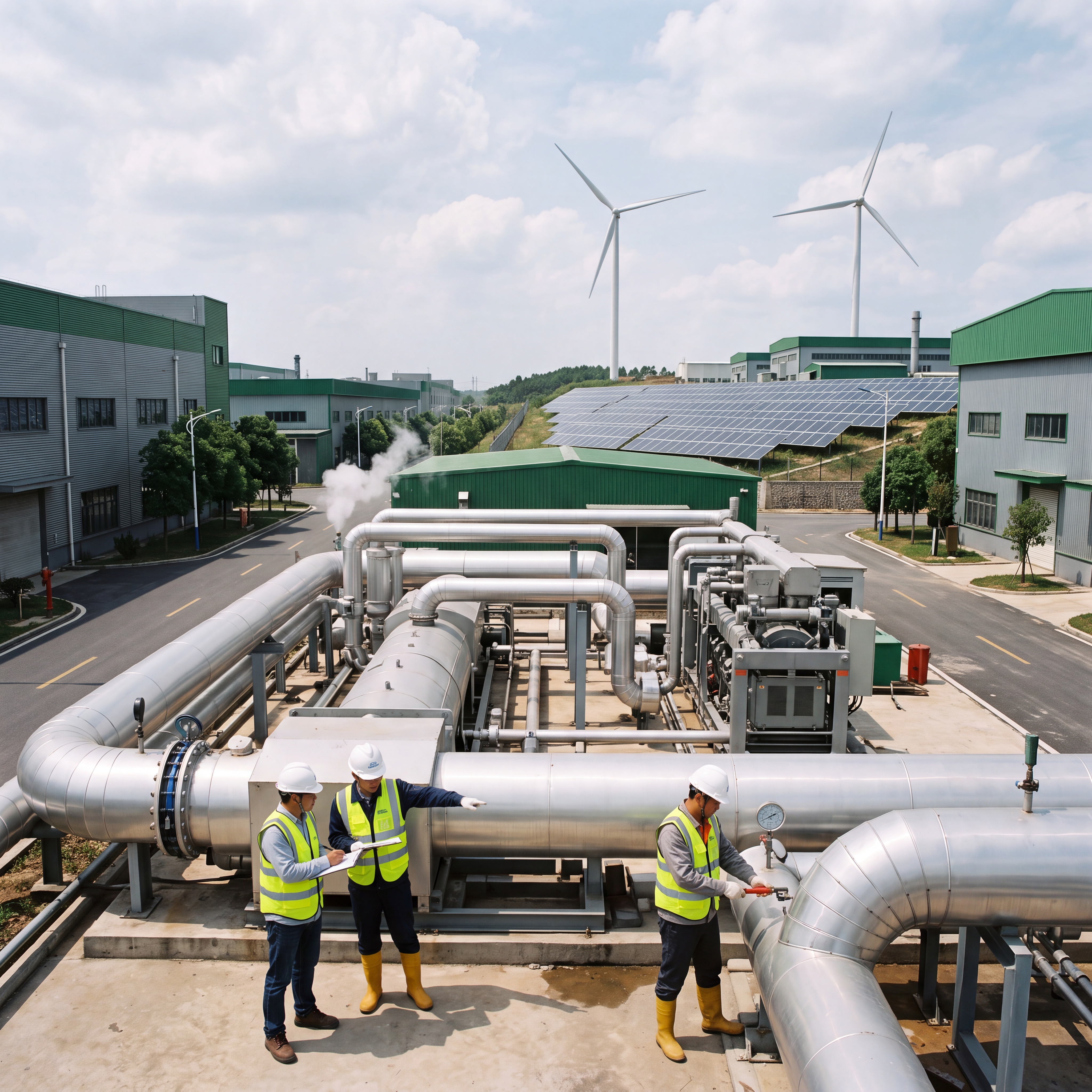
LGF Electromagnetic Flow Meter Powers Carbon-Neutral Industrial Parks
Precision water flow measurement is no longer just about leakage control—it’s the foundational sensor layer for industrial carbon accounting, as China’s 1,200+ green low-carbon pilot parks demand auditable, real-time water-energy-carbon linkages.
The Carbon-Water Nexus Is Now Measurable
Water use directly drives energy consumption (pumping, heating, treatment) and embedded emissions (chemical dosing, sludge handling). In China’s industrial sector—responsible for 68% of national CO₂ emissions—water meters are now classified as Tier-1 carbon monitoring instruments under the 2023 Ministry of Ecology and Environment (MEE) Technical Guidelines for Enterprise Carbon Accounting (HJ 1305–2023). A recent pilot across 22 textile plants in Zhejiang showed that integrating high-fidelity flow data reduced carbon footprint calculation uncertainty from ±14% to ±2.3%, accelerating verification cycles by 37%.
Why Flow Accuracy Is the First Milestone in Industrial Carbon Footprint Tracking
Carbon accounting standards—including ISO 14064-1 and China’s GB/T 32151.1—require mass-balance traceability for Scope 1 & 2 emissions tied to utility inputs. Yet over 73% of Chinese industrial parks still rely on mechanical water meters or uncalibrated ultrasonic devices with ±5–8% error margins. This introduces cascading inaccuracies: a 5% flow overestimation at a 50,000 m³/day food processing plant translates to ~1,200 tCO₂e/year misattribution in steam generation and wastewater treatment emissions—enough to invalidate an entire year’s carbon neutrality claim.
In Q3 2024, a Tier-1 automotive supplier in Changshu deployed Ecolor’s LGF electromagnetic flow meter (PA66-GF30 body) across 14 cooling water circuits. Post-deployment audit revealed 92% of historical energy-use models were misaligned due to legacy meter drift—correcting this alone enabled a verified 8.4% reduction in reported Scope 2 emissions without operational changes.
The LGF Advantage: Metrology Meets Material Innovation
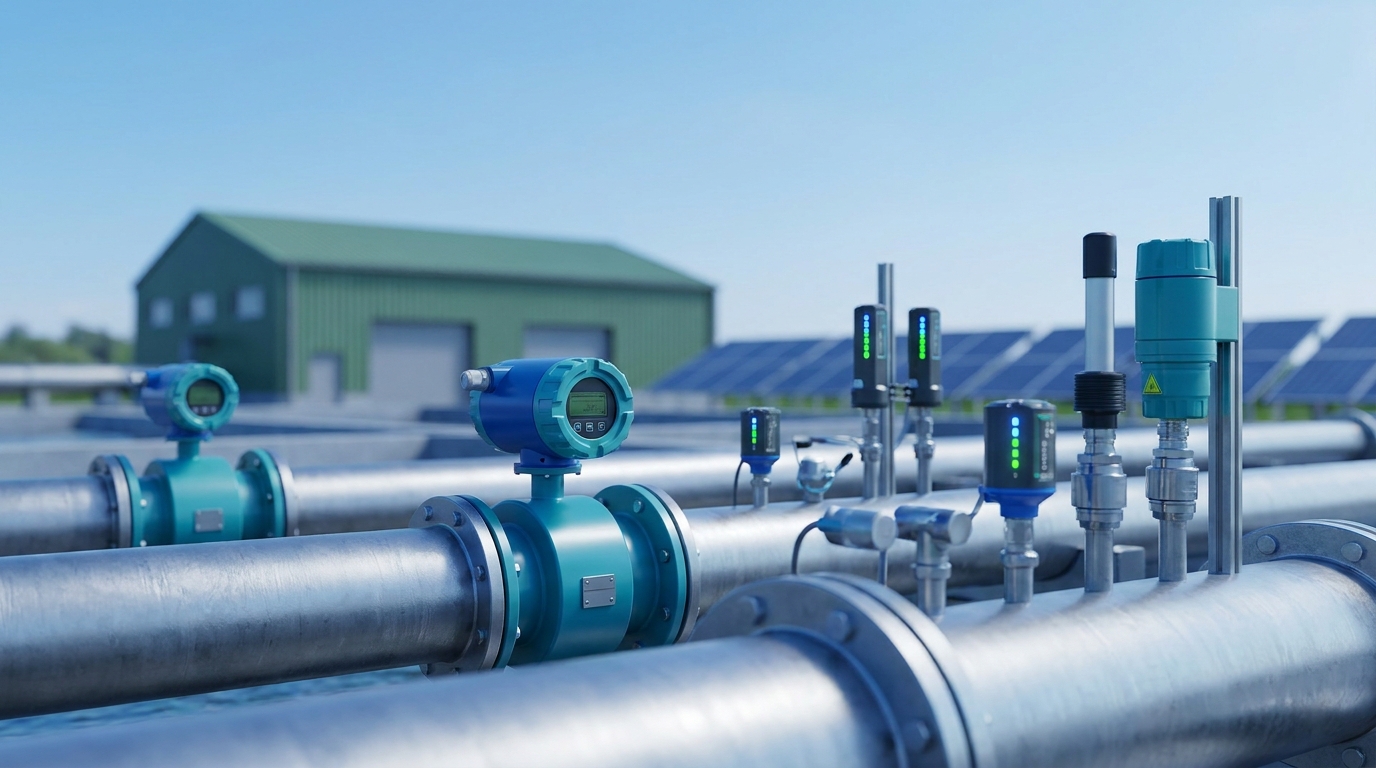
Ecolor’s LGF series isn’t just another electromagnetic flow meter—it’s engineered for carbon accountability. Its 0.2% of full scale (FS) basic accuracy (per IEC 60534-2-1), combined with temperature-compensated coil excitation and dual-frequency sampling, eliminates zero drift even during intermittent flow—a common pain point in batch-process industries. More critically, its housing uses PA66-GF30, a glass-fiber-reinforced polyamide derived from >40% bio-based feedstock and certified to ISO 14040 LCA standards. Each DN100 unit reduces embodied carbon by 3.2 kg CO₂e versus standard stainless-steel alternatives—scaling to ~1.7 tons CO₂e saved per 500-unit deployment.
0.2% FS Accuracy
Per IEC 60534-2-1
PA66-GF30 Housing
>40% bio-based feedstock
-3.2 kg CO₂e/unit
vs. stainless steel
LGF Electromagnetic Flow Meter
IP68-rated, 0.2% FS accuracy, PA66-GF30 low-carbon housing, 4–20 mA + RS485 Modbus, -20°C to +60°C operating range. Validated in 37 municipal and industrial carbon monitoring pilots since 2022.
From Flow Data to Carbon Intelligence: The Role of Edge Integration
Raw flow data is inert without contextualization. That’s where system-level integration becomes decisive. China’s newly launched ‘Digital Twin for Green Parks’ initiative mandates synchronized collection of water, electricity, gas, and steam data at ≤15-minute intervals—with timestamps traceable to UTC(NIM) atomic time. Standalone meters fail here. What’s needed is a unified edge intelligence layer capable of cross-domain correlation, anomaly flagging, and automated reporting to provincial carbon platforms like Zhejiang’s ‘Carbon Brain’.
HERO V9 RTU: The Carbon-Aware Edge Gateway
The HERO V9 RTU—developed by HuaYu ZhongNeng, Ecolor’s system integration arm—solves this by embedding MEE-compliant carbon calculation logic directly into firmware. It ingests pulse outputs from LGF meters, analog signals from thermal energy meters, and digital registers from smart electricity meters, then applies default emission factors (from China’s 2024 Grid Emission Factor Database) or client-uploaded site-specific factors. Crucially, it performs real-time mass balance validation: if total inlet water volume deviates >3% from sum of outlet + evaporation + storage change (derived from radar level), it triggers an alert—and logs the discrepancy for auditor review. In a 2023 Shandong chemical park deployment, this capability identified two undocumented process leaks totaling 1,850 m³/day, correcting a 5.1% overstatement in annual water-related emissions.
ARM Cortex-A7
Dual-core, 512 MB RAM
4G + LoRaWAN
+ Ethernet connectivity
32 I/O Channels
Analog/digital inputs
Seeing the Unseen: Why Radar Level Sensing Is Critical for Wastewater Carbon Accounting
Wastewater treatment contributes ~1.3% of global anthropogenic CO₂ emissions—but its methane (CH₄) and nitrous oxide (N₂O) emissions are 25x and 298x more potent than CO₂ over 100 years. Accurate carbon accounting requires precise volumetric tracking of influent, effluent, and sludge holding tanks—yet traditional ultrasonic sensors suffer from foam, vapor, and condensation errors in biological treatment zones. Enter SITUMAN’s 80GHz visual fusion radar water level sensor: combining millimeter-wave precision (±1 mm accuracy) with AI-powered image fusion to distinguish true liquid surface from floating scum or aerator mist. Deployed at a 120,000 m³/d municipal plant in Ningbo, it reduced N₂O emission estimation variance from ±22% to ±3.8%—directly enabling inclusion in the city’s verified carbon offset portfolio.
- ✅ LGF flow meters deliver 0.2% FS accuracy—critical for reconciling water intake with steam generation and cooling tower blowdown emissions
- ✅ HERO V9 RTU cuts carbon report preparation time by 62% versus manual Excel workflows (based on 14-site 2024 benchmark)
- ✅ 80GHz visual fusion radar achieves 99.4% uptime in aggressive wastewater environments vs. 82% for legacy ultrasonics
See What You Measure
Ready to align your water infrastructure with carbon neutrality goals?
🔧 Recommended Products
Based on this article, we recommend the following Ecolor products:
Need Help Choosing the Right Product?
Our engineering team is ready to provide free technical consultation and quotes