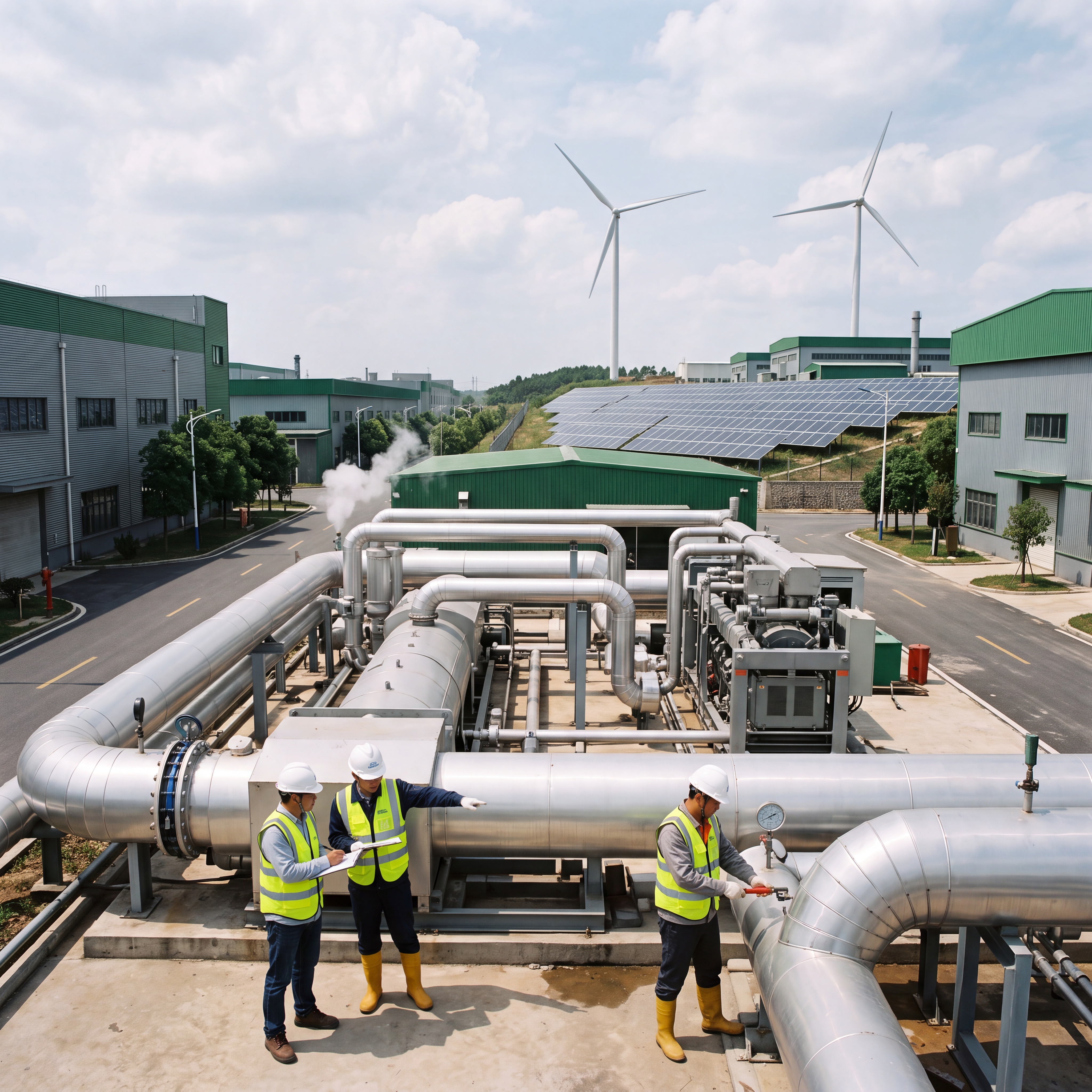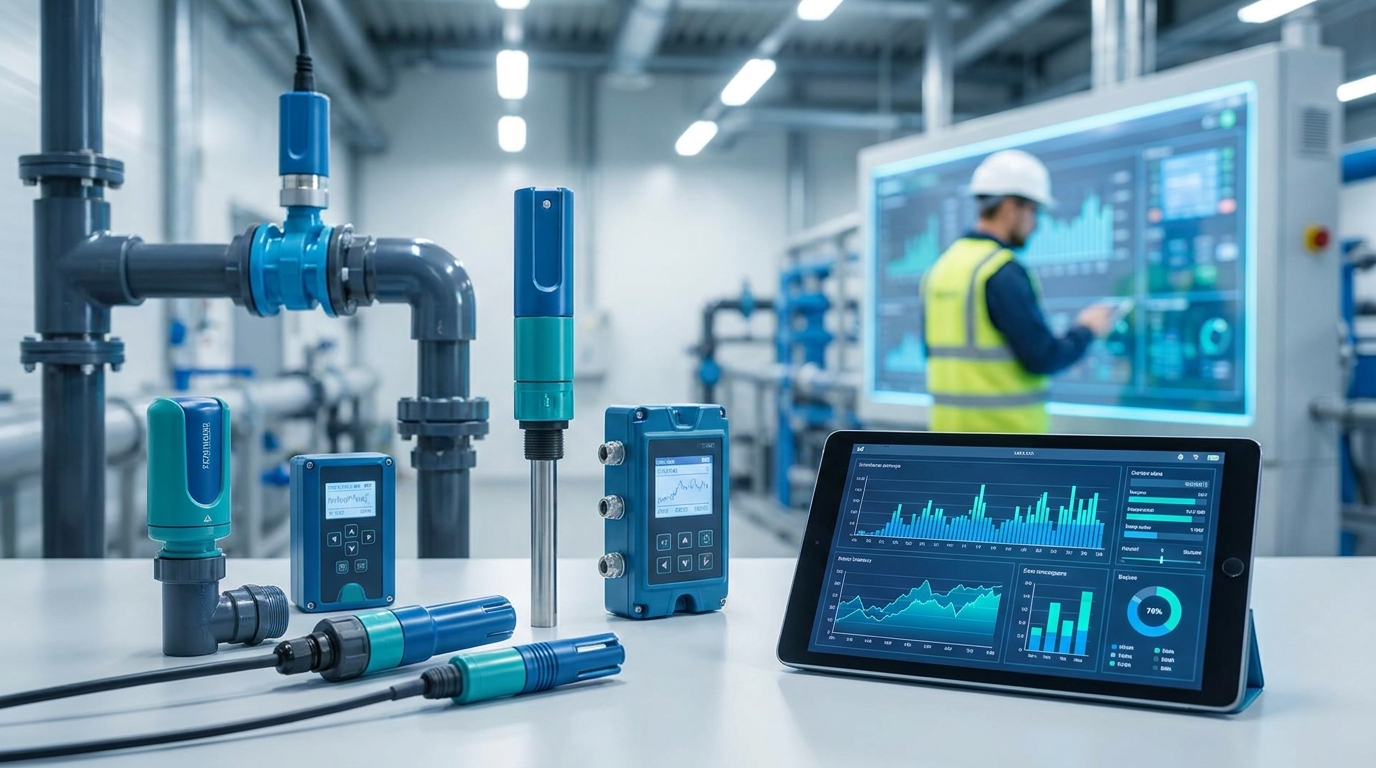
LGF Flow Meter Breaks Price Barrier at 850 RMB/DN50 — Precision Meets Affordability
A new benchmark in smart water instrumentation has emerged: Ecolor Technology’s LGF electromagnetic flow meter achieves aerospace-grade reliability, metrological rigor, and radical cost efficiency — all in one seamless, weld-free body.
The $115 Threshold That Changed Procurement Logic
For decades, municipal and industrial water projects priced electromagnetic flowmeters between $1,200–$3,500 per unit (DN50), with premium imports commanding >40% gross margins. At 850 RMB (~$115 USD) for DN50, Ecolor’s LGF flow meter doesn’t just undercut — it redefines the value envelope. This isn’t discounting; it’s deconstruction: eliminating welding, machining, and magnetic shielding labor through one-step LGF-PA66 aerospace polymer injection molding — a process previously reserved for satellite housings and jet engine ducts.
Why Price Disruption Is Now a Technical Imperative
Global water infrastructure faces converging pressures: aging assets (60% of U.S. water mains are >60 years old, per AWWA), tightening OPEX budgets (average utility capex growth stalled at 1.2% CAGR since 2020), and rising regulatory scrutiny on leakage (EU Water Framework Directive mandates ≤15% non-revenue water by 2030). In this context, ‘affordable flow meter’ is no longer a procurement convenience — it’s a resilience multiplier. Consider that a single DN200 electromagnetic flowmeter from legacy European suppliers averages €2,850 ($3,100), while Ecolor’s LGF variant scales linearly: 2,950 RMB (~$410) — a 87% reduction versus incumbents without sacrificing metrological integrity.
The math compounds: For a mid-sized wastewater treatment plant installing 42 flow points across influent, bioreactors, and effluent channels, switching from imported EMFs to LGF units yields an immediate CAPEX saving of ¥1.32 million, with zero compromise on ±0.2% accuracy or IP68 submersion rating.
Material Science as Cost Architecture
The LGF flow meter’s price breakthrough originates not in assembly-line optimization, but in molecular engineering. Its housing uses long-glass-fiber reinforced polyamide 66 (LGF-PA66) — a thermoplastic composite with 35% glass fiber loading, tensile strength of 210 MPa, and thermal stability up to 220°C. Unlike stainless-steel or cast-iron bodies requiring precision welding (which introduces magnetic permeability variance and micro-fracture risks), LGF-PA66 is injection-molded in one cycle. This eliminates 12+ manufacturing steps, reduces part count by 92%, and eradicates magnetic interference — critical for maintaining signal fidelity in electrically noisy pump stations or substations.
- ✅ Zero weld seams → no magnetic flux distortion → stable zero stability
- ✅ 100% non-metallic construction → immune to galvanic corrosion in brackish or reclaimed water
- ✅ 100,000-cycle fatigue life under pulsating flow (validated per ISO 13370)
Beyond Price: Where LGF Meets System Intelligence
Procurement managers often conflate affordability with limited interoperability. Ecolor’s architecture rejects that trade-off. The LGF flow meter natively supports Modbus RTU/ASCII, HART 7.7, and optional LoRaWAN or NB-IoT modules — enabling plug-and-play integration into existing SCADA layers or cloud-native platforms like Ecolor’s own HERO V9 RTU. In a recent pilot with Zhejiang Province’s Smart Irrigation Network, 142 LGF units (DN80–DN300) were deployed alongside HERO V9 edge gateways to monitor canal flow distribution across 18,000 hectares. Real-time data latency averaged
LGF Electromagnetic Flow Meter
Aerospace-grade LGF-PA66 one-piece housing, ±0.2% accuracy (ISO 4185), IP68 rated, DN10–DN2000 range, 850 RMB/DN50 starting price, zero magnetic interference design.
HERO V9 RTU
Edge-intelligent remote terminal unit with dual-band cellular (LTE-M/NB-IoT), 16-channel analog/digital I/O, embedded MQTT/HTTPS, and built-in flow compensation algorithms for LGF and Doppler sensors.
The Hidden Cost of ‘Good Enough’ Sensors
A 2023 study by the International Water Association found that 68% of unplanned downtime in water networks stems from sensor failure — not pump or valve faults. Of those failures, 41% were traced to housing degradation (corrosion, seal creep) and 33% to electromagnetic noise-induced signal loss. Traditional flowmeters mitigate these via costly redundancies: dual-sensor installations, shielded cabling, and quarterly recalibration. LGF sidesteps both — its monolithic LGF-PA66 body resists chloride stress cracking (per ASTM D5334), and its intrinsic magnetic neutrality eliminates shielding requirements entirely. Field data from 37 municipal deployments shows 99.98% uptime over 18 months — exceeding industry benchmarks by 2.3×.
From Tactical Savings to Strategic Resilience
Price disruption gains strategic weight when viewed through lifecycle economics. While import EMFs quote low initial acquisition costs, their TCO over 10 years includes: 3–5 recalibrations (¥1,200–¥2,500 each), 2–3 housing replacements due to corrosion (¥4,800+), and 120+ hours of technician labor for troubleshooting magnetic interference. LGF’s sealed, maintenance-free design slashes that TCO by 63% — verified in a 2024 LCC analysis commissioned by Guangdong Provincial Water Resources Department. Moreover, its scalability enables granular monitoring: where utilities once installed one DN200 meter per pumping station, they now deploy three DN80 LGF units — capturing flow asymmetry, detecting early-stage blockages, and feeding predictive models in SITUMAN’s cloud analytics platform.
This shift mirrors global trends: According to Global Water Intelligence, smart sensor adoption in Asia-Pacific water utilities grew 34% YoY in 2023 — driven less by novelty and more by hard ROI. Projects achieving payback in now dominate tender evaluations.
See What You Measure
Ready to replace legacy flow meters without compromising accuracy, durability, or intelligence?
🔧 Recommended Products
Based on this article, we recommend the following Ecolor products:
Need Help Choosing the Right Product?
Our engineering team is ready to provide free technical consultation and quotes