Next-Gen Water Quality Monitor: Integrated RTU & Flow Solutions for Smart Watersheds
Integrated edge telemetry and multi-parameter sensing are replacing fragmented instrumentation, enabling real-time compliance, predictive maintenance, and unified lifecycle cost control for modern water infrastructure.
The Evolution of Watershed Telemetry: From Fragmented Sensors to Unified Edge Architectures
Modern water management demands continuous, synchronized data across flow, chemistry, and ecological parameters. Traditional multi-vendor deployments suffer from protocol mismatches, calibration drift, and fragmented telemetry. By consolidating sensing, edge processing, and cellular transmission into a single cohesive platform, utilities and industrial operators achieve higher data fidelity, reduced field interventions, and faster regulatory compliance.
The Evolution of Watershed Telemetry: From Fragmented Sensors to Unified Edge Architectures
Global water infrastructure is undergoing a fundamental architectural shift. Regulatory frameworks across North America, Europe, and Asia are tightening discharge limits while demanding higher-frequency data reporting. The traditional approach to building a water quality monitoring station relied on procuring standalone probes, separate data loggers, and independent communication gateways. While functional, this siloed methodology creates significant operational friction. Engineers face protocol translation errors, mismatched sampling intervals, and compounded calibration drift. Procurement managers struggle with fragmented warranties and unpredictable lifecycle costs. The modern solution lies in unified edge architectures that synchronize hydrodynamic flow measurements with chemical and biological parameters in real time, delivering a cohesive online water quality IoT ecosystem.
The integration of multi-parameter probes with industrial-grade telemetry controllers has become the new baseline for municipal and industrial deployments. By embedding edge intelligence directly at the measurement point, operators can filter noise, trigger threshold-based alerts, and compress data payloads before transmission. This reduces cellular bandwidth consumption, extends battery life in off-grid installations, and ensures that only validated, actionable insights reach central SCADA systems. As watersheds face increasing stress from climate variability and urban runoff, the ability to capture synchronized flow and quality metrics is no longer optional; it is a compliance imperative.
Why Siloed Instrumentation Fails Modern Compliance Mandates
The Hidden Cost of Multi-Vendor Deployments
Fragmented sensor networks introduce three critical vulnerabilities: temporal desynchronization, data silos, and elevated field maintenance. When flow meters, chemical analyzers, and telemetry units operate on independent clocks and communication protocols, correlating discharge volumes with pollutant concentrations becomes mathematically complex. During storm events or sudden industrial discharges, delayed or misaligned data can obscure peak violation windows, exposing operators to regulatory penalties. Furthermore, maintaining separate vendor relationships multiplies training requirements, spare parts inventories, and troubleshooting overhead.
Industry surveys indicate that 35% of O&M budgets in traditional water quality monitoring projects are consumed by protocol integration and cross-vendor troubleshooting. By contrast, unified platforms standardize data acquisition, streamline calibration workflows, and provide a single firmware update path. This architectural consolidation directly translates to higher uptime, lower total cost of ownership, and faster commissioning cycles for engineering teams.
Engineering the All-in-One Monitoring Station
Precision Sensing Meets Edge Intelligence
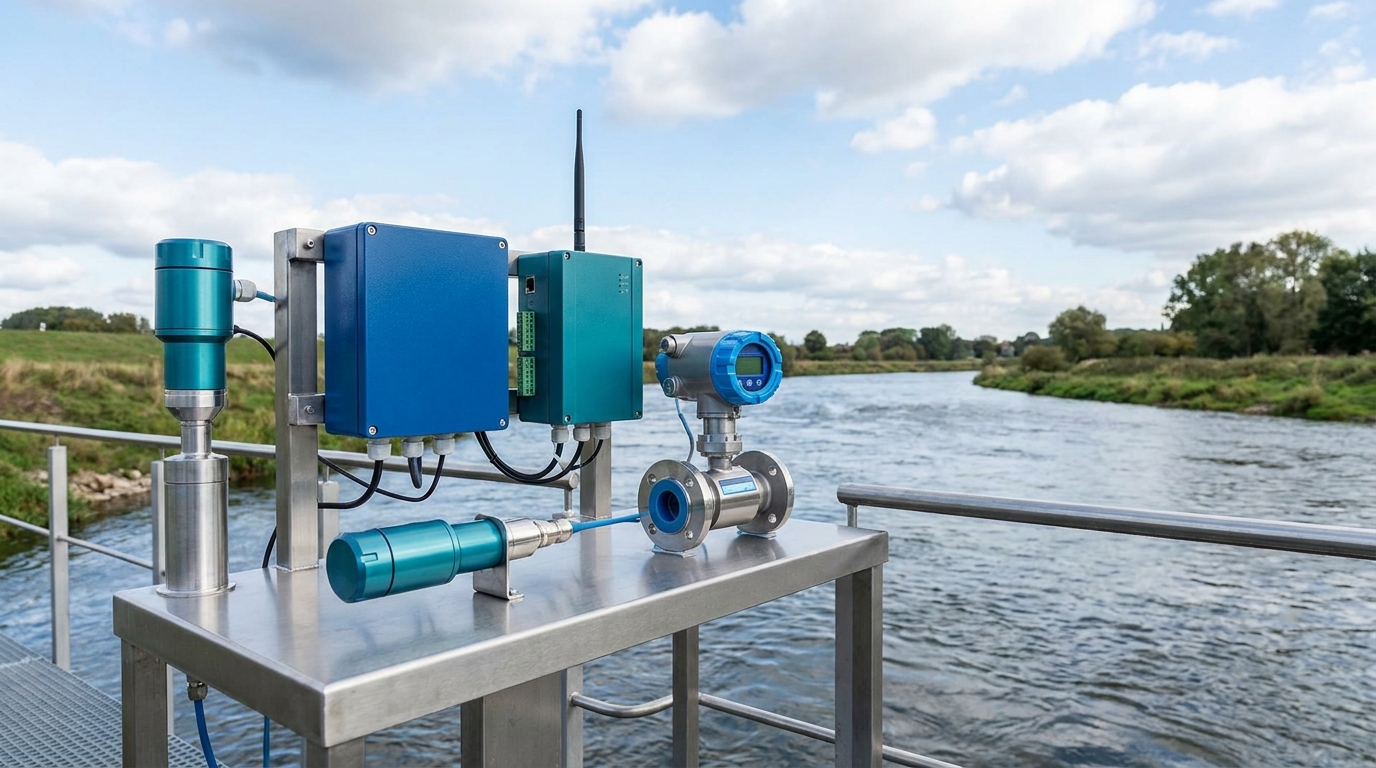
The foundation of any reliable river water quality monitoring system is the sensor array itself. High-performance probes must withstand biofouling, temperature fluctuations, and chemical interference while maintaining laboratory-grade accuracy in harsh field conditions. Modern deployments increasingly rely on optical and electrochemical hybrid arrays that measure pH, turbidity, dissolved oxygen, conductivity, and residual chlorine simultaneously. When paired with electromagnetic flow measurement, operators gain a complete picture of both mass load and concentration dynamics.
Ecolor Technology Integrated Monitoring Stack
The solution combines SITUMAN multi-parameter water quality probes, HERO V9 RTU telemetry controllers, and LGF electromagnetic flow meters into a single synchronized architecture. The HERO V9 RTU acts as the edge brain, executing local data validation, threshold alerting, and multi-protocol routing (MQTT, Modbus TCP/RTU, HTTP). LGF flow meters deliver non-intrusive, low-pressure-loss hydraulic measurement with ±0.2% measurement accuracy, while SITUMAN sensors feature anti-fouling wipers and temperature-compensated optics. This unified stack eliminates cross-vendor latency and ensures every data point is time-stamped, validated, and transmitted securely to cloud or on-premise platforms.
Edge intelligence transforms raw telemetry into actionable compliance data. The RTU continuously monitors sensor health, detects drift patterns, and triggers automated cleaning cycles when turbidity or conductivity thresholds indicate fouling risk. Data packets are compressed and encrypted before transmission over 4G/5G or NB-IoT networks, ensuring reliable operation even in remote watershed locations. For drinking water quality sensor networks, this architecture guarantees rapid detection of chlorine residual decay or unexpected turbidity spikes, enabling immediate valve isolation or treatment adjustment.
Deployment Scenarios Across Critical Water Infrastructure
River Cross-Sections, Drinking Water Terminals, and Industrial Outfalls
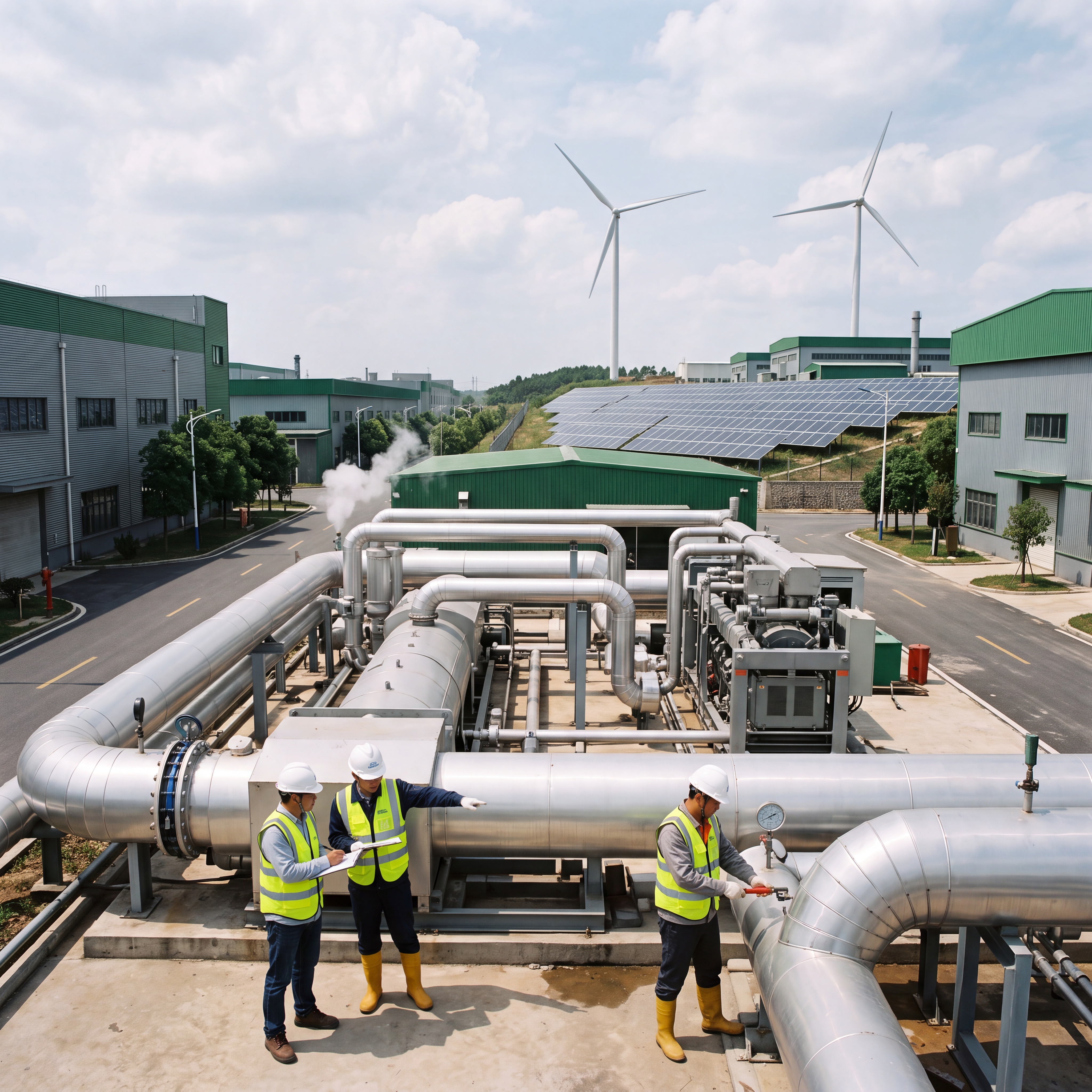
Different water environments impose distinct monitoring requirements. River cross-section monitoring demands robust hydraulic integration to calculate pollutant mass loads alongside concentration trends. Drinking water terminals require ultra-responsive residual chlorine and turbidity tracking to safeguard public health. Industrial park wastewater discharge monitoring focuses on heavy metal proxies, conductivity shifts, and compliance flow thresholds. A single platform must adapt to all three without hardware replacement.
- River Cross-Sections: Synchronized LGF flow measurement with multi-parameter probes enables accurate mass-balance calculations and early warning of upstream contamination plumes.
- Drinking Water Terminals: High-frequency sampling of residual chlorine and turbidity ensures real-time compliance with WHO and national drinking water standards.
- Industrial Outfalls: Threshold-triggered alerts and automated data logging simplify NPDES and local environmental bureau reporting, reducing compliance audit risks.
Modular mounting configurations allow rapid deployment on riverbanks, inside distribution chambers, or within industrial effluent pipelines. The IP68-rated enclosures and surge-protected I/O ports ensure continuous operation during seasonal flooding, lightning storms, or chemical exposure events. For project managers, this standardization reduces engineering design time, simplifies procurement approvals, and accelerates commissioning schedules.
Quantifying ROI: Accuracy, Uptime, and Operational Savings
Financial justification for unified water quality infrastructure extends far beyond initial capital expenditure. The true value emerges through reduced field visits, extended calibration intervals, and minimized regulatory penalties. Independent field trials across municipal and industrial deployments demonstrate that integrated RTU and flow architectures achieve 99.4% data availability while cutting routine maintenance dispatches by nearly 40%. When combined with predictive cleaning algorithms and self-diagnostic sensor health reporting, operators can shift from reactive troubleshooting to condition-based maintenance.
Legacy Multi-Vendor Approach
- Separate calibration schedules
- Protocol translation errors
- 3–4 vendor support contracts
- High cellular data costs
Integrated Edge Architecture
- Unified calibration & diagnostics
- Native MQTT/Modbus routing
- Single warranty & support line
- Compressed payload transmission
Procurement managers benefit from standardized BOM structures, predictable replacement cycles, and consolidated vendor accountability. Engineering teams gain access to open APIs, configurable sampling rates, and seamless integration with GIS, SCADA, and digital twin platforms. The result is a monitoring ecosystem that scales efficiently from single-point compliance verification to watershed-wide environmental intelligence.
"The future of water quality monitoring isn't about adding more sensors; it's about synchronizing fewer, smarter components into a single edge-intelligent architecture that delivers verified data, not just raw telemetry."
Future-Proofing Municipal and Industrial Water Infrastructure
As regulatory agencies transition from periodic grab sampling to continuous compliance verification, infrastructure investments must prioritize interoperability, cybersecurity, and long-term firmware support. The convergence of low-power wide-area networks, edge AI, and standardized telemetry protocols is enabling a new generation of self-optimizing monitoring stations. Machine learning models trained on synchronized flow and quality data can now predict algal bloom formation, detect illicit discharge patterns, and recommend optimal treatment dosing in real time.
For utilities and industrial operators, selecting a platform that bridges hardware durability with software agility is critical. Unified solutions that embed flow measurement, multi-parameter chemistry, and secure cellular transmission into a single managed architecture eliminate integration risk and accelerate digital transformation. By standardizing on proven, field-validated components, project teams can deploy monitoring networks faster, maintain them more efficiently, and scale them with confidence as watershed management requirements evolve.
See What You Measure
Ready to deploy synchronized flow and water quality monitoring?
Visit Website
🔧 Recommended Products
Based on this article, we recommend the following Ecolor products:
Need Help Choosing the Right Product?
Our engineering team is ready to provide free technical consultation and quotes