In the world of water management, project managers and utility engineers are locked in a constant battle between ambition and budget. The ambition is clear: build resilient, data-driven networks capable of weathering climate change, reducing non-revenue water (NRW), and ensuring equitable distribution. The budget, however, is often a story of constraints. A significant portion of this financial pressure stems from the high capital expenditure (CapEx) required for precision instrumentation. For decades, the electromagnetic flowmeter—a cornerstone of modern water monitoring—has been a high-ticket item, dominated by legacy brands with premium price tags. But what if the fundamental economics of this essential device could be rewritten? A revolution in material science and manufacturing is doing just that, and its impact is set to ripple across the entire water industry.
The CapEx Conundrum: Why Traditional Electromagnetic Flowmeters Inflate Project Costs
To understand the disruption, we must first analyze the status quo. The global market for electromagnetic flowmeters is a multi-billion dollar industry, historically led by manufacturers in Europe and North America. Their products are often excellent, but their price reflects a complex and costly manufacturing paradigm. A traditional flowmeter is an assembly of compromises.
The body is typically fabricated from carbon or stainless steel, requiring multiple stages of cutting, rolling, and welding. Each weld is a potential point of structural weakness and future corrosion. Because the steel body is conductive and susceptible to corrosion from treated water, an inert, non-conductive liner—often made of expensive materials like PTFE, PFA, or hard rubber—must be meticulously inserted and bonded to the interior. This liner is the meter's Achilles' heel. Temperature fluctuations, water hammer events, or improper installation can cause it to delaminate, blister, or tear, leading to catastrophic failure and inaccurate readings. This complex, multi-stage process involving expensive raw materials and skilled labor results in a high unit cost, which is inevitably passed on to the end-user.
For a water utility, this means that deploying a comprehensive sensor network for District Metered Areas (DMAs) can become prohibitively expensive. The American Society of Civil Engineers (ASCE) estimates a water infrastructure funding gap of over $1 trillion in the US alone over the next 20 years. When a single DN100 flowmeter can cost thousands of dollars, utilities are forced to make difficult choices, often resulting in sparse monitoring points and vast data deserts across their distribution networks.
A Paradigm Shift: Aerospace-Grade LGF-PA66 Composite Flowmeter Technology
The breakthrough comes from looking outside the traditional playbook of metal fabrication. Ecolor Technology, through its SITUMAN sensor division, has pioneered the use of Long Glass Fiber reinforced Polyamide 66 (LGF-PA66)—an aerospace-grade composite material—to fundamentally redesign the electromagnetic flowmeter.
LGF-PA66 is not merely plastic; it's a high-performance composite where long strands of glass fiber are embedded within a durable polyamide matrix. This creates a material with an extraordinary combination of properties perfectly suited for flow measurement, delivering strength-to-weight ratios comparable to aluminum while being completely inert to chemicals found in potable and wastewater.
The Material Advantage: Why LGF-PA66 Outperforms Traditional Flowmeter Materials
Exceptional Strength
Boasts a strength-to-weight ratio comparable to aluminum, ensuring it can withstand the high pressures of water mains without deformation.
Inherent Corrosion Resistance
Completely inert to chemicals found in potable and wastewater, eliminating the need for a separate, failure-prone liner. The body is the liner.
Electromagnetic Transparency
As a non-metallic composite, it does not interfere with the magnetic field essential for the meter's operation, leading to a cleaner signal and higher accuracy.
Lightweight Design
Significantly lighter than its steel counterpart, reducing shipping costs and making installation faster, safer, and cheaper—often requiring only one technician instead of two.
The Manufacturing Revolution: One-Piece Injection Molding for Electromagnetic Flowmeters
The true disruption lies in how this material is processed. Instead of a multi-step fabrication and assembly line, Ecolor's LGF flowmeter body is created in a single, highly-automated process: one-piece injection molding. Molten LGF-PA66 is injected into a precision-engineered mold, forming a complete, monolithic meter body—including the sensor tube and flanges—in seconds.
This process eliminates welds, seams, gaskets, and the entire concept of a separate liner. The result is a perfectly consistent, structurally superior product manufactured at a fraction of the cost of traditional methods.
Traditional Steel vs. LGF Composite Flowmeter: A Direct Comparison
❌ Traditional Steel Flowmeter
- • Multi-part steel construction requiring welding
- • Separate, expensive liner (PTFE/PFA) prone to delamination
- • Heavy, increasing installation cost
- • Multiple points of potential failure
✅ Ecolor LGF Composite Flowmeter
- • One-piece LGF-PA66 injection molded body
- • No liner, no welds, no delamination risk
- • Lightweight, corrosion-proof, and structurally superior
- • Drastically lower production cost
Performance Without the Premium: Ecolor LGF-Series Electromagnetic Flowmeter Specifications
This technological leap translates directly into unprecedented market value. Ecolor's LGF electromagnetic flowmeter starts at an astonishing ¥850 (approximately $120 USD) for a DN50 model. This isn't a stripped-down, low-spec device; it's a high-performance instrument designed for the rigors of modern water networks.
By leveraging material science, Ecolor delivers a flowmeter that redefines the relationship between price and performance.
±0.2%
High Accuracy
Certified billing-grade precision of reading
IP68
Extreme Durability
Continuous submersion in flooded manholes or direct burial
0
Liner Failures
Monolithic liner-less design eliminates primary failure cause
DN10–2000
Broad Application Range
From service connections to large trunk mains
The Ripple Effect: How Affordable LGF Flowmeters Democratize Water Network Data
The availability of an affordable, reliable flow meter is more than just a procurement win; it's a strategic enabler. It fundamentally changes the calculus for network-wide monitoring and allows utilities to tackle their most pressing challenges head-on.
The World Bank estimates that globally, over 32 billion cubic meters of treated water are lost to leakage each year. The most effective tool against this is the establishment of District Metered Areas (DMAs), but the cost of instrumentation has been a major barrier to granular implementation. With the LGF flowmeter's accessible price point, utilities can now afford to subdivide their networks into smaller, more manageable zones. This high-density data allows for:
Rapid Leak Detection
Abnormal flow patterns in small DMAs can be identified in hours instead of months, drastically reducing water loss.
Accurate Water Audits
Gaining a true, measured understanding of water supply versus consumption becomes feasible, pinpointing areas of high NRW.
Optimized Pressure Management
Data from across the network informs dynamic pressure adjustments, reducing mechanical stress on pipes and further minimizing leakage.
Equitable Agricultural Irrigation
In agricultural settings, affordable and accurate flow measurement is key to implementing fair water allocation and promoting efficient usage in an increasingly water-scarce world.
Ultimately, this price disruption lowers the total cost of ownership (TCO). The savings begin with the initial purchase and continue through lower installation costs, reduced maintenance, and a dramatically longer, more reliable service life. It shifts the flowmeter from a capital-intensive, sparingly deployed asset to a ubiquitous, foundational data point for the smart water grid.
See What You Measure: The Future of Affordable Smart Water Management
The era of overpaying for essential technology is drawing to a close. The convergence of advanced composite materials and intelligent manufacturing, championed by Ecolor Technology, proves that performance, reliability, and affordability are no longer mutually exclusive. For procurement managers and engineers tasked with building the water systems of the future, this innovation unlocks new possibilities, allowing them to expand their monitoring capabilities, conserve precious resources, and operate more efficiently than ever before. It's not just about a cheaper meter; it's about making smart water management an achievable reality for every utility, everywhere.
To explore the full specifications of the LGF-series flowmeter and learn how this technology can transform your project budgets and operational outcomes, visit us at www.cssoc.com.
Sources
- American Society of Civil Engineers (ASCE). (2021). 2021 Report Card for America's Infrastructure: Drinking Water.
Recommended Products
Ecolor Technology provides professional instruments for smart water, environmental monitoring & industrial automation:
Related News
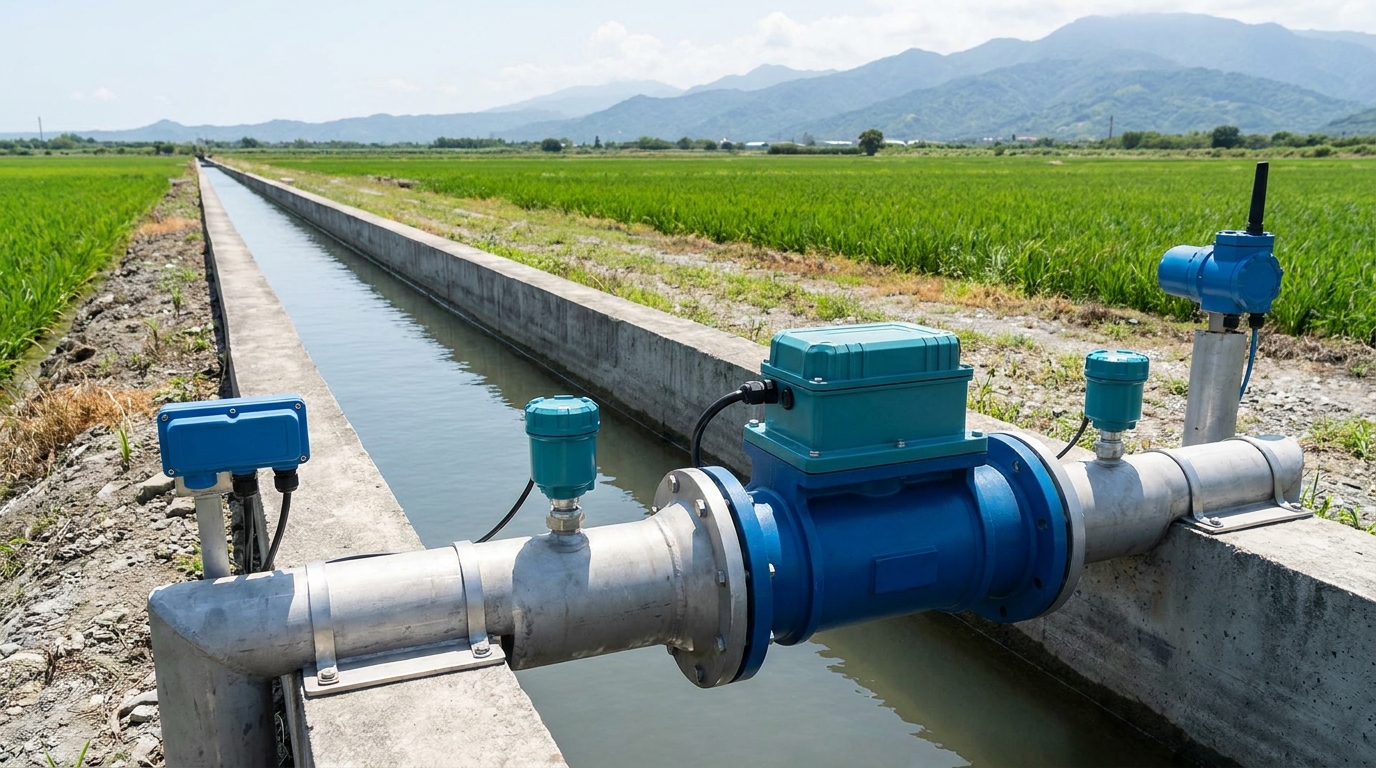
Smart Irrigation Flowmeter: Durable, Affordable Water Metering for Farms
Explore how Ecolor's LGF flowmeter and RTU solution breaks the cost barrier for precision irrigation, offering durable, maintenance-free agricultural water metering.
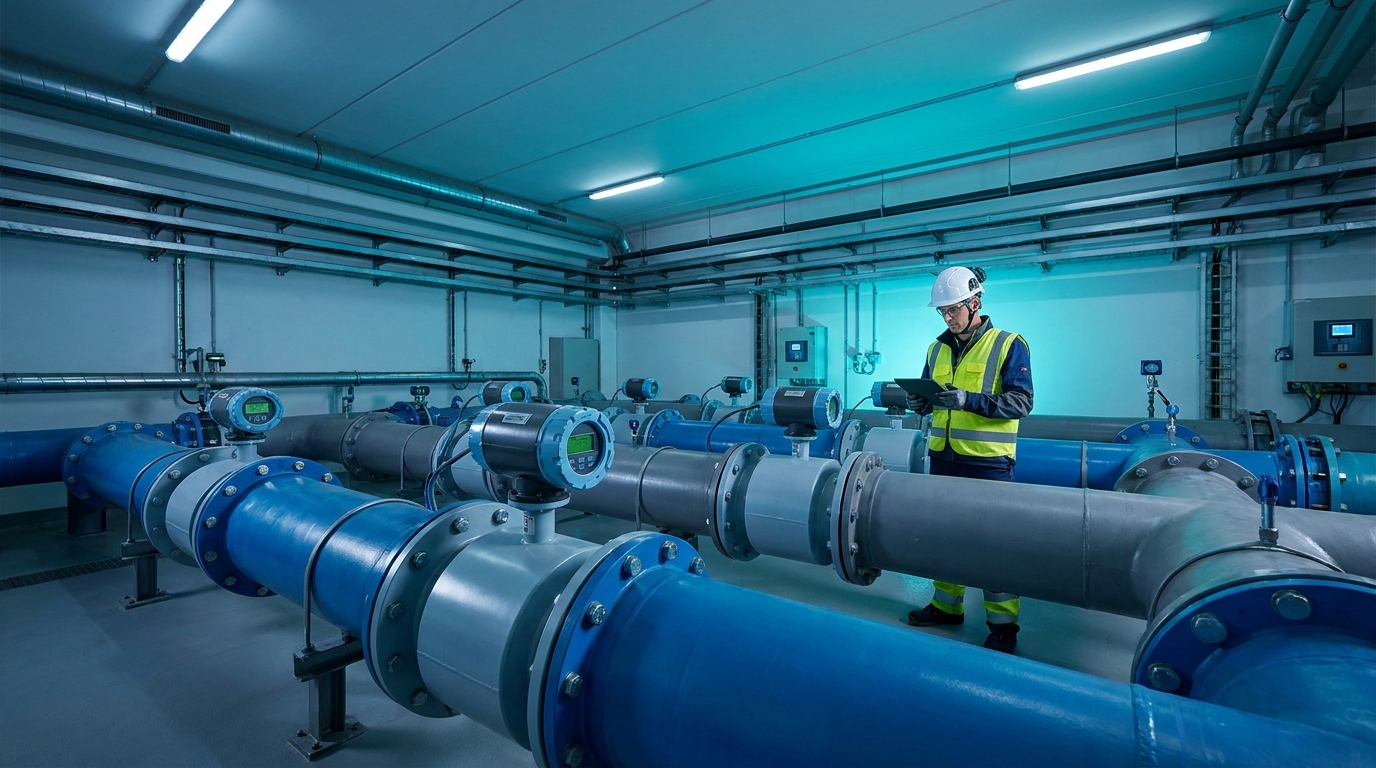
Beyond the Bond: The Future of Anti-Corrosion Flowmeters is Liner-Free
Traditional PTFE-lined flowmeters face inevitable failure from delamination. Ecolor's LGF polymer technology offers a revolutionary liner-free design, ensuring a 20-year maintenance-free lifespan and eliminating a critical industry vulnerability.