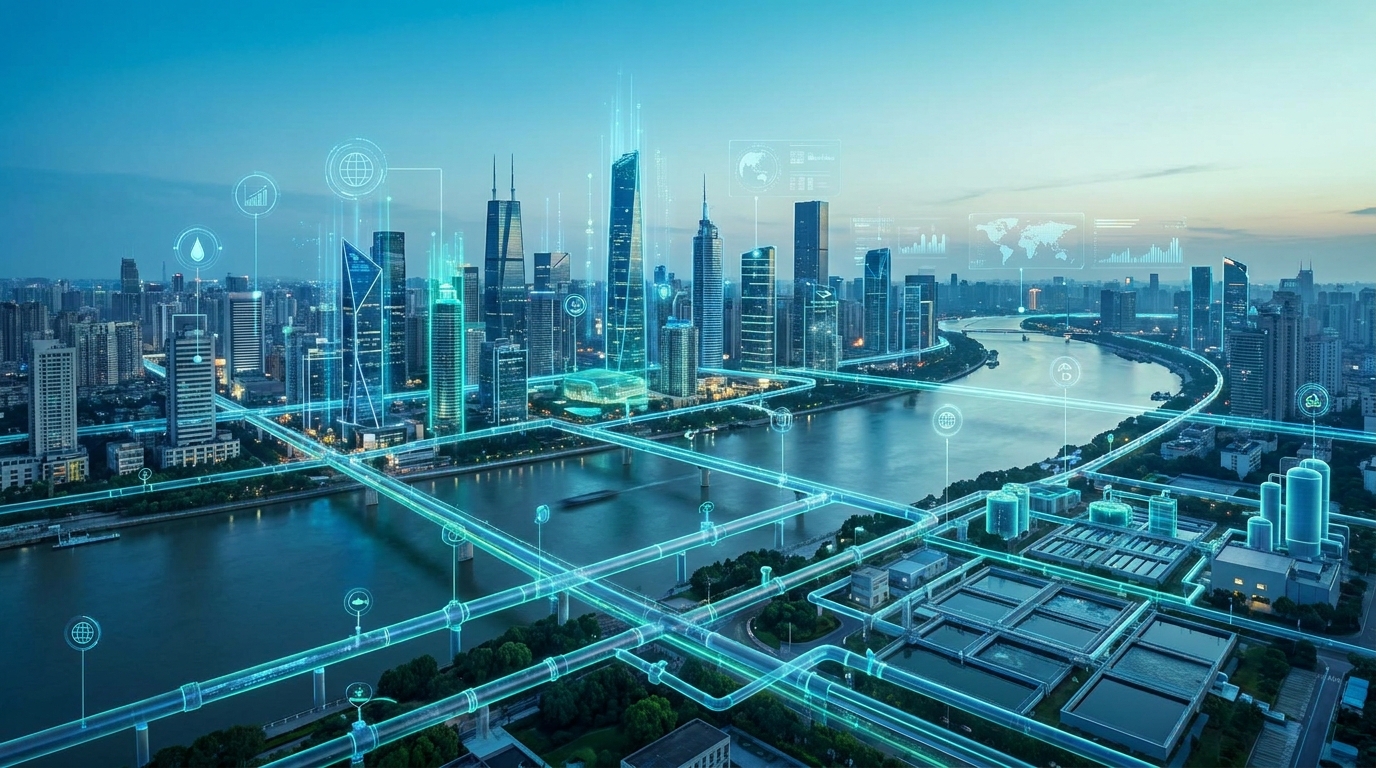
The Data Cascade: From Leaky Faucets to Intelligent Watersheds
Smart home water sensors like Hydrific's Droplet are pioneering a profound shift from reactive leak detection to proactive, data-driven water management across entire cities and industries—a true data cascade reshaping global water sustainability.
The Quiet Revolution Brewing in Our Basements with Smart Water Sensors
For years, the smart home revolution has focused on convenience and security—smart lights, thermostats, and doorbells. Now, a quieter but more profound transformation is underway, starting in the often-overlooked corners of our homes: the water pipes. Companies like Hydrific, a part of the global LIXIL brand, are introducing consumer-friendly devices like the 'Droplet' smart water sensor.
At first glance, it’s a simple proposition: a small device that tracks water use and alerts you to leaks, preventing waste and costly damage. However, this seemingly modest innovation is the leading edge of a massive wave, a “data cascade” that is beginning to reshape the entire global water industry, from the individual consumer to the largest industrial facilities.
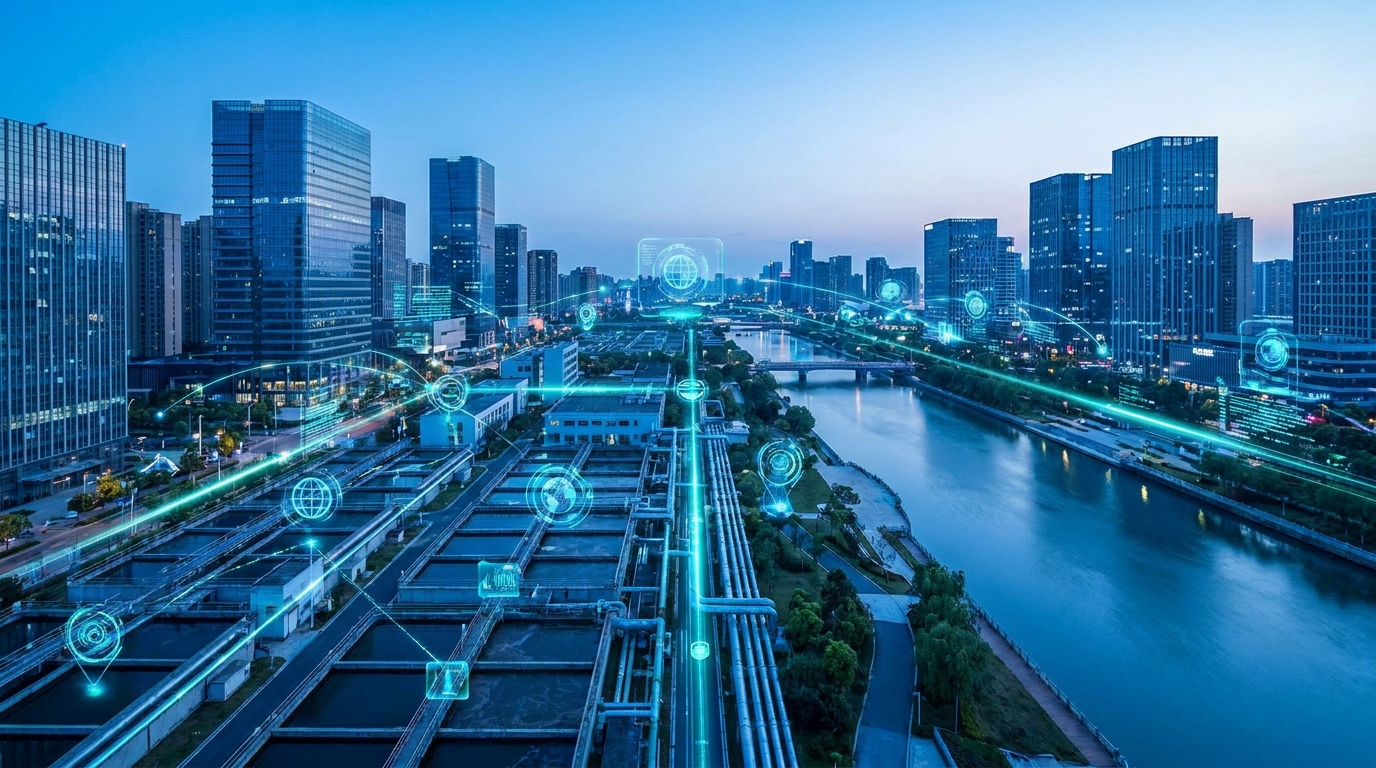
This shift from reactive to proactive water management, born in the consumer market, is creating an unprecedented demand for data, transparency, and control. As homeowners become accustomed to real-time insights into their own consumption, they are implicitly setting a new standard for the utilities and industries that manage our collective water resources. The technology that alerts you to a dripping faucet is conceptually the parent of the technology now being deployed to manage entire water grids, and this connection has profound implications for the future of water sustainability.
The Consumer as the Catalyst for Water Data Literacy
The consumer adoption of smart water sensors is driven by tangible benefits. As reviews from publications like Wirecutter highlight, these devices are no longer niche gadgets. They integrate seamlessly into the broader smart-home ecosystem, capable of triggering alerts on smart speakers or even activating other devices to mitigate damage.
The value proposition is clear: safety and savings. By detecting leaks early, these sensors prevent the catastrophic damage associated with flooding and the slow, insidious waste from persistent drips. But the secondary effect is more powerful. They are making millions of people data-literate about their own water footprint. This widespread awareness is the crucial “pull” factor, creating a societal expectation for better water stewardship at every level.
If an individual can monitor their home for leaks with a $50 sensor, why can’t a municipality proactively monitor its distribution network to prevent massive, costly main breaks?
Scaling Up: From the Smart Home to the Smart Network IoT Solutions
This consumer-driven expectation is accelerating the adoption of sophisticated IoT solutions throughout the water sector. The principles are the same—sensing, connectivity, and analysis—but the scale and complexity are vastly different. While a home sensor detects the presence of water, industrial and municipal systems require a far more nuanced understanding of the resource.
As industry analyses point out, the next wave of innovation involves a diverse array of sensor types, including ultrasonic, pressure transducers, and radar, to provide a complete picture of a water system's health. We are moving beyond binary “wet/dry” alerts to continuous streams of data on flow rates, pressure fluctuations, turbidity, and chemical composition. This leap requires not just better sensors but also a robust communications backbone and powerful cloud platforms to process the torrent of information, turning raw data into actionable intelligence for utility managers and industrial operators.
The Industrial Frontier: Precision IoT Connectivity in Water Management
At the highest level of this data cascade is the industrial water management sector, where the stakes involve regulatory compliance, operational efficiency, and environmental protection. Here, the convergence of high-precision sensing with reliable IoT connectivity is unlocking new possibilities. Facility managers can now remotely monitor critical parameters like pH and dissolved oxygen (DO) in real-time from their smartphones.
This capability is transformative, enabling predictive maintenance, optimizing chemical usage in treatment processes, and ensuring compliance with environmental discharge permits.
Building the Smart Water Grid Backbone: Advanced Instrumentation
This is the arena where specialized technology companies are building the backbone of the future smart water grid. Chinese innovators like Ecolor Technology, for example, are developing the advanced instrumentation required to meet this growing demand for granular, reliable data. Their solutions represent the industrial-grade evolution of the smart-home concept:
LGF Electromagnetic Flowmeter
Provides the highly accurate flow data essential for billing, leak detection in large networks, and process control.
80GHz Visual Radar Level Sensor
Offers non-contact, high-precision measurement for reservoirs, tanks, and open channels—driven by the same need for accurate, real-time information.
Multi-Band Doppler Flow Radar
Integrates a camera, offering the world’s first solution for visually monitoring conditions inside underground pipes, turning black-box infrastructure into a transparent, manageable asset.
HERO V9 RTU (Remote Terminal Unit)
Acts as the powerful, industrial-scale “hub” that connects these disparate sensors to the cloud, enabling the remote monitoring and control that managers now demand.
These technologies are not just incremental improvements; they are fundamental enablers of a new water management paradigm. They provide the “nervous system” for a smart water network, translating physical phenomena into the digital data needed for intelligent, automated decision-making.
Conclusion: A Connected and Coherent Water Future
The journey from a smart leak detector in a laundry room to a fully instrumented, AI-optimized watershed is not a series of disconnected events. It is a single, continuous story of technological and cultural evolution. The data cascade that begins with a consumer's desire to prevent a flooded basement culminates in a utility's ability to predict a major pipeline failure or an industrial plant’s capacity to recycle water with unprecedented efficiency.
This convergence of consumer expectations and industrial capability is creating a powerful feedback loop. As more data becomes available at every point in the water cycle, we become better equipped to manage this finite resource holistically. The simple, accessible technology in our homes is teaching us to ask for more from our large-scale water systems, and innovative companies are rising to the challenge, building the sophisticated tools required to deliver a more resilient, efficient, and sustainable water future for all.
Sources
- Droplet the #1 Smart Home Water Sensor - Hydrific, part of LIXIL
- The 2 Best Smart Water-Leak Detectors of 2026 | Reviews by Wirecutter
- Smart Home Water Sensors – Vesternet
- 15 Best IoT Water Quality Monitoring Systems (2026) - Water Brands
- The Future of Industrial Water Management: The Convergence of IoT and High-Precision Optical Sensors in 2026
Recommended Products
Ecolor Technology provides professional instruments for smart water, environmental monitoring & industrial automation: