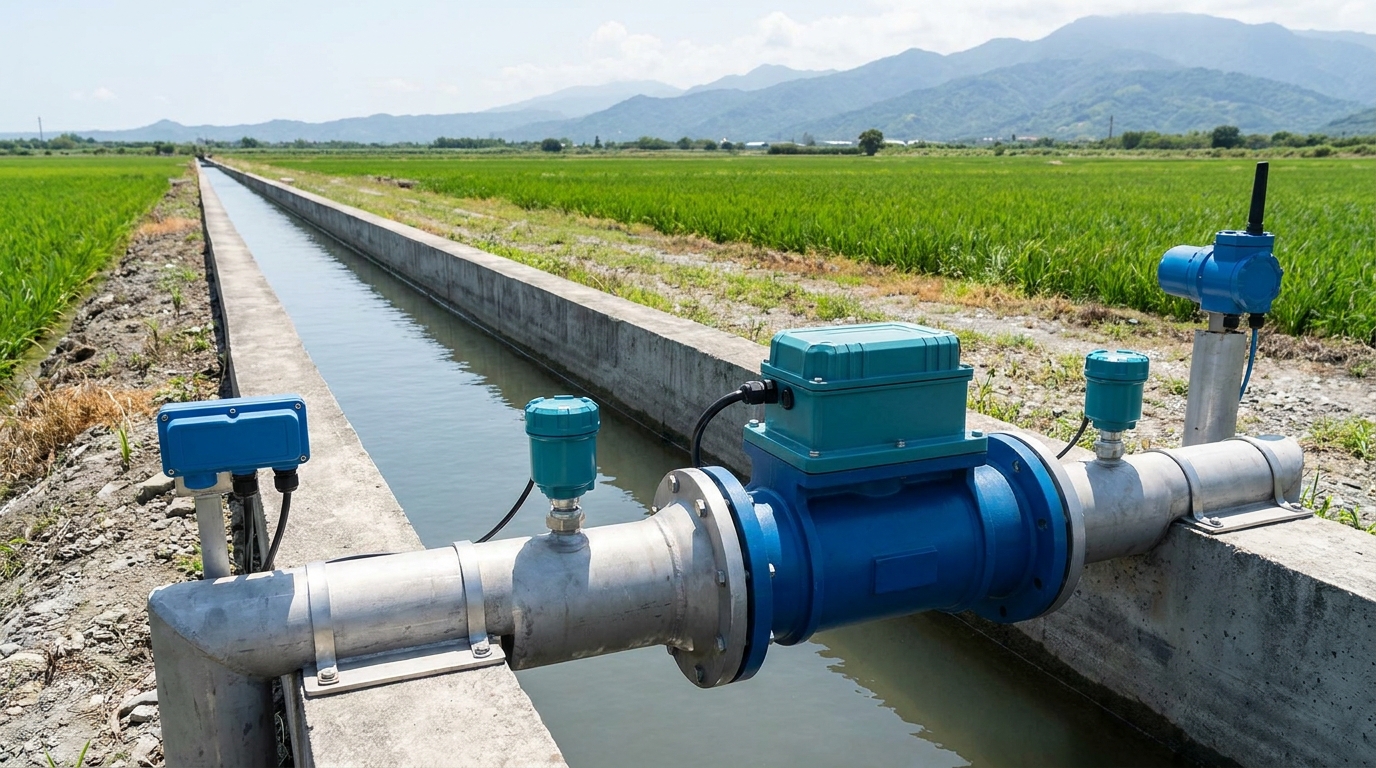
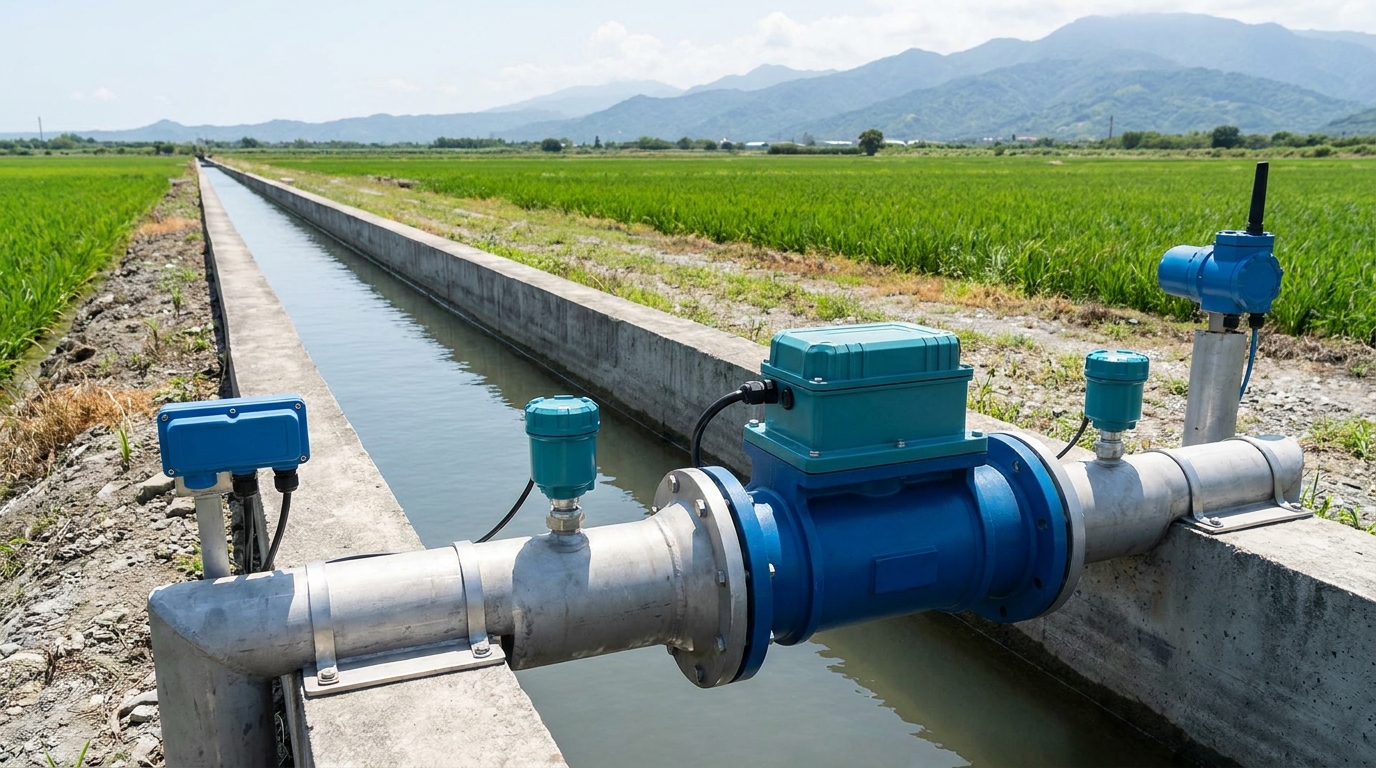
Visual Flow Radar Deployment in River Outfall Monitoring: A Complete Field Guide
The Visual Flow Radar (multi-band Doppler radar flowmeter) provides a complete, non-contact solution for mandatory river outfall flow monitoring. This guide details its practical application from equipment selection to data analysis, based on a real-world deployment of 32 units for comprehensive discharge monitoring.
Why River Outfall Flow Monitoring is Essential
Environmental regulations mandate accurate flow monitoring at discharge points to calculate total pollutant loads and assess compliance. The formula is simple: Discharge Volume = Pollutant Concentration × Discharge Flow Rate. Without reliable flow data, enforcement lacks a quantitative basis.
Monitoring at outfalls faces unique challenges: partially filled pipes, harsh corrosive environments, river backwater effects, and the need for visual evidence. The non-contact Visual Flow Radar, with integrated level-velocity measurement and a built-in camera, is specifically designed to overcome these hurdles.
Project Overview & Solution Design
Project Scope and Outfall Classification
This deployment covered a medium-sized urban river with 68 identified outfalls. 32 key outfalls were selected for continuous monitoring, encompassing industrial, municipal stormwater, combined sewer overflow (CSO), and miscellaneous types.
Why Visual Flow Radar Was Selected
Traditional weirs or submersible sensors are unsuitable for harsh, inaccessible outfall environments. Weirs require disruptive construction and clog easily, while submersible sensors need dangerous, frequent maintenance.
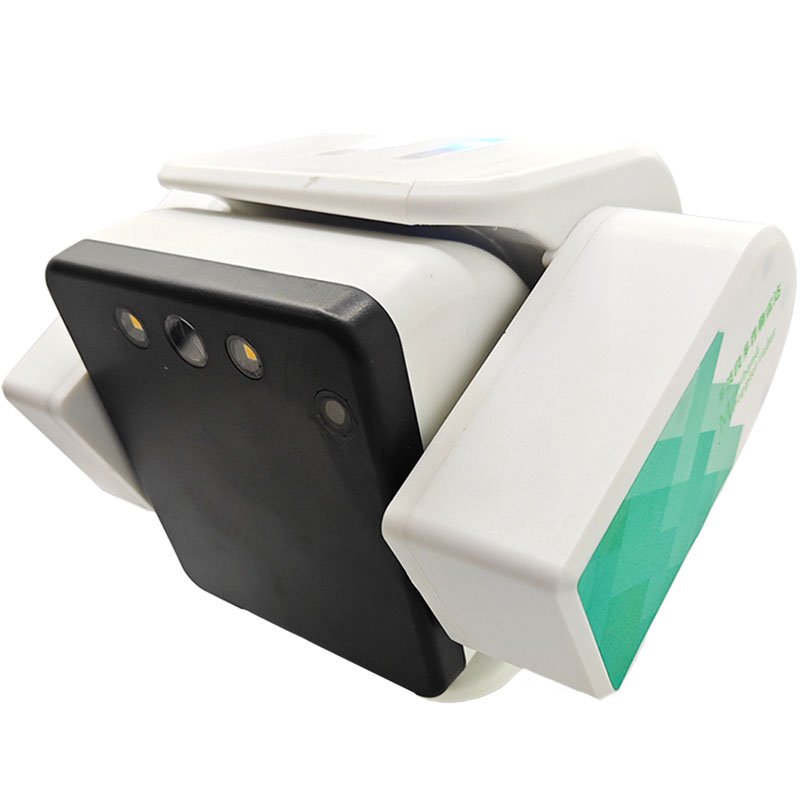
The Visual Flow Radar offers distinct advantages: non-contact installation, simultaneous level/velocity/flow/video capture, IP68 protection, and remote motorized angle adjustment. This makes it ideal for large-scale, dispersed outfall monitoring networks.
Installation, Calibration & Operation
Key Installation Principles for Outfalls
Install on the interior side of the outfall for stable flow conditions, avoiding external river turbulence. Choose a straight pipe section, at least 3 pipe diameters downstream from any bend. The mounting point must have adequate structural strength to withstand wind and vibration.
Typical methods include direct mounting on the outfall ceiling, overhead bracket mounting for circular pipes, and manhole installation for upstream network points. Anti-theft measures like tamper-proof bolts and tilt sensors are crucial for remote sites.
The Critical Role of Velocity Calibration
The most important commissioning step is calibrating the surface velocity coefficient (K). The radar measures surface velocity, but flow calculation requires mean cross-sectional velocity: V_mean = K × V_surface.
Field calibration using a portable flowmeter (e.g., ADCP) at multiple water levels is essential. This establishes a K-vs-level curve for adaptive correction, ensuring accurate long-term flow data for compliance reporting.
Remote Maintenance and Troubleshooting
The built-in motorized angle adjustment proved invaluable, allowing remote realignment without site visits. This feature alone saved an estimated 15 trips, reducing O&M costs significantly. Remote management via the RTU enables parameter updates, firmware upgrades, and live video inspection.
Data Application & System Benefits
Outfall Flow Pattern and Event Analysis
Data revealed distinct patterns: stable industrial flows, stormwater responses to rain, and CSO overflow events. Persistent dry-weather flow at a stormwater outfall indicated an illicit connection, enabling targeted remediation.
The integrated camera provides crucial visual evidence, such as capturing unauthorized milky-white discharges. Combining this with flow data quantifies the violation, providing solid evidence for environmental enforcement actions.
Integration with Regulatory Platforms
Data integrates seamlessly with environmental supervision platforms via API. This enables automated discharge volume statistics, early warnings for limit exceedances, and provides historical data and visual evidence for inspections, fulfilling the core "monitor" mandate.
Technical Specifications & Data Strategy
- Measurement Principle:
- Non-contact Doppler Radar
- Protection Rating:
- IP68
- Data Collection:
- Level & Velocity every 1 min
- Data Reporting:
- Flow data every 5 min / 1 hour
- Image Capture:
- 1/hour (increases on event)
- Flow Direction:
- Forward/Reverse detection
- Power:
- Solar + Battery or Mains
- Communication:
- 4G, SL651-2014 Protocol
Conclusion
River outfall monitoring is the final mile of water management. The Visual Flow Radar, with its non-contact operation, integrated video, and remote adjustment capabilities, provides a comprehensive, reliable, and practical solution. The successful deployment across 32 sites offers a replicable model for cities implementing outfall monitoring programs.
Get Your River Outfall Monitoring Solution
For expert support in visual flow radar deployment, equipment selection, or full system integration for discharge flow monitoring, contact our team.
Visit: www.cssoc.com
Service Hotline: 400-808-9114
Ecolor Technology (Hangzhou) | Situman Sensor Manufacturing | HuaYu ZhongNeng System Integration
Recommended Products
Ecolor Technology provides professional instruments for smart water, environmental monitoring & industrial automation: