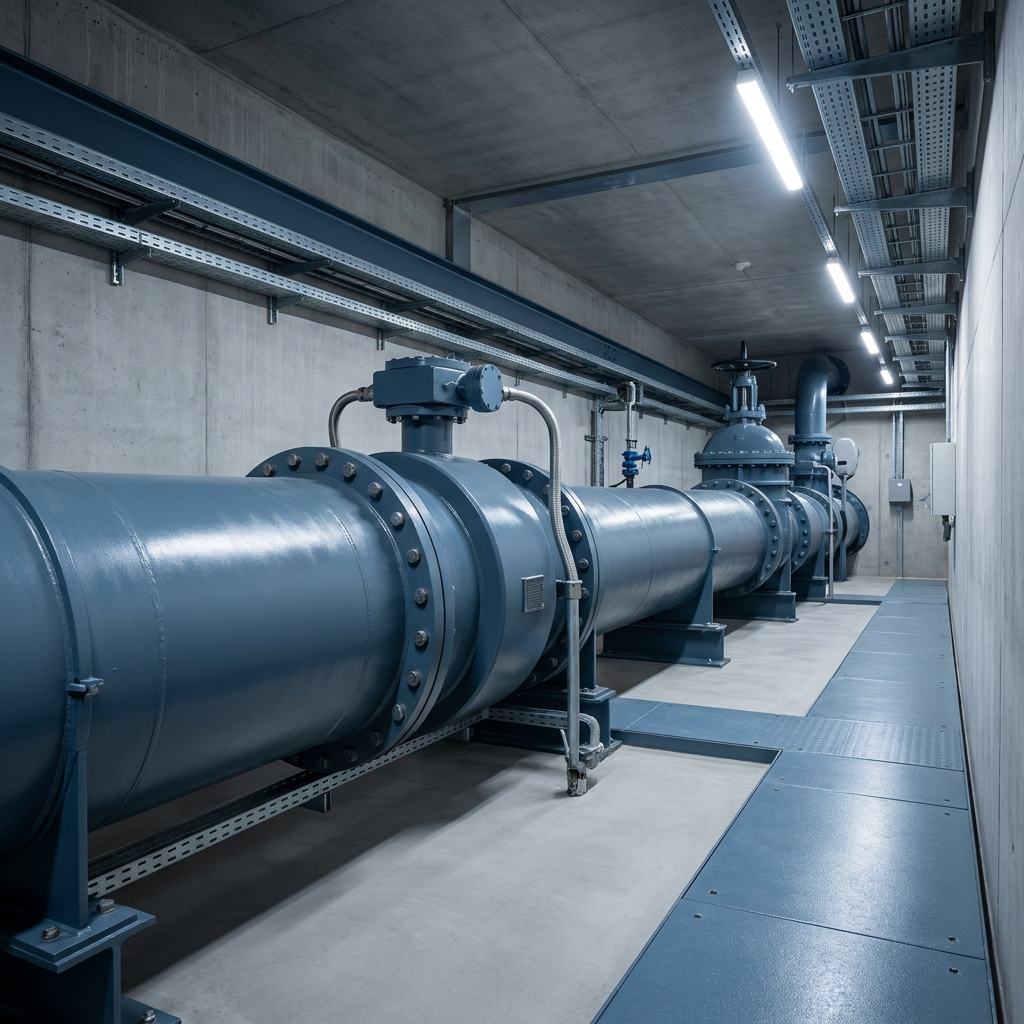
Large-Bore Electromagnetic Flowmeter Application Solution for Urban Raw Water Transmission
Targeting the large-bore, long-distance, high-reliability requirements of urban raw water transmission networks, providing DN300-DN3000 electromagnetic flowmeter selection, installation and O&M solutions to ensure water supply measurement accuracy and stability.
Overview
Summary
Targeting the large-bore, long-distance, high-reliability requirements of urban raw water transmission networks, providing DN300-DN3000 electromagnetic flowmeter selection, installation and O&M solutions to ensure water supply measurement accuracy and stability.
Solution Details
Urban Raw Water Transmission: The Critical Role of Large-Bore Electromagnetic Flowmeters
Urban raw water transmission is a critical link in the water supply system, involving long-distance water conveyance from water sources to water plants. Flow measurement for large-bore pipelines (DN300-DN3000) faces numerous challenges: large pipe diameters, uneven flow velocity distribution, limited installation space, and complex environmental conditions.
Core Challenges in Large-Bore Flow Measurement
- High Measurement Accuracy Requirements: Raw water transmission involves water resource scheduling and cost accounting. Measurement errors directly affect the economic benefits of water supply enterprises and water resource management.
- Complex Installation Conditions: Large-bore pipelines are often installed in underground galleries or open pipe piers, with limited space and difficulty meeting ideal upstream/downstream straight pipe requirements.
- Environmental Adaptability: Equipment must adapt to harsh environments including outdoor temperature/humidity variations, rain immersion, and electromagnetic interference.
- Long-term Stability: Water supply networks require 7×24 continuous operation. Equipment must have high reliability and low maintenance requirements.
Comprehensive Large-Bore Electromagnetic Flowmeter Solution
1. Large-Bore Electromagnetic Flowmeter Selection
Sensor Type: Choose integrated or remote-mount electromagnetic flowmeters based on installation environment. Remote-mount is recommended for underground galleries (transmitter installed in accessible location), while integrated type is recommended for open pipe piers.
Lining Material: Polyurethane or neoprene lining is recommended for raw water applications, offering wear and corrosion resistance. For high sand content water, select polyurethane lining (better wear resistance).
Electrode Material: 316L stainless steel electrodes are suitable for general raw water. For water with high chloride ion content (e.g., coastal areas), select Hastelloy or titanium electrodes.
Size Selection: Select based on actual pipe inner diameter to ensure full-pipe measurement. For old pipelines, measure the actual inner diameter (scaling may cause diameter reduction).
2. Installation Optimization for Large-Bore Pipelines
Straight Pipe Requirements: Upstream ≥10DN, downstream ≥5DN. If space is limited, use multi-electrode electromagnetic flowmeters (less sensitive to flow velocity distribution) or install flow conditioners.
Grounding Treatment: Grounding resistance for large-bore pipelines should be <10Ω. If the pipeline is non-metallic (e.g., PCCP pipe), install grounding rings or grounding electrodes.
Lightning Protection: Outdoor installations must be equipped with lightning arresters, especially in thunderstorm-prone areas.
3. Intelligent O&M for Electromagnetic Flowmeters
Self-Diagnostic Functions: Real-time monitoring of excitation current, electrode impedance, and signal strength, with automatic alarms for abnormalities.
Remote Monitoring: Supports 4-20mA/HART/RS485/wireless communication, integrating into SCADA systems for remote monitoring and data acquisition.
Periodic Verification: Annual on-site comparison verification is recommended (using clamp-on ultrasonic flowmeters) to ensure long-term measurement accuracy.
Technical Advantages of Large-Bore Electromagnetic Flowmeters
High Accuracy
±0.5%R, up to ±0.2%R
No Flow Obstruction
Zero pressure loss
Wide Rangeability
Up to 100:1 or more
Long-term Stability
Service life 10+ years
Typical Applications for Large-Bore Electromagnetic Flowmeters
- Flow measurement at raw water intake pump stations
- Flow monitoring in raw water transmission pipelines
- Water plant inlet measurement
- Regional water supply network dispatch measurement
Implementation Recommendations for Large-Bore Electromagnetic Flowmeter Solutions
- Selection Phase: Thoroughly understand pipe material, inner diameter, medium characteristics (sand content, chloride ion content), and installation environment.
- Installation Phase: Strictly follow the installation manual, paying special attention to grounding and lightning protection.
- O&M Phase: Establish regular inspection systems, monitor self-diagnostic information, and promptly handle abnormalities.
- Verification Cycle: Develop reasonable verification cycles based on water quality conditions and operating experience (generally 1-2 years).
? Reference Sources
- Industry standards for electromagnetic flowmeter installation and calibration
- Technical documentation from leading flowmeter manufacturers
- Case studies on urban water supply network optimization
❓ Related FAQs
Related Solutions
Split-Type Electromagnetic Flow Meter Solution for Pump Stations with High Humidity and Heavy Vibration
Inline Ultrasonic Flow Meter Solution for Pump Station Discharge Metering and Pump Efficiency Testing
Doppler Ultrasonic Flow Meter Solution for Flow Monitoring in Partially Filled Municipal Drainage Conduits

Ready to Optimize Your Business?
Contact us, and our professional team will provide customized solutions to help your business achieve digital transformation.
Get In Touch