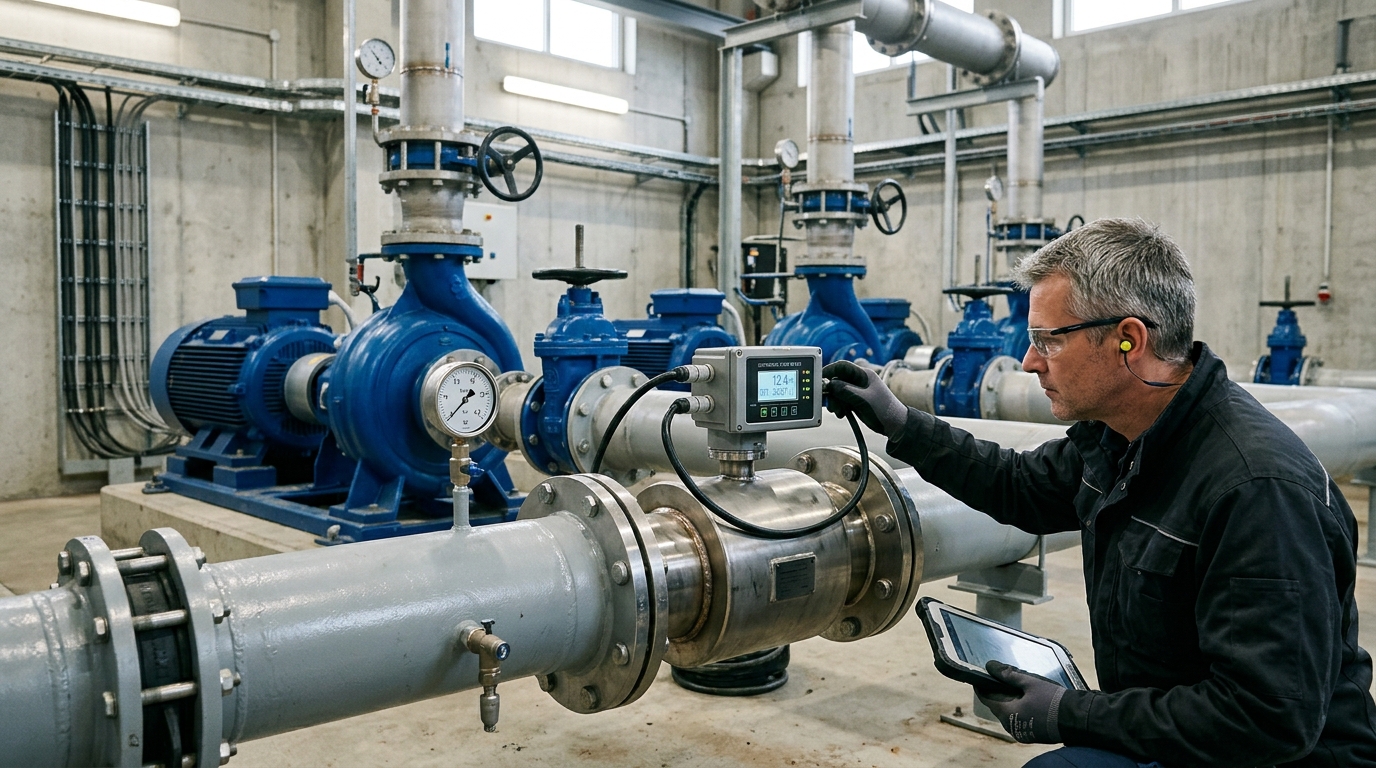
Inline Ultrasonic Flow Meter Solution for Pump Station Discharge Metering and Pump Efficiency Testing
Addressing pump station pain points - flow pulsation and pipe vibration that destabilize metering, throttle-based retrofits that waste energy, and efficiency testing without synchronized flow-pressure-power data - this solution is built around inline (spool-piece) ultrasonic flow meters: transit-time principle with multi-pulse digital signal processing, <=1% accuracy, 0 to +/-10 m/s bidirectional velocity, DN32-DN6000 sizes, no obstruction and no pressure loss, low starting flow. Three 4-20 mA inputs accept pressure transmitters and PT100 sensors; isolated RS485 Modbus connects straight to RTUs, delivering high-accuracy discharge metering plus automated pump performance curves, efficiency and specific-energy evaluation to quantify energy-saving retrofits and overhaul results.
Overview
Summary
Addressing pump station pain points - flow pulsation and pipe vibration that destabilize metering, throttle-based retrofits that waste energy, and efficiency testing without synchronized flow-pressure-power data - this solution is built around inline (spool-piece) ultrasonic flow meters: transit-time principle with multi-pulse digital signal processing, <=1% accuracy, 0 to +/-10 m/s bidirectional velocity, DN32-DN6000 sizes, no obstruction and no pressure loss, low starting flow. Three 4-20 mA inputs accept pressure transmitters and PT100 sensors; isolated RS485 Modbus connects straight to RTUs, delivering high-accuracy discharge metering plus automated pump performance curves, efficiency and specific-energy evaluation to quantify energy-saving retrofits and overhaul results.
Key Advantages
Challenges
- Pulsation and vibration destabilize metering: centrifugal pump outlets carry periodic flow pulsation and strong pipe vibration, accelerating bearing wear and drift in mechanical and turbine meters so data cannot support energy accounting
- Throttle-based metering retrofits raise station energy use: orifice and Venturi devices impose unrecoverable pressure loss - a permanent electricity surcharge - and require long straight runs that aging pump houses lack space for
- Clamp-on meters suffer unstable acoustic coupling: scale, corrosion and uneven linings on in-service old pipework degrade clamp-on acoustic coupling over time; data credibility collapses after the calibration window and re-verification is costly
- Efficiency testing lacks synchronized data: most stations have only pressure gauges and ammeters; flow, head and power cannot be time-aligned, performance curves cannot be drawn, and efficiency degradation or overhaul results are judged by experience alone
- Low-flow metering fails across wide turndown: multi-pump combinations and VFD control create very wide single-pump turndown; conventional meters with high starting flow lose accuracy sharply at low flow, distorting night-time small-flow periods
Results
- Pump station discharge is metered online at <=1% accuracy; wide turndown and low starting flow cover single-pump trimming, multi-pump combinations and VFD operation, ending night-time small-flow distortion
- No obstruction, no pressure loss and full-bore straight-pipe design make the metering retrofit energy-neutral; flange-in installation avoids major pipe cutting, shrinking shutdown windows to hours
- Synchronized flow, inlet/outlet pressure, temperature and power acquisition generates pump performance and efficiency curves automatically; degradation trends are quantified and pre/post-overhaul results are documented
- 0 to +/-10 m/s bidirectional measurement covers water hammer and siphon backflow events, which are recorded and alarmed, protecting metering data integrity
- RS485 Modbus + RTU networking enables unattended centralized monitoring with automatic specific-energy and pump-efficiency reports, providing a quantitative basis for energy-saving retrofits and tariff accounting
Solution Details
Why Pump Station Discharge Metering Fails — and How Inline Ultrasonic Flow Meters Solve It
Pump stations are the energy core of water supply, drainage and irrigation systems — pump efficiency directly determines specific energy consumption per unit of water. Yet discharge metering at in-service stations is widely missing or inaccurate: periodic flow pulsation and strong pipe vibration at centrifugal pump outlets accelerate bearing wear and reading drift in mechanical and turbine meters; orifice and Venturi devices meter reliably but impose permanent pressure loss — a year-round electricity surcharge — and demand long straight runs that aging pump houses cannot provide; clamp-on ultrasonic meters avoid cutting into pipes, but scale, corrosion and uneven linings on old pipework destabilize acoustic coupling, and data credibility collapses once the calibration window passes. More fundamentally, stations typically have only pressure gauges and ammeters: flow, head and power cannot be captured in time alignment, so pump performance curves cannot be drawn and efficiency degradation or post-overhaul recovery can only be judged by experience.
Pump Efficiency Testing Demands More From Flow Measurement
Pump efficiency testing raises the metering bar further. Per station test codes, efficiency equals useful power over shaft power, and useful power derives from flow and head (inlet-outlet pressure differential) — any measurement error is amplified into the efficiency result. Test conditions span single-pump trimming, multi-pump combinations and VFD speed control, requiring the flow meter to hold accuracy across a wide turndown with a sufficiently low starting flow, and to time-align with pressure and power data.
Integrated Inline Ultrasonic Flow Meter Design: Ready on Power-Up
This solution installs inline ultrasonic flow meters whose sensor and measuring spool are factory-integrated and calibrated: pi-type spools for DN15-32 and standard spools for DN40 and above, bolted between flanges and ready on power-up — no field sensor positioning, eliminating both the acoustic-coupling uncertainty of clamp-ons and the pressure loss of throttle devices. Measurement uses the ultrasonic transit-time principle with multi-pulse technology, digital signal processing and error correction, giving small zero drift, strong interference immunity and reliable long-term accuracy for pump station discharge metering.
Key Features of the Inline Ultrasonic Flow Meter Solution
- Integrated spool design, ready on power-up: host and spool-piece sensor are factory-calibrated as one unit; pi-type spools for DN15-32 and standard spools for DN40+, bolted between flanges with no field positioning or acoustic coupling tuning, intuitive data readout
- Transit-time multi-pulse digital measurement: ultrasonic transit-time principle with multi-pulse technology, digital signal processing and error correction — small zero drift, strong anti-interference, ≤1% accuracy
- Wide size, wide velocity, bidirectional: DN32-DN6000 pipe sizes, 0 to ±10 m/s forward/reverse velocity; for water, seawater, sewage, acid/alkali liquids, alcohols, oils — any homogeneous ultrasound-conducting liquid at -30 to 160 °C
- No pressure loss, low starting flow: obstruction-free full-bore flow path with no pressure loss and very low starting flow; compatible with steel, stainless steel, cast iron, copper, PVC, aluminum and GRP pipes
- Rich I/O forms an efficiency-test acquisition unit: three 4-20 mA inputs for pressure transmitters and three-wire PT100 RTDs (heat metering supported), one 4-20 mA output, one OCT pulse output, one relay output, SD-card logging of parameters and results
- Industrial protection and wide-range supply: IP68 sensor for humid pump houses, DC8-36 V or AC85-264 V supply, isolated RS485 with Modbus protocol connecting directly to RTU/SCADA
Technical Specifications at a Glance
≤1%
Accuracy
DN32–DN6000
Pipe Size Range
0 to ±10 m/s
Bidirectional Velocity
-30 to 160 °C
Liquid Temperature
IP68
Sensor Protection
DC8-36 V / AC85-264 V
Power Supply
Applications: Pump Station Discharge Metering and Efficiency Testing
The inline ultrasonic flow meter solution is built for in-service pump station discharge metering and pump efficiency testing. With no pressure loss and a full-bore obstruction-free path, it removes the permanent energy surcharge of throttle devices while its factory-integrated spool eliminates the acoustic-coupling uncertainty of clamp-on meters on aging pipework. Combined with three 4-20 mA pressure inputs, PT100 RTD channels and pulse/relay outputs, the meter forms a complete efficiency-test acquisition unit that captures flow, head and power in time alignment — enabling accurate pump performance curves, efficiency degradation tracking and post-overhaul recovery verification across single-pump, multi-pump and VFD speed-control conditions.
? 参考来源
- Product description and technical features provided by the manufacturer.
- Station test codes for pump efficiency testing (efficiency = useful power / shaft power).
Approach
How we implement intelligence into your infrastructure step by step.
Station survey and metering-point planning
Review pump models, rated flow and head, discharge pipe size and material, straight-run lengths, single-pump turndown and multi-pump combinations; fix installation position, meter size and pressure tap layout, and compile the efficiency-test condition list.
Spool installation and meter configuration
Bolt the inline meter between flanges on the pump discharge straight run (meeting 10D upstream / 5D downstream), install inlet/outlet pressure transmitters into the meter's 4-20 mA inputs; ready on power-up with no parameter setting, then configure acquisition and storage cycles per test code.
Efficiency-test system integration
Take power data from VFD or soft-starter energy modules and time-align it with meter data at the platform over RS485; build the head-flow-power computation model to auto-generate pump performance and efficiency curves.
Platform integration and energy assessment
Stream Modbus data via RTU/telemetry terminal to the station monitoring platform; output pump-set efficiency, degradation trend and specific-energy reports, compare against rated efficiency to assess in-service condition, and support retrofit and overhaul decisions.
O&M and periodic verification
Annually cross-check online against clamp-on ultrasonic meters or volumetric methods; inspect flange seals, grounding and signal cabling; accumulate metering data as the station energy archive baseline for tariff accounting and carbon management.
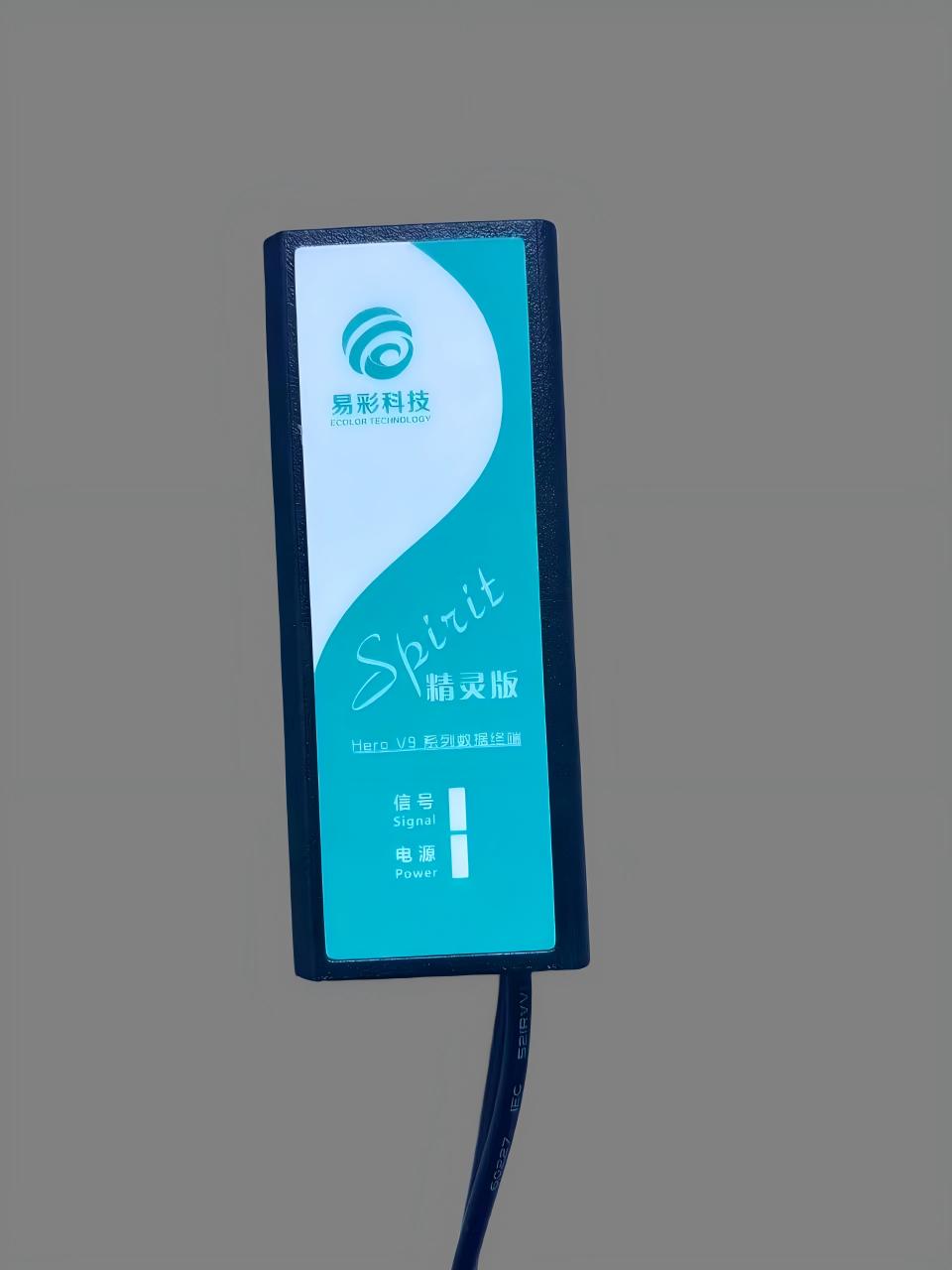
Recommended Hardware
Essential components for this solution.
❓ Related FAQs
Related Solutions
Split-Type Electromagnetic Flow Meter Solution for Pump Stations with High Humidity and Heavy Vibration
Doppler Ultrasonic Flow Meter Solution for Flow Monitoring in Partially Filled Municipal Drainage Conduits
Mechanical Water Meter Solution for Household Metering in Rural Centralized Water Supply Projects

Ready to Optimize Your Business?
Contact us, and our professional team will provide customized solutions to help your business achieve digital transformation.
Get In Touch