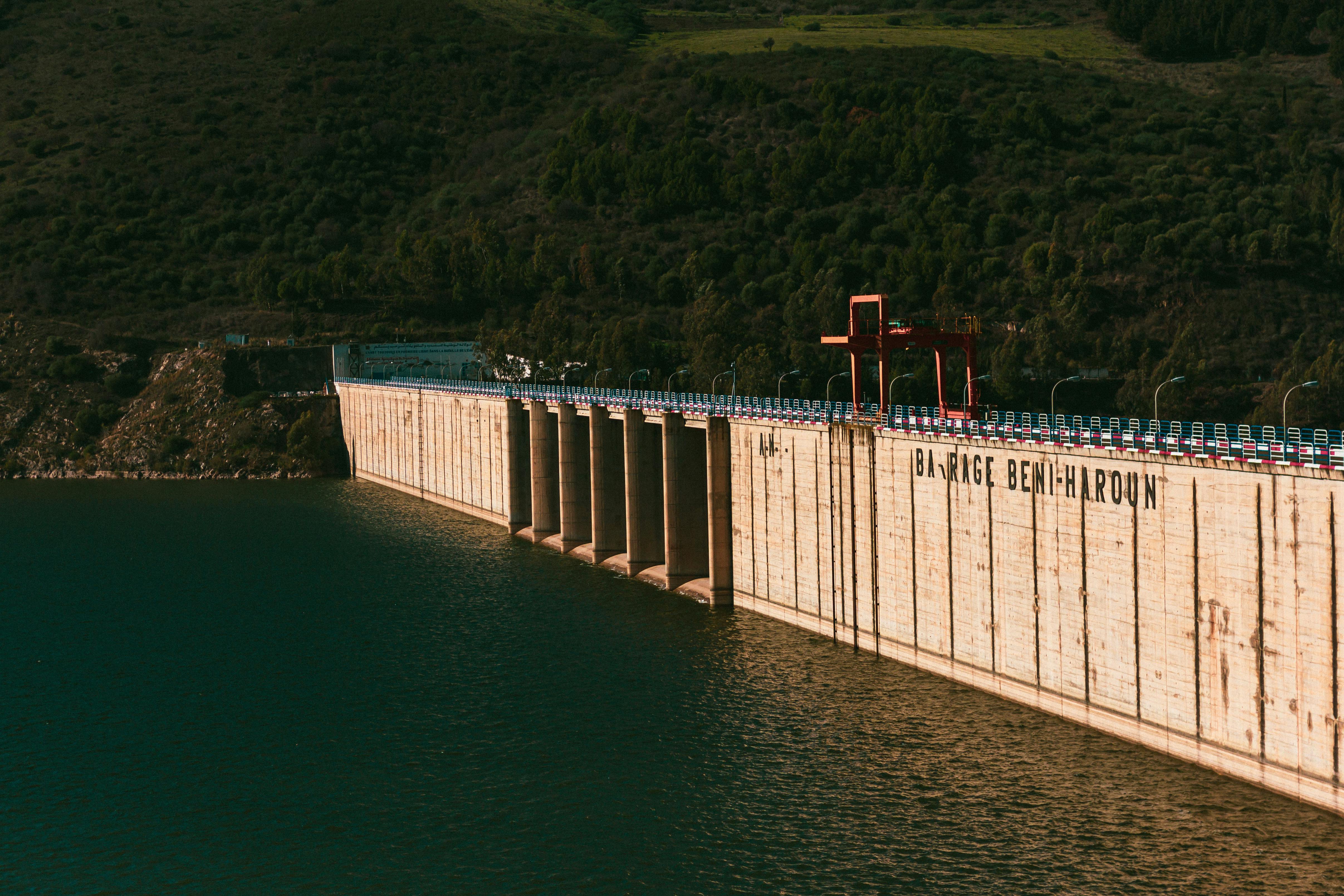
Reservoir Dam Safety Monitoring System Solution
The reservoir dam safety monitoring system, centered on IoT sensing technology, deploys intelligent sensing devices such as radar water level gauges, visual radar cameras, piezometers, and submersible level gauges across the dam body and reservoir area. It collects critical safety indicators—including reservoir water level, seepage flow, dam displacement, and rainfall—in real-time via RTU telemetry terminals. Data is transmitted through dual 4G/BeiDou communication links to the reservoir safety monitoring cloud platform, enabling comprehensive perception, intelligent early warning, and emergency response coordination for dam safety. This system provides technical support for the "four-prevention" (forecasting, warning, simulation, and contingency planning) framework in small and medium-sized reservoirs.
Overview
Summary
The reservoir dam safety monitoring system, centered on IoT sensing technology, deploys intelligent sensing devices such as radar water level gauges, visual radar cameras, piezometers, and submersible level gauges across the dam body and reservoir area. It collects critical safety indicators—including reservoir water level, seepage flow, dam displacement, and rainfall—in real-time via RTU telemetry terminals. Data is transmitted through dual 4G/BeiDou communication links to the reservoir safety monitoring cloud platform, enabling comprehensive perception, intelligent early warning, and emergency response coordination for dam safety. This system provides technical support for the "four-prevention" (forecasting, warning, simulation, and contingency planning) framework in small and medium-sized reservoirs.
Key Advantages
Challenges
- Among China's 98,000 reservoirs, small and medium-sized ones account for over 95%, most of which lack automated safety monitoring facilities and still rely on manual inspections.
- Manual inspections during heavy rain in the flood season are dangerous and untimely, making it impossible to achieve 24-hour uninterrupted monitoring.
- The development of hidden dangers such as seepage and displacement in dam structures is slow, making it difficult for manual observation at low frequencies to capture abnormal trends.
- Monitoring data is scattered across different paper-based ledgers, lacking a unified platform for comprehensive analysis and trend assessment.
Results
- A Small Reservoir Safety Monitoring Project in a Province: Radar water level gauges and RTU terminals were installed at 156 small (Type 2) reservoirs to achieve automatic monitoring of reservoir water levels and early warning for exceeding flood limits. The early warning response time during flood seasons was reduced from 4 hours to 15 minutes.
- Medium-sized Reservoir Dam Safety Monitoring Upgrade in a City: Deployment of Visual Radar Water Level Gauges + Seepage Pressure Monitoring + Video Surveillance. The system successfully detected an abnormal increase in seepage flow in the dam body, issuing an early warning 72 hours in advance to prevent a potential hazard.
- A County Mountain Reservoir Network Monitoring Project: 42 reservoirs are connected to a unified monitoring platform, allowing reservoir managers to view real-time water conditions of each reservoir via a mobile app, reducing inspection workload by 60%.
Solution Details
Reservoir Dam Safety Monitoring System Solution
The reservoir dam safety monitoring system solution, with radar water level gauges, visual radar cameras, and intelligent RTU telemetry terminals at its core, builds an automated monitoring network covering multiple elements such as reservoir water level, seepage, dam deformation, and hydrological conditions. It provides real-time, accurate, and reliable data support for the safe operation management and flood control scheduling of reservoirs, serving as a key infrastructure for the "Four Pre-" system construction in small and medium-sized reservoirs.
Construction Background for Dam Safety Monitoring
China currently has over 98,000 reservoirs of various types, with small and medium-sized reservoirs accounting for more than 95%. Most of these reservoirs were built in the 1950s-1970s, suffering from aging infrastructure and weak management, posing safety hazards often described as "a basin of water overhead." The Ministry of Water Resources has explicitly required achieving full coverage of rainfall and water condition monitoring and forecasting for large/medium reservoirs and key small reservoirs by the end of 2025, promoting the construction of "Four Pre-" capabilities.
Traditional reservoir management relies on manual inspections and observations by administrators. During flood seasons with heavy rain, personnel face difficulties in access, poor timeliness of observation data, and significant safety risks. There is an urgent need to build automated safety monitoring systems to realize a modern reservoir management model combining "human defense + technical defense."
System Architecture of the Monitoring Solution
- Perception Layer: Radar water level gauge, visual radar, piezometer, displacement meter, rain gauge, water quality sensors, etc.
- Collection & Transmission Layer: Hero V9 series RTU terminals, supporting 4G/Beidou dual-link transmission, solar self-powered
- Platform Layer: Reservoir safety monitoring cloud platform, data storage, intelligent analysis, GIS display, warning release
- Application Layer: Real-time monitoring dashboard, mobile APP, warning SMS, emergency plan linkage, dispatch decision support
Core Monitoring Modules for Dam Safety
Automatic Reservoir Water Level Monitoring
Install an 80GHz high-precision radar water level gauge on the upstream face of the dam for non-contact measurement of reservoir water level, with an accuracy of ±3mm, unaffected by wind waves, floating debris, or ice layers. The visual radar simultaneously provides real-time video footage of the dam front, with water level data overlaid on the video, achieving "visible water level." The system automatically compares levels against flood limit water level, design flood level, and check flood level, triggering tiered warnings upon exceedance.
Dam Seepage Monitoring
Install submersible level gauges in seepage observation wells downstream of the dam to monitor real-time changes in seepage pressure water levels at the dam foundation and within the dam body. The system uses a seepage pressure-reservoir water level correlation analysis model to automatically identify abnormal seepage, triggering alarms when the seepage gradient exceeds limits. Supports joint analysis of multi-point seepage pressure data, drawing seepage field contour maps to visually display the dam's seepage status.
Comprehensive Hydrological Monitoring
Integrates tipping bucket rain gauges, air temperature/pressure sensors to monitor rainfall and meteorological conditions in the reservoir area in real-time. Combined with upstream inflow forecasting models, predicts inflow for the next 6-24 hours. Provides full-chain forecast data of "rainfall-runoff-inflow-reservoir water level" for reservoir scheduling.
Video Surveillance & AI Recognition
The visual radar water level gauge has a built-in high-definition camera (2MP or above), providing 24/7 real-time monitoring of key areas like the dam surface, spillway, and water release facilities. Supports AI image analysis, automatically identifying abnormal events such as dam surface cracks, landslide signs, illegal fishing/swimming, etc.
Recommended Product Configuration for Dam Monitoring
Monitoring Item
Reservoir Water Level
Recommended Product
Visual Radar Water Level Gauge
Technical Features
Radar + HD camera, non-contact, ±3mm accuracy
Monitoring Item
Auxiliary Water Level
Recommended Product
Radar Level Meter
Technical Features
26G/80G, suitable for downstream river water level monitoring
Monitoring Item
Seepage Pressure Monitoring
Recommended Product
Submersible Level Gauge
Technical Features
Stainless steel probe, range 0-200m, accuracy ±0.1%FS
Monitoring Item
Data Acquisition
Recommended Product
Hero V9 RTU (EC32 Hydrology Edition)
Technical Features
Hydrology-specific, supports SL651 protocol, Beidou + 4G dual-link
Monitoring Item
Remote Reservoirs
Recommended Product
Micro-power Self-powered RTU
Technical Features
Solar + lithium battery, continuous operation for 3+ years in environments without external power
Key Advantages of the Reservoir Safety Monitoring Solution
- ✓ "Visible" Reservoir: Visual radar integrates water level data with real-time video, ending "blind management and blind measurement"
- ✓ All-weather Automatic Operation: Solar self-powered + Beidou transmission, enabling continuous monitoring even in mountainous areas without power or network
- ✓ Intelligent Warning: Multi-parameter joint analysis, automatic tiered alarms for abnormal seepage and water level exceedance
- ✓ Rapid Deployment: Non-contact installation, no need for reservoir shutdown during construction, deployment for a single reservoir can be completed in 1-2 days
Product Features of the Dam Monitoring System
- Non-contact Reservoir Water Level Monitoring: 80GHz High-Precision Radar Water Level Gauge, Measurement Accuracy ±3mm, Unaffected by Wind Waves and Floating Debris, Long Maintenance-Free Cycle.
- Visualized Real-Time Condition Monitoring: Radar + HD Camera Integrated Device, Water Level Data Overlaid on Live Video Feed, Truly Achieving "Visible and Measurable"
- Intelligent Analysis of Dam Seepage: Submersible level gauges monitor water levels in seepage pressure wells behind the dam, combined with reservoir water level data for inverse analysis of seepage flow, with automatic alarms for abnormal seepage.
- BeiDou + 4G Dual-Link Transmission: In remote mountainous reservoir areas, BeiDou satellite short message transmission is prioritized, with dual-link mutual backup in 4G-covered regions to ensure uninterrupted data transmission during flood seasons.
- Solar Self-Powered System: Micro-power RTU terminal paired with solar panels and lithium batteries, requiring no external power supply, suitable for electricity-deprived mountainous areas.
- "Four Pre" System Integration: Forecast (Inflow Prediction), Warning (Exceedance Alert), Pre-simulation (Reservoir Operation Simulation), Pre-plan (Emergency Response Coordination)
Approach
How we implement intelligence into your infrastructure step by step.
Dam Safety Assessment & Design
Comprehensive assessment of dam structure, seepage, and deformation; develop automated monitoring plan per regulatory standards
Sensor Installation & Data Acquisition
Install level sensors, piezometers, and displacement sensors at critical dam sections; enable automated collection via RTU
Safety Monitoring Platform & Alerts
Deploy dam safety management platform with data visualization, trend analysis, and multi-level safety warning capabilities
Emergency Management & Long-term O&M
Establish enhanced flood-season monitoring and emergency response plans for long-term system reliability

Ready to Optimize Your Business?
Contact us, and our professional team will provide customized solutions to help your business achieve digital transformation.
Get In Touch