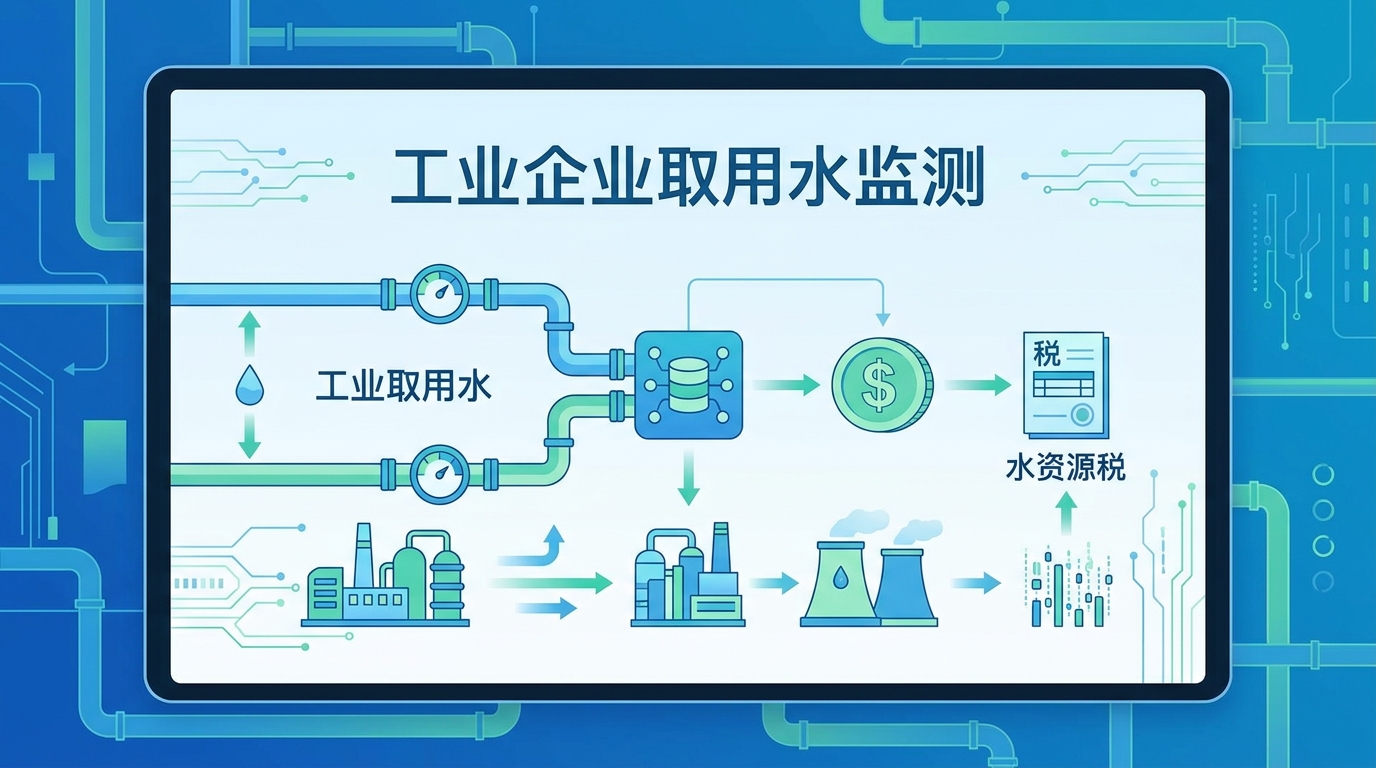
Industrial Enterprise Water Intake & Usage Monitoring: Latest Technology Advances in Smart Water Conservancy
Industrial enterprise water intake and usage monitoring has entered a new era driven by China’s water resource tax reform and rapid advancements in smart water conservancy technologies. Electromagnetic flowmeters now serve as the foundational data engine—delivering high-precision, tamper-proof, real-time measurement for regulatory compliance, cost optimization, and sustainable production.
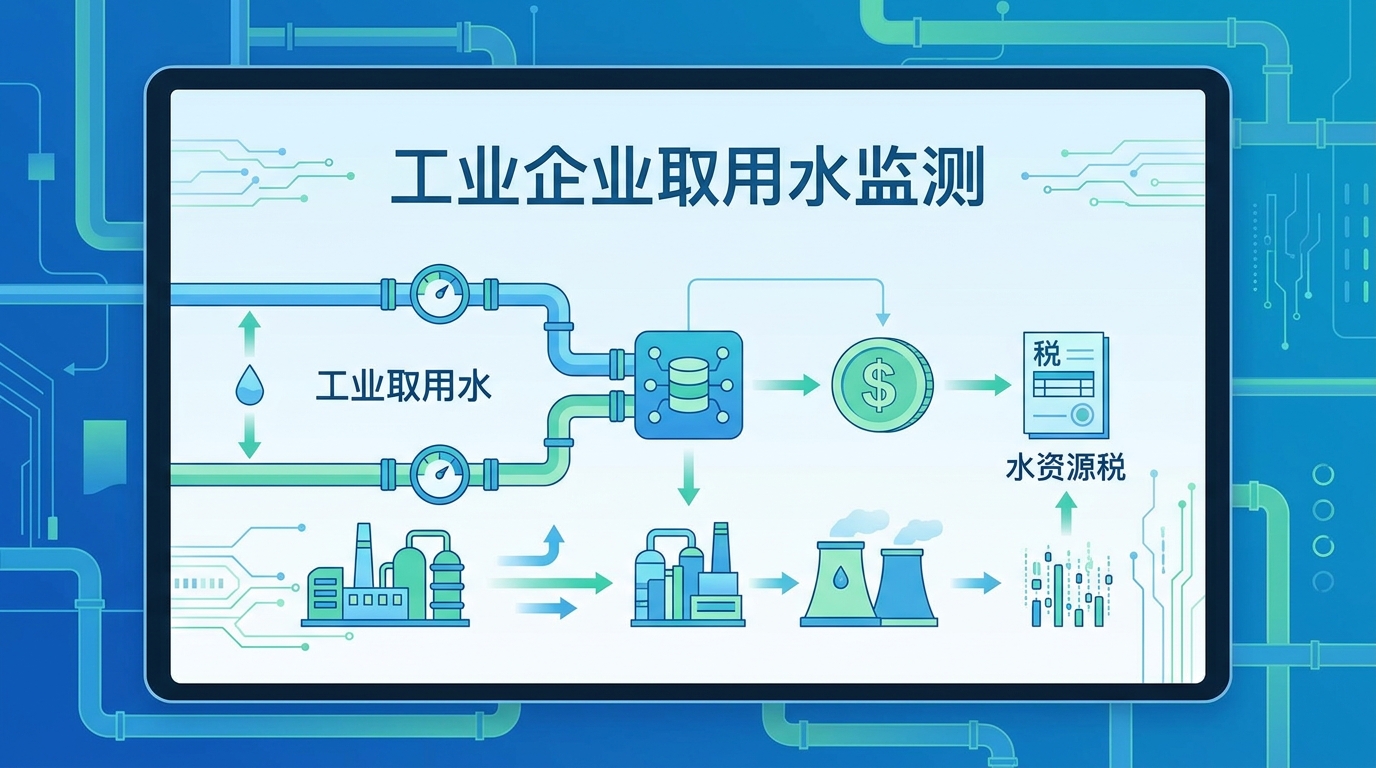
Water Resource Tax Reform Reshapes Industrial Water Metering Standards
The nationwide rollout of water resource tax reform shifts China’s water governance from administrative fees to market-oriented, rule-of-law-based taxation—where “taxation by volume” makes metering accuracy non-negotiable.
Legacy methods—manual estimates, empirical calculations, or outdated mechanical meters—no longer meet legal requirements. Measurement errors now carry direct financial and compliance risks.
Regulatory mandates now require anti-interference, tamper-proof, remotely transmitted data—transforming intelligent industrial water intake and usage monitoring from optional to mandatory infrastructure.
Electromagnetic Flowmeters: Technical Core of Industrial Water Monitoring
Based on Faraday’s law of electromagnetic induction, electromagnetic flowmeters measure conductive liquids—including raw water, circulating cooling water, and wastewater—without internal obstructions. This non-contact principle eliminates pressure loss and mechanical wear, ensuring long-term stability and energy efficiency.
Modern high-end models achieve ±0.2% measurement accuracy—even under challenging conditions like high silt content, air bubbles, or fluctuating flow profiles—thanks to dual-frequency excitation and advanced digital signal processing.
Accuracy
±0.2% of reading (typical)
Durability
No moving parts; >15-year service life
Robustness
Dual-frequency excitation + adaptive noise filtering
Deep Alignment with Diverse Industrial Application Scenarios
From source water intake to process circulation and end-of-pipe discharge, electromagnetic flowmeters adapt across critical stages—supporting metallurgy, chemical, papermaking, and textile industries with application-specific configurations.
At raw water intakes (surface or groundwater), large-bore meters handle high-silt flows while feeding verified data directly into provincial water affairs and tax cloud platforms via Modbus TCP or NB-IoT.
In internal cooling loops, strategically placed meters enable real-time recycling rate analytics and dynamic process tuning—reducing water consumption per ton of product and supporting green manufacturing KPIs.
Smart Water Conservancy Trends: IoT Integration & Edge Intelligence
Industrial water intake and usage monitoring is rapidly evolving beyond basic metering—toward intelligent, networked, and self-aware systems powered by next-generation IoT and edge computing.
Wireless connectivity (NB-IoT, LTE-M, 5G) replaces costly wired infrastructure—enabling millisecond-latency cloud uploads from remote pump stations, mountainous reservoirs, or offshore facilities.
Embedded AI algorithms now perform real-time self-diagnosis: detecting electrode fouling, empty-pipe conditions, or coil impedance drift—shifting maintenance from reactive to predictive and reducing downtime by up to 40%.
Ultra-low-power designs—paired with lithium-thionyl chloride batteries or solar hybrid power—extend deployment flexibility into off-grid locations, dramatically expanding coverage of industrial water monitoring networks.
Conclusion: From Compliance Driver to Strategic Enabler
Water resource tax reform is more than a regulatory mandate—it’s a catalyst accelerating the digital transformation of industrial water management. Electromagnetic flowmeters provide the trusted, auditable data foundation required for national water scheduling, tax administration, and environmental reporting. Simultaneously, they empower enterprises with granular visibility into water use intensity, leakage hotspots, and process inefficiencies—turning water monitoring into a strategic lever for green, low-carbon, and lean operations. As sensing intelligence and industrial IoT converge, smart water conservancy is no longer aspirational—it’s operational reality.

