Latest Technology Advances in 智慧水利 for High-Standard Farmland
In the sweeping transformation toward agricultural modernization, water resources management is the lifeline of agriculture. At the heart of this initiative lies "irrigation district informationization," functioning as the central nervous system of high-standard farmland development. This article provides a rigorous examination of the current technological landscape, real-world applications, and forward-looking trends shaping the informationization of irrigation districts in China's high-standard farmland program.
Multi-Dimensional Sensing in Modern Irrigation District Informationization
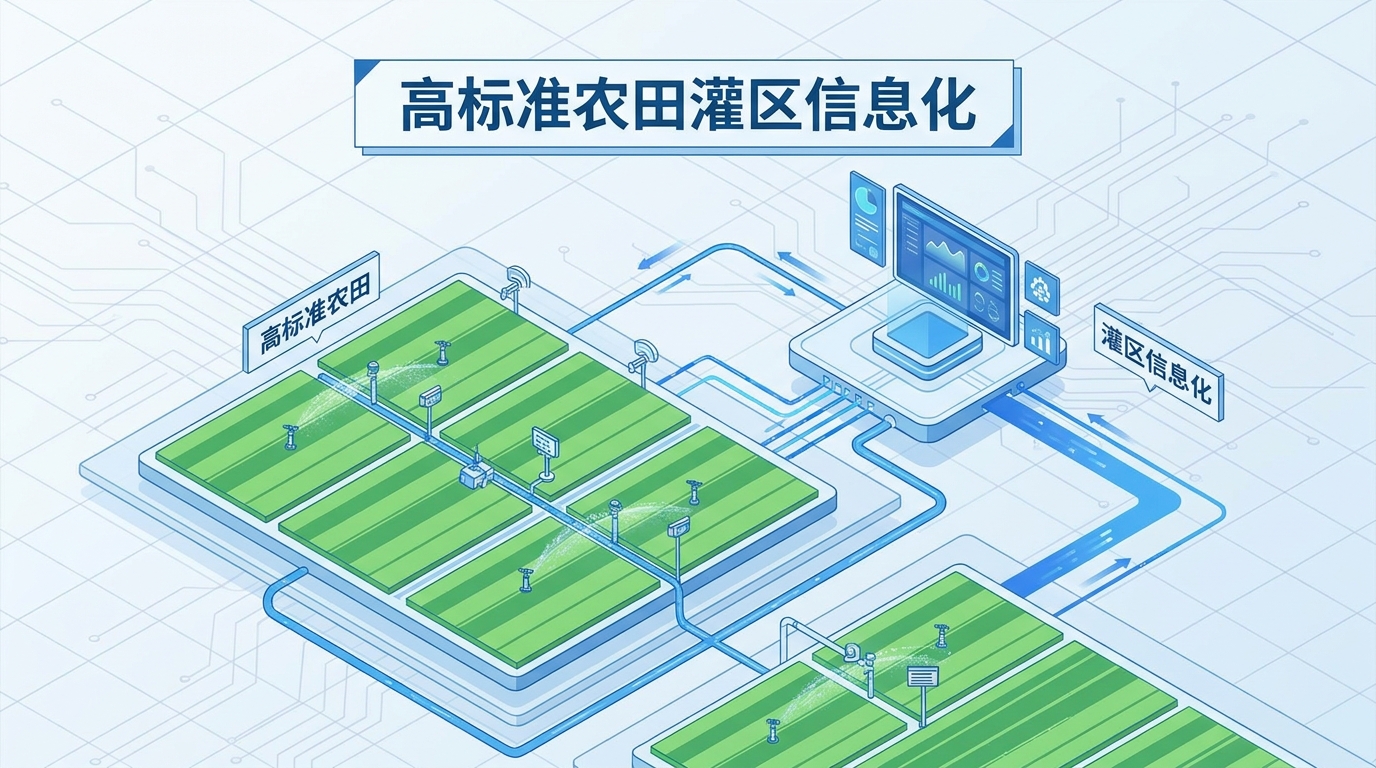
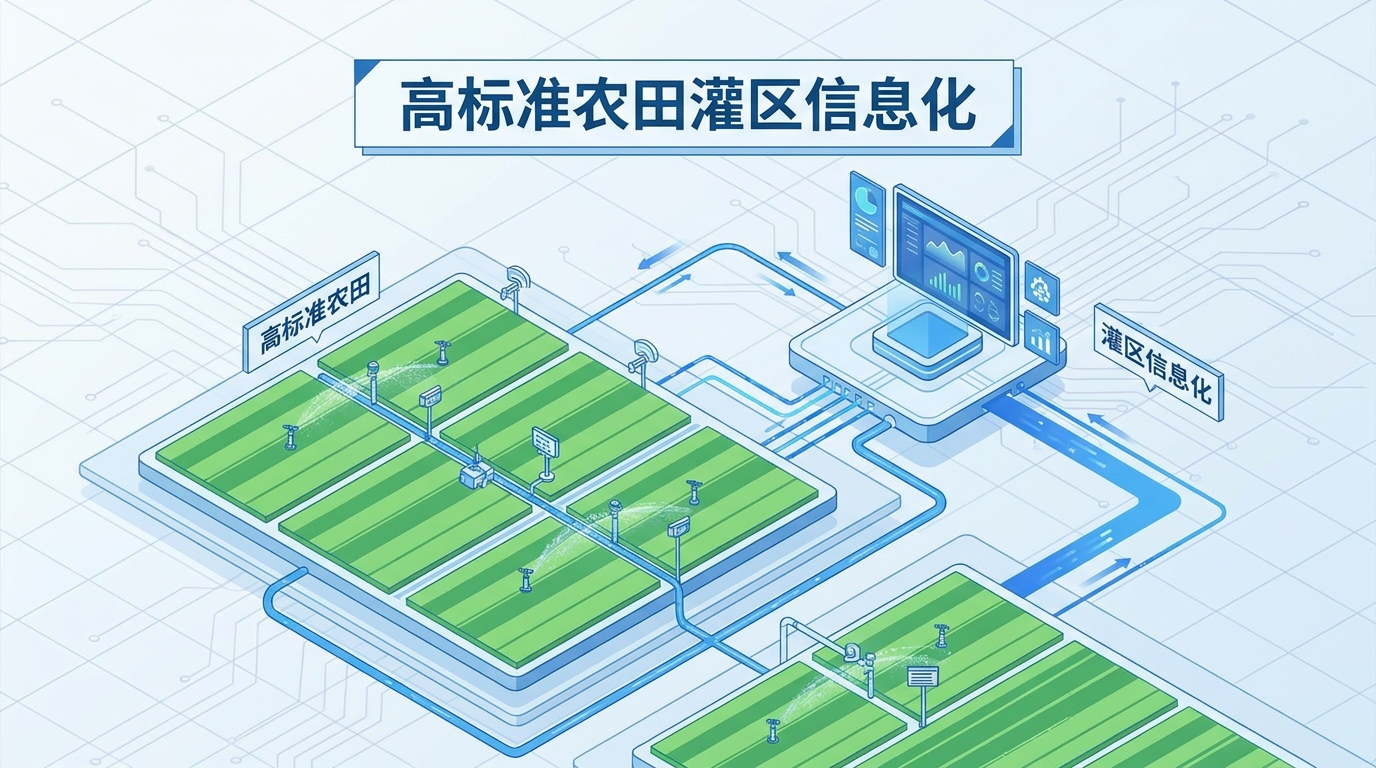
Irrigation district informationization has evolved beyond isolated monitoring into an integrated ecosystem powered by the convergence of IoT, big data, cloud computing, and geospatial technologies. At the foundational sensing layer, IoT-enabled hydrological, water quality, meteorological, and soil moisture monitoring networks are now operationally mature.
High-precision ultrasonic water-level sensors, radar-based flow meters, and multi-depth soil moisture probes are widely deployed across main and branch canals. These devices form a 24/7, all-weather data acquisition infrastructure essential for smart water management.
Seamless Data Integration via 5G and Cloud Platforms
The widespread adoption of 5G, NB-IoT, and LoRa wireless communication technologies has effectively eliminated the "data silos" long associated with remote rural areas. This connectivity bridges the final kilometer gap, ensuring reliable transmission from field sensors to central servers.
Cloud-based platforms now aggregate massive volumes of heterogeneous agricultural and hydraulic data. Through centralized irrigation district big data centers, raw data undergoes rigorous cleaning, fusion, mining, and analytics to deliver robust computational power.
Sensing Layer
Ultrasonic sensors, radar flow meters, soil moisture probes (24/7 monitoring).
Transmission Layer
5G, NB-IoT, LoRa networks eliminating rural data gaps.
Processing Layer
Cloud aggregation, data cleaning, and AI-driven analytics.
Application Layer
Precision scheduling, automated control, and water rights management.
Core Application Scenarios: Precision Water Allocation
Historically reliant on manual judgment, traditional water distribution was often inefficient. Today's information systems integrate satellite-derived crop mapping, real-time weather forecasts, and historical evapotranspiration data to build dynamic supply–demand models.
These systems automatically generate scientifically grounded water allocation plans, shifting practice from reactive "water-on-demand" to proactive, spatially and temporally precise "water-by-prescription."
Automated Pump-Gate Control and Intelligent Irrigation
By fusing real-time soil moisture data with crop growth stage models, systems autonomously assess plant water stress levels. They trigger remote actuation of pumping stations and integrated measurement-and-control gates to ensure optimal hydration timing.
This automation slashes labor-intensive inspection costs while maximizing yield potential and minimizing physiological stress on crops.
Water-Saving Metrics and Micro-Irrigation Efficiency
Information platforms enable real-time flow monitoring across canal tiers and precise volumetric water metering at farm-level outlets. This supports granular water rights allocation and end-user billing, creating transparent accountability.
When combined with advanced micro-irrigation technologies like drip and micro-sprinkler systems, the platform eliminates wasteful flood irrigation. Effective utilization coefficients often exceed 0.55 in pilot districts, surpassing the national average of ~0.53.
Future Trajectories: Digital Twins in Smart Irrigation
Comprehensive deployment of "digital twin" irrigation districts is poised to become the cornerstone of next-generation infrastructure. By creating a full-fidelity, real-time digital replica, the virtual twin enables dynamic simulation of water flow propagation and drought/flood scenario forecasting.
Decision-makers can test interventions in cyberspace before deploying them in the physical world, transitioning from reactive crisis response to proactive planning.
AI-Driven Autonomous Decision Making
As data volume matures into actionable intelligence, machine learning algorithms will increasingly govern predictive analytics. Systems will forecast crop water demand under climate volatility and detect early faults in electromechanical equipment.
Next-generation intelligent irrigation systems will feature adaptive learning capabilities, dynamically adjusting schedules based on agronomic parameters, market price signals, and regional water scarcity indices.
Standardized Interoperability and Cybersecurity Frameworks
With exponential growth in connected devices, cross-vendor interoperability has become non-negotiable. National standards for data interfaces and device ontologies are being formalized to ensure seamless integration.
Concurrently, cybersecurity requirements are escalating as infrastructure assumes critical status. Blockchain-based architectures are emerging for tamper-proof water rights ledgering and secure peer-to-peer water trading.
Conclusion: A Paradigm Shift in Agricultural Water Governance
Irrigation district informationization in high-standard farmland projects transcends hardware upgrades—it represents a paradigm shift in agricultural production philosophy. From intelligent sensing to precision scheduling, cutting-edge ICT is delivering measurable impact across China's agricultural water sector.
As innovation accelerates, tomorrow's irrigation districts will be smarter, more resilient, and inherently sustainable—serving as an unshakeable technological pillar for national food security.

