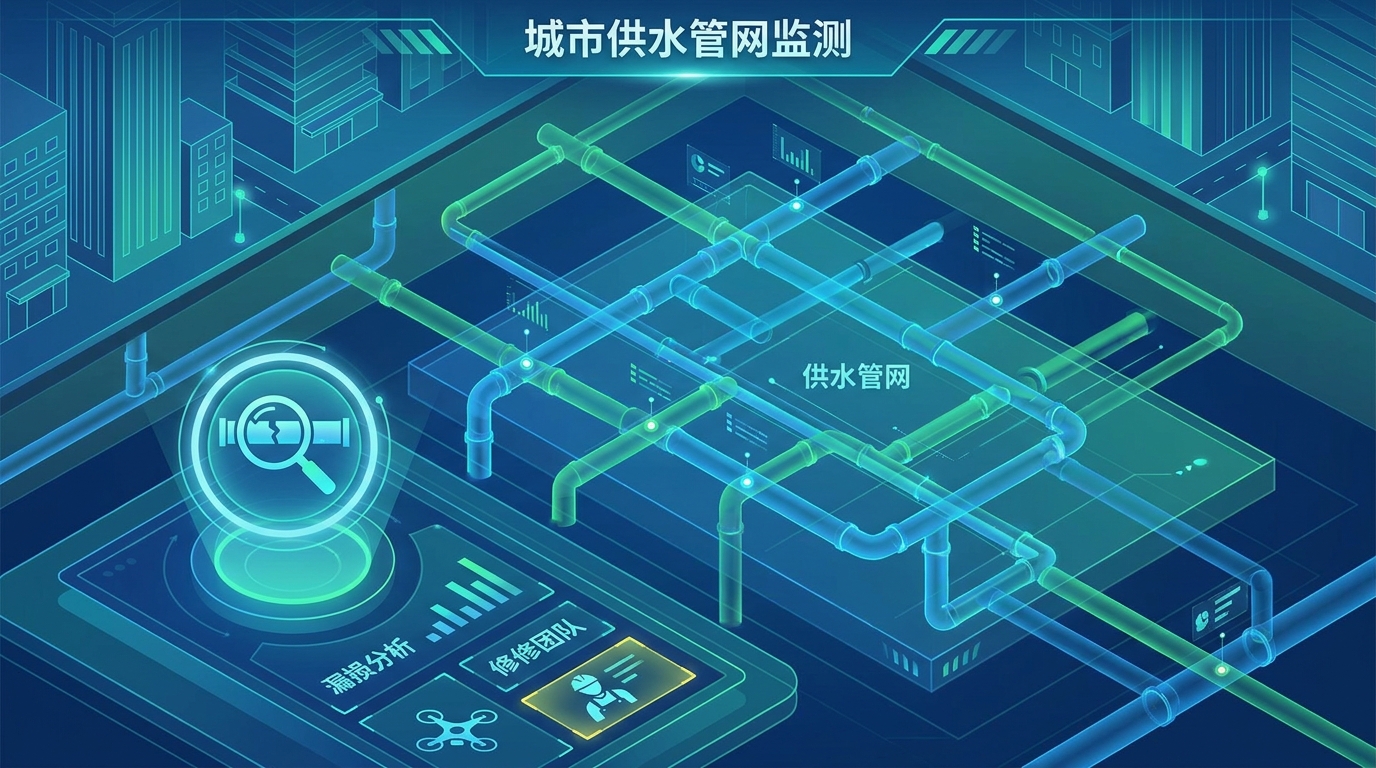
Urban Water Distribution Network Monitoring: Latest Technology Advances in Smart City Infrastructure
Urban water distribution network monitoring is transforming from reactive maintenance to AI-driven, real-time intelligent management — enabling cities to reduce non-revenue water, prevent pipe bursts, and build climate-resilient infrastructure.
Current Status: From Reactive Repair to Active Perception
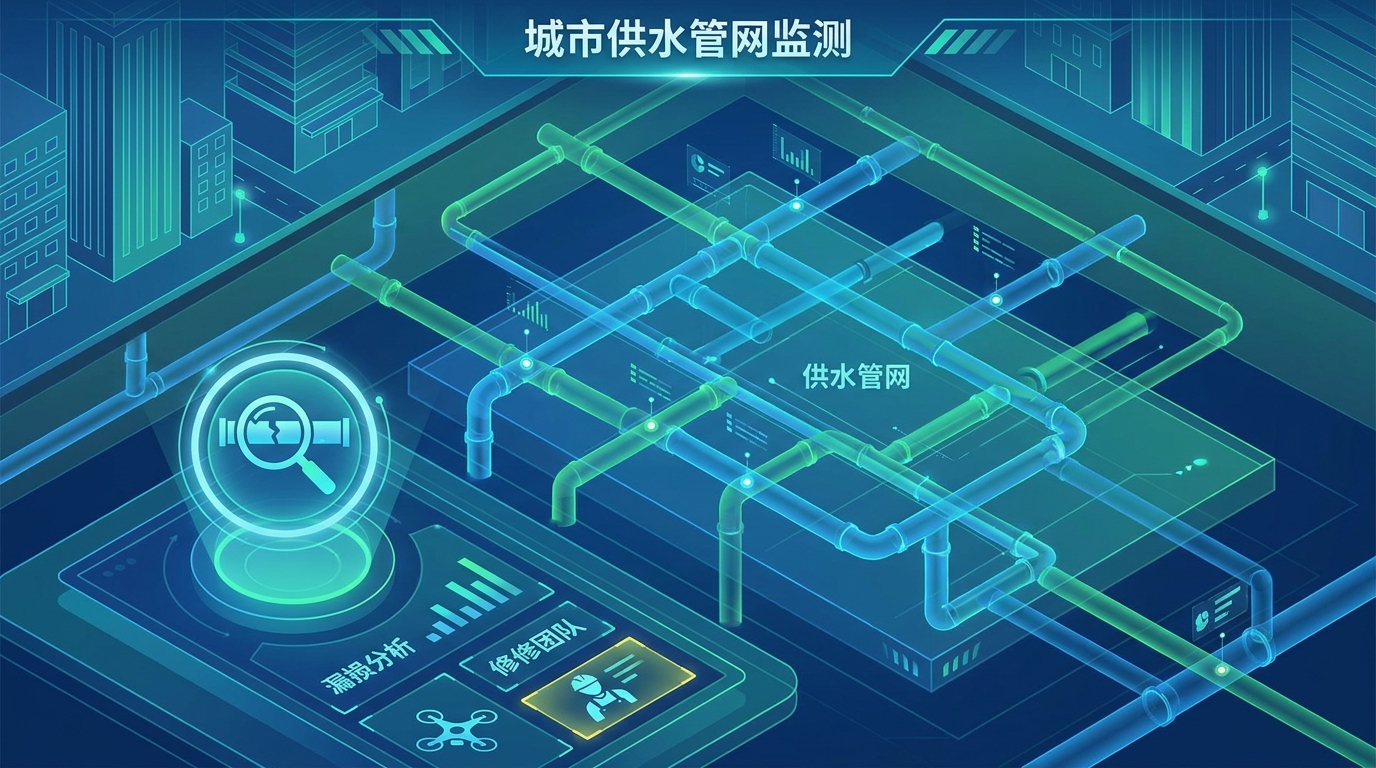
Traditional urban water network management relied on manual inspections and post-failure repairs — an inefficient, high-risk approach unable to detect hidden leaks. Today, IoT-enabled active perception has redefined urban water distribution network monitoring, shifting operations toward data-driven precision.
Two foundational technologies now dominate the field: District Metered Areas (DMA) and intelligent pressure management. Together, they form the backbone of modern leakage control, enabling granular visibility, rapid diagnostics, and proactive intervention across complex underground infrastructure.
District Metered Areas (DMA): The Global Gold Standard for Leakage Control
DMA divides sprawling urban water networks into smaller, hydrologically isolated zones using valves and flow meters. Real-time inflow/outflow tracking allows precise calculation of Non-Revenue Water (NRW), Minimum Night Flow (MNF), and zone-specific leakage rates — turning vague suspicions into actionable intelligence.
By isolating anomalies to specific DMAs, utilities dramatically narrow investigation scope and accelerate repair cycles. This grid-based methodology is especially critical in aging cities where legacy maps are outdated and pipe conditions are unknown.
Network Pressure Monitoring: Reducing Leakage at Its Source
Hydraulic physics confirms a strong correlation between pipe pressure and leakage volume. Excessive or fluctuating pressure accelerates pipe fatigue, increases background leakage, and raises burst risk — making pressure optimization a cornerstone of urban water distribution network monitoring.
High-precision pressure sensors deployed at strategic nodes — combined with automated Pressure Reducing Valves (PRVs) — enable dynamic pressure regulation. This “pressure flattening” strategy maintains service-level pressure while minimizing stress on aging infrastructure — delivering immediate, measurable NRW reduction.
Leakage Analysis: From Threshold Alerts to Multidimensional Intelligence
Modern urban water distribution network monitoring goes beyond raw data collection — it fuses flow, pressure, pipe age, material type, soil conductivity, and weather data into unified hydraulic models. Advanced algorithms filter out normal usage spikes to isolate true leakage signatures.
In practice, this enables hotspot prioritization in historic districts lacking as-built drawings — and seamless integration into smart city master plans, where sensor networks feed directly into integrated operations centers for full-lifecycle water asset management.
Future Trends: Digital Twins, AI Predictive Maintenance & Edge Intelligence
Next-generation urban water distribution network monitoring systems converge three transformative forces: Digital Twin virtual replicas for immersive simulation and emergency preparedness; AI-powered pattern recognition that predicts pipe fatigue from micro-pressure transients; and low-power, edge-computing sensors that preprocess data underground — reducing latency and extending battery life.
Digital Twin Integration
1:1 virtual mapping with live sensor feeds, hydraulic simulation, and scenario-based contingency planning.
AI-Powered Predictive Analytics
Time-series learning of consumption patterns + transient flow analysis for early failure forecasting.
Intelligent Edge Sensing
Miniaturized, ultra-low-power terminals with onboard feature extraction and adaptive sampling.
Conclusion: Toward Resilient, Water-Smart Cities
Urban water distribution network monitoring is no longer just about leak detection — it’s a systemic enabler of sustainability, resilience, and operational excellence. As DMA deployment deepens, pressure management matures, and AI analytics grow more precise, cities gain unprecedented control over their most vital infrastructure.
The convergence of IoT, hydraulics, big data, and artificial intelligence is forging a new paradigm: one where water networks self-diagnose, anticipate failure, and optimize resource use in real time — laying the foundation for water-conserving societies and truly intelligent urban ecosystems.

