Latest Technology Advances in Low-Carbon Smart Park Energy Management
As the global energy transition accelerates, Smart Park Energy Management systems are evolving from basic data collection to intelligent, AI-driven platforms essential for China's "Dual Carbon" goals. By leveraging Industrial Internet of Things (IIoT) and advanced analytics, modern solutions enable industrial parks to achieve deep energy efficiency optimization, transforming them into hubs of green transformation and digitalization.
Technological Evolution: From Data Collection to Global Coordination
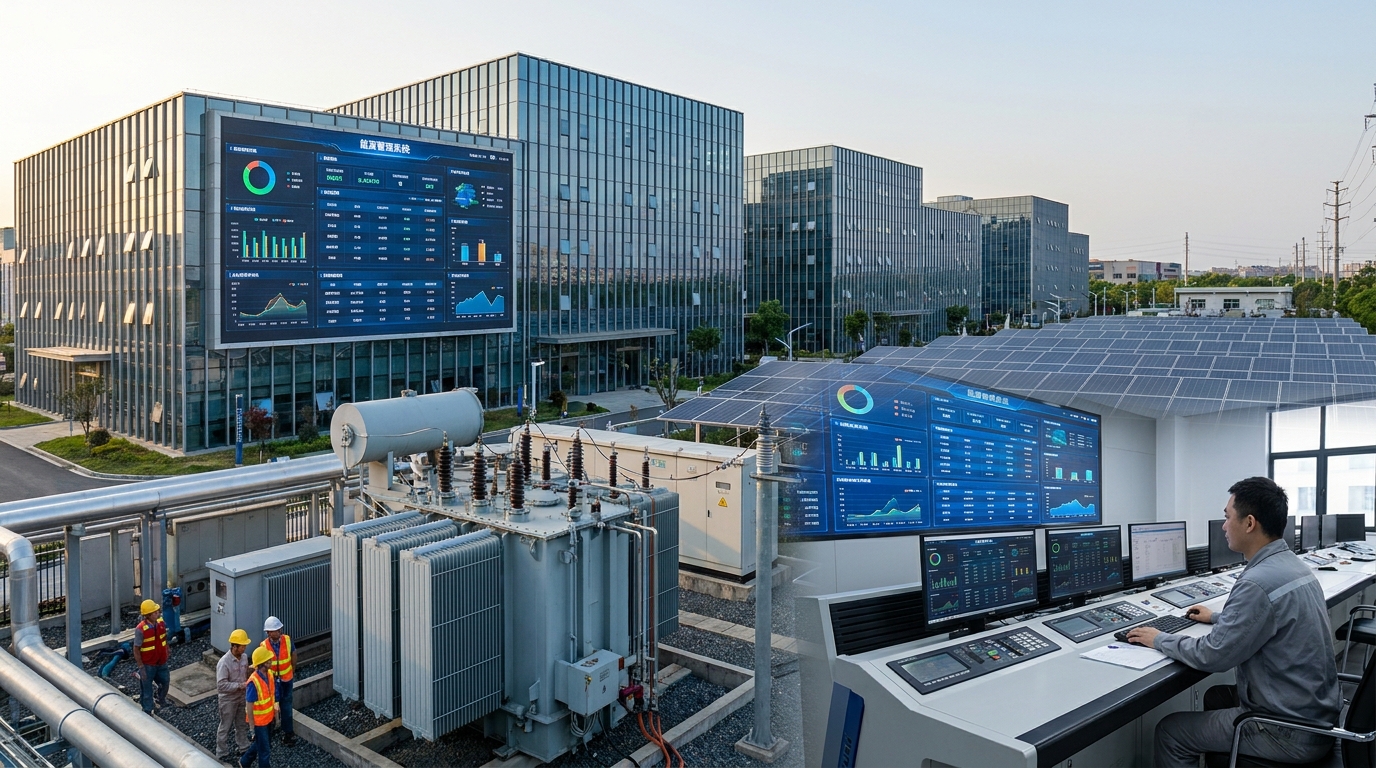
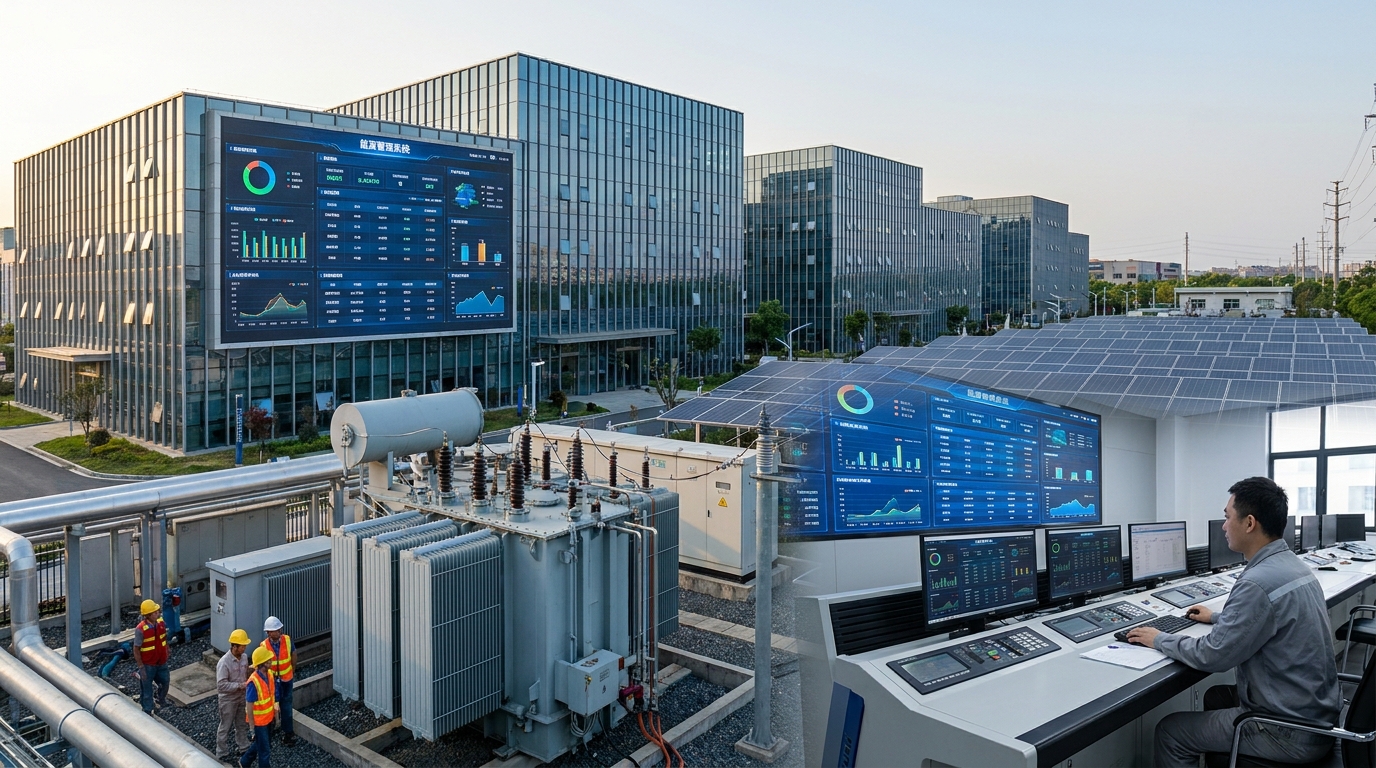
The technical architecture of Energy Management Systems (EMS) in smart parks has matured significantly, moving beyond simple meter reading statistics to comprehensive operational intelligence. Widespread adoption of Industrial Internet of Things (IIoT) technologies now enables minute-by-minute perception of electricity, water, gas, and heating sources across the entire facility.
Modern EMS platforms integrate edge computing with big data processing, achieving millisecond-level responses for real-time monitoring and anomaly alarms. By deploying intelligent edge nodes locally and hosting historical analysis on cloud backends, these systems focus on cross-analysis of building structures and dynamic load variations to drive substantive energy efficiency optimization.
HVAC Optimization
Dynamic adjustment of chilled water parameters and fan curves based on weather and occupancy.
Potential Energy Saving
Multi-Source Integration
Adaptive charge-discharge logic for PV-storage-charging microgrids based on time-of-use pricing.
Reduced Maximum Demand Charges
Core Application Scenarios: Deep Intervention in Key Systems
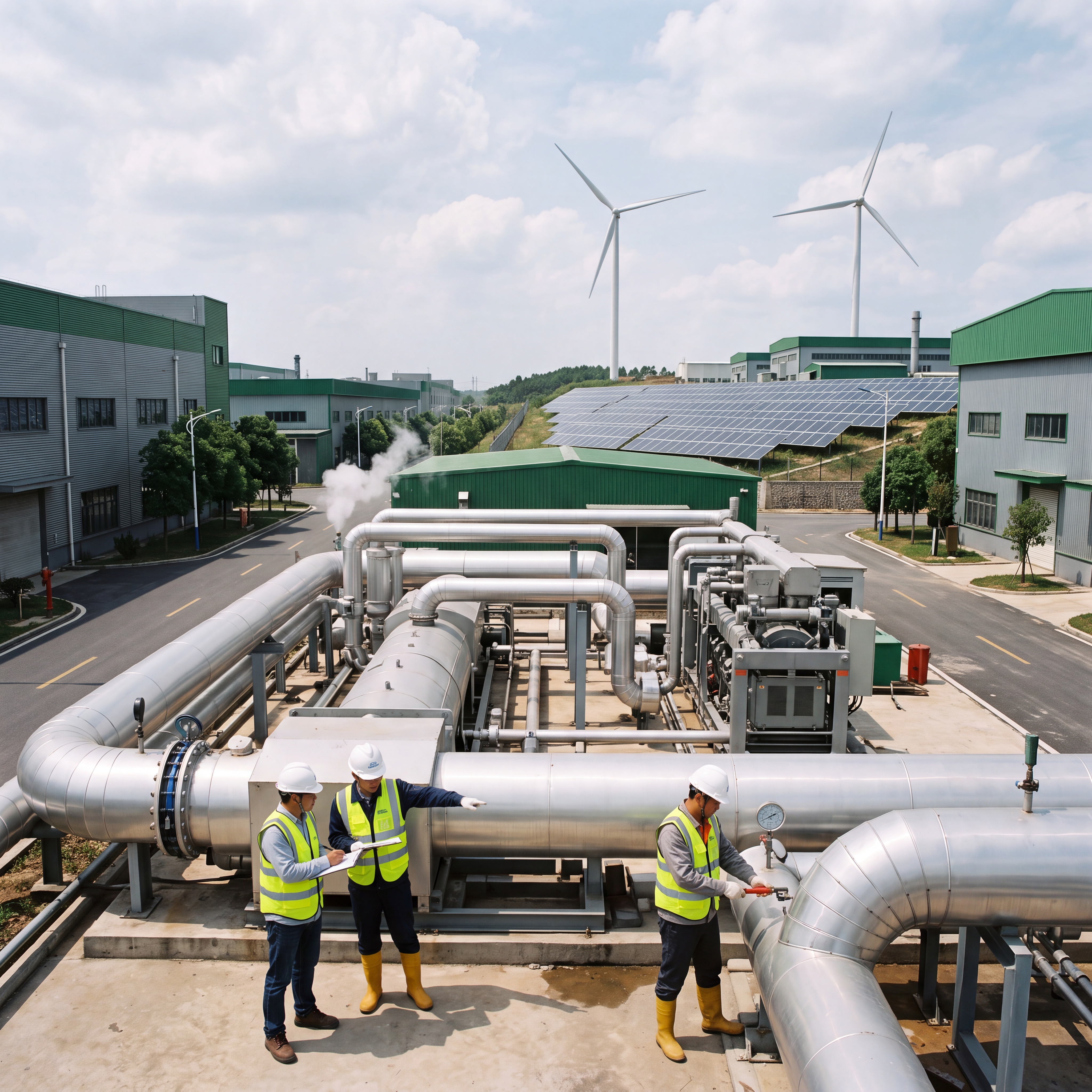
In practical operations, Smart Park Energy Management focuses on high-consumption subsystems, starting with the dynamic optimization of Central Air Conditioning and HVAC. As a core unit accounting for over 40% of park energy consumption, modern EMS dynamically adjusts chiller offsets and pump frequencies by integrating environmental sensors and Building Automation Systems data. This precision matching achieves significant energy savings without compromising human comfort.
Secondly, collaborative management of multi-source carriers like "PV-Storage-Charging" is now indispensable. EMS adapts storage logic based on photovoltaic forecasts and electricity pricing policies, facilitating peak shaving and valley filling. This approach optimizes the economic operation of local micro-energy networks and reduces maximum demand charges effectively.
Future Trends: AI-Driven Control and Integrated Carbon Management
Over the next five years, Energy Management Systems will evolve towards greater proactivity through the integration of AI prediction control algorithms. Reinforcement learning and Physics-Informed Neural Networks (PINN) will be introduced to endow systems with "predictive" capabilities, automatically generating optimal dispatch strategies based on historical states for truly unattended tuning.
Furthermore, the interaction capability of "Source-Grid-Load-Storage" microgrids will become standard infrastructure, allowing parks to actively participate in auxiliary service markets like peak regulation. Consequently, energy consumption scheduling will evolve into an asset with value-added attributes, shifting from passive consumption to active market participation.
The Fusion of Energy and Carbon Management
A key trend is the deep fusion of energy and carbon emission management, replacing single metering systems with dual-line interoperability between "energy consumption" and "carbon emissions." Next-generation Smart Park EMS will automatically output Scope 1 and Scope 2 carbon emission calculation data compliant with national standards.
This capability assists managers in high-order lifecycle planning, including carbon verification, carbon trading, and green asset rating, serving as foundational digital intelligence facilities for low-carbon sustainable development.
In summary, modern Energy Management Systems in smart parks undertake the mission of cost reduction and efficiency enhancement while driving industrial park upgrades. Technology providers must continue to deepen the integration of data algorithms and industrial automation to solve practical pain points, jointly constructing modern green industrial spaces.