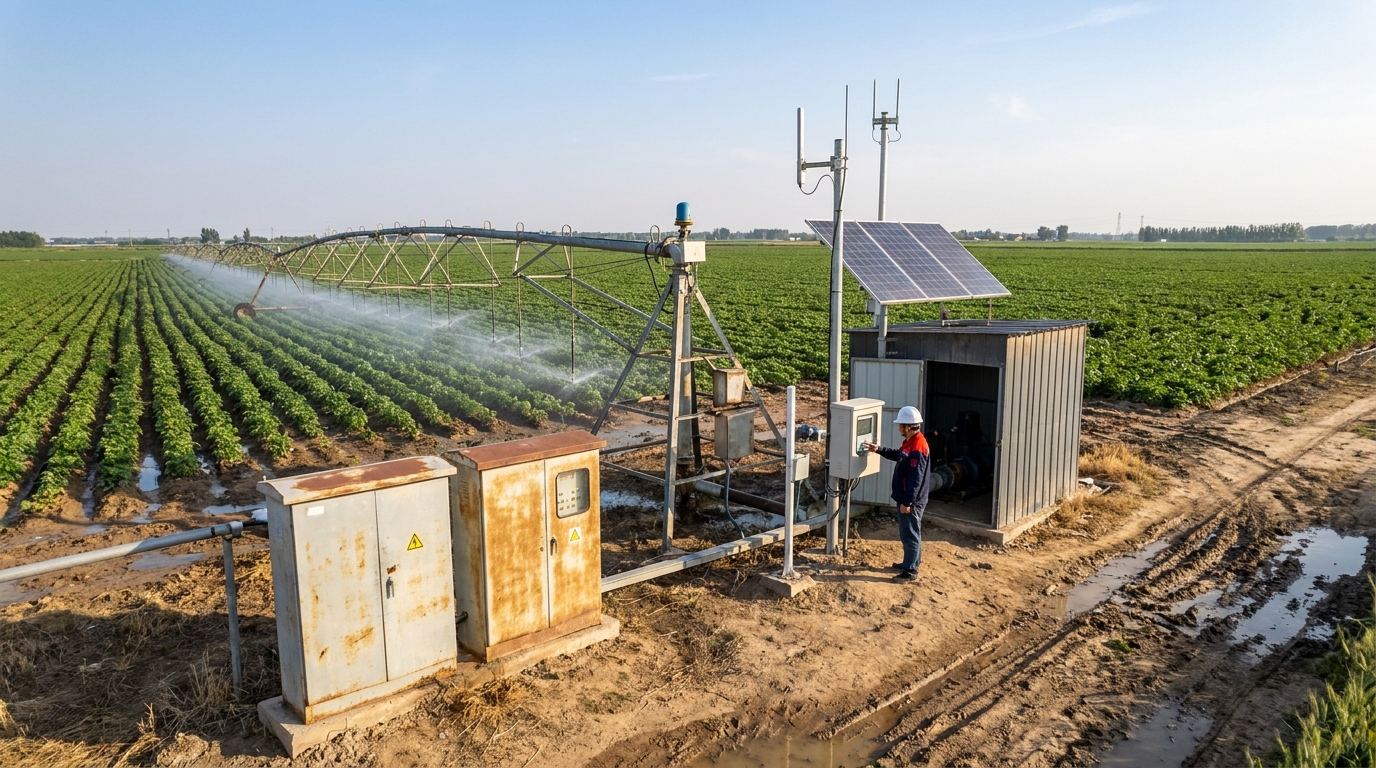
As global climate change intensifies, the construction of high-standard farmland irrigation districts is reshaping modern agriculture through advanced smart water conservancy solutions. By integrating IoT sensors, big data analytics, and AI-driven decision-making, these digital systems are transforming traditional flood irrigation into a precise, efficient, and sustainable model for ensuring national food security.
IoT and Big Data Reshaping Water Allocation Nexus
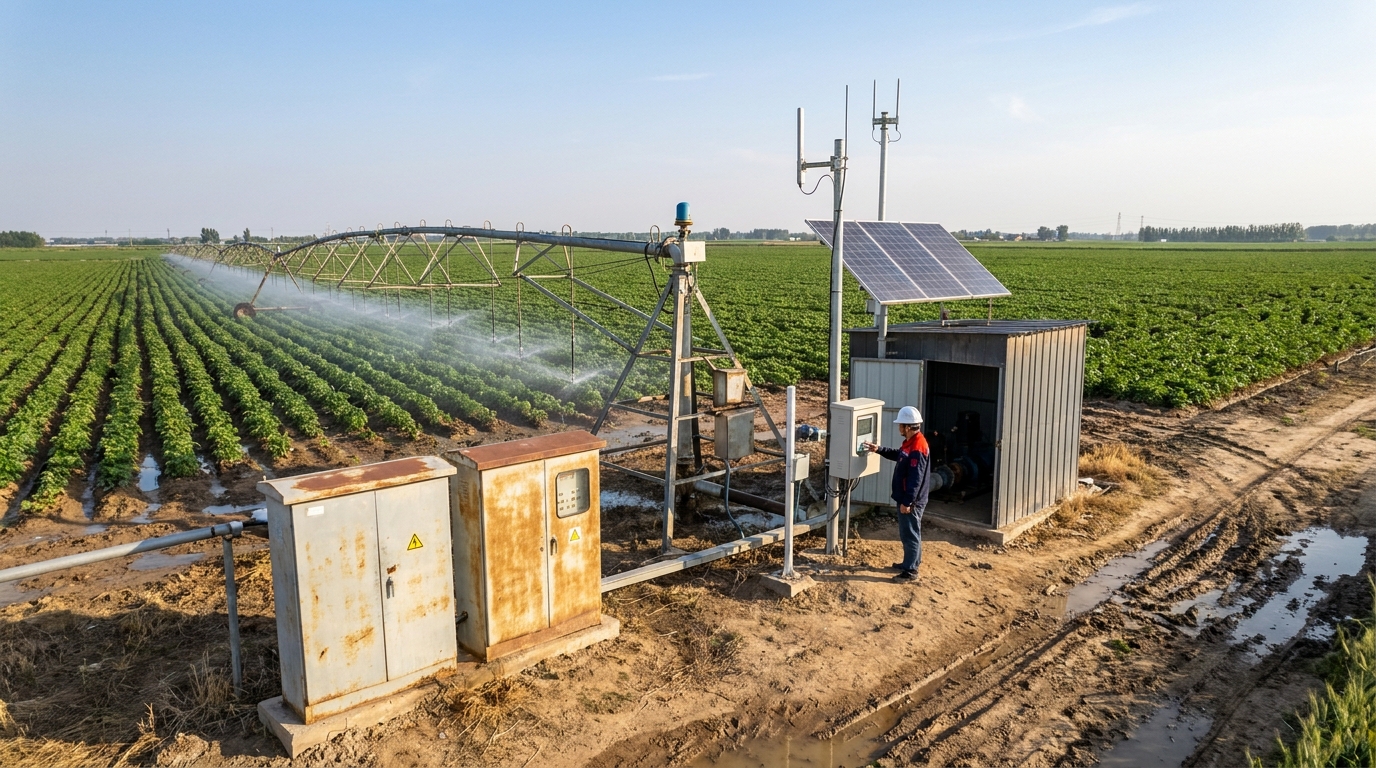
The informatization of high-standard farmland has evolved beyond simple data collection to a comprehensive system integrating perception, transmission, and intelligent analysis. Massive networks of IoT sensors now act as the "neural endings" of the irrigation network, continuously monitoring soil moisture, water levels, and micro-meteorological conditions across canals and fields.
Leveraging 4G/5G and NB-IoT technologies, this data is aggregated in the cloud with low latency. At the core, cloud-based big data platforms function as the "brain," utilizing hydrodynamic models to calculate optimal water requirements for specific crops at different growth stages, enabling automated delivery via control valves and variable frequency pumps.
Perception Layer
IoT sensors for soil, water, and weather data.
Transmission Layer
4G/5G, NB-IoT, LoRa for low-latency aggregation.
Application Layer
Big data platforms for intelligent decision-making.
Precision Strategies in Multi-Dimensional Scenarios
High-standard farmland informatization addresses complex needs ranging from macro-level resource scheduling to micro-level field management. In large irrigation districts, open-channel flowmeters and integrated gates allow central control rooms to monitor allocation in real-time, significantly reducing labor costs and preventing water waste during long-distance conveyance.
At the field level, smart irrigation integrates drip and micro-sprinkler systems with soil humidity feedback. When moisture drops below thresholds, the system automatically triggers irrigation; once saturated, it shuts off. Combined with water-fertilizer integration, liquid fertilizers are precisely injected alongside water, enhancing crop yield and quality while conserving resources.
Digital Twins and AI Leading Future Trends
The future of smart water conservancy is defined by digital twins and artificial intelligence. Digital twin technology creates a full-element 3D virtual map of the physical irrigation district, enabling "Four Pre-functions": forecasting, warning, simulation, and planning for extreme weather or drought scenarios.
AI algorithms will drive intelligent decision-making by analyzing satellite remote sensing, weather forecasts, and crop cycles. Moving beyond simple thresholds, these self-learning models predict water deficit trends in advance, shifting operations from passive response to active prevention. Additionally, carbon-water synergy will optimize energy consumption and emissions, aligning irrigation with dual carbon goals.
Conclusion: A Paradigm Shift in Agriculture
The informatization of high-standard farmland irrigation is not merely a hardware upgrade but a profound transformation of agricultural production methods. Empowered by continuous innovation in smart irrigation and water-saving technologies, modern agriculture is breaking free from dependence on natural conditions, contributing crucially to global food security and sustainable water resource utilization.

