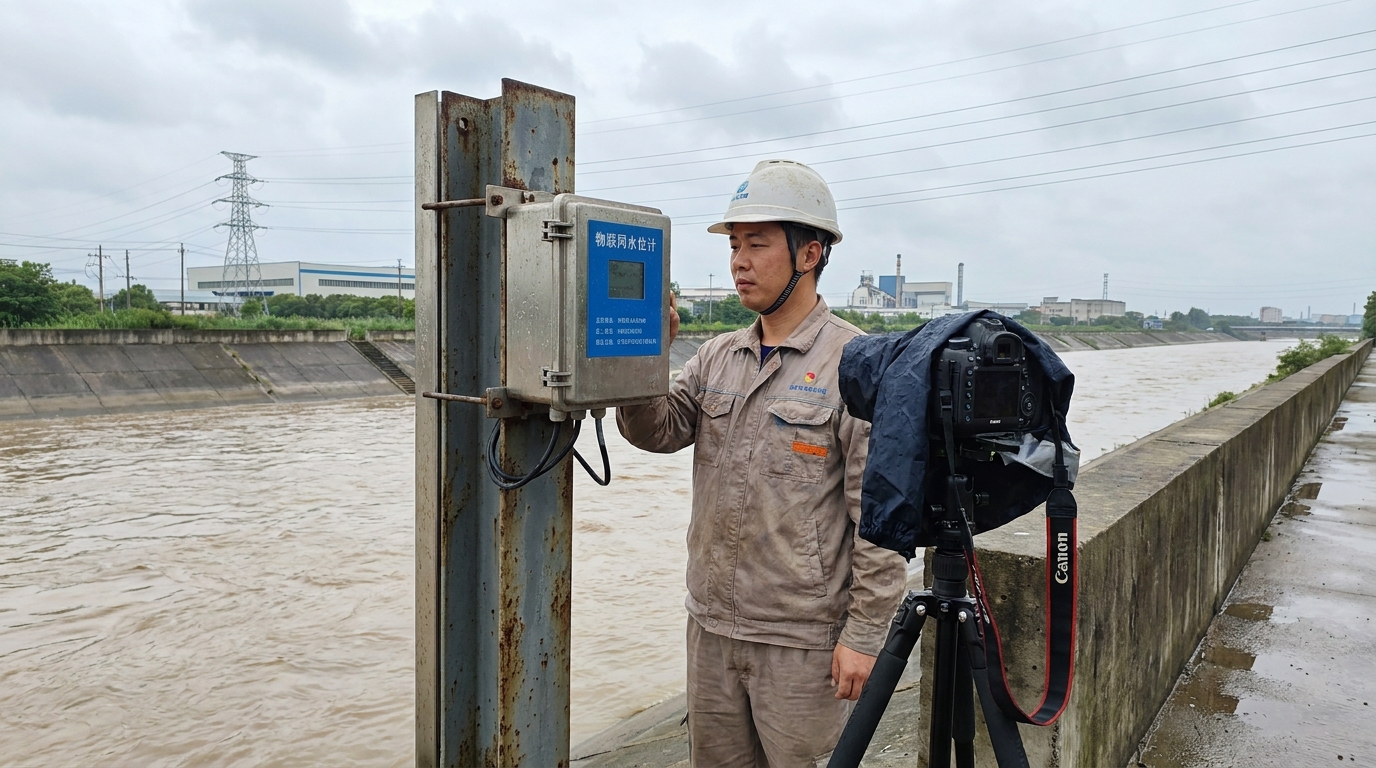
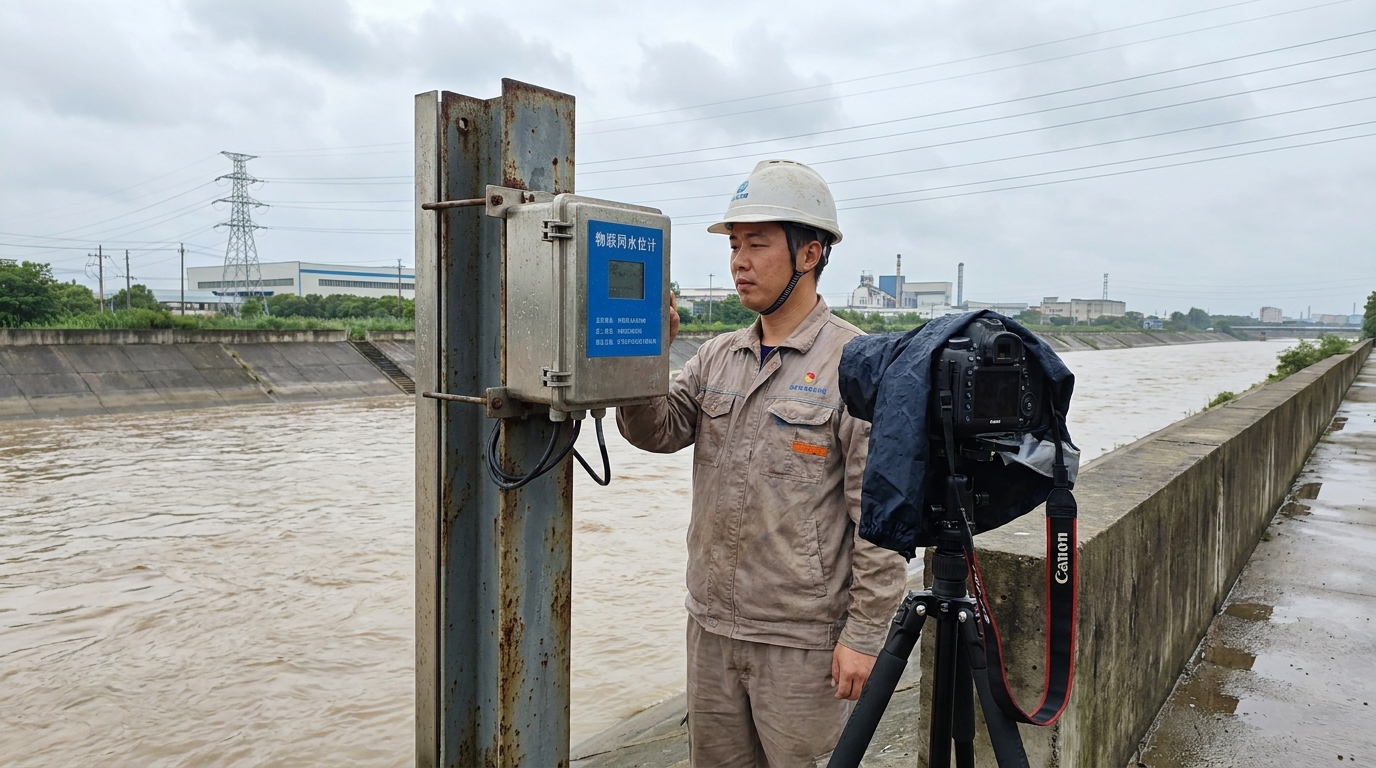
Latest Advances in River Water Level Monitoring Technology
Amidst the intensifying global climate crisis, accurate and real-time river water level monitoring serves as the bedrock for safeguarding lives and property while enabling scientific resource allocation. Driven by rapid advancements in sensor technology and big data analytics, traditional hydrological models are accelerating their transformation toward intelligent networking.
The widespread adoption of Internet of Things (IoT) water level gauges marks a significant technological leap, replacing legacy float-type equipment that suffered from high maintenance costs and environmental interference.
Non-Contact IoT Sensors Revolutionize Accuracy
Today, non-contact IoT monitoring devices represented by radar and ultrasonic water level gauges have become the industry standard. By emitting microwave or acoustic pulses and calculating distance based on reflected signals, these devices achieve millimeter-level precision unaffected by deteriorating water quality or floating debris.
Furthermore, the integration of IoT communication modules—including NB-IoT, LoRa, 4G, and 5G—liberates these devices from traditional cabling constraints. This enables automatic wireless data acquisition and real-time uploading even in remote water bodies, effectively bridging the "last mile" of hydrological data transmission.
Precision
Millimeter-level accuracy with non-contact measurement.
Connectivity
NB-IoT, LoRa, 4G, and 5G support for remote areas.
Reliability
Unaffected by sediment, debris, or flow fluctuations.
From Passive Response to Active Flood Defense
In flood control scenarios, high-frequency, high-precision river water level data acts as the core support for decision-making. IoT-architecture-based systems facilitate a paradigm shift from "passive response" to "active defense" by transmitting data to cloud centers at minute-level intervals.
When safety thresholds are breached, the system instantly triggers multi-level linked flood warnings disseminated via SMS, radio, and mobile apps. This millisecond-level data response capability secures invaluable golden time for emergency rescue and evacuation.
Optimizing Water Resource Management & Allocation
Beyond disaster mitigation, daily water resource management relies on continuous monitoring to balance agricultural irrigation and ecological needs. By constructing a high-density network across river basins, departments can monitor volume dynamics around the clock.
Coupled with flow conversion models, this data transforms into dynamic dashboards for precise water scheduling. The long-term accumulation of data also provides objective evidence for regional carrying capacity analysis and the assessment of the River Chief System.
Current Challenges in Deployment
- Environmental Survivability: Equipment must withstand high salinity fog, extreme temperature fluctuations, and severe thunderstorms.
- Power Supply: Remote areas rely on solar-lithium hybrid designs, though power outages remain a risk during prolonged rainy weather.
- Data Cleaning: R&D focuses on filtering anomalous data caused by wind waves or bird strikes to ensure reliability.
Future Trends: AI Integration and Digital Twins
Looking ahead, the industry will see deep integration of edge computing and artificial intelligence (AI). Future IoT water level gauges will evolve into "intelligent nodes" capable of autonomous local data filtering, significantly reducing latency and power consumption.
Other key trends include the fusion of multi-parameter sensors (flow, velocity, rainfall, quality) and the construction of digital twin river basins for high-precision simulation and deduction.
Conclusion: A Transformation in Water Governance
The iteration of river water level monitoring technology represents more than just an upgrade in hardware; it signifies a profound transformation in the management philosophy of the water conservancy industry.
Leveraging IoT to build a network characterized by comprehensive perception, intelligent connectivity, and precise decision-making will inject continuous technological power into society's disaster prevention capabilities and water resource utilization.

