Electromagnetic Flowmeter Selection & Maintenance: LGF-PA66 Cost Analysis
ECAI Tech Industry Insights: A comprehensive guide to market pricing, material evolution (LGF-PA66), and Total Cost of Ownership (TCO) optimization for industrial automation.
As global industrial automation accelerates, fluid measurement technologies have become indispensable across critical sectors—including chemical processing, water and wastewater treatment, food & beverage production, and new energy systems. Among flow measurement instruments, electromagnetic flowmeters (EMFs) stand out for their unique physical advantages: zero pressure drop, high accuracy, wide applicability to conductive liquids, and insensitivity to fluid density, viscosity, or temperature fluctuations.
Driven by these attributes—and underpinned by stringent regulatory requirements for process efficiency and sustainability—the global EMF market continues its steady expansion. This report provides an objective analysis of the current market landscape, pricing structure, procurement best practices, and total lifecycle cost considerations—tailored specifically for water utilities, industrial plant engineers, and procurement professionals.
Market Pricing Structure & TCO Shift
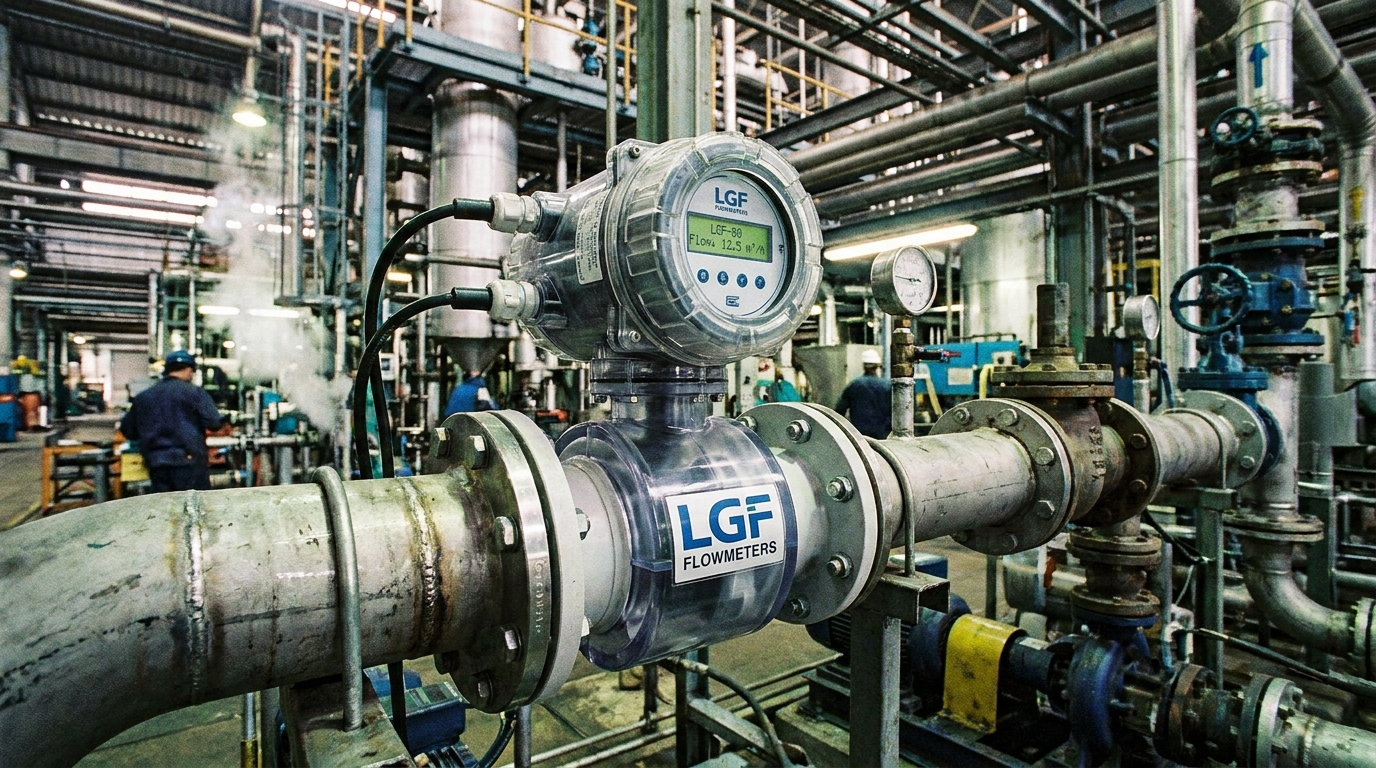
Market pricing for electromagnetic flowmeters varies significantly, shaped primarily by nominal diameter (DN), liner material, electrode composition, housing construction, communication protocols (e.g., HART, Modbus RTU/TCP, PROFIBUS), and certification requirements (e.g., ATEX, IECEx, NSF/ANSI 61).
- Entry-Level (DN10–DN25): Typically range from RMB 1,500 to 3,000 (~USD 210–420).
- Mid-Range (DN50): Widely deployed in municipal water distribution and pharmaceutical loops; average prices between RMB 2,500 and 5,000 (~USD 350–700).
- High-End (DN200+ & Custom): Large-bore units with tantalum electrodes, PTFE/PFA liners, and explosion-proof housings can exceed RMB 10,000 (~USD 1,400). Premium smart models reach RMB 30,000–50,000 (~USD 4,200–7,000).
Increasing price transparency has shifted buyer focus from upfront capital expenditure (CAPEX) toward Total Cost of Ownership (TCO), emphasizing long-term reliability, calibration stability, and serviceability.
Material Evolution: The Rise of LGF-PA66
Advancements in materials science are fundamentally reshaping EMF design. Conventional stainless steel or carbon steel meter bodies often fall short in aggressive chemical environments, suffering from coating delamination, crevice corrosion at flange welds, and liner blistering.
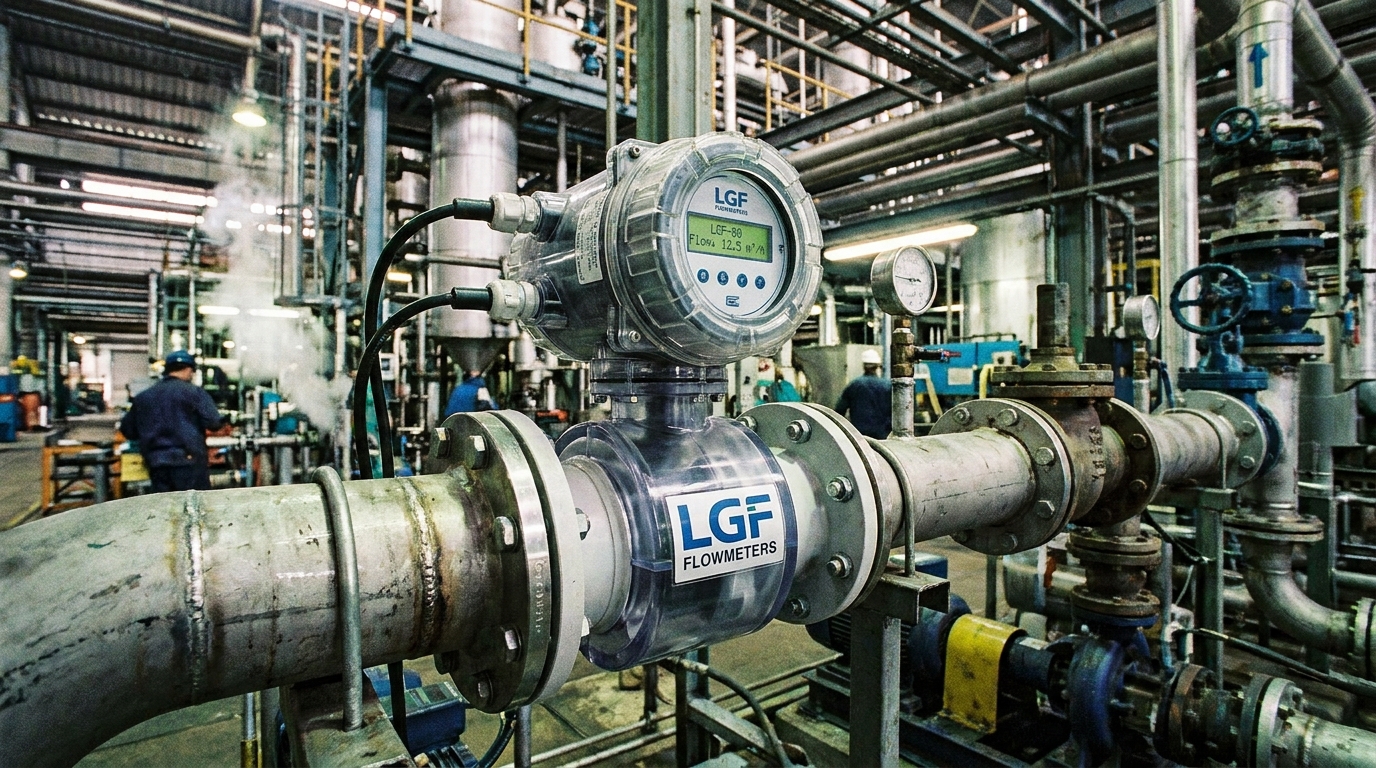
To address this, leading manufacturers are adopting long-glass-fiber-reinforced polyamide 66 (LGF-PA66). This engineered polymer delivers exceptional mechanical strength (>200 MPa tensile), dimensional stability across –40°C to +120°C, and outstanding resistance to acids, alkalis, oxidants, and halogenated solvents.
Key Advantages of LGF-PA66 Construction
- Monolithic Design: Fully integrated injection-molded construction merges the measuring tube, housing, and mounting flanges into a single unit.
- Weight Reduction: A DN50 EMF built using this method weighs up to 40% less than its stainless-steel counterpart.
- Corrosion Resistance: Eliminates welded joints and gasket interfaces—common sites for galvanic corrosion—enhancing reliability in brine transport, acid dosing, or reclaimed wastewater reuse.
Selection Framework & Lifecycle Management
Selecting the optimal electromagnetic flowmeter demands a rigorous, application-first evaluation framework:
- Fluid Characterization: Assess minimum conductivity (≥5 µS/cm), operating temperature/pressure, suspended solids, and chemical aggressiveness. Pair chemically inert electrodes (Hastelloy C-276, Titanium, Tantalum) with appropriate liners (PTFE, PFA, Ceramic).
- Sizing Optimization: Balance hydraulic performance and metrological accuracy. Maintain average flow velocity between 1.5–3.0 m/s to prevent noise or erosion.
- Environmental Conditions: Address EMI from VFDs with dual-frequency excitation and shielded cabling. Ensure IP67/IP68 ratings for outdoor/submerged installations.
In lifecycle asset management, hidden operational expenditures often dwarf initial purchase costs. Traditional metal-bodied meters frequently incur recurring labor-intensive interventions—rust removal, re-coating, or full replacement after liner degradation. By contrast, LGF-PA66-based EMFs exhibit negligible aging effects under continuous exposure to chlorinated seawater or acidic leachate, reducing scheduled maintenance intervals by up to 60%.
Intelligent Diagnostics & Future Outlook
Next-generation intelligent EMFs integrate advanced diagnostics—including empty-pipe detection, electrode fouling monitoring, coil integrity self-tests, and real-time signal-to-noise ratio analytics. These capabilities enable predictive maintenance strategies, allowing operators to schedule interventions during planned shutdowns rather than reacting to catastrophic failures.
Industry benchmarking indicates that while high-performance composite EMFs may carry a 15–25% higher initial investment versus basic stainless-steel models, their TCO over a standard 5–10 year service life is reduced by 20–30%. This is driven by lower calibration frequency, minimal consumables, extended mean time between failures (MTBF > 15 years), and avoidance of production losses.
Conclusion: The electromagnetic flowmeter market is undergoing a pivotal transition—from legacy metal fabrication toward intelligent, material-optimized instrumentation. For water and wastewater utilities, EPC contractors, and industrial end-users, moving beyond “lowest bid” procurement toward holistic evaluation—anchored in fluid compatibility, structural durability, digital readiness, and verified TCO—is essential for ensuring resilient, compliant, and energy-efficient operations.