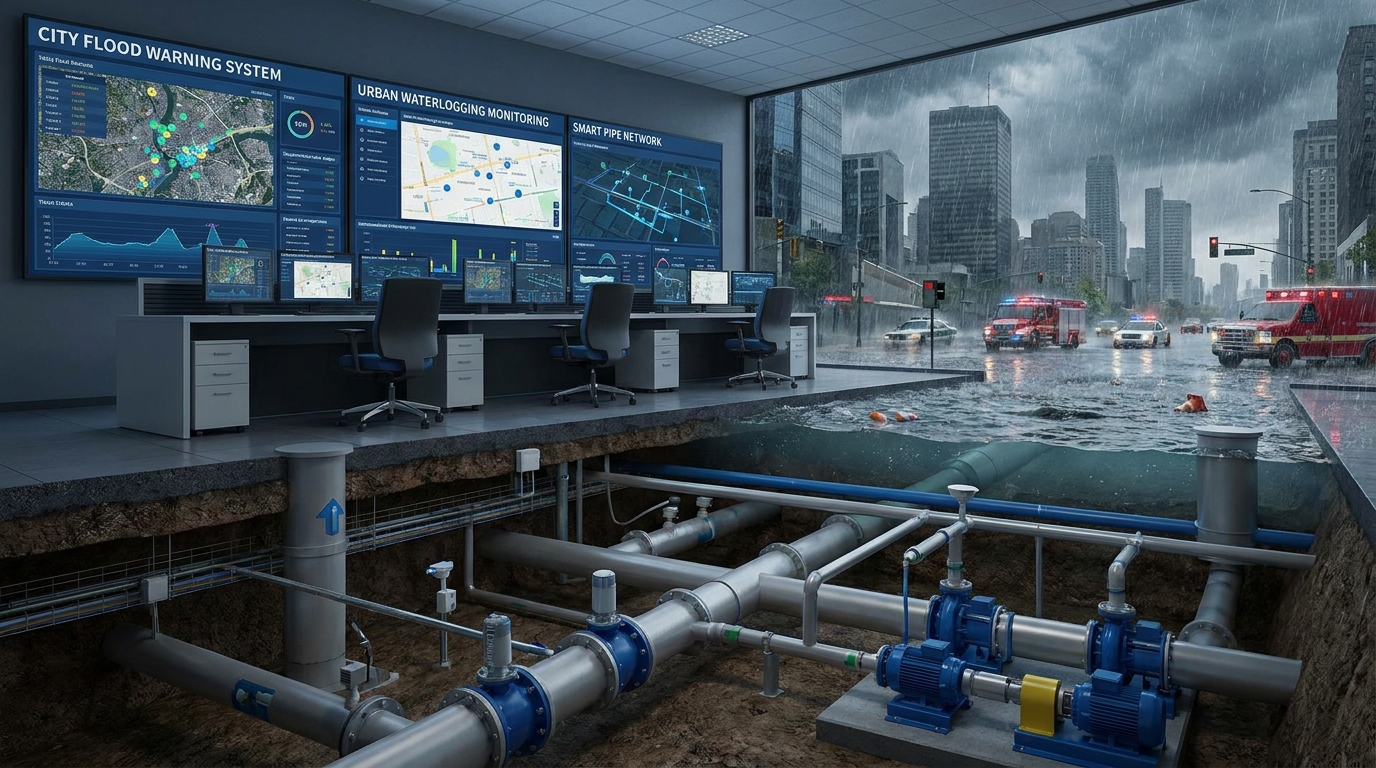
As global climate change intensifies, urban pipe network trends are shifting towards digital intelligence to reshape flood defense. Modern cities face unprecedented drainage challenges, requiring a transformation from traditional models to smart, resilient systems. This evolution leverages IoT, AI, and radar sensing to create a new generation of urban water safety lifelines.
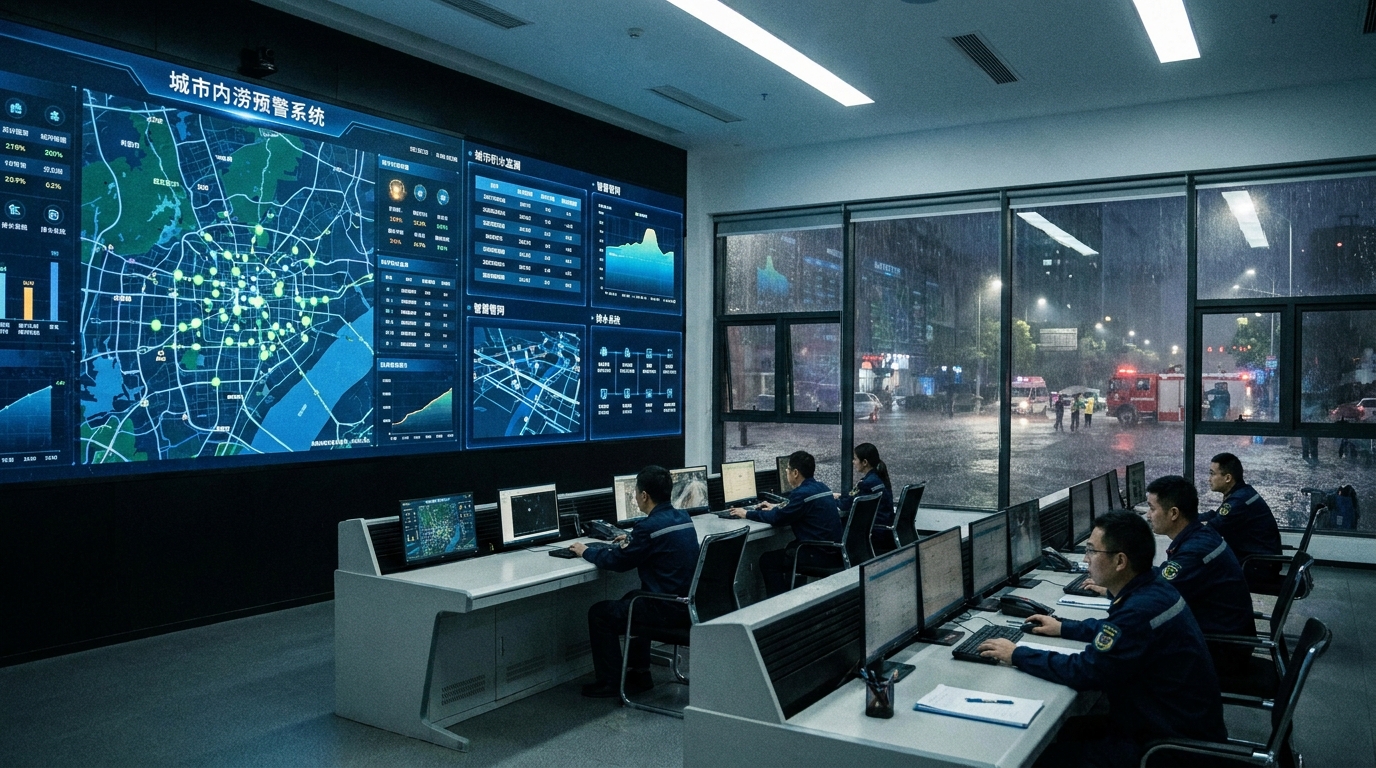
Policy Drivers for Urban Pipe Network Upgrades
National authorities are accelerating the comprehensive upgrade of underground infrastructure through top-level design. Policies explicitly call for the full-scale renewal of aging pipelines while promoting "resilient cities" and "sponge cities."
These initiatives bring massive special funds and sovereign bond support, compelling local governments to shift governance from political achievements to visible engineering projects. This momentum provides a solid market foundation for the informatization and intelligent upgrading of the urban pipe network industry.
Market Shift: From Construction to Smart Management
The urban pipe network industry is moving from a "construction-heavy" model to one emphasizing lifecycle management and operations. Traditional manual inspections are being replaced by demands for asset digitization, status visualization, and intelligent decision-making.
Water utility groups are increasingly procuring front-end smart hardware alongside large-scale smart water scheduling platforms. This expansion ensures interoperability of underlying data and facilitates cross-departmental collaboration for better urban flood defense.
Key Market Drivers
- Lifecycle Management Focus
- Data Interoperability
- Cross-Department Collaboration
- Asset Digitization
IoT Innovation: Radar Sensing for Real-Time Monitoring
Internet of Things (IoT) technology is iterating towards high precision, with millimeter-wave radar becoming the standard for sewer and manhole monitoring. Unlike traditional contact sensors, radar equipment offers non-contact operation, strong anti-interference capabilities, and high precision.
By deploying these nodes in underpasses and low-lying culverts, management departments can monitor water accumulation around the clock. When safety thresholds are breached, the system automatically triggers sound and light devices to dissuade vehicles and pedestrians, effectively blocking safety risks.
AI Integration: Precise Pre-Event Warning Systems
Forward-looking pipe network systems are upgrading from passive post-event rescue to precise pre-event warning. Next-generation hydraulic models fuse medium-to-long-term weather forecasts with AI algorithms to build a three-dimensional urban waterlogging warning system.
Before a storm arrives, the system performs high-precision sandbox simulations to identify potential overflow points and high-risk areas. Command centers use this predictive data to preemptively schedule pumping stations and allocate emergency rescue teams, achieving scientific optimization through source reduction and combined storage.
Future Outlook: The Digital Twin Ecosystem
The future of urban pipe networks lies in a "digital twin" ecosystem where every pulse of rainfall receives real-time feedback in a virtual space. This requires continuous miniaturization of sensing technologies and the breaking down of data silos across industries.
Single hardware or software solutions can no longer meet the pain points of holistic governance. Only by building an open industrial ecosystem that promotes deep integration among industry, academia, and application can we forge resilient pipe networks capable of withstanding future extreme weather challenges.
Core Technological Pillars
Radar Sensing
Non-contact, high-frequency millimeter-wave technology for reliable water level monitoring.
AI Models
Fusion of weather data and topology for precise flood prediction and simulation.
Digital Twins
Virtual mapping of physical networks for real-time feedback and holistic governance.

