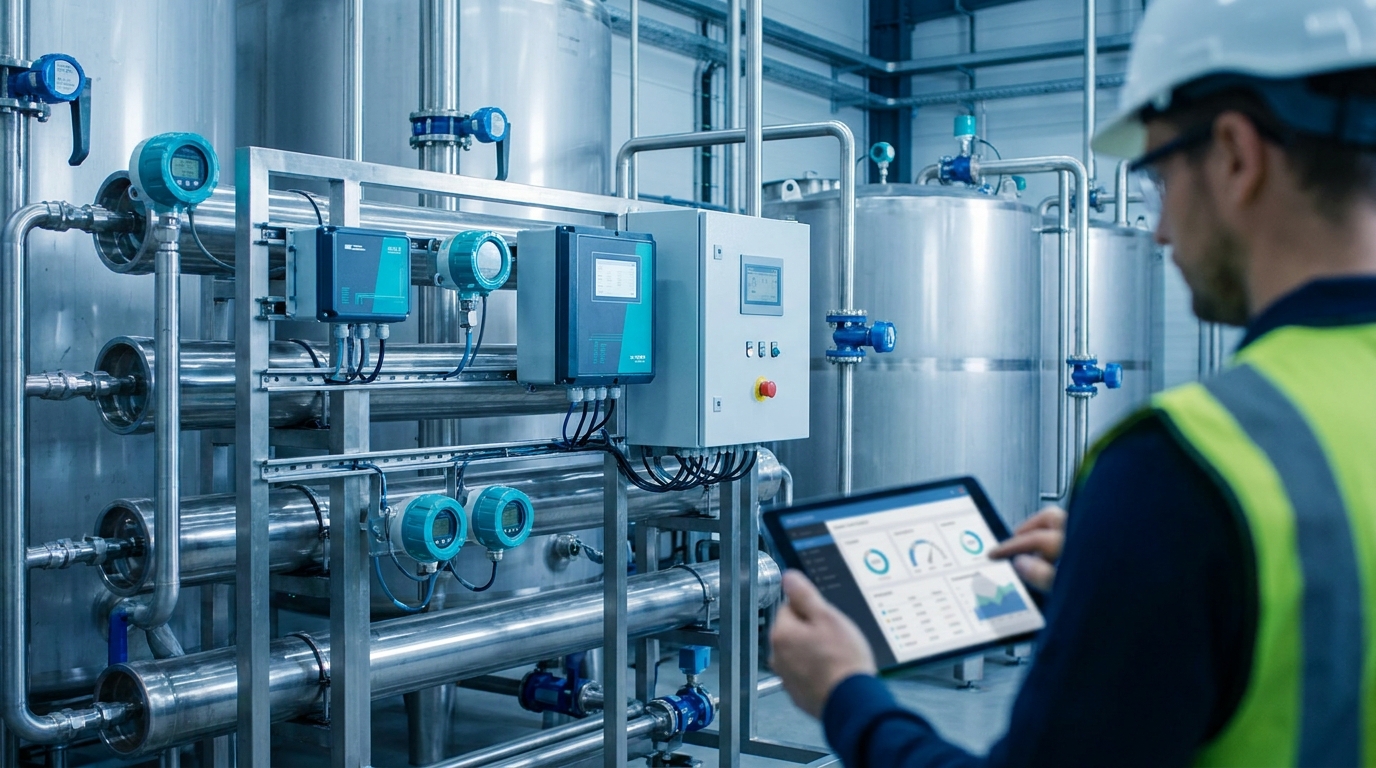
AI Convergence Councils Reshape Global Water Intelligence
The rise of multi-stakeholder AI convergence councils—such as the Water Environment Federation’s Water-AI Nexus—marks a decisive pivot from algorithmic optimization to institutional co-design of global water intelligence. These councils are redefining how AI is governed, deployed, and trusted across utilities, regulators, and technology providers worldwide.
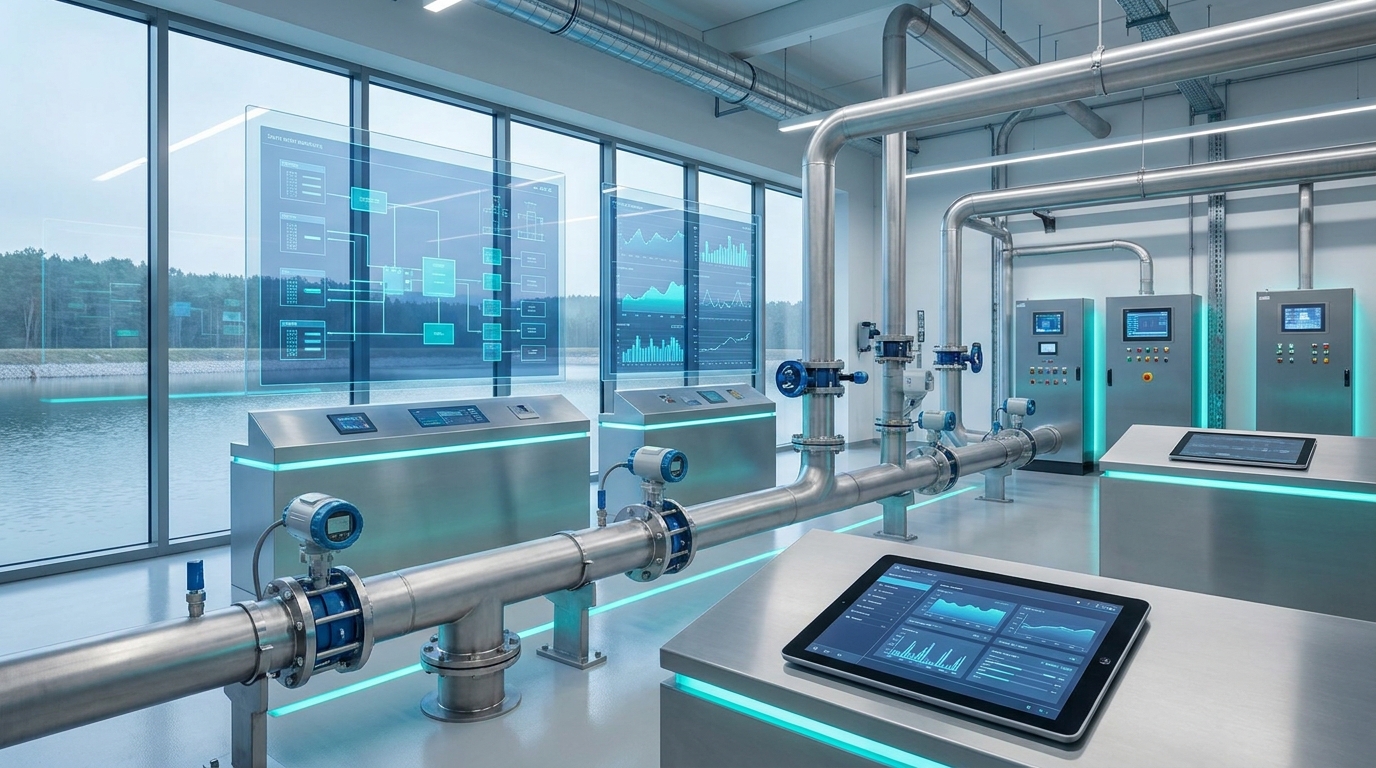
From Tool Integration to Institutional Architecture
Autodesk’s recent entry into WEF’s Water-AI Nexus™ Center of Excellence Advisory Council reflects more than a vendor partnership—it signals a fundamental reconfiguration of authority in the global water sector.
The Council now unites technology firms, utilities, engineering consultancies, academia, and public agencies under a shared mandate: to “accelerate sustainable water management while championing responsible use of AI.”
This shift moves beyond siloed AI pilots toward systemic alignment—where data standards, model transparency, and infrastructure interoperability are negotiated at the council level—not implemented downstream by individual operators.
The Three-Layer Shift in Water Intelligence
The Water-AI Nexus initiative crystallizes an emerging three-layer evolution in how water systems are understood, modeled, and governed—each layer reinforcing the integrity of AI-driven decision-making.
Layer 1: Physical Sensing Fidelity
AI models are only as robust as their inputs. Real-time, high-resolution field data—especially from constrained or buried environments—is now foundational infrastructure, not ancillary instrumentation.
Example: Visual radar fused with Doppler velocity profiling for contextual awareness.
Layer 2: Interoperable Digital Infrastructure
Open APIs, standardized ontologies (e.g., WEF’s Water Ontology Initiative), and hardware-agnostic edge-to-cloud architectures replace proprietary telemetry stacks.
Goal: Guardrails against black-box decision-making and vendor lock-in.
Layer 3: Governance Co-Design
Utility operators, regulators, and community representatives jointly define AI use cases, validation protocols, and equity thresholds—ensuring algorithms serve affordability and service continuity.
Outcome: AI that aligns with public trust, regulatory expectations, and funding criteria.
Implications for Utilities & Technology Providers
For utilities, AI adoption is no longer optional—but doing so without participating in cross-sectoral governance risks misalignment with evolving regulatory expectations, funding criteria (e.g., Bipartisan Infrastructure Law grant scoring), and public trust metrics.
For technology providers, differentiation is shifting from feature density to certifiable integration readiness: Can your hardware feed validated hydraulic models? Support federated learning? Output structured metadata compliant with ISO 14692 or WEF’s emerging AI data schema?
This landscape favors companies whose hardware was engineered for AI-native workflows—not retrofitted for them.
Ecolor Technology: Engineering AI-Native Water Hardware
Ecolor Technology exemplifies this paradigm shift—designing sensors and controllers from the ground up for AI-driven water intelligence:
- ✓ LGF Electromagnetic Flowmeter: ±0.2% accuracy with built-in harmonic noise rejection—critical for AI-driven anomaly detection in aging networks.
- ✓ 80GHz Visual Radar Level Sensor: Combines millimeter-wave precision with on-device image analytics—enabling edge-based sediment tracking without cloud dependency.
- ✓ Multi-Band Doppler Flow Radar + Camera: World’s only underground pipe sensor delivering synchronized velocity, fill-level, and visual condition data—directly feeding digital twin calibration and AI training pipelines.
- ✓ HERO V9 RTU: Native MQTT/OPC UA support + lightweight inference engines—enabling localized leak classification and pump health scoring without full-stack vendor lock-in.
China’s Strategic Positioning: Beyond Export, Toward Architectural Equivalence
Chinese water technology firms—including Ecolor—are increasingly engaged not as suppliers of discrete hardware, but as contributors to global interoperability frameworks.
While not yet formal members of the Water-AI Nexus Advisory Council, several Chinese enterprises participate in WEF’s technical communities and co-author IWA/WEF white papers on AI validation for non-revenue water reduction.
Their strength lies in vertically integrated R&D—combining sensor physics, embedded AI, and cloud-agnostic firmware—which aligns with the Council’s emphasis on ‘responsible’ deployment: traceable data lineage, auditable model inputs, and hardware-level security.
As WEF expands its Asia-Pacific engagement—highlighted in its 2024 regional roadmap—the pathway for Chinese innovators shifts from cost competitiveness to architectural equivalence: proving their systems can interoperate within globally trusted AI governance structures.
What Comes Next: From Council to Code
The next 18 months will test whether advisory councils translate into enforceable norms—and whether physical sensing layers can reliably close the “reality gap” between simulated models and aging infrastructure.
Key milestones to watch include:
- Q3 2024: Publication of the Water-AI Nexus’s Responsible AI Framework for Utilities
- 2024–2025: Integration of AI-readiness criteria into WIFIA and EPA SRF loan evaluations
- Ongoing: Pilot deployments of federated learning networks across U.S. and EU utility consortia—using anonymized, edge-processed data to train shared models for stormwater overflow prediction and biofilm growth forecasting
Success hinges not on algorithmic novelty—but on reliable physical sensing. Sensors like Ecolor’s underground pipe radar must deliver trustworthy, real-world data to anchor AI models in operational reality.
Sources
- Autodesk joins Water Environment Federation’s Water-AI Nexus Advisory Council to help advance sustainable infrastructure
- Water-AI Nexus Welcomes Global Organizations to Advisory Council
- Water-AI Nexus Center of Excellence announces expansion
- World Economic Forum – Wikipedia
- Water Innovation of the Month: Distributed by Water Finance & Management
Recommended Products
Ecolor Technology provides professional instruments for smart water, environmental monitoring & industrial automation: