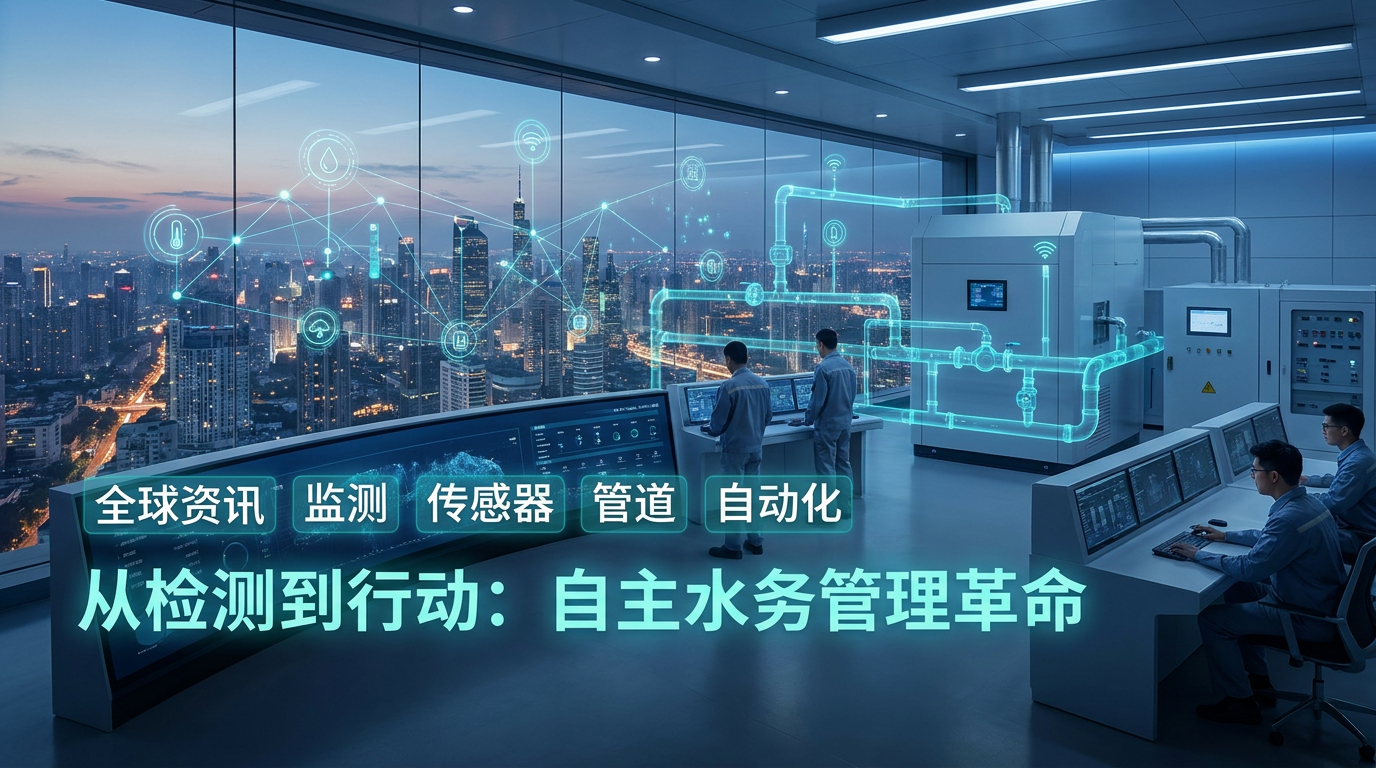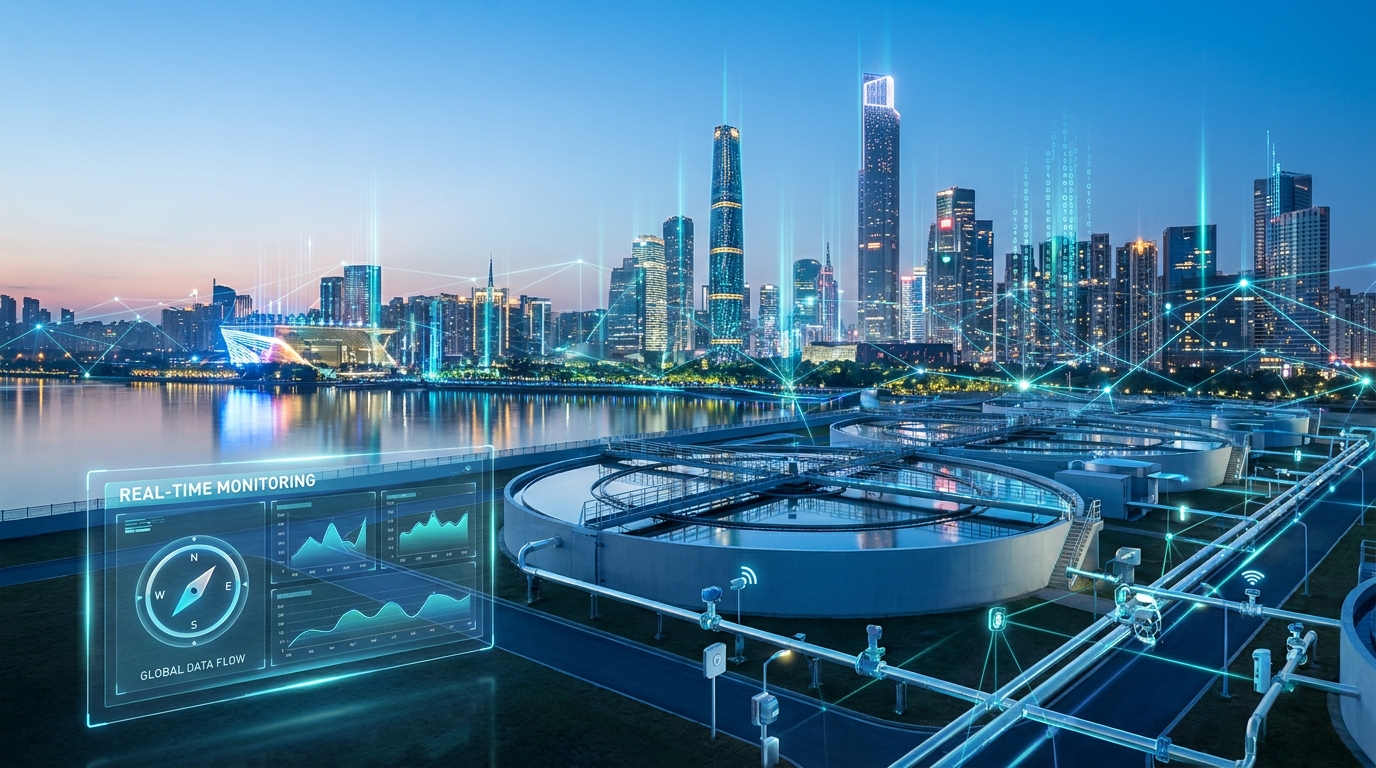
The Convergence of Intelligence and Infrastructure
The global water sector stands at a pivotal inflection point where decades-old infrastructure meets cutting-edge sensing technology. From consumer-focused leak detectors to industrial-scale monitoring platforms, the industry is experiencing a fundamental shift toward proactive, data-driven water management that promises to transform how utilities and facility operators protect one of the world's most critical resources.
According to market analysis, the global smart water management sector is experiencing unprecedented growth, driven by accelerating urbanization, intensifying water scarcity challenges, and the urgent need to modernize aging pipe networks. Advanced sensors, automated systems, IoT-enabled devices, and predictive analytics tools are now enabling utilities and industrial operators to monitor, control, and optimize water resources with a precision that was unimaginable just a decade ago.
From Reactive Response to Predictive Prevention
The traditional approach to water network management has been fundamentally reactive—problems were addressed only after they manifested as visible leaks, burst pipes, or contamination events. However, a new generation of intelligent monitoring solutions is flipping this paradigm on its head.
Consumer-grade devices like the GoveeLife Wi-Fi Water Leak Detector exemplify this shift at the household level. With ultra-sensitive dual sensor probes, customizable 105dB alarms, and remarkable 1804ft long-range monitoring capability, these devices represent the residential frontier of a much broader technological revolution. Meanwhile, premium solutions such as Moen's Flo Smart Water Monitor take monitoring further by using internal sensors that analyze actual water movement patterns, distinguishing between normal usage and anomalies indicating leaks or burst pipes.
At the industrial and municipal scale, the stakes are even higher. Research indicates that nearly one in three homeowners face unexpected plumbing issues annually, translating to billions in property damage and wasted water globally. The economic case for intelligent monitoring extends far beyond convenience—it represents a fundamental revaluation of infrastructure asset management.
The Industrial Water Management Revolution
The industrial sector presents perhaps the most compelling opportunity for advanced water monitoring technology. Facilities managing complex water systems—from manufacturing plants to power generation stations—require continuous, multi-parameter monitoring that traditional manual sampling methods simply cannot provide.
The convergence of high-precision optical sensors with IoT infrastructure is enabling a new paradigm in industrial water management. By combining accurate pH sensors and dissolved oxygen probes with 4G communication modules, facility managers can now monitor critical water parameters in real-time from smartphones via cloud platforms. This capability transforms water management from a periodic reporting function into a continuous optimization process.
The implications extend across the entire water value chain. Process water quality can be adjusted dynamically based on real-time sensor feedback. Cooling tower cycles of concentration can be optimized automatically. Discharge compliance can be monitored continuously rather than through periodic sampling that may miss transient violations.
Global Market Dynamics and Regional Opportunities
The smart water management market is expanding rapidly as utilities worldwide confront similar challenges: aging infrastructure, workforce attrition, regulatory pressure, and the need for operational efficiency. This convergence creates both opportunities and competitive pressures that are reshaping the industry landscape.
Chinese technology companies have emerged as significant players in this evolution, bringing advanced manufacturing capabilities and competitive pricing to the global market. Companies like Ecolor Technology are positioning themselves at the intersection of industrial-grade instrumentation and digital connectivity, offering solutions that address both the sensing and data transmission requirements of modern water management.
Ecolor Technology's product portfolio exemplifies the breadth of capabilities now available to water sector operators. Their LGF electromagnetic flowmeter series provides high-accuracy flow measurement essential for billing accuracy and network balance calculations. The 80GHz visual radar level sensor delivers non-contact level measurement for tanks and reservoirs with exceptional precision. Their multi-band Doppler flow radar represents a particularly innovative offering—currently the world's only solution combining underground pipe monitoring with integrated camera systems, enabling operators to visually inspect pipe interiors without excavation.
Complementing these sensing platforms, the HERO V9 RTU (Remote Terminal Unit) provides the critical connectivity layer, aggregating data from multiple sensors and transmitting it to central control systems via robust communication protocols. This combination of field instrumentation and data transmission technology addresses the end-to-end requirements of modern SCADA and IoT-enabled water management systems.
Implications for the Global Water Sector
The rapid adoption of smart water technologies carries profound implications for utilities, regulators, and consumers alike. For utilities, intelligent monitoring enables a transition from time-based to condition-based maintenance, potentially extending asset life while reducing operational costs. Network efficiency can be optimized continuously rather than through periodic, labor-intensive surveys.
For regulators and policymakers, the granularity of data now available from smart monitoring systems creates opportunities for more effective oversight and more nuanced standards development. Real-time water quality monitoring can provide early warning of contamination events, potentially preventing public health incidents.
For consumers and industrial customers, the benefits are increasingly tangible—reduced water bills through leak detection, improved service reliability, and enhanced environmental stewardship. As these technologies mature and costs decline, their deployment is expanding from premium commercial applications into mainstream residential and municipal markets.
Looking Ahead
The water sector's digital transformation is accelerating, driven by technological capability, economic imperative, and environmental necessity. The convergence of advanced sensors, ubiquitous connectivity, and artificial intelligence is creating water management systems of unprecedented sophistication.
However, realizing this vision requires addressing persistent challenges: cybersecurity concerns for connected infrastructure, interoperability standards for multi-vendor systems, workforce development for digital operations, and equitable access to technology benefits across developed and developing regions. The technology is ready; the organizational and regulatory frameworks continue to evolve.
What is clear is that the water sector of 2030 will bear little resemblance to its predecessor. The combination of intelligent sensing, automated response, and data-driven decision making is creating a new paradigm—one where water networks can monitor their own health, respond to emerging problems autonomously, and continuously optimize their performance. This is not merely an incremental improvement but a fundamental reimagining of how critical infrastructure operates in an increasingly complex and resource-constrained world.
Sources
- GoveeLife Smart Water Leak Detector with Wifi Gateway
- Global Smart Water Management Market Set to Transform Utilities and Industrial Operations by 2031
- Flo Smart Water Monitor | Flo Smart Water Shut Off | Moen
- Best Automatic Water Shut-Off Valves: 10 Tested Picks (2026)
- The Future of Industrial Water Management: The Convergence of IoT and High-Precision Optical Sensors in 2026
Recommended Products
Ecolor Technology provides professional instruments for smart water, environmental monitoring & industrial automation: