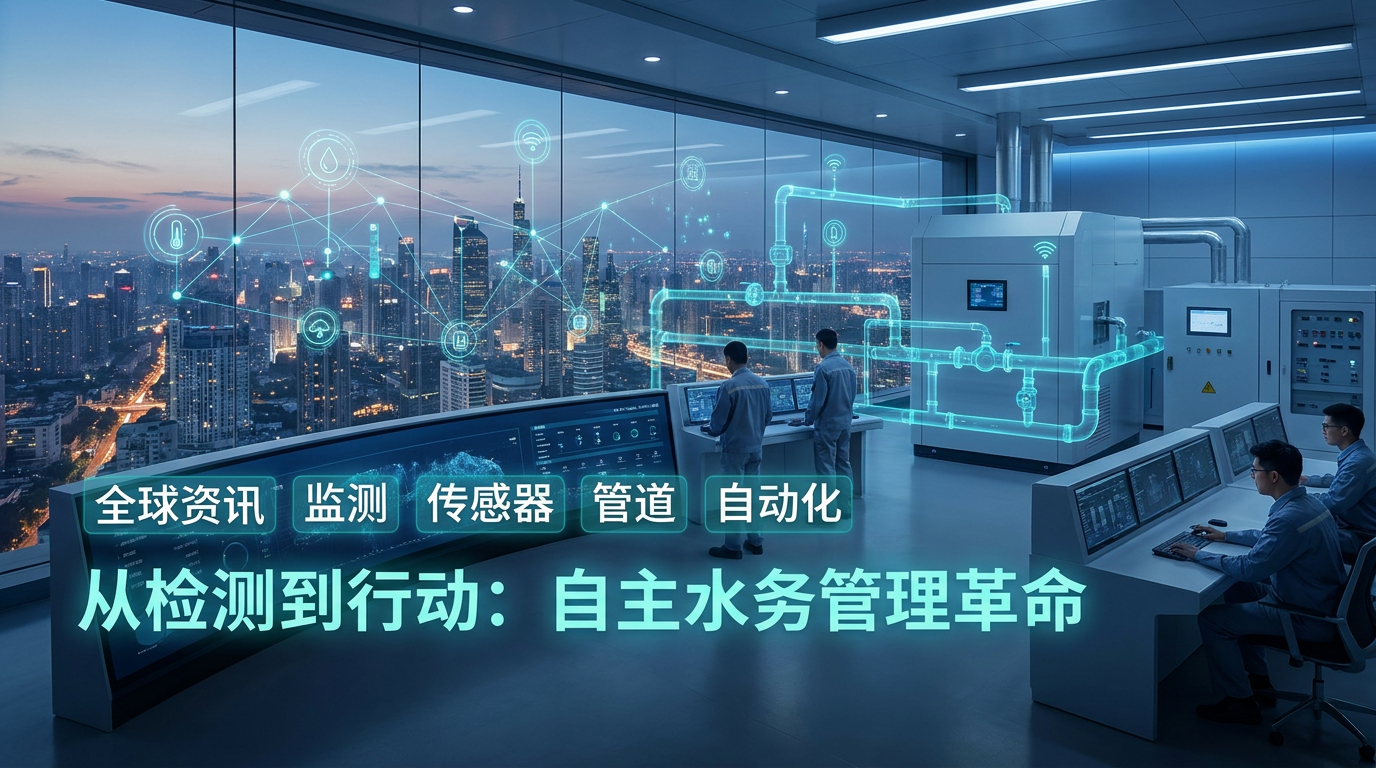
The Autonomous Water Management Revolution: From Detection to Action
The global water industry stands at a pivotal inflection point. As climate change intensifies water scarcity while urbanization strains existing infrastructure, the sector is rapidly evolving beyond simple monitoring toward autonomous, AI-driven water management systems. This transformation, accelerating through 2026, represents a fundamental shift in how utilities, industries, and homeowners approach water resource management.
The Rise of Proactive Leak Protection
Water leaks drain an estimated 20-30% of treated water globally before it reaches consumers. The economic toll exceeds $14 billion annually in the United States alone. The latest generation of smart water devices moves decisively beyond mere detection toward immediate automated response.
Companies like Govee and Moen are pioneering this shift with intelligent leak detection systems that integrate directly into home and building management ecosystems. The GoveeLife Wi-Fi Water Leak Detector combines ultra-sensitive dual sensor probes with a powerful 105dB alarm and an impressive 1804ft monitoring range, creating comprehensive coverage for residential and commercial properties. Meanwhile, Moen's Flo Smart Water Monitor represents a paradigm shift, using internal sensors to distinguish between normal water usage patterns and actual leak or burst pipe events—moving beyond the ultrasound-based listening technology that characterized earlier generations.
The market trajectory confirms this evolution. The global smart water management market is experiencing compound growth rates that position it as one of the most dynamic segments within water technology, driven by the convergence of falling sensor costs, expanding IoT connectivity, and rising water scarcity concerns that demand more efficient resource allocation.
Industrial Convergence: IoT and Precision Sensing
The industrial sector presents even more compelling opportunities. A recent industry analysis highlights the convergence of high-precision optical sensors with IoT platforms as the defining trend of 2026. By combining accurate pH sensors and dissolved oxygen probes with 4G-enabled modules, facility managers now access real-time water quality data through cloud-based platforms accessible from smartphones.
This capability proves transformative for industries ranging from manufacturing to energy production, where water quality directly impacts operational efficiency and environmental compliance. The ability to monitor, predict, and respond to water quality variations in real-time reduces both waste and regulatory risk.
Chinese technology providers have emerged as significant contributors to this industrial IoT water ecosystem. Companies like Ecolor Technology have developed comprehensive solutions spanning multiple sensing modalities. Their LGF electromagnetic flowmeter delivers high-precision flow measurement essential for industrial process optimization, while the 80GHz visual radar level sensor provides accurate tank and reservoir monitoring capabilities previously available only through more expensive technologies. Perhaps most notably, their multi-band Doppler flow radar represents a unique innovation—the world's only solution combining underground pipe monitoring with integrated camera systems, enabling operators to visually inspect pipe conditions without excavation.
The HERO V9 RTU (Remote Terminal Unit) completes this ecosystem by providing robust data aggregation and transmission capabilities, enabling seamless integration between field sensors and central management platforms. This hardware-software integration positions Ecolor as a full-spectrum solution provider for industrial water management applications.
Market Dynamics and Investment Flows
The smart water management sector attracted substantial capital investment in 2025 and 2026, driven by several converging factors. Municipalities worldwide face aging infrastructure requiring modernization, while simultaneously confronting more stringent efficiency mandates. Utilities recognize that leak detection and prevention offer some of the fastest returns on capital investment within the water sector.
The commercial and residential segments are growing faster than municipal applications, however, reflecting both increasing homeowner awareness of water damage risks and the expansion of smart home ecosystems that naturally incorporate water monitoring capabilities. Insurance companies increasingly incentivize smart water device adoption, recognizing their potential to reduce claims from water damage incidents.
Implications for Global Water Security
Beyond economic considerations, autonomous water management carries significant implications for global water security. As extreme weather events become more frequent, the ability to rapidly detect and respond to infrastructure failures becomes critical for maintaining service continuity. Smart systems enable utilities to shift from reactive to predictive maintenance models, addressing potential failures before they cascade into service disruptions.
The technology also supports more equitable water distribution by reducing losses that disproportionately affect communities at the end of distribution networks. Every liter saved through leak prevention represents water available for other uses, including agricultural production and ecosystem maintenance.
The Path Forward
The autonomous water management revolution is not merely technological—it represents an operational philosophy shift. Utilities and industrial operators must develop new competencies in data analytics, system integration, and cybersecurity to fully realize the benefits of these technologies. Training and workforce development emerge as critical success factors alongside technological deployment.
Regulatory frameworks are adapting to accommodate these new capabilities, with several jurisdictions exploring requirements for continuous monitoring in high-risk applications. Standardization efforts aim to ensure interoperability between devices and platforms, preventing vendor lock-in while enabling ecosystem integration.
For Chinese technology providers like Ecolor Technology, the global expansion of smart water infrastructure creates substantial opportunities. Their combination of advanced manufacturing capabilities, competitive pricing, and comprehensive product portfolios positions them well to serve both domestic and international markets. The multi-band Doppler flow radar with integrated camera exemplifies the kind of differentiated innovation that can capture global market share.
The water industry's transformation from passive monitoring to active, autonomous management accelerates through 2026. Organizations that embrace this evolution position themselves to address the twin challenges of water scarcity and infrastructure aging more effectively than those clinging to legacy approaches. The technology exists; the imperative is deployment.
Sources
Recommended Products
Ecolor Technology provides professional instruments for smart water, environmental monitoring & industrial automation: