2026 Development Opportunities for Urban Pipe Networks Under the Dual Carbon Goals
[Yicai Technology Industry Insight] Deep Dive into the Urban Underground "Lifeline": Trends and Future of Precision Pipe Network Management
The operation of a bustling metropolis often relies on hidden corners beyond public view. Beneath the busy streets, the crisscrossing urban pipe networks function like the body's blood vessels, continuously delivering the water resources essential for urban survival. The health of these "underground lifelines" directly determines the safety of city operations and the efficiency of resource utilization. Looking back at the rapid urbanization of the past few decades, millions of kilometers of underground pipelines have been laid across the country. Today, these early-stage networks are universally facing severe challenges such as material aging, loose joints, and ground subsidence. "Urban diseases" like frequent pipe leakage and bursts are becoming increasingly prominent.
Through long-term market research and frontline practice, the industry research team at Yicai Technology has observed a profound industry transformation quietly taking place. Driven by strong national policies and empowered by cutting-edge technologies like the Internet of Things (IoT) and Artificial Intelligence (AI), the management model for urban water supply networks is completely bidding farewell to the past "extensive expansion" phase that prioritized construction over maintenance. It is now fully entering a new era of "precision operations" centered on data-driven insights and intelligent decision-making.
Policy Directive: Elevating Leakage Control from an "Economic Calculation" to a "Security Imperative"
The intensive rollout and precise regulation of macro-level policies serve as the primary engine driving accelerated transformation in the water sector. In recent years, core ministries such as the National Development and Reform Commission (NDRC) and the Ministry of Housing and Urban-Rural Development (MOHURD) have jointly issued multiple guiding opinions, elevating the control of public water supply network leakage to an unprecedented strategic height. At the policy level, not only have highly challenging mandatory targets been set—explicitly requiring the national urban public water supply network leakage rate to be controlled within 9% by 2025—but substantial financial support has also been provided across dimensions such as special fund applications, old residential community renovations, and major infrastructure upgrades.
The establishment of this 9% "red line" has triggered a massive response within the industry. It is important to note that for a considerable period in the past, leakage rates in some older urban districts reached as high as 15% to over 20%. What is lost is not just water, but also the purification costs initially invested by water treatment plants, the massive electricity consumed by booster pump stations, and the carbon emissions generated during treatment. Consequently, reducing leakage rates is no longer merely an "economic calculation" for water utilities aiming to cut costs and improve efficiency; it has comprehensively escalated into a rigid constraint for implementing national water conservation initiatives, ensuring urban water supply security, and promoting green, low-carbon development. Against this backdrop, nationwide pipeline renovation projects and smart water management upgrade initiatives are experiencing a historic period of policy dividends. Water utilities across various regions have reached an unprecedented level of attention towards pipeline leakage governance.
Market Evolution: Full Lifecycle Management Reshaping the Industry Competitive Landscape
Policy guidance has directly catalyzed the rapid iteration of market demands. The passive repair model in traditional water management—characterized by a reactive "symptomatic treatment" approach, where manual excavation and patching are only organized after visible surface water accumulation or even road collapses occur—can no longer meet the resilience requirements of modern urban operations. This lagging management approach not only incurs high restoration costs but also severely disrupts urban traffic and residents' daily lives.
Current market demands are firmly evolving toward full lifecycle management of pipeline assets. Water utilities are no longer satisfied with standalone hardware procurement; instead, they urgently require comprehensive pipeline governance services characterized by systematic and routine operations. From top-level design in the early stages, such as pipeline GIS (Geographic Information System) mapping and hydraulic model construction, to the mid-stage large-scale deployment of smart sensing devices, and finally to the late-stage big data analytics, early warning systems, and on-site execution by professional leak detection teams, the market demand for integrated solutions is experiencing explosive growth.
Concurrently, the market competitive landscape is undergoing a profound reshuffling. The close attention of social capital, coupled with the strong influx of cross-industry tech giants and specialized IoT enterprises, has disrupted the comfort zone of traditional water equipment manufacturers. The survival space for companies relying solely on hardware assembly and price wars has been significantly compressed. Industry resources are rapidly consolidating toward leading enterprises that simultaneously master underlying sensing algorithms, possess high-end hardware R&D capabilities, and can provide mature SaaS software service platforms. The increase in industry concentration is forcing the entire value chain to transition toward higher value-added technical services.
Technological Breakthrough: DMA Zoning and Smart Metering as Foundational Infrastructure
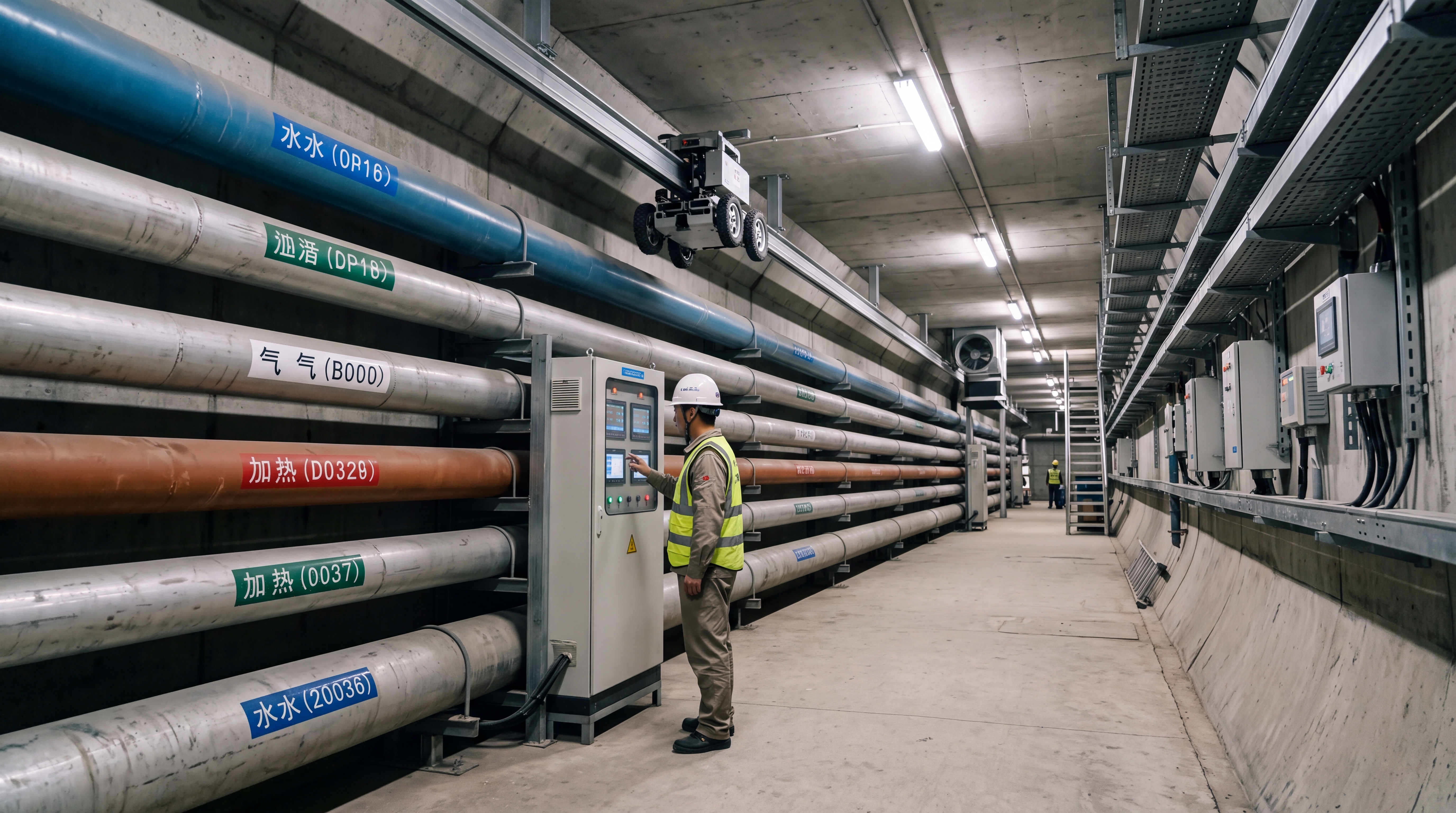
Faced with intricate underground pipe networks, technological advancement remains the core driving force for breakthroughs in leakage governance. Currently, District Metered Area (DMA) zoning management technology has become a globally recognized effective method for leakage control in the water sector. Its core logic lies in "breaking the whole into parts"—scientifically dividing the massive, disordered urban network topology into several relatively independent, clearly bounded grid zones based on topography, pipeline routing, and the number of water-consuming households.
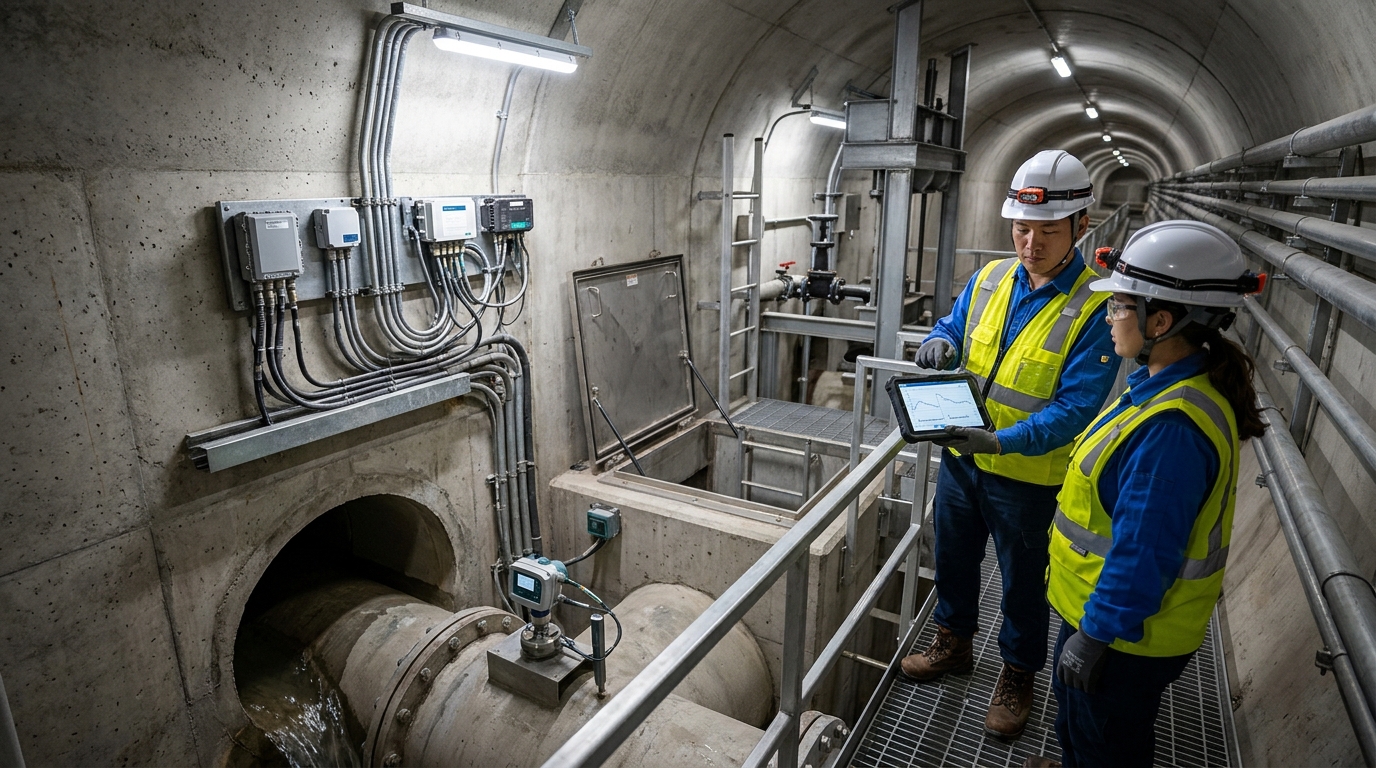
At the boundaries of these physically isolated zones, high-precision smart metering devices play the critical role of "gatekeepers." Traditional mechanical water meters, due to physical limitations such as high starting flow rates and susceptibility to scale buildup and wear, often "turn a blind eye" to minor concealed leaks in the network. Today, innovations in metering technology have completely changed this reality. Ultrasonic water meters and electromagnetic flowmeters, with their overwhelming advantages of having no moving parts, wide turndown ratios, and extremely low starting flow rates, are rapidly replacing traditional mechanical meters. They can accurately capture even the most minute changes in water flow within the network.
More importantly, the widespread adoption of IoT remote transmission technology has given wings to underground data, enabling it to soar to the cloud. Whether utilizing NB-IoT, LoRa, or Cat.1 communication technologies, continuous optimizations in signal penetration and low-power characteristics have successfully overcome physical barriers such as the damp environment and severe signal shielding of underground meter pits. This has completely bridged the "last mile" for real-time transmission of network operational data to cloud control centers. As a result, managers can monitor flow differentials and pressure fluctuations across each DMA zone at minute-level frequencies without leaving their offices, achieving a qualitative leap in the transparency of network operational status.
Data Valorization: AI Algorithms and Multi-Dimensional Detection Networks Precisely Pinpoint "Concealed Leaks"
Acquiring massive, multi-dimensional network operational data is merely the first step. The true challenge in reducing network leakage lies in how to extract actionable business value from these raw numbers. In this phase, big data analytics and Artificial Intelligence (AI) algorithms are reshaping the technical boundaries of network O&M with unprecedented depth.
Empowered by AI models, the system can establish dynamic operational baselines for each DMA zone. Taking Minimum Night Flow (MNF) analysis as an example, during the 2:00 AM to 4:00 AM window when residential water consumption is minimal, network flow should theoretically drop to its lowest and remain stable. Through deep learning of variables such as historical flow data, weather conditions, and holiday patterns, AI algorithms can accurately predict the normal flow thresholds for this period. Once actual monitoring data exhibits minor anomalies deviating from the baseline, the system can trigger second-level alerts and automatically assess whether new physical leaks exist in the area.
Beyond macro-level analysis of flow and pressure, micro-level physical detection technologies are also deeply integrating with software algorithms. Acoustic leak detection technology deploys highly sensitive correlators and listening devices on pipelines to capture high-frequency noise in specific bands generated by water jetting from damaged areas. AI algorithms are responsible for filtering out background environmental noise from ground traffic and construction, precisely extracting leak characteristic sounds. Additionally, Ground Penetrating Radar (GPR) technology can visualize underground soil voids, while InSAR (Interferometric Synthetic Aperture Radar) displacement monitoring technology, based on satellite remote sensing, can keenly detect millimeter-level surface subsidence caused by underground pipeline leak scouring from a space-based perspective. These complementary technologies collectively construct an integrated "space-air-ground-subsurface" three-dimensional leakage detection network, significantly improving the discovery rate and repair efficiency of "concealed leaks" buried deep underground with no obvious surface signs.
Future Outlook: Digital Twins Guiding Network Management Toward a "Predictive" Future
Standing at the current technological juncture and looking to the future, the evolution of urban pipe networks will undoubtedly exhibit high levels of intelligence and foresight. Digital Twin technology is accelerating its deployment and is destined to become an indispensable core infrastructure for next-generation urban network management.
A Digital Twin is not merely simple 3D visual modeling; rather, it constructs a dynamic system in a virtual digital space that is fully mapped and interacts in real-time with the physical network. Future smart network platforms will not only achieve precise synchronization of physical states like water pressure, flow, and water quality from the real world onto virtual models but will also possess powerful simulation capabilities. For instance, during network renovations or when responding to sudden pipe burst incidents, the system can conduct hydraulic simulations and incident scenario modeling in the virtual space, instantly calculating the optimal valve closure strategy to minimize the impact area of water outages.
Even more disruptively, network leakage governance will transition completely from the current "post-incident remediation" and "in-process monitoring" to the highest tier of "pre-incident prediction." Digital Twin systems will be able to integrate lifecycle aging curves for various pipe materials (e.g., ductile iron, PE, PCCP), soil corrosivity data, and long-term network pressure fluctuation fatigue data to proactively predict which specific pipe segments face a high risk of rupture in the coming months. Based on these predictions, the system will automatically generate optimal preventive maintenance strategies and pressure regulation plans, eliminating hidden dangers before pipe bursts even occur.
The urban network industry is at a critical historical juncture of transitioning from old to new growth drivers. Guided by macro-policies that strictly control leakage rates, a technological system built on DMA zoning management as the foundational base, high-precision smart metering as the sensing tool, and big data & AI algorithms as the decision-making core is comprehensively maturing. Future urban underground networks will be far more than cold physical conduits for transporting water resources; they will evolve into "intelligent living entities" deeply integrating wide-area sensor networks, edge computing nodes, and AI hubs. Only by adapting to this irreversible law of technological evolution and continuously deepening precision network operations can the water sector firmly guarantee urban water supply security while achieving a win-win for both the ecological benefits of water resources and the economic benefits of enterprises, laying a solid foundation for building highly resilient, green, low-carbon modern smart cities.
? Learn More
Visit https://www.cssoc.com or call 400-808-9114 to obtain customized solutions for your pipeline management needs.
Reference Sources
- National Development and Reform Commission - Notice on Strengthening Leakage Control of Public Water Supply Networks
- Ministry of Housing and Urban-Rural Development - Policy Guidance on Urban Renewal and Underground Network Renovation