Urban Pipeline Network Trend Outlook: Drainage Reshapes the Urban Pipeline Network
Yicai Technology Observation: Urban Pipe Networks Enter a New Stage of Collaborative Governance in Drainage, Liquid Level, Flow Rate, and Waterlogging Prevention.
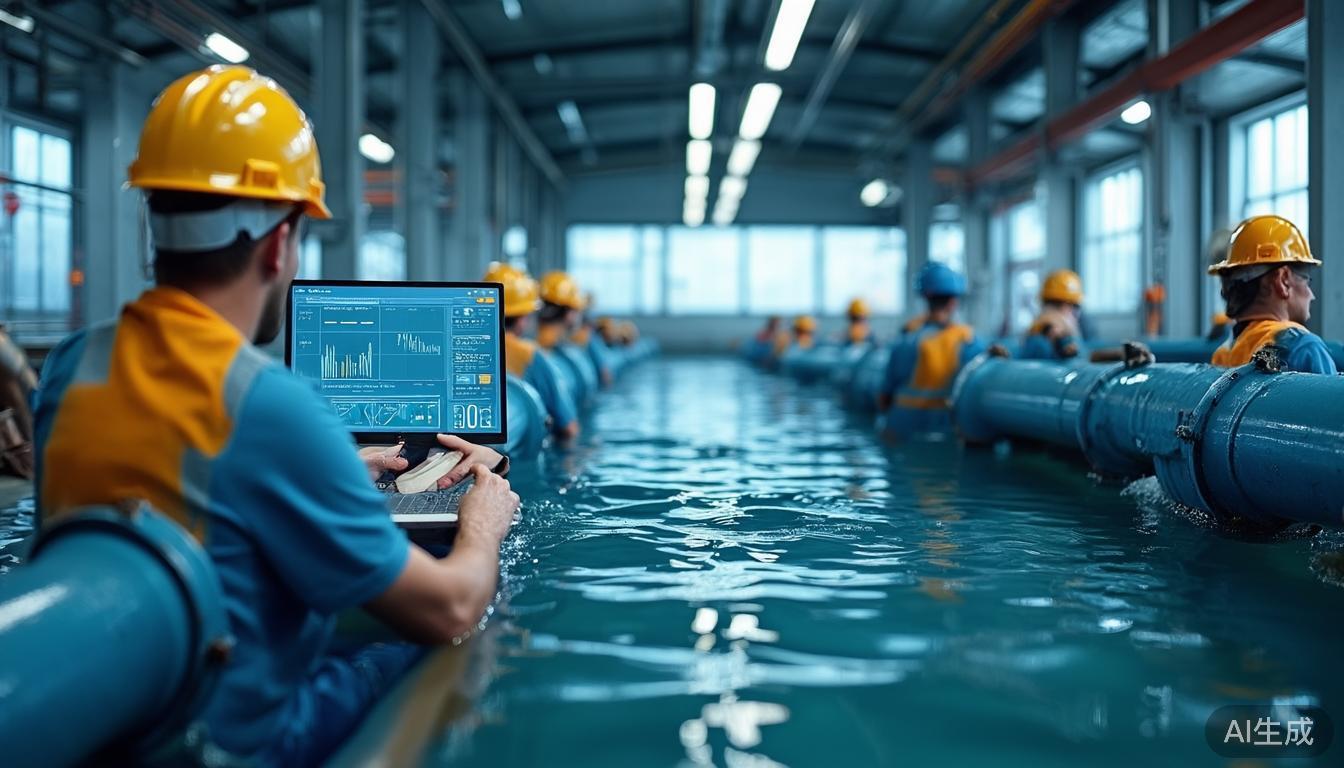
Urban underground pipe networks are transitioning from traditional "concealed works" to core infrastructure for the safe operation and refined governance of cities. In recent years, the frequent occurrence of extreme rainfall events has led to road waterlogging, blocked underpasses, and flooding of underground spaces in some cities during short-duration heavy rains, putting the capacity of drainage networks, pump stations, detention facilities, and river floodways under concentrated scrutiny. Industry discussions centered on keywords such as drainage capacity, liquid level monitoring, flow metering, and waterlogging early warning have extended from the engineering construction level to data governance, operational dispatch, and risk management.
From the perspective of public policies and industry practices, urban pipe network construction no longer merely pursues the expansion of pipe diameters and lengths, but places greater emphasis on system diagnostics, storm-sewer separation, source reduction, process detention and retention, intelligent sensing, and emergency linkage. For the drainage industry, the focus in the coming period will be on finding a balance among stock renewal, resilient city building, smart water management, and fiscal constraints, and enhancing the observability, predictability, and dispatchability of pipe network operations through basic data such as liquid level and flow rate.
I. Market Trends: Shifting from Incremental Expansion to Stock Renewal and Resilience Investment
The urban pipe network market is undergoing structural changes. Over the past decade or so, industry growth was mainly driven by the construction of supporting pipe networks for new roads, new district development, and the expansion of sewage treatment capacity. Currently, however, urban renewal, old residential area renovation, waterlogging hotspot remediation, storm-sewer separation, and pipe network rehabilitation have become more significant sources of demand. Public data shows that the total length of urban drainage pipelines nationwide has approached 900,000 kilometers, with rainwater, sewage, and combined sewer systems coexisting. In some old urban areas, pipe networks have been in service for over 30 years, suffering from issues such as aging pipe materials, joint leakage, misconnections and cross-connections, siltation and blockages, and structural defects. As the basic carrier for urban flood control, waterlogging prevention, and sewage collection, the operational quality of drainage pipe networks directly affects the effectiveness of waterlogging prevention and pollution control.
Key Insight: On one hand, the demand for drainage pipe network inspection and trenchless rehabilitation continues to rise. Technologies such as CCTV pipe inspection robots, QV pipe inspection cameras, sonar inspection, and pipe endoscopes are widely used. On the other hand, trenchless rehabilitation methods such as CIPP UV curing, thermal curing lining, spiral winding, and short pipe replacement are increasingly applied due to their minimal impact on traffic. Consequently, the market is gradually expanding from single pipe material supply to multi-link collaboration involving inspection, assessment, rehabilitation, O&M, monitoring equipment, platform software, and model services.
II. Drainage Systems: Reconstructing Pipe Network Functions through Storm-Sewer Separation, Detention and Retention, and Source Reduction
The technical route of drainage systems is shifting from "rapid discharge" to a comprehensive model of "source reduction, pipe network discharge, combined detention and discharge, and emergency response for excess standards." Traditional drainage design emphasizes transporting rainwater to rivers or receiving water bodies as quickly as possible through pipes and channels. However, in high-density urban environments, relying solely on pipe diameter expansion often faces challenges such as insufficient underground space, backwater effects from downstream water levels, and superimposed peak flows. Therefore, drainage systems are beginning to integrate with sponge city facilities, stormwater detention tanks, deep tunnels, pump station clusters, and river channel remediation.
- Storm-Sewer Separation: Initial rainwater pollution control has become an important approach for improving the quality and efficiency of drainage. Through source separation, pipe network renovation, interception and detention, and terminal treatment, overflow frequency can be reduced.
- Detention and Retention: Projects such as the Shanghai Suzhou Creek Deep Tunnel Drainage and Storage System demonstrate the approach of utilizing underground space for storage to reduce flood peaks.
- Sponge City Construction: Improves on-site absorption capacity through permeable pavements, bioretention, rain gardens, and sunken green spaces. Many newly built areas use the annual runoff volume control rate as an important indicator to reduce pressure on the drainage system at the source.
III. Liquid Level and Flow Rate Monitoring: From Point Instruments to Full-Domain Sensing Networks
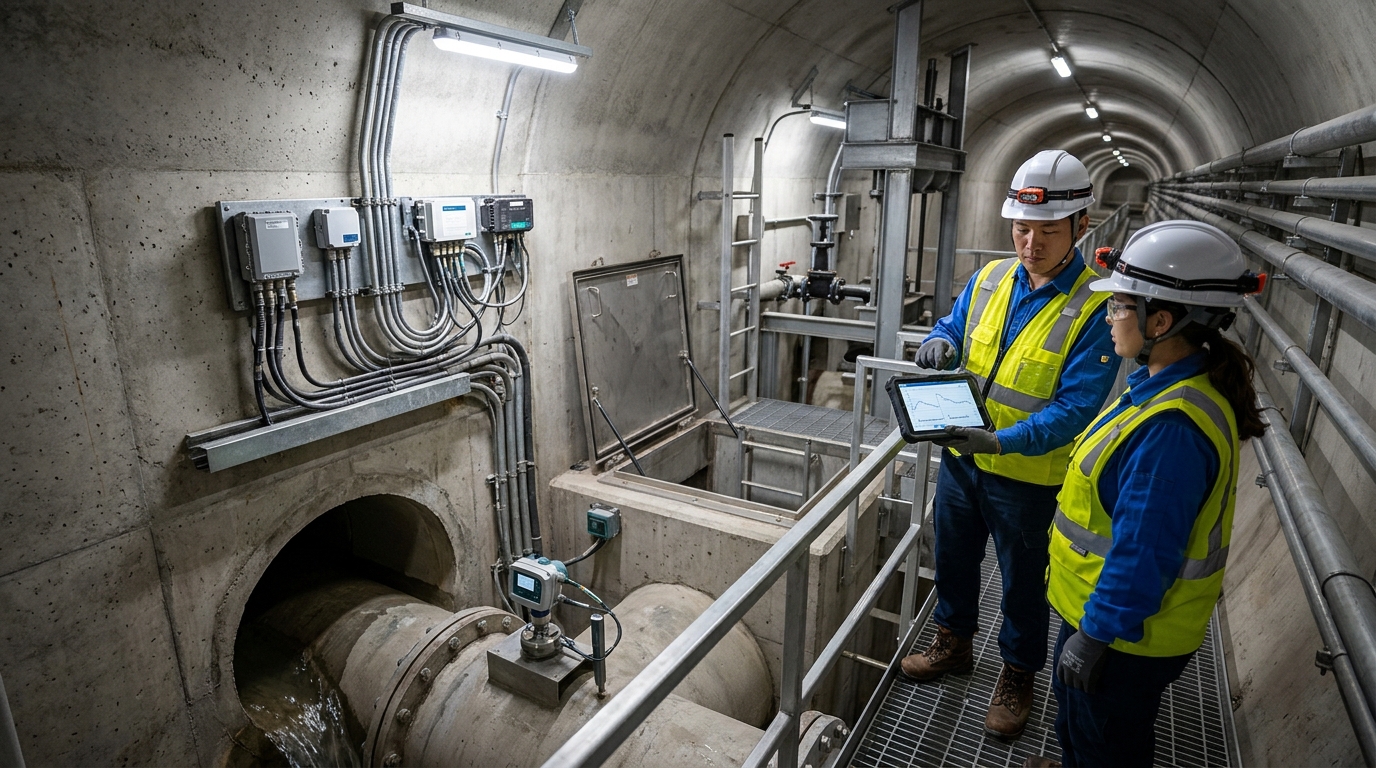
To truly make drainage pipe networks manageable, the first step is to solve the problems of "invisibility, inaccurate measurement, and slow transmission." Liquid level and flow rate are the most basic and critical operational parameters. Liquid level data can reflect water level changes in manholes, stormwater inlets, pipes and channels, while flow rate data can characterize the conveyance capacity of the pipe network.
Liquid Level Monitoring
- Ultrasonic: Standard manholes, ranges within several meters, accuracy ±0.25% FS.
- Radar: Less affected by foam/moisture, millimeter-level accuracy.
- Pressure: Lower cost, requires consideration of siltation and zero drift.
Flow Rate Measurement
- Electromagnetic: Suitable for full-pipe sewage (DN300-DN2000), Class 0.5 accuracy.
- Ultrasonic (Doppler/Transit-time): Suitable for non-full-pipe/open channel, measures velocity & level simultaneously.
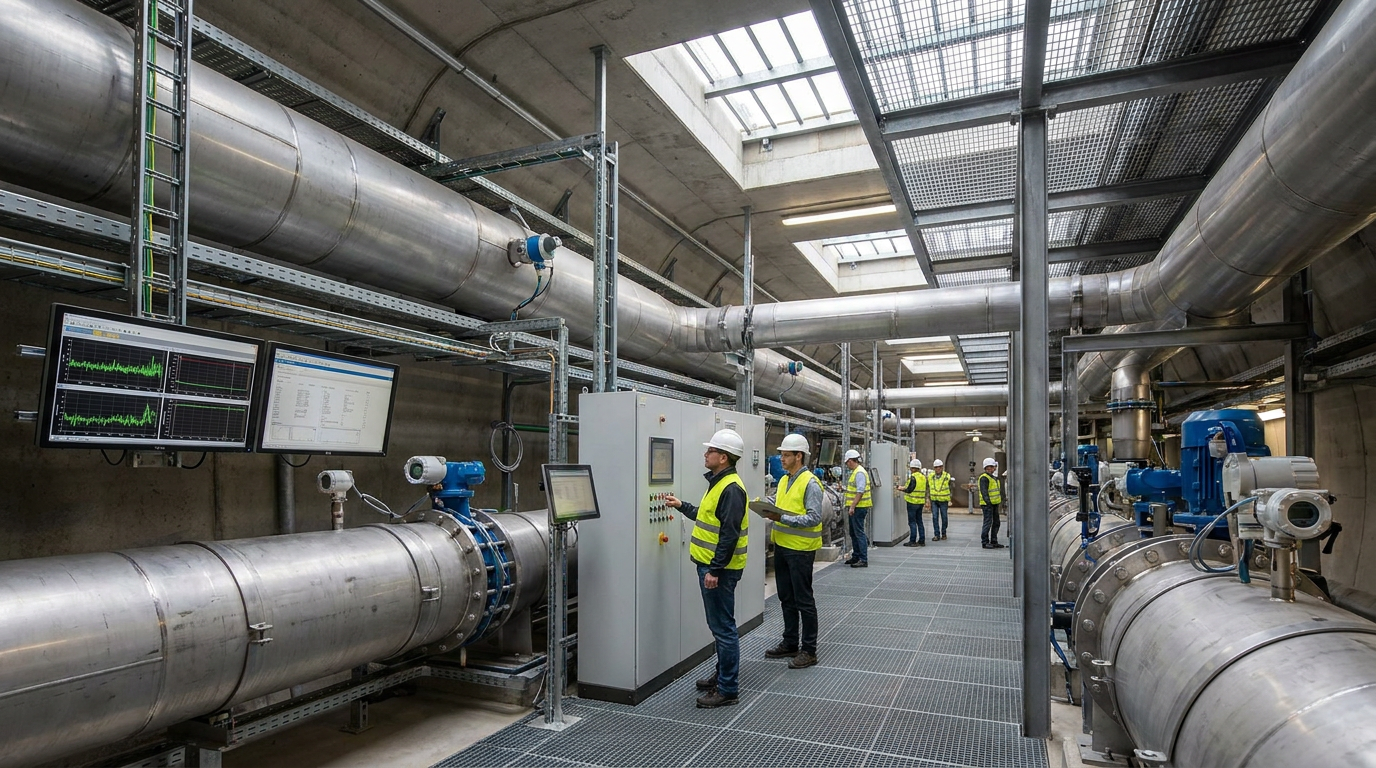
In industry practice, cities deploy monitoring terminals at key trunk pipes, pump station forebays, and waterlogging hotspots. With the popularization of NB-IoT, 4G, 5G, and edge gateways, the drainage sensing network is evolving from single-point devices to a "single map of the pipe network," providing a continuous data foundation for dispatch decision-making.
IV. Waterlogging Prevention and Control: Moving from Engineering Standards to Closed-Loop Risk Management
The core of urban waterlogging prevention is shifting from "building compliant engineering" to "forming a closed-loop risk management system." This closed loop includes risk identification, monitoring and early warning, engineering dispatch, emergency response, review and evaluation, and continuous improvement. In recent years, extreme rainstorms have prompted regions to pay more attention to high-risk scenarios such as underpass intersections, tunnels, subway entrances, and underground garages.
Waterlogging exceeding 15 cm may affect vehicle and pedestrian safety, and exceeding 30 cm significantly increases risk. Therefore, waterlogging depth monitoring, video surveillance, and automatic alarms have become common configurations.
Waterlogging dispatch has expanded from single pump station operation to joint regulation of "sources, networks, rivers, lakes, pumps, and gates." Cities such as Guangzhou, Shenzhen, Shanghai, and Chengdu are promoting command platforms integrating weather radar, nowcasting, drainage models, and emergency teams. Future waterlogging prevention will place greater emphasis on the combination of "engineering resilience and management resilience."
V. Policy Impact: Planning, Standards, and Funding Mechanisms Working in the Same Direction
Policy is the most direct variable in the urban pipe network industry. Recent national policies related to urban drainage, sewage treatment, and sponge city construction promote the industry's shift from fragmented construction to systematic governance. The "14th Five-Year Plan for Urban Sewage Treatment" proposes adding and renovating approximately 80,000 kilometers of sewage collection pipe networks.
Standards and funding mechanisms are reshaping industry logic. At the design level, return periods vary by importance (2-3 years for general areas, up to 100 years for critical locations). At the funding level, tools such as central budget investment, local government special bonds, and infrastructure REITs provide diversified channels. Project planning now values performance indicators—such as improved sewage collection rates and reduced overflow pollution—driving the industry from "emphasizing construction" to "emphasizing operation, assessment, and results."
VI. Technological Directions: Synergy of Digital Twins, AI Prediction, and Edge Control
Future technological competition focuses on three levels: data quality, model capability, and control closed loop. Digital twin drainage systems are becoming an industry hotspot. Their foundation lies in GIS geographic information, BIM facility models, and hydraulic models like SWMM and InfoWorks ICM. Managers can simulate pipe network fullness and overflow locations under different rainfall scenarios, advancing prediction windows from "post-event disposal" to "30 minutes to 3 hours in advance."
Artificial intelligence and edge computing enhance adaptive capacity. AI applies to rainfall forecast downscaling, waterlogging point prediction, and anomaly identification. Edge computing terminals achieve local alarming and linkage under unstable communication conditions. In the future, drainage pipe networks will evolve into an urban water safety operation system with sensing, analysis, prediction, and control capabilities.
VII. Outlook: Three Main Threads for Urban Pipe Networks in the Next Five Years
Looking ahead to the next five years, the urban pipe network industry will unfold along three main threads:
- Stock Renewal and Quality-Efficiency Improvement: Old pipe network rehabilitation, misconnection renovation, and storm-sewer separation will continue to release demand, focusing on lifecycle costs.
- Sensing Networks and Data Assets: Liquid level, flow rate, and water quality indicators will form continuous data streams, making data governance and platform interoperability key to success.
- Waterlogging Resilience and Operational Closed Loop: Cities will emphasize risk contingency plans, cross-departmental linkage, and public alerts under extreme rainfall scenarios.
Conclusion
Overall, the urban pipe network industry is entering a stage that is more rational, more refined, and places greater emphasis on long-term operation. Drainage is no longer just about "discharging water away," and liquid level and flow rate are no longer just instrument readings; they are core data assets supporting waterlogging prevention decision-making, pollution control, and asset management.
Although urban underground pipe networks are inconspicuous, they directly relate to public safety and people's livelihood experience. As policies, technologies, and operational models continue to mature, the collaborative governance of drainage, liquid level, flow rate, and waterlogging prevention will become one of the most certain directions in future urban infrastructure construction.