Development Opportunities for Urban Pipeline Networks in 2026 Under the Dual Carbon Goals
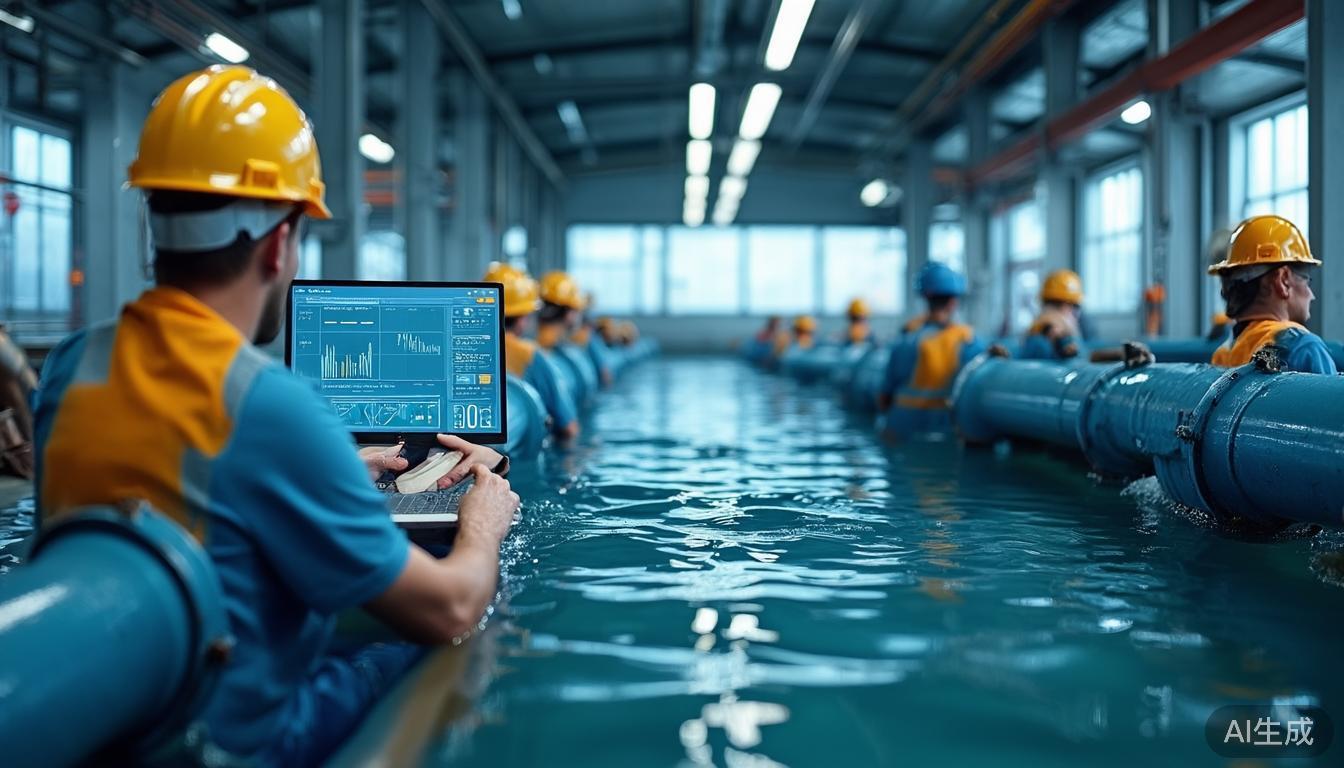
Urban pipe networks have long been regarded as "invisible engineering," yet they directly impact road traffic, underground space safety, sewage collection efficiency, and the capacity to respond to extreme rainfall. A new urban operational perception system is taking shape around the liquid level, flow rate, waterlogging depth, pump station operating status, and storage facility load of drainage networks.
In the past, drainage systems relied more on engineering construction and manual inspections; today, against the backdrop of frequent extreme rainfall, accelerated urban renewal, and advancing digital governance, drainage networks are transitioning from standalone municipal facilities to the data foundation for safe urban operations.
Policy Targets: 2025 & 2035
- By 2025: Cities will basically form a drainage and waterlogging prevention engineering system tailored to local conditions.
- By 2035: An overall pattern of "source reduction, network discharge, combined storage and discharge, and emergency response" will be established.
- Sponge City Goal (2030): Over 80% of urban built-up areas to achieve 70% or more local rainfall absorption.
I. Market Trends: Stock Renewal & Systematic Prevention
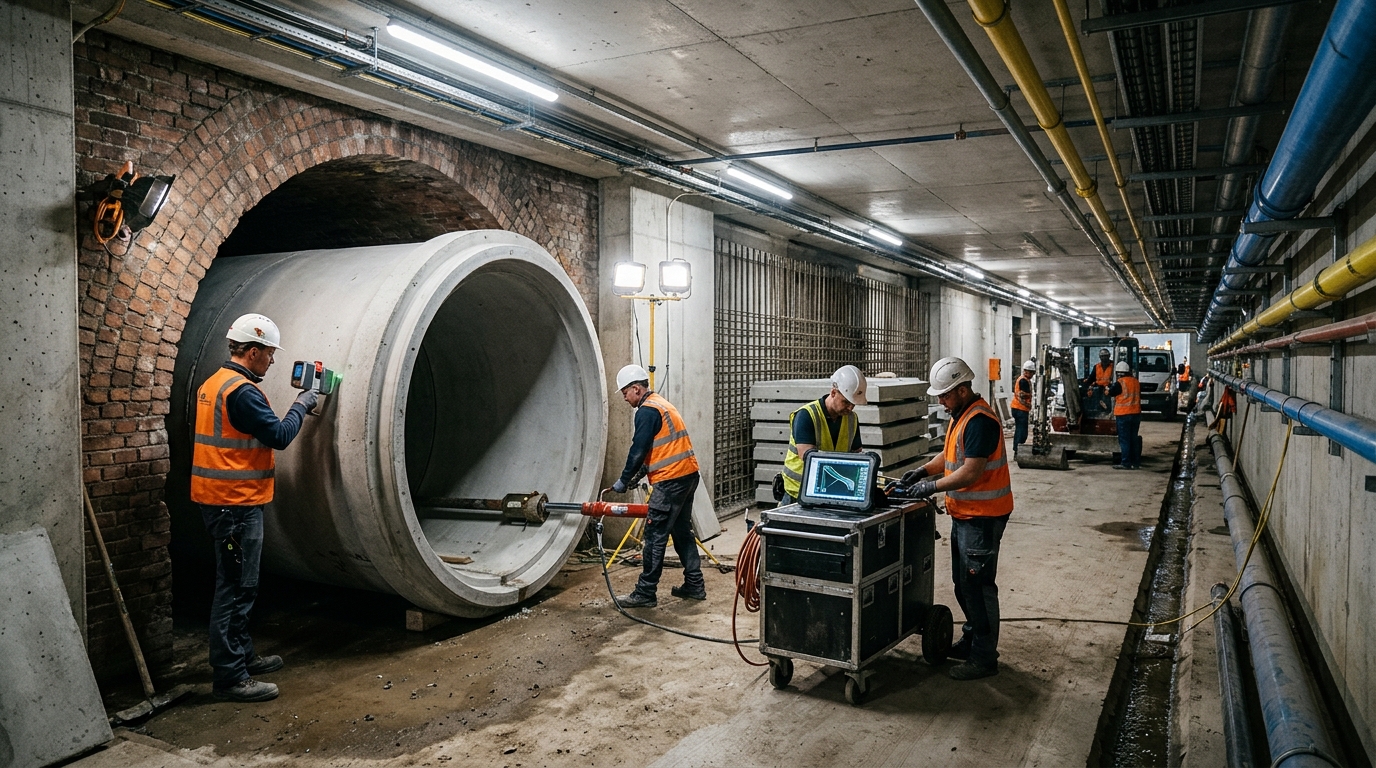
China's urban drainage networks have formed a large-scale stock of assets. In megacities, issues such as pipeline aging, cross-connections, siltation, and insufficient flow capacity are emerging. The industry demand has shifted from "whether we have it" to "whether it is good, stable, and capable of rapid response."
The market structure is changing. Investment focus is shifting towards:
- Network inspection and defect repair
- Stormwater and sewage separation renovation
- Intelligent pump station upgrades
- Online monitoring equipment deployment
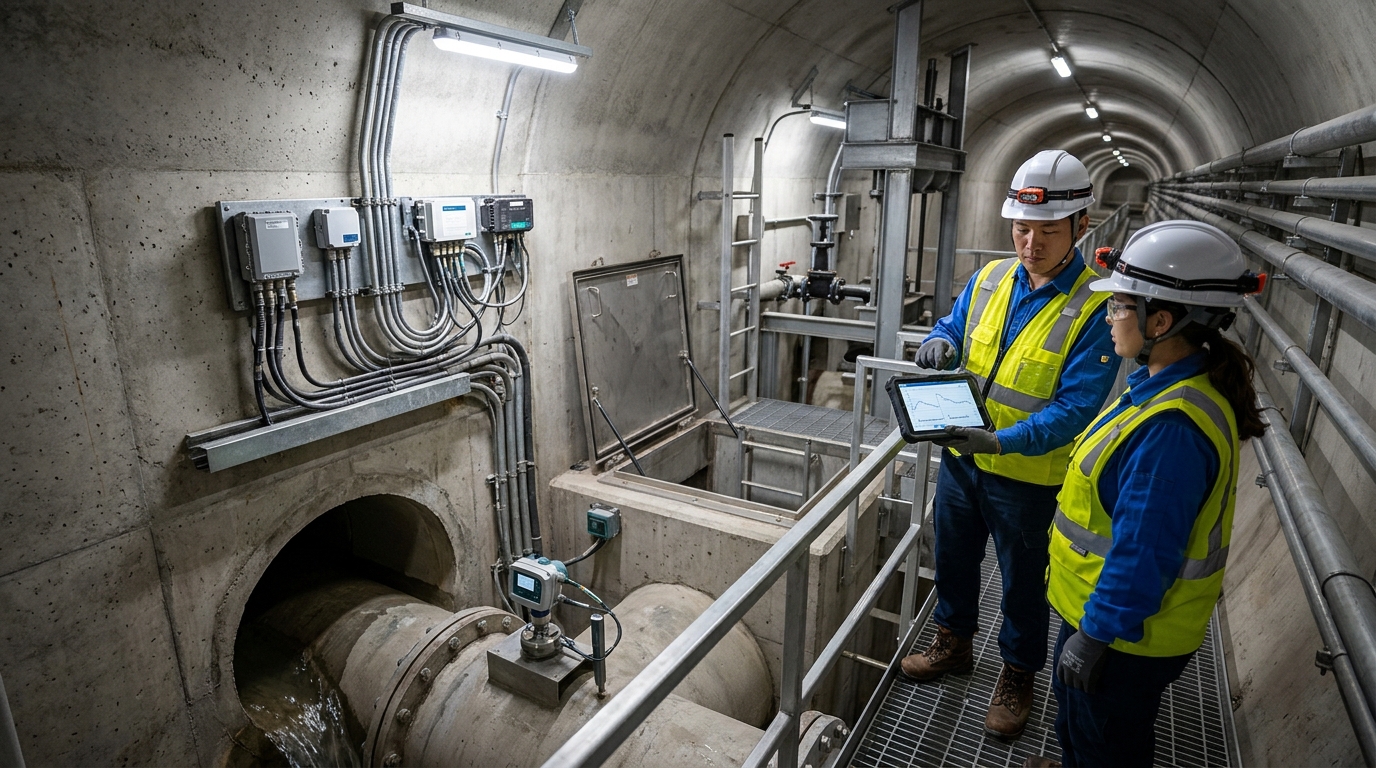
Sensing devices such as level gauges, flow meters, and video surveillance are becoming standard configurations, driving the industry to evolve from general contracting to a composite model of "engineering + data + operations."
II. Liquid Level & Flow Monitoring: From Single Instruments to Digital Gateways
Liquid level and flow rate are the most fundamental parameters in drainage operation. Current technologies include:
Level Gauges
- Radar: ±2mm accuracy, suitable for humid/corrosive conditions.
- Ultrasonic: ±0.25% accuracy, ideal for manholes/open channels.
- Pressure: 0-10m range, facilitates integration with traditional control systems.
Flow Meters
- Electromagnetic: ±0.5% accuracy, DN300-DN2000, best for full-pipe.
- Doppler Ultrasonic: Adaptable to non-full-pipe/impurity-laden conditions.
- Transit-Time: Suitable for clean water bodies.
Deployment logic is shifting from single-point instruments to a network around key nodes. Data collection frequency increases from every 15 minutes (normal) to every 1-5 minutes (heavy rain), providing a foundation for model calibration and dispatch decision-making.
III. Elevated Waterlogging Standards: Resilient & Controllable
Design return periods are increasing based on regional importance:
- General Areas: 1-3 years
- Important Areas: 3-5 years
- Critical Zones/Traffic Nodes: Up to 10+ years
The concept is shifting from "rapid discharge" to a four-pillar approach:
Source Reduction
Permeable pavements, rain gardens, green roofs.
Network Discharge
Enhancing conventional drainage via pipes and pumps.
Combined Storage
Storage tanks, deep tunnels, wetlands for peak attenuation.
Emergency Response
Early warning, traffic control, mobile pumps.
IV. Tech Directions: Closed-Loop Integration
The core future system integrates "perception—modeling—control—O&M".
Perception Layer
Devices are evolving towards low power consumption, IP68 protection, edge computing, and self-diagnostics. Multi-source data (liquid level, flow, quality, gas, video) is collected synchronously.
Modeling Layer
Traditional hydraulic models combine with AI and digital twins. Systems can predict waterlogging points and network overload risks 1-3 hours in advance using meteorological radar data. The value lies in continuous calibration: "becomes more accurate the more it is used."
Control & O&M Layers
Coordinated dispatch pre-evacuates networks before rain and dynamically adjusts pumps during rain. O&M shifts from reactive repairs to predictive maintenance using CCTV/QV robots and trenchless rehabilitation technologies, prioritizing sections with long-term low flow or frequent backwater effects.
V. Policy Impact: Top-Level Design & Performance Orientation
Policies like the "Implementation Opinions on Strengthening the Management of Urban Waterlogging" drive the shift from single engineering construction to comprehensive goals encompassing safety, ecology, and digital governance.
Funding & Assessment Shifts
Funding sources now include local government special bonds, central budget investments, and ultra-long-term treasury bonds.
Assessments are shifting from "construction volume" to "operational effectiveness," including indicators like elimination rate of waterlogging points, sewage collection concentration, and emergency response time. Models like EOD (Ecology-Oriented Development) are gaining traction.
VI. Case Observations: Systematic Renovation Value
Shanghai: Suzhou Creek Deep Tunnel
A 15km main tunnel with ~10m diameter and 200,000 m³ storage capacity.
Embodies "network discharge + storage peak attenuation + systematic governance," suitable for high-density areas.
Shenzhen/Guangzhou/Hangzhou: Smart Dispatch
Deploying minute-level data uploading for early warning linkage.
Key success factor: Data entering the dispatch process to form a closed loop of warning, handling, and review.
Following extreme events like Zhengzhou's "7·20" rainstorm, cities like Beijing, Wuhan, and Chongqing are accelerating resilient facility construction. Liquid level and flow data act as the "eyes" for risk assessment and resource dispatch.
VII. Forward-Looking Outlook: Climate Adaptation
In the next 3-5 years, three trends will dominate:
- Denser Perception: Monitoring extends from key facilities to ordinary network nodes.
- Real-Time Modeling: Shift from offline analysis to 1-3 hour advance risk prediction.
- Cross-Departmental Collaboration: Linkages with meteorological, emergency, and transportation departments.
Looking ahead 10 years, urban drainage networks will integrate into climate-adaptive city construction. Gray and green infrastructure will combine deeply. Whole-life-cycle management, carbon accounting, and resilience assessment will become new industry standards.
Cities that continuously acquire high-quality data and translate it into dispatch capabilities will occupy a proactive position in the future waterlogging prevention system.