Selection and Procurement of Drainage Network Monitoring Systems: What is the Cost of Drainage Monitoring?
A comprehensive guide to market drivers, technical routes, pricing strategies, and lifecycle costs.
Introduction: In recent years, extreme heavy rainfall has occurred frequently in many cities. Issues such as road waterlogging, submergence of underpass tunnels, and backflow into residential communities caused by short-duration heavy rain have continuously increased the pressure on the safe operation of drainage systems. Traditional management methods relying on manual patrols, empirical judgment, and post-event response can no longer meet the flood prevention safety requirements of high-density urban operations. Consequently, drainage network monitoring has become a crucial direction for the digital transformation of municipal infrastructure. Its core lies in the real-time collection of data on liquid level, flow rate, waterlogging depth, manhole cover status, and rainfall, providing a basis for drainage dispatch, emergency rescue, and network assessment.
From the perspective of industry development, drainage network monitoring is no longer just simple equipment procurement; it is a systematic engineering project encompassing sensors, communication networks, power supply methods, data platforms, model analysis, and operation and maintenance services. While purchasers pay attention to the price of individual devices, they are also increasingly valuing data accuracy, system stability, long-term maintenance costs, and platform scalability. This article will provide an objective analysis of the drainage network monitoring industry from aspects of market drivers, technical routes, product price ranges, purchasing recommendations, maintenance costs, and application cases, offering a reference for urban drainage management units, engineering integrators, and relevant procurement decision-makers.
I. Market Drivers: Convergence of Drainage Safety and Digital O&M Demands
The primary driver of the drainage network monitoring market stems from urban flood prevention safety demands. As urban impervious surface areas increase, the surface runoff coefficient rises, significantly accelerating the convergence speed after rainfall. Once the rainfall intensity exceeds the design capacity of the network, waterlogging easily forms in low-lying road sections, under overpasses, and at entrances and exits of underground spaces. An indicator of widespread industry concern is the time gap between "discovery, response, and disposal." In the past, it might take over 30 minutes for waterlogging to be detected after it occurred in some cities. However, through online monitoring and automatic alarming, this target is usually compressed to within 10 to 15 minutes. For key flood prevention areas, some projects even require a waterlogging alarm delay of less than 5 minutes to facilitate the advance dispatch of pumping stations, gates, valves, and rescue forces.
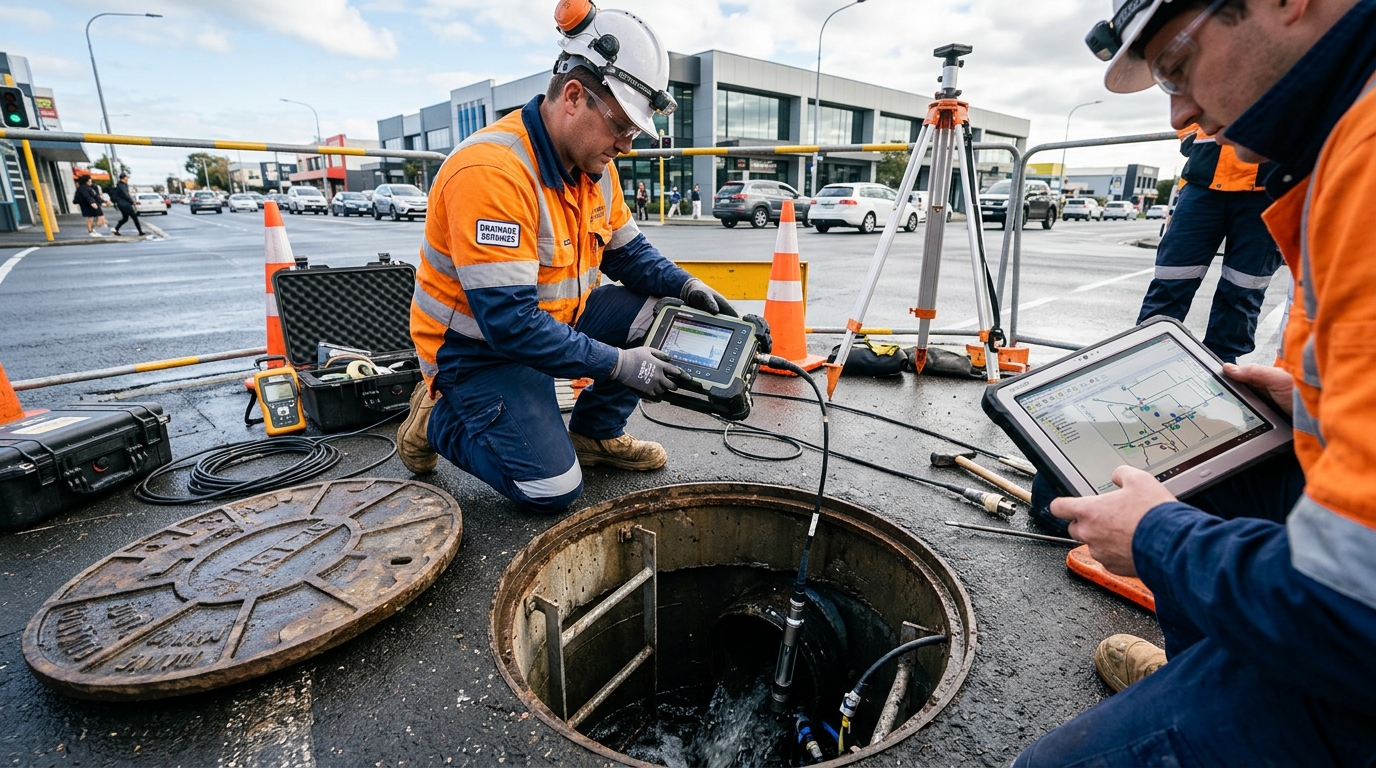
The second driver comes from the demand for refined management of the drainage network. Many urban drainage networks suffer from unclear baseline conditions, severe siltation, mixed rainwater and sewage connections, external water infiltration, and abnormal discharge outlets. Relying solely on periodic manual inspections makes it difficult to grasp the dynamic operational status of the network. Liquid level and flow monitoring can help management units determine whether pipelines are operating at high water levels, whether there is abnormal flow during dry weather, and whether drainage capacity has decreased due to siltation. It also provides basic data for rain-sewage separation retrofitting, network rehabilitation, and drainage model calibration. With the advancement of urban renewal, sponge city construction, and efforts to make up for shortcomings in drainage and flood prevention, monitoring equipment is gradually shifting from pilot applications to large-scale deployment, and market demand is transitioning from single-point equipment procurement to area-wide, networked, and platform-based construction.
II. Monitoring System: Synergy of Liquid Level, Flow Rate, and Flood Prevention Scenarios
Liquid Level Monitoring
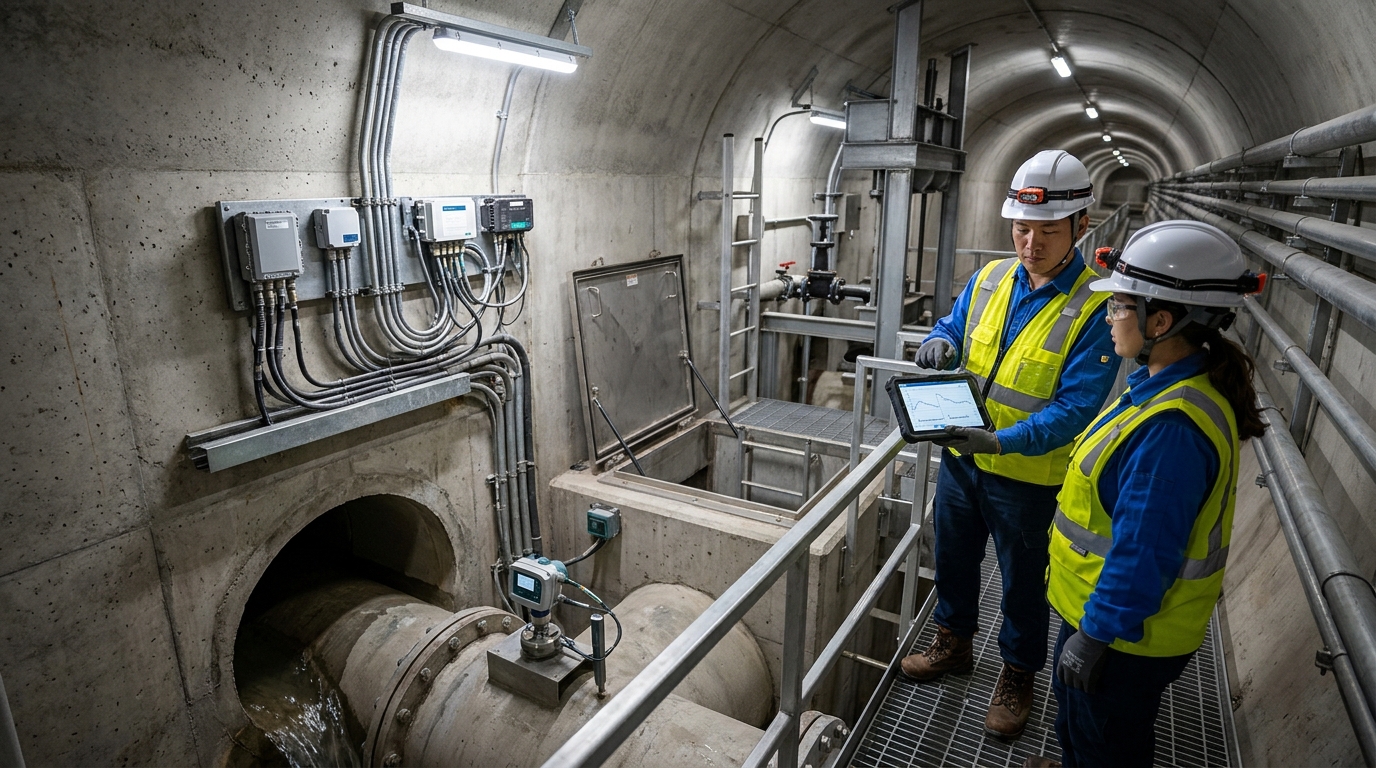
In drainage network monitoring, liquid level is one of the most fundamental and widely applied parameters. Common technical routes include submersible pressure level transmitters, ultrasonic level transmitters, and radar level transmitters. Submersible pressure level transmitters are relatively low in cost and suitable for large-scale deployment, but require attention to protection and cleaning in environments with sludge, grease, and corrosive substances. Ultrasonic level transmitters are easy to install but are susceptible to interference from water vapor, foam, obstacles, and temperature changes inside the manhole. Radar level transmitters have strong anti-interference capabilities and are suitable for complex working conditions, but their prices are generally higher than those of standard ultrasonic devices. Common industry technical parameters include a range of 0 to 10 meters, an accuracy of ±1 cm or ±0.5% FS, an IP68 protection rating, a sampling interval of 5 to 15 minutes, and support for encrypted collection during heavy rain.
Flow & Flood Prevention Integration
Flow monitoring, on the other hand, focuses more on drainage capacity assessment and abnormal discharge identification. Drainage pipelines mostly operate under gravity flow and are frequently in a non-full-pipe state; therefore, Doppler flow meters are widely used as they can simultaneously measure liquid level and flow velocity, making them suitable for circular pipes, box culverts, and combined sewer networks. For pressure pipelines, pumping station discharge pipes, or pipe sections operating under full-pipe conditions for long periods, electromagnetic flow meters offer high stability, with common diameters covering DN300 to DN2000 and accuracies mostly between ±1% and ±2%. Flood prevention monitoring also needs to integrate waterlogging depth monitoring, video surveillance, manhole cover displacement monitoring, and rainfall data. For example, underpass tunnels typically use waterlogging rulers, radar, or video recognition methods; manhole covers prone to surcharging can be equipped with displacement or tilt sensors to trigger timely alarms when abnormal movement occurs, avoiding safety risks to pedestrians and vehicles.
III. Price Ranges: Clear Stratification of Single-Point Device and System Integration Costs
From a market price perspective, drainage network monitoring equipment varies significantly in price due to differences in technical routes, protection ratings, communication methods, and installation conditions. For liquid level monitoring, standard submersible level transmitters typically range from 1,500 to 6,000 RMB per unit; ultrasonic level transmitters range from 2,500 to 12,000 RMB; and radar level transmitters range from 4,000 to 18,000 RMB. If projects require explosion-proof, anti-corrosion, lightning-proof features, solar power supply, or high-precision calibration, prices will increase further. For waterlogging monitoring, simple waterlogging depth monitoring points cost about 5,000 to 15,000 RMB, while waterlogging monitoring equipment with video recognition or edge analysis functions ranges from approximately 6,000 to 30,000 RMB.
Flow Monitoring Equipment
- Doppler Flow Meters: 12,000 – 60,000 RMB/unit
- Electromagnetic Flow Meters: 30,000 – 150,000 RMB (based on diameter)
- Clamp-on/Transit-Time Meters: 20,000 – 100,000 RMB
Auxiliary & Platform Costs
- Manhole Cover Displacement: 1,500 – 8,000 RMB
- Rainfall Stations: 8,000 – 50,000 RMB
- Edge Gateways/RTUs: 3,000 – 20,000 RMB
- Platform Project Quote: 300k – 3M RMB (Basic) / 500k – 5M RMB (Advanced)
Overall Investment Estimate: For an area-wide project with 300 monitoring points, if focused primarily on liquid level and waterlogging monitoring, the total investment may range from 3 million to 8 million RMB; if it includes extensive flow monitoring, video analysis, and platform construction, the investment could reach 10 million to 30 million RMB.
IV. Purchasing Recommendations: Select Based on Scenarios and Prioritize Long-Term Stability
When purchasing drainage network monitoring equipment, buyers should avoid using price as the sole criterion and should first clarify the business scenarios. For trunk pipelines and key discharge outlets, it is recommended to prioritize data continuity and accuracy, adopting radar level transmitters or Doppler flow meters equipped with redundant communication. For pumping station forebays, storage tanks, and gate control sections, attention should be paid to the rate of liquid level change and linkage control capabilities. For underpass tunnels, low-lying communities, and areas around schools and hospitals, the focus should be on deploying waterlogging depth monitoring and alarming equipment. For rain-sewage mixed connection investigations and abnormal dry-weather flow identification, flow monitoring is more valuable than simple liquid level monitoring.
Key Selection Indicators
- Protection Rating: Equipment should generally meet IP68 protection standards and feature anti-corrosion housings and sealed designs given the damp and highly corrosive environment inside drainage manholes.
- Communication Reliability: NB-IoT, 4G, LoRa, and wired fiber optics each have their applicable conditions; when signals are weak in underground manholes, external antennas, relays, or gateways should be considered.
- Power Supply Capacity: For battery-powered devices, the battery life must be clearly defined, with common requirements being 3 to 5 years; solar power supply requires evaluation of lighting conditions and anti-theft maintenance.
- Data Quality: Equipment should be required to have functions such as abnormal value filtering, breakpoint resume transmission, remote calibration, and fault self-diagnostics.
- Interface Openness: The platform should support standard protocols to avoid being locked into a single system during future expansions.
V. Maintenance Costs: From Construction Investment to the Five-Year Operational Ledger
The true cost of a drainage network monitoring system is not just the construction investment, but also the subsequent maintenance. Industry experience shows that the annual O&M costs of a monitoring system typically account for 8% to 15% of the initial construction investment. Taking a project with 1,000 monitoring points as an example, if the initial construction investment is 15 million RMB, the annual O&M cost could range from 1.2 million to 2.25 million RMB. Maintenance mainly includes equipment cleaning, sensor calibration, battery replacement, communication fees, platform maintenance, spare parts replacement, and on-site inspections.
Annual O&M Cost Breakdown (Per Point)
- Battery Replacement: Every 3–5 years (~300–1,500 RMB/point)
- Communication Fees: ~60–360 RMB/point/year
- On-site Calibration: 1–2 times/year (~200–800 RMB/session)
- Cleaning & Inspection: 2–6 times/year (~150–600 RMB/session)
Effective ways to reduce maintenance costs include selecting equipment with self-cleaning and self-diagnostic functions, utilizing remote O&M platforms to reduce ineffective inspections, establishing a spare parts inventory to shorten fault recovery time, and clearly defining service indicators such as data integrity rate, fault response time, and equipment availability during the bidding stage. Purchasers should calculate the Total Cost of Ownership over at least a five-year cycle, rather than just looking at the quotation for the construction phase.
VI. Cases and Outlook: From Single-Point Alarming to Data Operations
Practices in various regions show that the value of drainage network monitoring is reflected not only in flood season alarming but also in daily operational management and engineering decision support. A flood-prone area in a southern city once built 620 monitoring points, including 320 for liquid level, 110 for flow rate, 90 for waterlogging, and 100 for manhole cover displacement, along with a unified monitoring platform and a waterlogging early warning model for key areas. After the project was completed, the detection time for abnormal events during the flood season was reduced from about 45 minutes to within 15 minutes, emergency response efficiency improved by about 40%, and the number of waterlogging events in key areas decreased by about 28% compared to pre-renovation levels. In an old urban area in a northern city, after operating 300 liquid level monitoring points and 120 flow monitoring points, multiple pipe sections with high liquid levels during dry weather and abnormal nighttime flows were identified, providing a basis for subsequent desilting, mixed connection retrofitting, and discharge outlet remediation.
Future Trends
- Expanded Monitoring Targets: Monitoring targets will expand from liquid level and flow rate to water quality, siltation, gas, and structural safety, forming a more comprehensive drainage perception system.
- Data Application Shift: Data application will shift from "being visible" to "calculating accurately," achieving advance prediction and proactive flood prevention through the linkage of weather forecasts, network hydraulic models, pumping station dispatch models, and emergency plans.
- Procurement Model Transition: The procurement model will transition from one-time construction to long-term operational services, with data quality, O&M response, and continuous iteration capabilities becoming key to project success.
For drainage management departments, drainage network monitoring is not merely the stacking of equipment, but a critical infrastructure for enhancing urban drainage safety, flood resilience, and refined governance capabilities. Only by truly integrating monitoring data into daily dispatch, maintenance, and decision-making processes can its long-term value be realized.