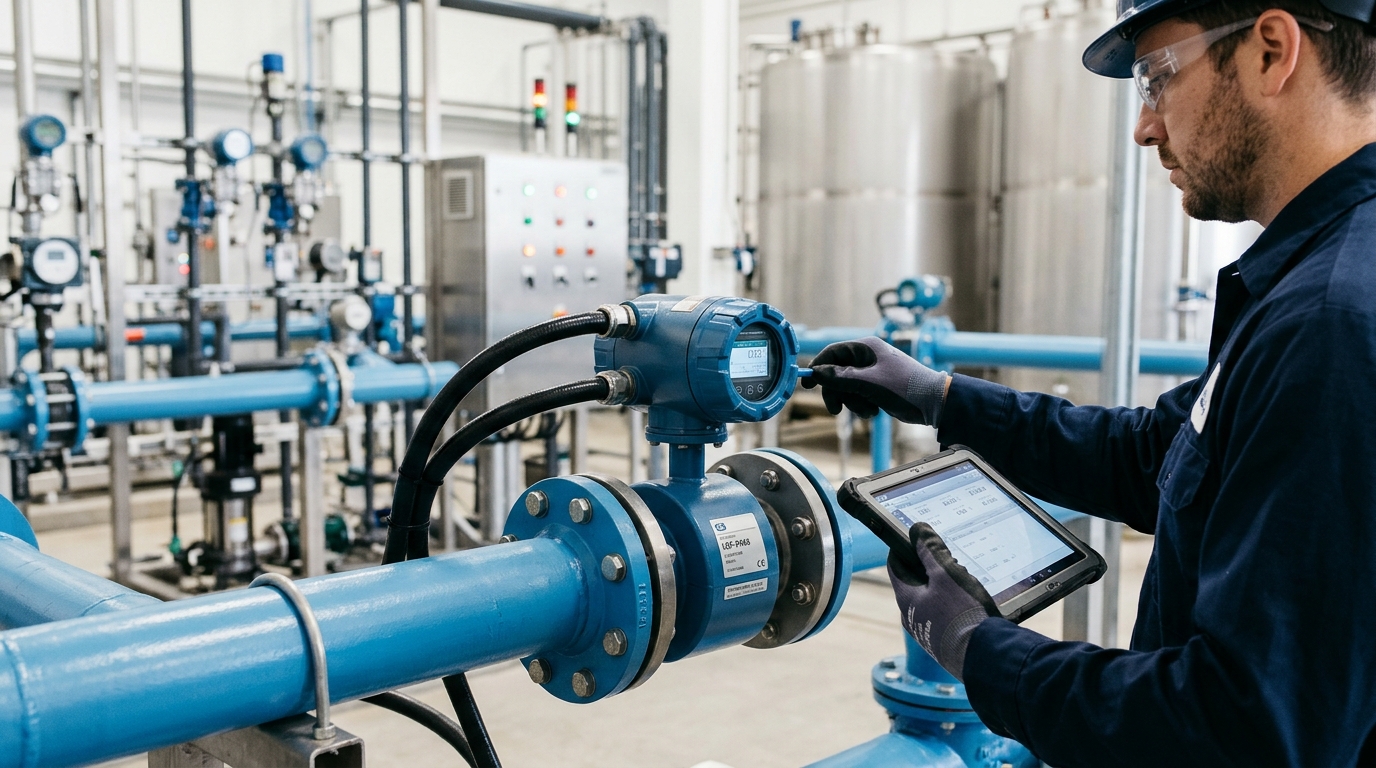
Smart Water Conservancy Trend Forecast: LGF-PA66 Reshaping the Industry
As smart water conservancy enters the phase of refined implementation, market trends, technological evolution, and policy variables are converging to redefine industry standards.
From Proof-of-Concept to Refined Operation
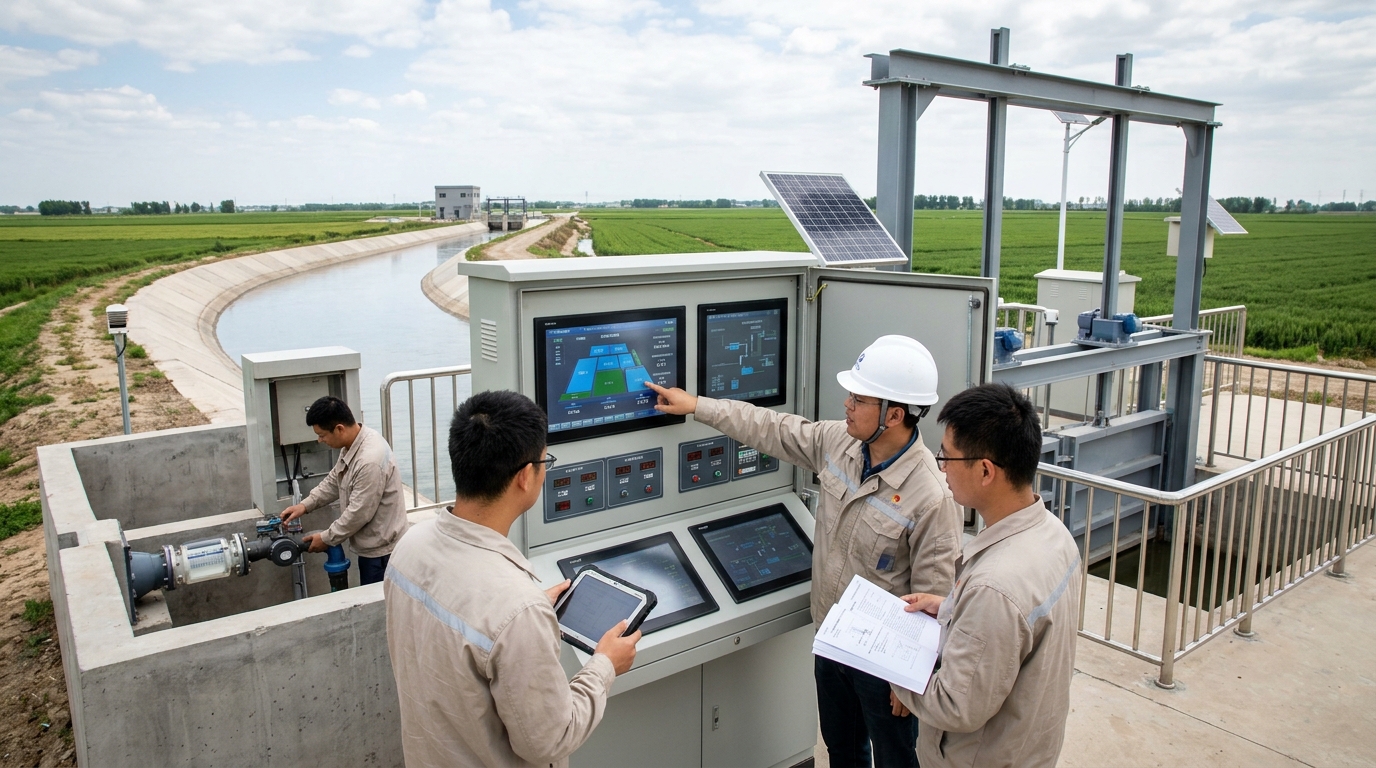
In recent years, the construction of smart water conservancy has been transitioning from proof-of-concept to large-scale application. With the advancement of the National Water Network construction, digital twin river basin pilots, and urban-rural integrated water supply, the water conservancy industry's demand for sensing devices, pipeline network monitoring, intelligent control, and data platforms continues to rise.
The industry's focus is also gradually shifting from "whether to digitalize" to "whether it can operate stably in the long term, reduce O&M costs, and support refined management."
Shifting Market Trends & Technical Evolution
From the perspective of market trends, the investment structure of smart water conservancy is undergoing changes. Early projects were mostly concentrated in demonstration projects, platform construction, and monitoring of key river basins, whereas current demand increasingly stems from scenarios such as:
- Urban water supply pipeline network renewal
- Rural water supply security
- Modernization of irrigation districts
- Upgrading of secondary water supply facilities
- Leakage control
Such projects typically feature numerous points, wide coverage, and decentralized deployment, placing higher demands on equipment consistency, installation convenience, and post-installation maintenance efficiency.
At the technical level, smart water conservancy is evolving from single-point sensing to the coordinated integration of "sensing, transmission, analysis, and control."
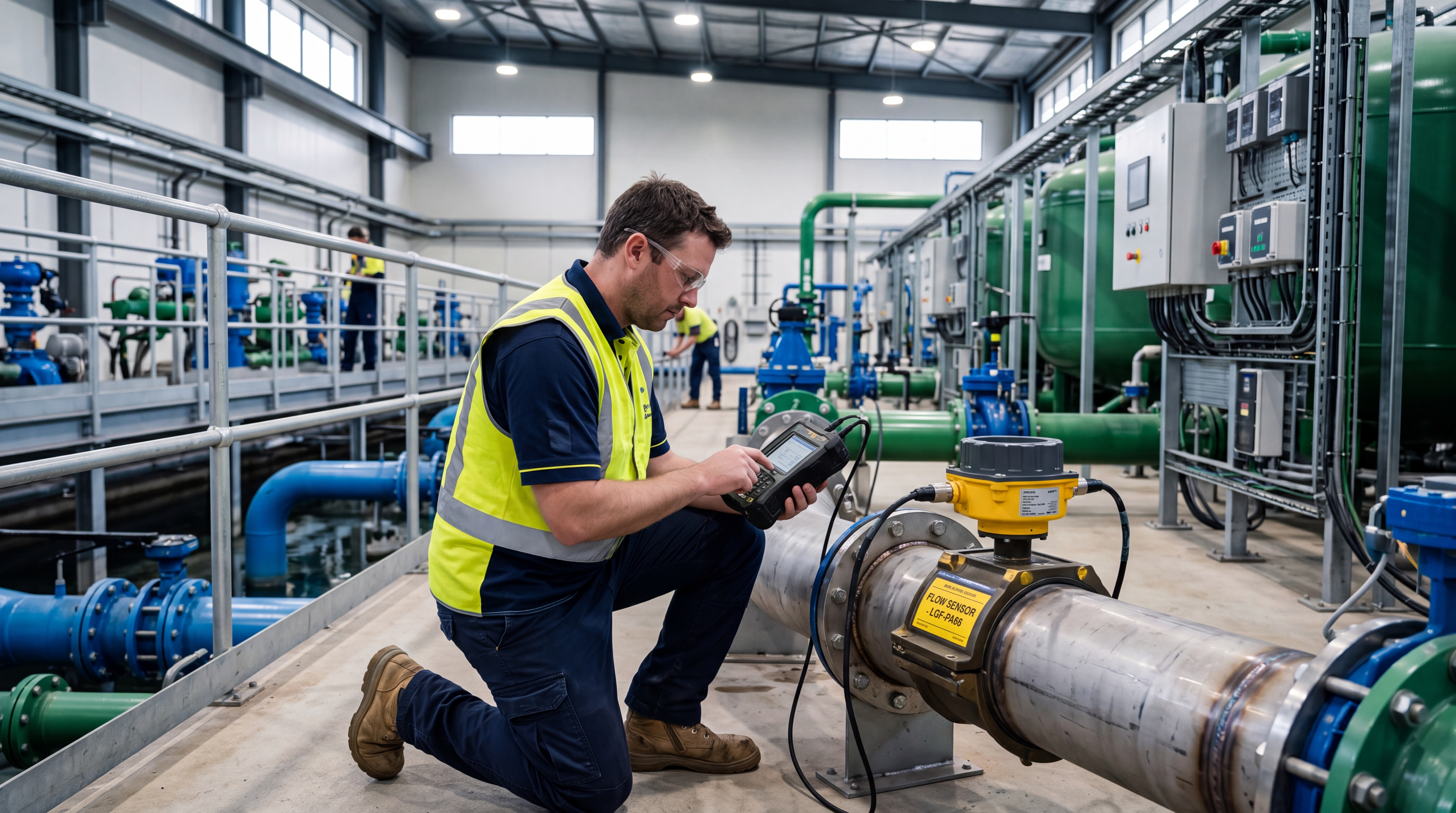
Sensing devices for pressure, flow, liquid level, and water quality are gradually becoming standard configurations for pipeline networks and pump stations. Edge computing, low-power communication, AI predictive analytics, and digital twin models are being incorporated into more engineering practices. The future focus is not merely on collecting more data, but on improving data quality to form a closed-loop capability applicable to dispatch decision-making, risk early warning, and asset management.
The Critical Role of Materials: LGF-PA66
Meanwhile, water-contact equipment materials are becoming a critical variable in industry upgrading. Smart water conservancy terminals operate year-round in humid, buried, manhole, or outdoor environments. Corrosion, leakage, aging, and structural failure can affect monitoring continuity and service life.
High-performance engineering plastics such as long glass fiber reinforced nylon 66 (LGF-PA66), due to their high strength, dimensional stability, fatigue resistance, and excellent anti-corrosion adaptability, are being increasingly applied in valve components, instrument housings, pipe fittings, and well structural components.
Focus on DN50: The Standard for Terminal Nodes
At the end of the water supply pipeline network and household connection nodes, the DN50 diameter holds typical significance. DN50 is commonly found in community branch pipes, rural household connections, irrigation branch pipes, small-scale metering nodes, and some industrial and commercial water interfaces, serving as a crucial diameter connecting the main pipeline network to the user end.
As smart water management extends to the endpoints, the demand for standardization, modularity, and long service life of DN50-related metering, monitoring, and control components has significantly increased, prompting manufacturers to adjust their material selection and molding processes.
Integral Injection Molding: Enhancing Reliability
Integral injection molding is emerging as one of the technical pathways to enhance the reliability of water-contact components. Compared to multi-piece assembly or metal assembly structures, integral injection molding can:
- Reduce seams and potential leakage points
- Improve product structural consistency
- Lower the risk of subsequent sealing failures
For DN50 smart terminals and supporting components that require batch deployment, integral injection molding not only helps improve anti-corrosion performance and assembly efficiency but also facilitates the realization of standardized interfaces and scaled production, thereby reducing life-cycle costs.
Policy Drivers and Competitive Landscape
The policy environment also has a significant impact on the smart water conservancy industry. Policies such as the National Water Network construction, water security guarantee, water-saving society construction, urban water supply leakage control, and high-quality development of rural water supply are continuously advancing, providing a long-term demand foundation for the industry.
Procurement standards are also changing: previously, the focus was more on whether equipment had networking capabilities, while the future will place greater emphasis on stability, protection ratings, material durability, data accuracy, and O&M response capabilities. Policy orientation is driving the industry to shift from "focusing on construction" to "focusing on operation."
From the perspective of the competitive landscape, smart water conservancy is no longer just a competition between single devices or software platforms, but a competition in system adaptability. Project parties are paying more attention to the matching degree of equipment with the pipeline network environment, communication conditions, power supply methods, installation space, and management processes.
Future Outlook: Three Key Trends
Looking ahead to the next three to five years, smart water conservancy will present three trends:
- Sensing devices will evolve from "usable" to "durable," with material anti-corrosion and structural reliability becoming key indicators.
- The standardization level of terminal nodes will increase, and smart components for common diameters such as DN50 will focus more on interchangeability and low-maintenance design.
- Data applications will shift from display to prediction, with AI models increasingly serving pipe burst early warning, leakage localization, pressure optimization, and asset health management.
Conclusion
Overall, the smart water conservancy industry is entering a more pragmatic stage of development. The market is no longer simply pursuing advanced concepts, but values engineering adaptability, long-term operation, and comprehensive costs more. For enterprises in the industrial chain, those that can integrate high-performance materials such as LGF-PA66, integral injection molding processes, anti-corrosion design, and standardized diameter products, and serve real-world water management scenarios, will secure more stable market opportunities in the next phase. Yicai Technology believes that the long-term value of smart water conservancy will ultimately be reflected in the fundamental capabilities of reliable, low-cost, and sustainable operation.