Digital Transformation in Smart Water Management: Data Silos and IoT Platform
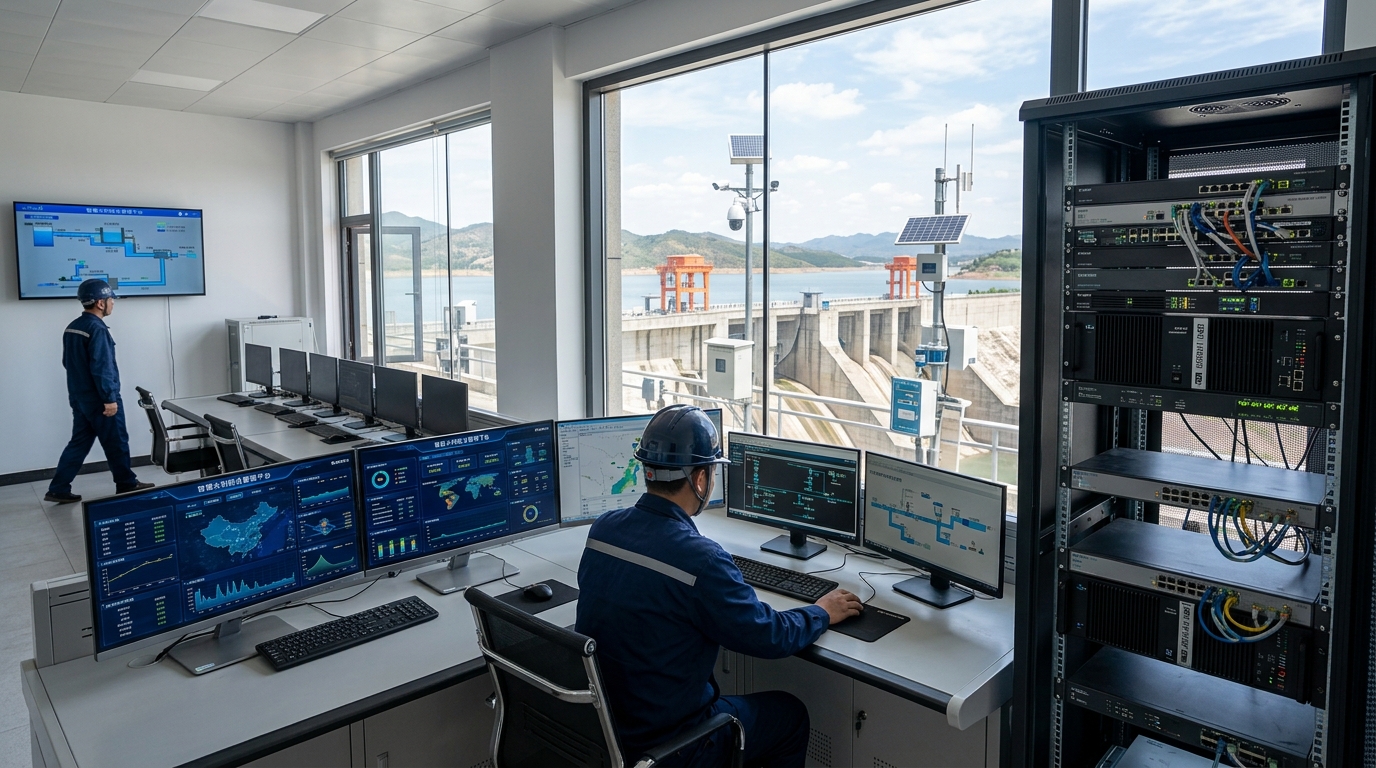
Smart water management is transitioning from early-stage video surveillance, remote gate control, and single-point data collection to a new phase centered on sensing quality, data governance, model prediction, and closed-loop control. In the past, the industry focused more on "whether there is equipment" and "whether remote viewing is possible." However, against the backdrop of the continuous advancement of integrated urban-rural water supply, modernization of irrigation districts, urban drainage and waterlogging prevention, and the national water network construction, users are now more concerned with whether equipment remains online long-term, whether data is trustworthy, whether the system can assist in dispatching, and whether O&M costs are controllable.
After reviewing recent industry projects and policy documents, the editorial team at Yicai Technology has noted that the competitive focus of smart water management is shifting from platform display capabilities to the reliability of underlying sensing terminals, communication stability, material durability, and engineering adaptability.
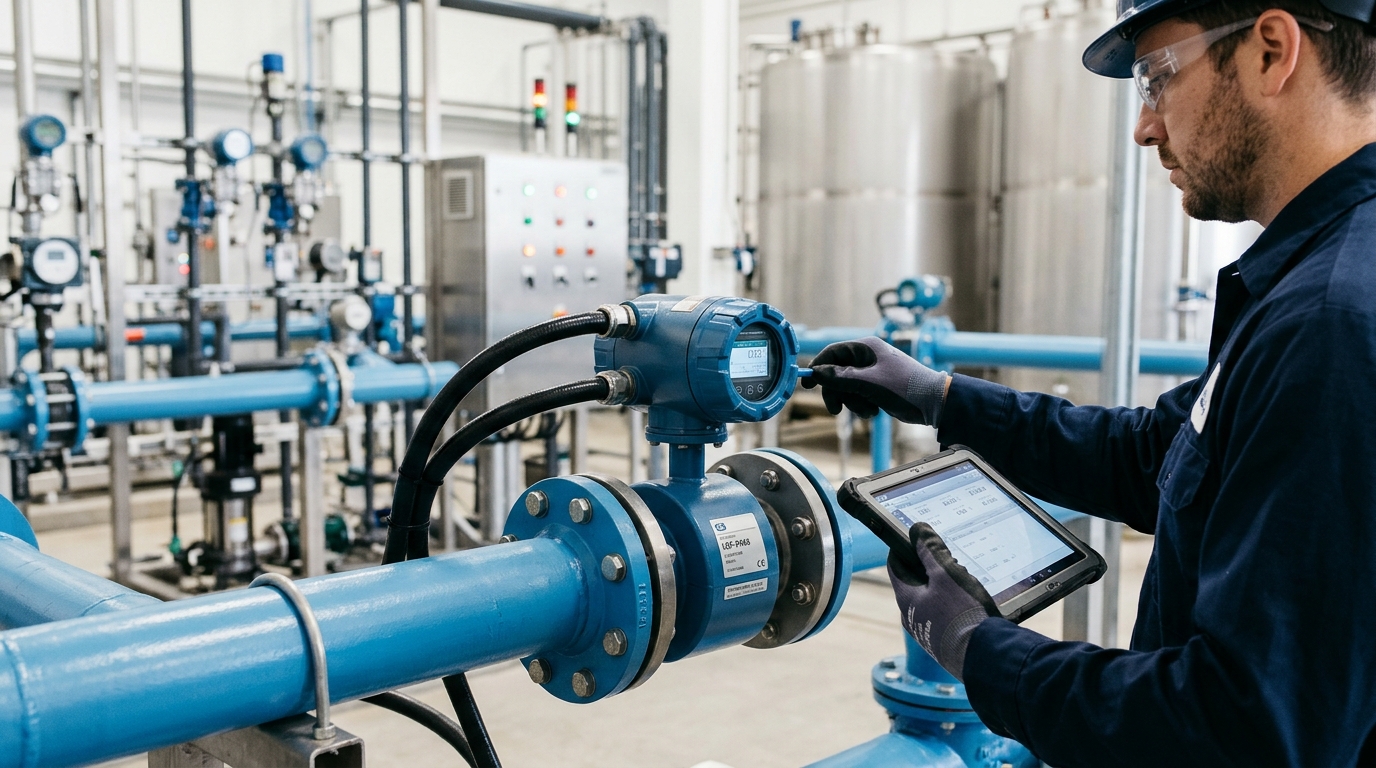
The Critical Role of DN50 Terminals
The value of small and medium-bore smart terminals such as DN50 has been significantly amplified. With a nominal diameter of approximately 50 millimeters, DN50 terminals are widely deployed in residential branch service pipes, bypasses in secondary water supply pump rooms, end-of-district irrigation metering, greening water intake, fire replenishment, and rural scaled water supply. Their massive quantity, dispersed distribution, and complex environments make them critical nodes for the "last mile" sensing capability.
Meanwhile, keywords such as LGF-PA66, one-piece injection molding, and anti-corrosion have begun to frequently appear in the product design of smart water meters, pressure transmitters, flowmeter housings, electric valve bodies, and level gauge protective sleeves. Material and manufacturing processes are no longer just details on the production side; they have become crucial factors affecting equipment lifespan, installation efficiency, maintenance frequency, and data quality. This article provides a systematic observation of the smart water management industry from six dimensions: market trends, policy impacts, technological directions, material upgrades, typical scenarios, and future prospects.
I. Market Trends: Investment Extends from "Mega Projects" to "Fine-Grained Sensing"
In terms of investment scale, the water conservancy industry remains in a high-prosperity range. Public data shows that in 2023, national water conservancy construction investment reached approximately 1.1996 trillion RMB, hitting a historic high. Compared to previous investment structures dominated by dams, reservoirs, river channel regulation, and water diversion projects, the new round of investment places greater emphasis on "digitalization of engineering" and "intelligentization of management."
- Leakage Control: The leakage rate of urban public water supply networks nationwide will be controlled within 9% by 2025. Leakage control relies heavily on district metering, pressure regulation, minimum night flow analysis, and acoustic leak detection.
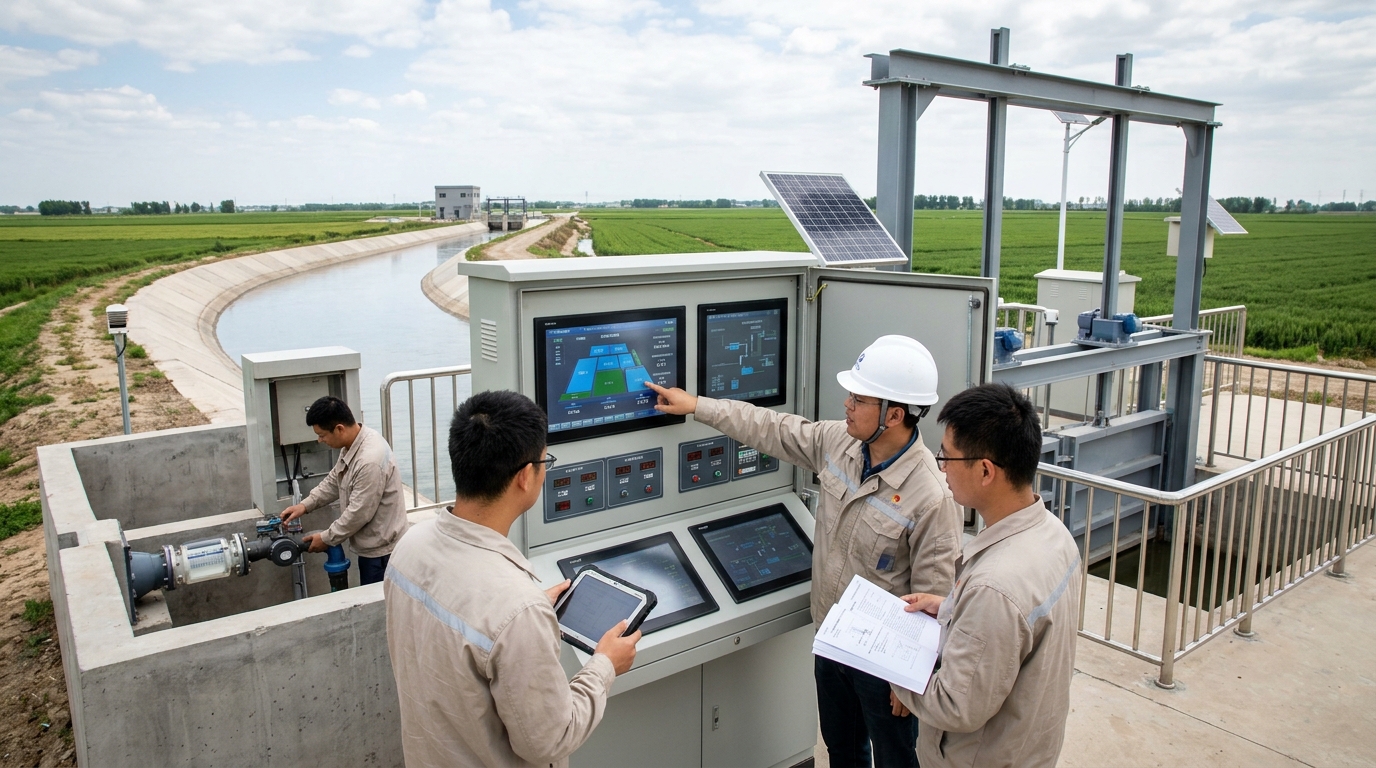
- Agricultural Modernization: China's large and medium-sized irrigation districts require adding highly efficient water-saving irrigation areas. Small and medium-bore metering and control equipment (DN50, DN65, DN80) face higher requirements for low power consumption, anti-corrosion, moisture resistance, and sand/dust prevention.
- Scaled Replication: Projects are moving from "demonstration" to "scaled replication." Procurement logic has shifted from one-time construction prices to emphasizing stable performance in damp valve chambers, saline-alkali soils, and extreme temperatures.
II. Policy Impacts: Water Network Construction, Leakage Control, and Data Governance
Policies are one of the most important sources of demand. Documents such as the "14th Five-Year Plan for Smart Water Conservancy Construction" and the "Outline of the National Water Network Construction Plan" explicitly propose taking digitalization, networking, and intelligentization as main threads.
National Water Network
Not a single project but a multi-layered network. Monitoring pressure, flow, and water quality at the ends of the pipe network is the foundation for ensuring water supply safety. DN50 nodes are crucial for refined metering.
Data Governance
Trend towards data factorization requires unified coding, interfaces, and quality standards. Equipment with standardized interfaces and stable data quality will gain a greater advantage over those with inconsistent protocols.
Furthermore, financial instruments like special-purpose bonds emphasize performance orientation. Projects must answer whether "investments form effective assets," "whether operational efficiency is improved," and "whether leakage, energy consumption, and labor costs are reduced."
III. Technological Directions: Low Power, Edge Intelligence, and High Reliability
The industry is currently at the intersection of the second stage ("managing the equipment") and the third stage ("letting models make judgments"). Key technological evolutions include:
- Low-Power Design: Many DN50 terminals rely solely on battery power. The industry expects a battery life of 5 to 8 years, achieved through low-power MCUs, NB-IoT/LoRa communication, scheduled wake-ups, and event-triggered reporting.
- Edge Computing: In scenarios with unstable networks or high alarm timeliness requirements, edge intelligence allows terminals to perform preliminary filtering, threshold judgment, and anomaly compression locally, reducing communication traffic.
- Diversified Communication: While NB-IoT offers underground coverage, redundancy via 4G, LoRa, BeiDou short messages, or satellite communication is crucial for remote areas and flood monitoring.
- Digital Twins & AI: These integrate geographic information, hydraulic models, and real-time data for forecasting. The accuracy of these models is directly constrained by the quality of the sensing layer.
IV. Material Upgrades: LGF-PA66 and One-Piece Injection Molding
Materials and structures determine whether equipment can operate stably over the long term. Traditional metal housings are prone to rusting, pitting, and seal aging in corrosive environments.
Why LGF-PA66?
Long Glass Fiber Reinforced Polyamide 66 (LGF-PA66) is becoming a key candidate. Compared to standard PA66, LGF-PA66 retains longer glass fibers (30%-50%), improving impact resistance, creep resistance, and fatigue resistance. Its tensile strength and heat deflection temperature are significantly higher, making it suitable for withstanding water pressure fluctuations and outdoor temperature variations.
One-piece injection molding is another critical process. By integrating sensor cavities, battery compartments, and cable sealing grooves into a single part, assembly interfaces are reduced, structural integrity is improved, and batch production consistency is enhanced. This reduces per-unit assembly time and minimizes quality fluctuations caused by manual assembly differences.
"Material selection will shift from 'whether it can be used' to 'whether it can be used stably over a ten-year lifecycle.'"
V. Anti-Corrosion and DN50 Scenarios: From "Meeting Installation Requirements" to "Long-Life Maintenance-Free"
Anti-corrosion is a practical issue facing smart water management terminals. Residual chlorine, chloride ions, salt spray, and fertilizer residues can all cause corrosion. For DN50 terminals installed in limited-maintenance windows, housing rust or seal failure often requires complete replacement.
The industry is forming a new evaluation standard: anti-corrosion is a systems engineering approach encompassing material modification, wall thickness distribution, sealing paths, and surface protection. Merely emphasizing a specific material name is insufficient; what truly matters is the long-term reliability achieved through the matching of materials, structures, processes, and scenarios.
VI. Case Observations: Practical Value of DN50 Smart Terminals
Case 1: Secondary Water Supply Renovation (East China)
Deployed DN50 pressure and flow monitoring terminals with LGF-PA66 one-piece injection molded housings. After 18 months, the equipment online rate remained above 99%, and maintenance work orders decreased by approximately 40%. Installation time per point dropped from 45 minutes to 28 minutes due to increased integration.
Case 2: Irrigation District Modernization (Northwest China)
Used DN50 smart valve control terminals with LGF-PA66 valve bodies and IP68-rated electrical compartments. Despite extreme temperatures (-20°C to 60°C+), valve bodies showed no significant rusting after two seasons. Metering errors were kept within requirements, and maintenance frequency was significantly lower than traditional metal solutions.
Case 3: Urban Drainage Monitoring (Southern City)
Liquid level monitoring equipment switched to anti-corrosion composite housings. Continuous operation capability during the flood season improved significantly. Although per-point investment did not change much, overall O&M efficiency improved due to reduced false alarms and fewer on-site inspections.
VII. Future Prospects: Digital Twins, AI Prediction, and Material Data Closed Loops
Looking ahead to the next five years, three obvious changes will reshape the industry:
- Sensing Shift: From "whether they exist" to "whether they are accurate and stable."
- Platform Shift: From "display-oriented" to "decision-oriented."
- O&M Shift: From "reactive maintenance" to "predictive maintenance."
Digital Twins will become critical infrastructure, simulating outcomes under various conditions. AI Applications will evolve from simple alarms to prediction and optimization, identifying abnormal usage patterns and predicting pipe failure probabilities.
Material Data will enter asset management systems. Data on temperature resistance, moisture resistance, and creep resistance for materials like LGF-PA66 will become quantifiable, traceable, and comparable operational parameters. Standardization will also become key, helping reduce procurement costs and creating conditions for large-scale AI training.
Conclusion
The smart water management industry has moved past the proof-of-concept stage and entered deep waters oriented towards operational outcomes. What truly determines the success or failure of a project are often those inconspicuous details: whether a DN50 valve chamber takes on water, whether a pressure transmitter drifts, whether a battery compartment is sealed, and whether a piece of data is uploaded on time.
Against this backdrop, the significance of keywords such as LGF-PA66, one-piece injection molding, and anti-corrosion should not be simply understood as material substitution, but rather viewed as a crucial pathway for upgrading the reliability of smart water management terminals. Only when every sensor, every DN50 terminal, and every segment of pipe network data can withstand the test of time, can smart water management move from "digital display" to "intelligent governance."