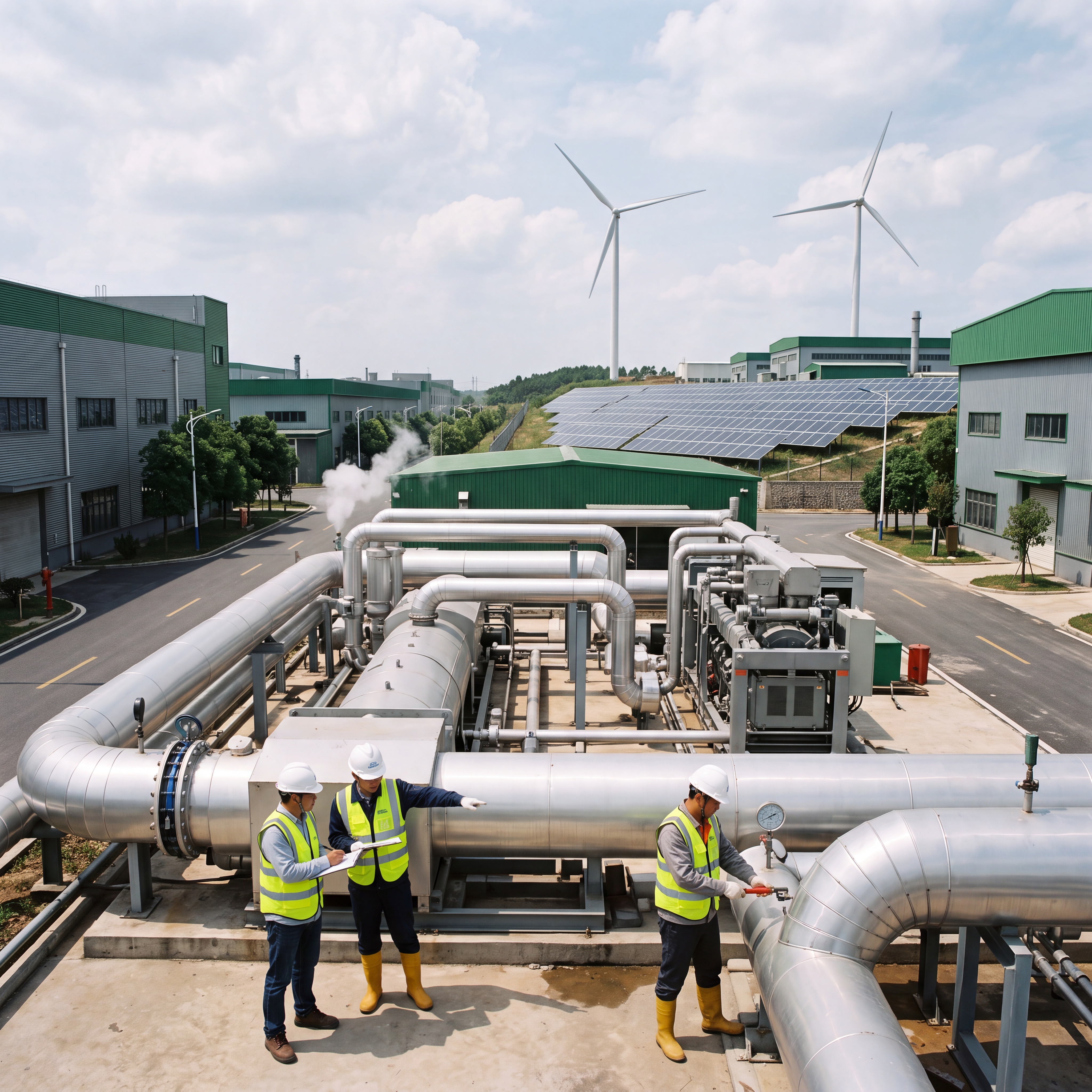
Flow Meter and RTU Integration: The Blueprint for Industrial Water and Energy Efficiency
Modern manufacturing facilities are transitioning from reactive utility tracking to predictive resource optimization through precision flow meter and RTU integration—a foundational step toward industrial water and energy efficiency.

The Regulatory and Economic Imperative for Industrial Water Tracking
Global industrial sectors face unprecedented pressure to optimize water intake and reduce energy overhead. With regulatory frameworks tightening—and utility costs escalating by double-digit percentages annually—facility managers must move beyond manual logging to automated, high-fidelity monitoring architectures.
This shift demands robust sensor networks delivering real-time visibility into steam generation, cooling loops, and process water consumption—key components of any industrial water intake monitoring strategy aligned with ISO 50001 and MIIT energy reporting standards.
The Hidden Costs of Legacy Metering Architectures
Mechanical turbine meters, analog pressure gauges, and isolated SCADA nodes once served early automation—but now introduce critical blind spots. Analog signals degrade over distance; mechanical parts drift with wear; and data silos prevent cross-departmental visibility.
Unmeasured utilities equal unmanaged overhead. Without precise baseline data, energy-saving initiatives remain speculative—not strategic. Worse, regional water allocation policies now mandate granular reporting, with penalties for exceeding quota thresholds by more than 5.0%.
Precision Architecture: Electromagnetic Flow Measurement Meets Edge Telemetry
Intelligent utility monitoring rests on two pillars: high-accuracy primary sensors and reliable edge data acquisition. Electromagnetic flow meters have become the industry standard for conductive liquids due to zero moving parts, minimal pressure loss, and immunity to viscosity changes. When paired with modern remote terminal units (RTUs), they form a closed-loop telemetry system—transmitting calibrated flow rates, temperature differentials, and diagnostic alerts directly to ERP platforms.
LGF Electromagnetic Flow Meter: Engineered for Process and Steam Applications
- Nominal diameter range: DN10 to DN2000 — suitable for lab-grade chemical lines and main header distribution networks
- Accuracy: ±0.5% across full operational range, enabled by dual-electrode excitation design
- Steam & thermal energy support: Seamless integration with temperature/pressure transmitters for real-time enthalpy calculation and mass flow conversion
- Robust construction: PTFE/PFA lining options, IP68 ingress protection, ideal for continuous process monitoring and boiler feedwater management
HERO V9 RTU: The Nerve Center for Enterprise Energy Consumption Monitoring
- Multi-protocol connectivity: Modbus RTU/TCP, MQTT, secure 4G/5G cellular transmission
- Industrial resilience: Isolated I/O channels, built-in surge protection, operating range: –40°C to +75°C
- Edge intelligence: Local flow integration, cumulative consumption tracking, automated valve actuation or alarm routing on anomaly detection
- Compliance-ready: Supports ISO 50001 energy reporting standards and unmanned monitoring station deployment
Quantifiable Impact: From Baseline to Operational Optimization
Deploying an integrated LGF and HERO V9 architecture transforms utility tracking from compliance obligation into a continuous improvement engine—delivering measurable gains in water waste reduction, thermal distribution optimization, and regulatory reporting speed.
Traditional Setup
- • Manual monthly meter readings
- • Isolated PLC nodes
- • Reactive maintenance cycles
- • 14–21 day reporting latency
- • Uncalibrated drift → 8–12% billing discrepancies
Ecolor Integrated Solution
- • Real-time telemetry & automated anomaly alerts
- • Predictive calibration scheduling
- • Same-day compliance reporting
- • ±0.5% sustained accuracy
- • 18.7% reduction in thermal energy waste
Financial ROI is compelling: high-fidelity steam metering and thermal energy tracking enables engineering teams to isolate underperforming heat exchangers, detect underground pipe degradation, and dynamically adjust cooling tower cycles. Industrial energy saving initiatives driven by this level of telemetry typically achieve payback within 14 to 18 months, with compounding annual OPEX reductions.
“Facilities that integrate precision flow metering with edge telemetry consistently outperform legacy plants in both cost efficiency and regulatory compliance. The data doesn’t just track consumption—it reveals optimization pathways that manual auditing never uncovers.”
Strategic Deployment for Procurement and Engineering Teams
Successful implementation requires vendor evaluation, site surveying, and protocol standardization. Prioritize manufacturers offering end-to-end compatibility, transparent calibration documentation, and localized technical support.
Validate sensor DN sizing against peak flow velocity to maintain optimal measurement range
Configure HERO V9 alarm thresholds to trigger before regulatory quota limits are breached
Schedule bi-annual reference calibration using traceable gravimetric or master meter standards
Integrate telemetry outputs with existing MES/SCADA platforms via standardized OPC-UA gateways
As global manufacturing evolves toward zero-waste production and carbon-neutral operations, accurate measurement remains the non-negotiable foundation. Industrial water intake monitoring, steam metering, and thermal energy tracking are no longer optional—they’re competitive differentiators.
See What You Measure
Ready to optimize your facility’s water and thermal efficiency with precision flow meter and RTU integration?
Visit www.cssoc.comSources:
- 1. International Water Association (IWA) – Industrial Water Efficiency Guidelines
- 2. ISO 50001 Energy Management Systems Framework – ISO.org
- 3. China MIIT – Enterprise Energy Consumption Monitoring Standards