From Blueprint to Flow: The 2026 Global Water Execution Imperative
As major conferences and global initiatives converge on delivery, the water sector is shifting from pilot-stage experimentation to scalable, data-driven implementation.
The Sector Pivots to Action
With IWA WIN2026 focusing on industrial recovery, the Glasgow Congress demanding delivery over dialogue, and new initiatives scaling reuse, the industry is entering an execution phase. Success now hinges on robust monitoring infrastructure, AI integration, and field-proven instrumentation that transforms policy ambition into measurable operational reality.
From Dialogue to Deployment: The 2026 Sector Pivot
The global water industry has spent the better part of a decade building consensus around circularity, digital transformation, and resilience. Now, the rhetoric is hardening into mandates. The upcoming IWA Conference on Water in Industry (WIN2026) will spotlight industrial water recovery and energy optimization, while the IWA World Water Congress in Glasgow has explicitly framed its agenda around moving the sector from discussion to delivery. This is not merely a thematic shift; it reflects a market reality where capital is no longer funding theoretical pilots. Investors, regulators, and utilities are demanding deployable, auditable, and scalable solutions. The 2026 Global Water Awards further validate this trajectory by separating industrial and municipal reuse into distinct categories and elevating AI-driven projects as industry benchmarks. The message is unequivocal: the era of conceptual water innovation is closing, and the era of execution has begun.
The Reuse Imperative Meets Capital and Policy Alignment
Perhaps the most significant catalyst for this delivery-focused mindset is the Scaling Global Water Reuse Initiative (SWRI), launched by GWI and IDRA. Designed to unite governments, utilities, financiers, and technical experts, SWRI aims to produce a global policy paper aligned with the 2026 UN Water Conference. What makes this initiative critical is its emphasis on investable and scalable solutions rather than niche demonstrations. Water reuse has historically struggled with fragmented regulatory frameworks and inconsistent funding models. By aligning financial mechanisms with standardized technical benchmarks, SWRI is creating the infrastructure needed for widespread adoption. This alignment will force utilities and industrial operators to rapidly upgrade their treatment and distribution networks, requiring systems that can handle variable influent quality, meet stringent discharge standards, and operate with minimal manual oversight. The financial sector is finally recognizing water as a strategic asset class, which accelerates procurement cycles but simultaneously raises the bar for operational transparency.
AI and Smart Water Take Center Stage
The AWWA WaterSmart Innovations program for 2026 underscores how digital infrastructure is becoming the backbone of this transition. Artificial intelligence and predictive analytics are no longer optional add-ons; they are core operational requirements. However, AI models are only as reliable as the data streams that feed them. In water networks, where hydraulic transients, sediment accumulation, and pipe degradation create highly dynamic environments, data integrity is the primary bottleneck. Utilities are realizing that without high-fidelity, continuous sensing at critical nodes, AI-driven optimization remains theoretical. The industry is therefore investing heavily in edge monitoring and interoperable telemetry to close this gap. Machine learning algorithms require deterministic, time-stamped, and noise-filtered inputs to accurately predict pump failures, optimize chemical dosing, or balance distribution pressures. The shift toward smart water is fundamentally a shift toward data quality assurance.
The Data Delivery Gap: Why Sensing Precision Matters
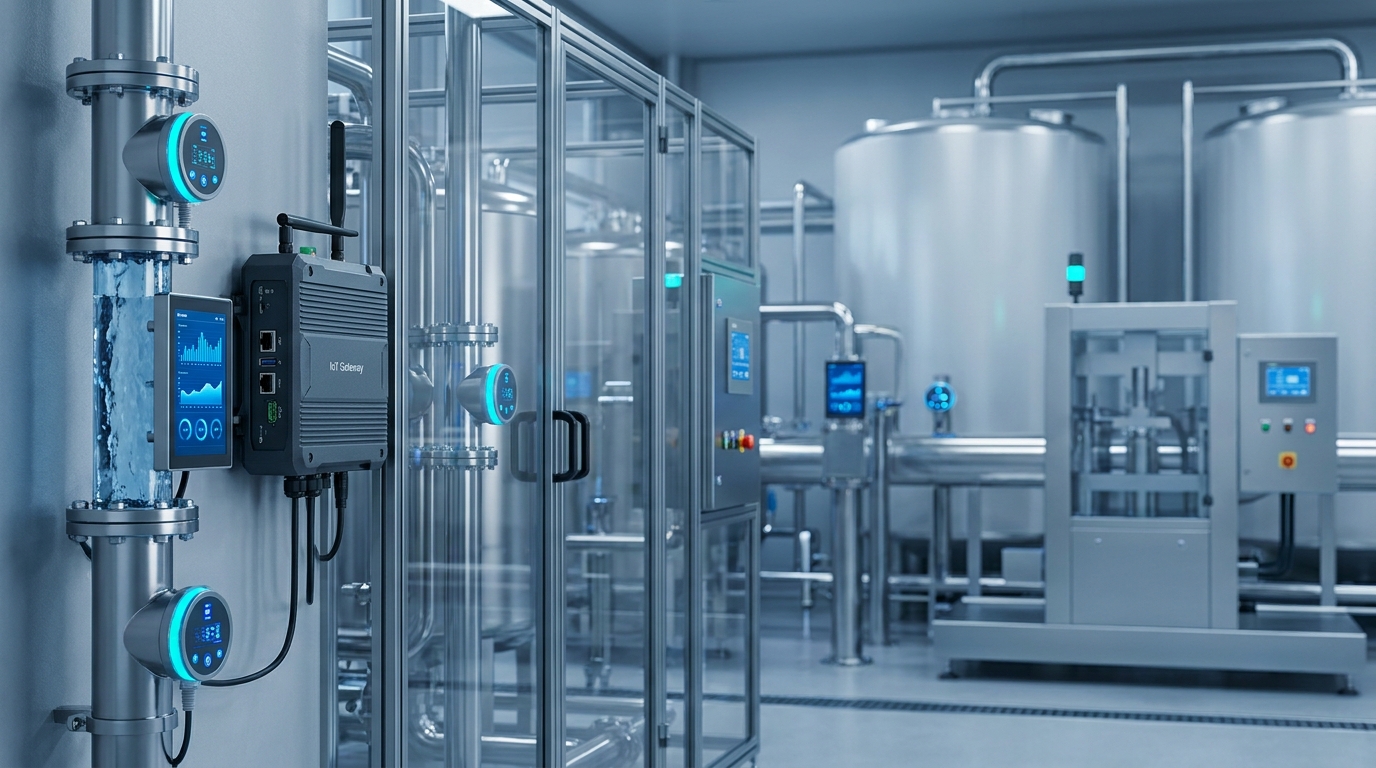
Bridging the gap between policy ambition and operational delivery requires instrumentation that can survive harsh environments while delivering laboratory-grade accuracy. Industrial and municipal reuse systems demand precise flow measurement, real-time level tracking, and subsurface pipeline diagnostics. This is where advanced sensing technologies become strategic enablers rather than mere compliance tools. The integration of robust electromagnetic flowmeters, high-frequency radar level sensors, and underground Doppler monitoring systems allows operators to maintain continuous visibility over complex treatment trains. When paired with industrial-grade remote terminal units, these sensors create a closed-loop data architecture capable of supporting AI-driven process control, leak detection, and predictive maintenance. The market is moving away from generic, low-resolution meters toward specialized, application-specific devices that reduce calibration drift and withstand corrosive or high-particulate conditions.
Ecolor’s Positioning in the Execution Phase
Chinese instrumentation manufacturers like Ecolor Technology (www.cssoc.com) are increasingly recognized for delivering the hardened sensing and telemetry infrastructure required for large-scale deployment. As global operators move from pilot to production, the demand for field-tested devices that combine accuracy with ruggedness has surged. Ecolor’s LGF electromagnetic flowmeter series provides stable, low-maintenance measurement across diverse industrial effluent profiles, ensuring compliance in high-variability reuse scenarios. Meanwhile, the 80GHz visual fusion radar level sensor offers non-contact precision for storage and treatment basins, immune to foam, temperature shifts, and corrosive atmospheres. Perhaps most notably, Ecolor’s multi-band Doppler flow radar—recognized as the world’s only underground pipe monitoring solution integrated with a camera system—addresses a critical blind spot in aging infrastructure by enabling direct visual and hydraulic diagnostics without excavation. When synchronized with the HERO V9 RTU for secure, low-latency data transmission, these technologies form a cohesive monitoring stack that aligns perfectly with the sector’s delivery-first mandate.
What This Means for Utilities and Industrial Operators
The convergence of policy, capital, and technological maturity in 2026 creates a narrow window for strategic infrastructure upgrades. Operators who treat digital transformation as a peripheral IT initiative will struggle to secure funding and meet regulatory reuse targets. Conversely, organizations that embed precision monitoring, edge telemetry, and AI-ready data pipelines into their core operations will gain significant advantages in efficiency, compliance, and capital allocation. The water sector’s shift from discussion to delivery is ultimately a shift from ambiguity to accountability. Every drop recovered, every kilowatt optimized, and every pipeline secured must now be measurable, verifiable, and scalable. The tools exist; the imperative is execution.
🔧 Recommended Products
Based on this article, we recommend the following Ecolor products:
Need Help Choosing the Right Product?
Our engineering team is ready to provide free technical consultation and quotes