As global water scarcity intensifies, Massive IoT is revolutionizing the water industry by transforming traditional manual inspections into intelligent, real-time operations. From reducing pipeline leaks in the UK to optimizing energy costs in Ecuador, underlying sensing devices like electromagnetic flow meters and radar sensors are emerging as the critical backbone of digitalization. This shift enables utilities to move from reactive repairs to predictive maintenance, ensuring sustainable resource management in an era of urbanization.
The Urgent Need for Digital Water Infrastructure
Traditional water management models are facing unprecedented challenges as urbanization accelerates and water scarcity deepens. Recent reports indicate that approximately 20% of tap water in the UK is lost to pipeline leaks alone, highlighting a critical inefficiency in current systems.
With forecasts predicting severe water shortages in England within the next 25 years, the industry is pivoting towards Massive IoT solutions. This transformation moves the sector away from discrete, manual management toward intelligent, data-driven, and predictive operations.
Real-World Impact: The Guayaquil Success Story
The application value of IoT technology has moved beyond theory, delivering tangible economic benefits in projects like the one in Guayaquil, Ecuador. In February 2026, the city upgraded over 170 water and wastewater treatment stations using a comprehensive remote monitoring system.
By integrating field sensors with industrial gateways and cloud platforms, facility managers replaced traditional SCADA systems reliant on manual checks. The results were immediate and significant: a 15% reduction in energy costs and an 18% decrease in the frequency of on-site inspections.
Core Hardware: The Backbone of Smart Water Systems
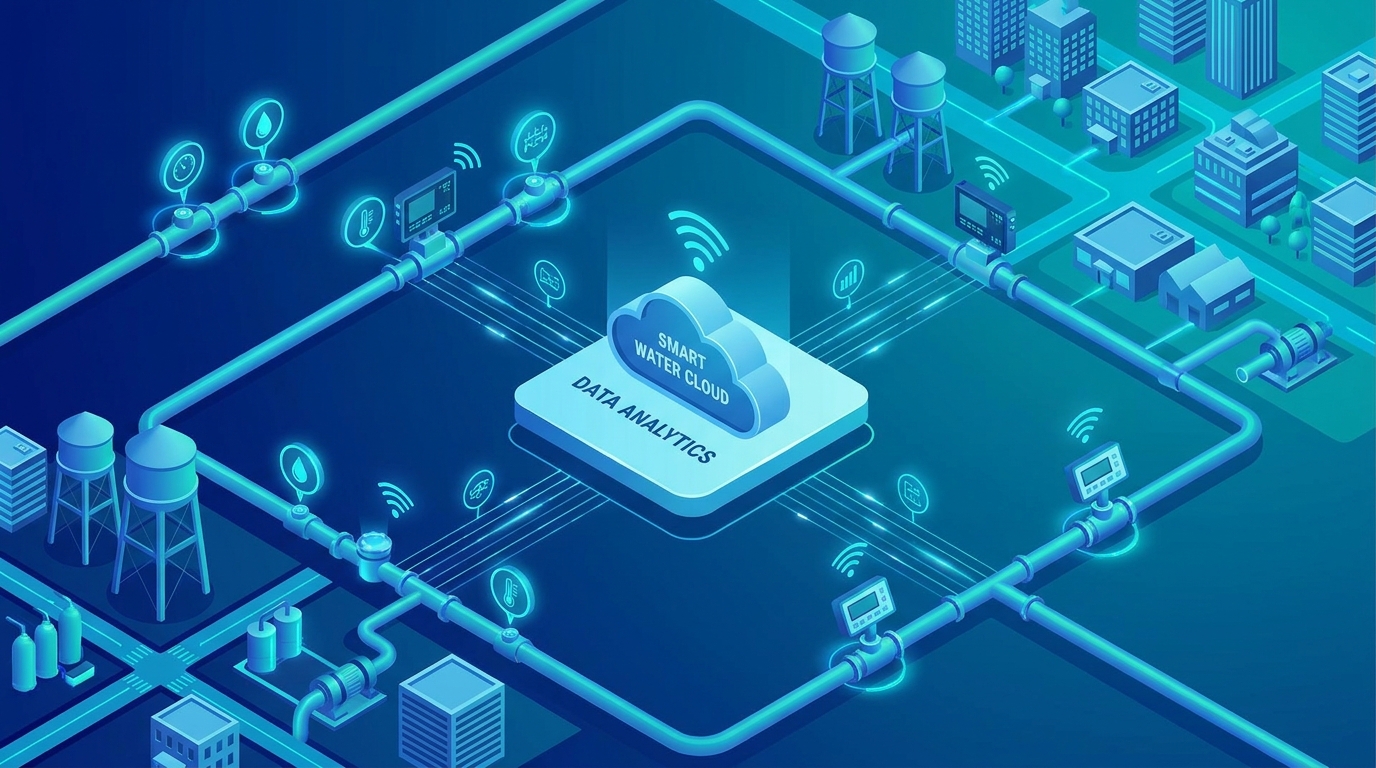
Industry analysis reveals that successful smart water construction relies on a closed-loop system connecting "underlying data acquisition" to "cloud-based analytics." While cloud algorithms act as the brain, high-precision sensing devices serve as the indispensable nerve endings of this ecosystem.
Fundamental hardware components such as electromagnetic flow meters, radar water level meters, Doppler radar flow meters, and RTU telemetry terminals form the foundation of effective IoT water management. These devices ensure that the massive volume of data required for modern optimization is accurate, reliable, and continuously available.
Key Performance Metrics
- Energy Savings: Up to 15% reduction via optimized pump control.
- Inspection Efficiency: 18% fewer site visits required.
- Leak Detection: Real-time identification of anomalies in District Metered Areas.
- Data Integrity: Resumable transmission during network fluctuations.
Critical Device Functions
- Electromagnetic Flow Meters: High accuracy for trunk mains and leakage detection.
- Radar Water Level Meters: Non-contact measurement unaffected by turbidity.
- Doppler Radar Flow Meters: Stable velocity data for open channels and drainage.
- Industrial RTUs: Edge computing and secure wireless transmission (4G/5G/NB-IoT).
Precision Flow Monitoring and Leak Detection
Addressing critical issues like the UK's 20% pipeline leakage rate requires precise flow monitoring devices deployed across District Metered Areas (DMAs). Electromagnetic flow meters are widely used here due to their immunity to fluid density variations and high measurement accuracy.
By comparing inflow and outflow rates in real time, utilities can rapidly pinpoint potential leakage zones. Conversely, for open channels and natural water bodies, Doppler radar flow meters provide stable, non-contact volumetric data essential for flood control and wastewater monitoring.
Optimizing Pump Stations with Radar Technology
Synergistic equipment operation is key to reducing energy consumption in pump stations, as demonstrated by Guayaquil's 15% cost savings. Radar water level meters play a pivotal role in this scenario, offering millimeter-level accuracy unaffected by water turbidity or surface foam.
Unlike traditional contact meters, radar sensors provide continuous data that allows control systems to dynamically optimize pump frequencies and start-stop times. This prevents dry running and over-pumping, achieving maximum energy conservation while extending equipment lifespan.
Reliable Data Transmission via Industrial RTUs
Aggregating data from vast urban areas or remote regions to the cloud requires the critical bridging role of Remote Terminal Units (RTUs). Modern RTUs not only handle wireless transmission via networks like 4G, 5G, NB-IoT, and LoRa but also increasingly feature edge computing capabilities.
During network fluctuations or extreme outdoor conditions, industrial-grade RTUs ensure local data caching and resumable transmission. This guarantees the integrity and security of water data, providing solid communication assurance for remote pump station control and water quality monitoring.
From Reactive Repair to Proactive Maintenance
Looking ahead, Massive IoT will drive the refined management of the water industry through deep integration and predictive analytics. Utilities can now utilize long-term deep learning of multidimensional data—such as flow, liquid level, and pressure—to predict failure probabilities before physical damage occurs.
This capability fundamentally transforms traditional "reactive repair" strategies into "proactive maintenance," enhancing the resilience and efficiency of infrastructure against global water challenges.
Ecolor Technology: Enabling Global Water Digitalization
The development of smart water is a systemic technological revolution requiring unified industry consensus on leveraging IoT for infrastructure resilience. Ecolor Technology continues to focus on professional measurement and IoT transmission fields to meet these growing demands.
With high-standard flow, water level, and telemetry terminal equipment, the company is committed to providing objective and reliable hardware support. This dedication ensures the sustainable development of water resources and the successful digital transformation of the global water industry.

