Global Water IoT Market Accelerates Expansion as Smart Sensing Devices Build the Digital Foundation for Smart Water
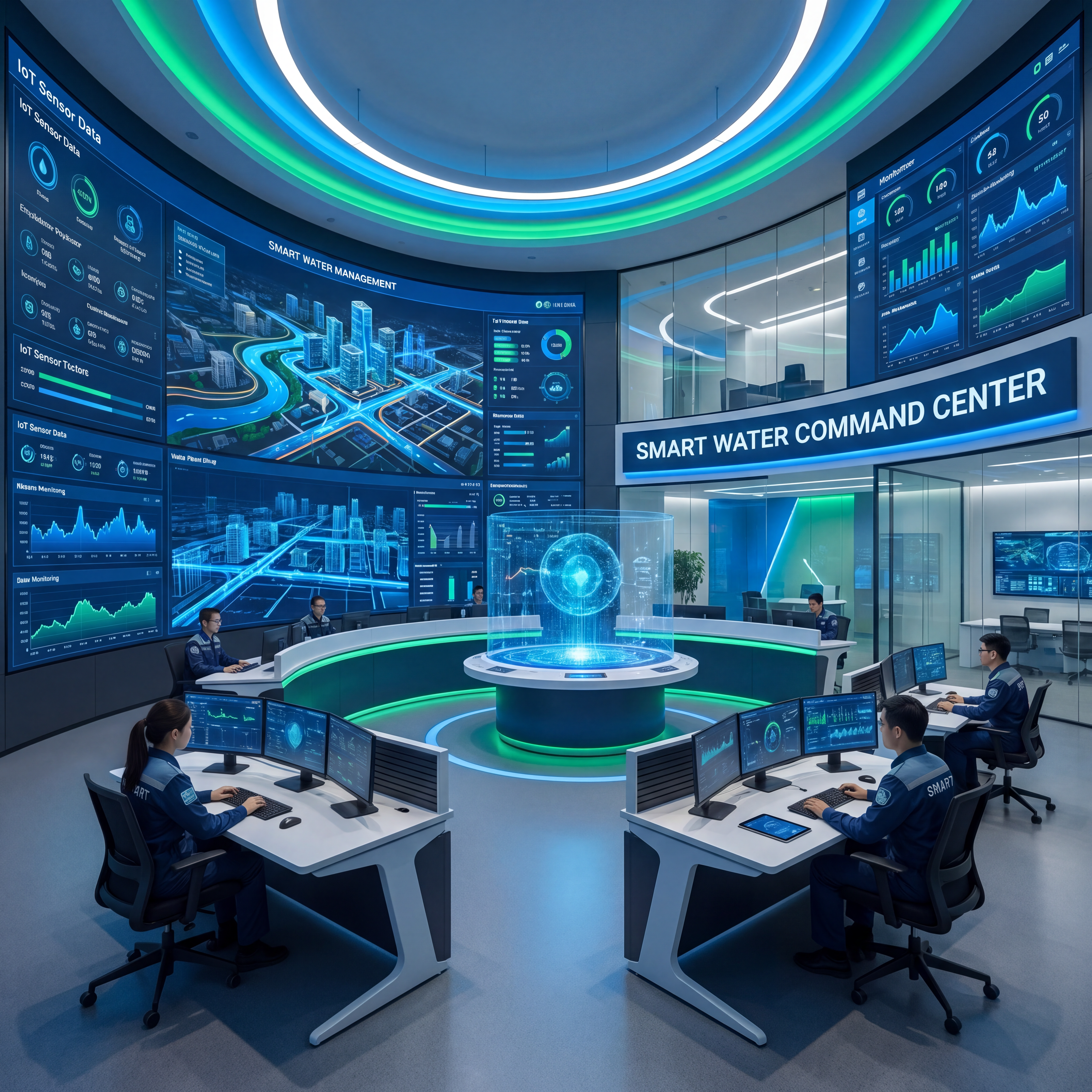
The global Internet of Things (IoT) in water management market is experiencing explosive growth, driven by the deployment of smart sensing devices that build the digital foundation for smart water infrastructure. According to The Business Research Company, the market size is projected to surge from $11.75 billion in 2025 to $13.45 billion in 2026, registering a robust compound annual growth rate (CAGR) of 14.5%. Looking ahead, the sector is expected to reach $22.87 billion by 2030, with some forecasts predicting the broader smart water management market could surpass $74 billion by 2034.
Key Drivers Fueling Global Water IoT Market Growth
The continuous expansion of this massive market is propelled by several critical factors, including increasingly severe global water scarcity challenges and the urgent need to upgrade aging water infrastructure. Widespread adoption of smart city initiatives, the application of AI-driven water analytics, and increasingly stringent water conservation regulations worldwide further accelerate this trend. Geographically, North America currently holds the largest market share, while the Asia-Pacific region represents the fastest-growing market due to rapid urbanization and infrastructure modernization.
Core Technologies Powering the Smart Water Revolution
Throughout the market's evolution, large-scale deployment of smart water meters, real-time leak detection systems, and automated water usage monitoring have emerged as prominent trends. Realizing these advanced digital functionalities relies heavily on front-end sensing layer devices to provide accurate, real-time, and continuous physical data. Within this technological architecture, the professional performance of flow measurement and water level monitoring equipment directly dictates the operational efficiency of the entire IoT system.
Electromagnetic Flowmeters: Solving Non-Revenue Water Losses
In addressing aging pipeline networks and real-time leak detection, electromagnetic flowmeters play an indispensable role. Traditional pipeline systems frequently suffer significant "Non-Revenue Water" (NRW) losses due to invisible leaks, but modern high-precision electromagnetic flowmeters provide highly accurate volumetric flow measurements for conductive liquids in closed pipes. These devices remain unaffected by changes in fluid density, viscosity, and temperature, ensuring reliable data even in challenging conditions. By deploying these meters at critical nodes, water authorities can acquire real-time flow fluctuation data to enable the rapid localization of network anomalies and minor leaks.
Doppler Radar Flowmeters for Complex Hydrological Monitoring
For the automated monitoring of natural water bodies, open channels, and complex drainage systems, the application value of Doppler radar flowmeters is becoming increasingly prominent. In the face of complex flood control and drainage requirements in smart cities, as well as stringent environmental discharge regulations, these radars leverage their non-contact measurement capabilities to accurately measure surface velocity and flow rates. They achieve this without disrupting the flow profile and remain unaffected by water turbidity, significantly enhancing the safety and durability of hydrological monitoring. Such equipment provides a reliable real-time data chain for urban waterlogging early warnings and wastewater discharge compliance.
Radar Water Level Meters Ensuring Precision in Extreme Conditions
In scenarios such as reservoir dispatch, river basin management, and groundwater monitoring, the precision of water level data is equally a core metric for water management. Utilizing high-frequency microwave pulse technology, radar water level meters can deliver millimeter-level accuracy in water level monitoring, even under extreme weather conditions like heavy rain or high winds. They maintain stability in complex environments with surface fluctuations or foam interference, serving as the physical prerequisite for achieving remote water infrastructure control and automated flood disaster early warnings.
RTU Telemetry Terminals Bridging the Last Mile of Smart Water Systems
It is worth noting that the massive volume of front-end sensing data must rely on highly efficient transmission terminals to be transformed into digital assets on IoT platforms. RTU (Remote Terminal Unit) telemetry terminals act as the "edge nerve center," compatible with a multitude of industrial protocols to enable seamless integration with various sensors. Advanced RTUs incorporate edge computing capabilities and Low-Power Wide-Area Network (LPWAN) communication technologies, providing a standardized pathway for low-cost, wide-coverage remote data acquisition. In rapidly growing markets like the Asia-Pacific, where geographical environments are complex, these terminals are the critical components for bridging the "last mile" of smart water systems.
Technological Breakthroughs Driving Cost-Effective Adoption
Technological breakthroughs within the industry are continuously reshaping the market landscape, exemplified by recent innovations from the Indian Institute of Technology Madras. A research team recently developed a non-intrusive smart water metering technology that costs merely one-tenth of traditional smart meters, underscoring the industry's strong demand for cost-effective solutions. This innovation signals a further increase in the adoption rate of water IoT hardware, empowering the global water industry to construct denser monitoring networks in a highly economical manner through the optimization of hardware costs.
Conclusion: The Path to Proactive Intelligent Prediction
In summary, global water management is at a critical juncture, transitioning from passive response to proactive, intelligent prediction. Whether addressing macro-level challenges of water scarcity or implementing precise pipeline leakage control, the industry fundamentally relies on underlying hardware support represented by electromagnetic flowmeters, radar water level meters, Doppler radar flowmeters, and RTU telemetry terminals. As AI analytics and IoT technologies become deeply integrated, professional water measurement and data acquisition equipment will continue to serve as a vital digital foundation, empowering the global water industry to achieve its goals of efficient, safe, and sustainable development.

