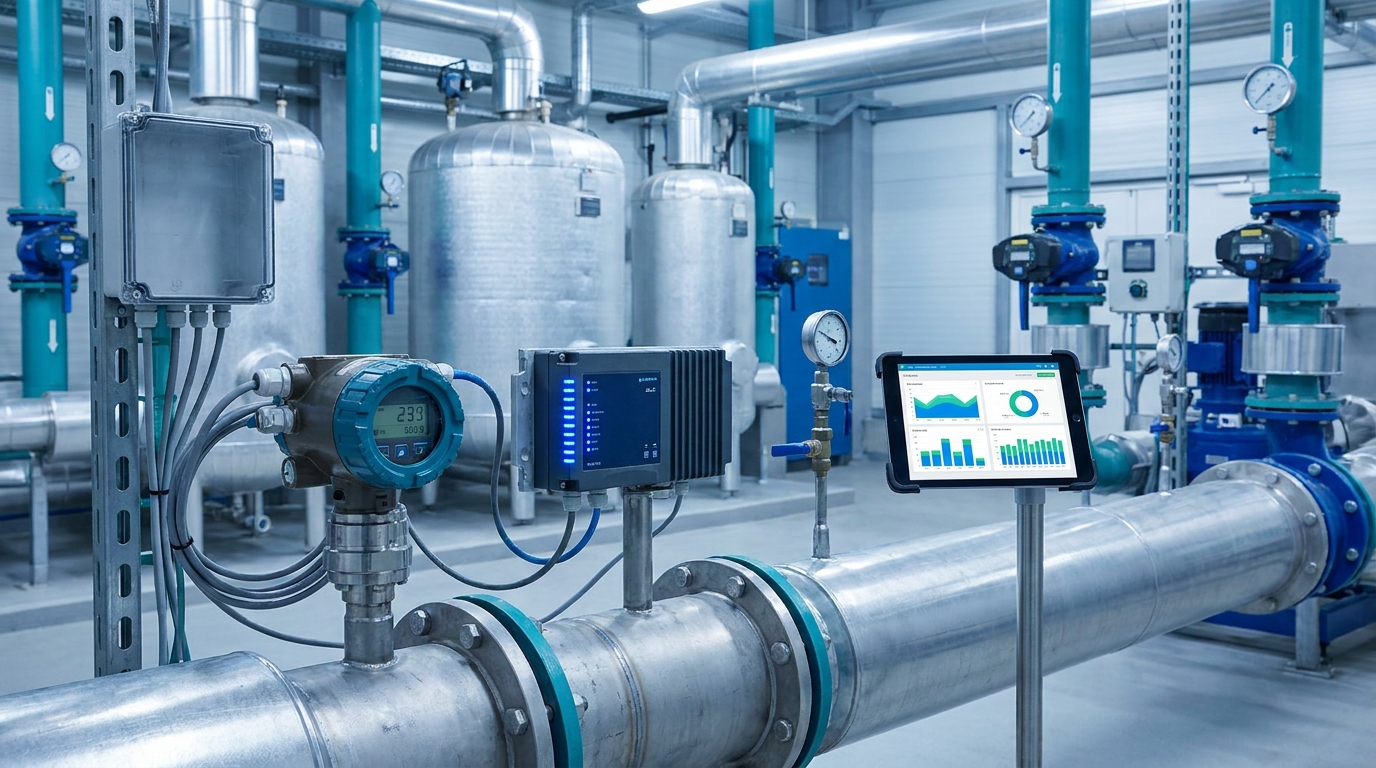
Industrial Flow Meter & RTU Strategies for Water and Steam Energy Monitoring
Precision sensing and edge telemetry transform industrial water intake tracking, steam metering, and enterprise energy consumption monitoring into measurable operational savings and regulatory compliance.
The Hidden Tax of Unmetered Industrial Resources
Global manufacturing facilities face unprecedented pressure to decouple production growth from resource consumption. Industrial water intake monitoring and enterprise energy consumption monitoring have transitioned from voluntary ESG initiatives to mandatory operational imperatives. Regulatory frameworks across Asia, Europe, and North America now enforce strict water withdrawal permits, carbon reporting mandates, and real-time discharge compliance. Yet, many plants continue to operate with fragmented metering infrastructure, relying on mechanical gauges or isolated analog transmitters that fail to capture dynamic process variables. The financial impact is staggering: unmonitored steam leaks, unmeasured cooling water bypasses, and inefficient boiler operations routinely drain 15–25% of a facility’s total utility budget. Modern industrial energy saving demands a paradigm shift from reactive troubleshooting to predictive, data-driven resource optimization.
Why Legacy Metering Falls Short in Modern Manufacturing
Traditional utility tracking in industrial environments suffers from three critical blind spots: temporal resolution, environmental resilience, and data silos. Mechanical flow meters degrade rapidly under high-temperature steam or abrasive process water, leading to measurement drift that goes undetected until quarterly audits. Furthermore, legacy systems lack edge computing capabilities, forcing engineers to manually log readings or rely on delayed SCADA polling intervals. In steam distribution networks, where pressure and temperature fluctuations directly alter volumetric flow, single-variable sensors cannot accurately calculate mass flow or thermal energy transfer. This disconnect between physical flow and digital reporting creates a false sense of compliance while actual water efficiency management remains compromised. Without synchronized, multi-parameter sensing, procurement and engineering teams cannot justify capital expenditures for boiler upgrades, pump replacements, or heat recovery systems.
Architecting Precision: The Smart Sensing & RTU Synergy
High-Fidelity Water Intake & Process Flow Tracking
Effective industrial water intake monitoring requires sensors that maintain calibration across varying fluid conductivities, temperatures, and flow velocities. Electromagnetic flow measurement remains the gold standard for conductive liquids, offering zero pressure drop and immunity to viscosity changes. Modern deployments pair these sensors with advanced signal processing to eliminate noise from pump harmonics or electrical interference. By installing robust inline meters at raw water intakes, cooling loops, and wastewater outfalls, facilities establish a closed-loop water balance. This granular visibility enables immediate detection of unauthorized diversions, pump inefficiencies, or membrane fouling in reverse osmosis systems. The ±0.5% measurement accuracy achievable with contemporary electromagnetic designs ensures that every cubic meter is accounted for, transforming utility tracking from an estimation exercise into a precise accounting function.
Steam Metering & Thermal Energy Management
Steam distribution represents the highest energy density vector in industrial processing, yet it is notoriously difficult to meter accurately due to phase changes, condensate formation, and extreme thermal stress. Proper steam metering thermal energy tracking requires compensation algorithms that continuously integrate pressure, temperature, and volumetric flow to derive true mass flow. Facilities that implement compensated steam metering typically identify 10–20% in unaccounted thermal losses within the first operational quarter. These insights directly inform insulation upgrades, trap maintenance schedules, and boiler load optimization, transforming steam from an uncontrolled overhead into a managed asset. When paired with high-temperature rated sensors and robust telemetry, plants achieve continuous ASME PTC 6 compliance while reducing specific steam consumption per unit of output.
Edge Intelligence & Enterprise Data Aggregation
Sensors alone cannot drive industrial energy saving without intelligent data acquisition. Remote terminal units must act as localized processing hubs, converting raw analog pulses or 4–20mA signals into standardized digital protocols before transmission. Edge computing capabilities enable local alarm triggering, data buffering during network outages, and protocol translation for legacy PLC integration. This architecture ensures that enterprise energy consumption monitoring platforms receive clean, timestamped datasets ready for AI-driven analytics and regulatory reporting. By processing data at the edge rather than relying solely on cloud polling, facilities achieve sub-second response times for critical process deviations and maintain operational continuity during WAN disruptions.
? LGF Electromagnetic Flow Meter
Engineered for industrial water and steam metering across DN10–DN2000 pipelines. Features IP68 sealing, anti-corrosion electrodes, and integrated temperature/pressure compensation. Delivers ±0.5% accuracy with minimal maintenance, making it ideal for raw water intake, cooling circuits, and high-temperature steam headers.
? HERO V9 RTU
Advanced edge telemetry terminal for enterprise energy consumption monitoring. Supports multi-protocol acquisition, 4G/NB-IoT/cellular fallback, and local data caching. Enables seamless integration with SCADA, ERP, and carbon accounting platforms while providing real-time alarm routing and remote firmware updates.
From Blind Spots to Bottom-Line Savings: Real-World Impact
The transition to integrated sensing and telemetry yields measurable operational and financial returns. In a recent deployment across a tier-1 chemical manufacturing complex, upgrading to a unified monitoring architecture reduced overall utility costs by 21.4% within 14 months. The system identified a chronic steam trap failure that was wasting approximately 4.2 tons of condensate per day, while simultaneously optimizing cooling tower blowdown cycles to maintain water efficiency management compliance. Procurement managers benefit from predictable OPEX, reduced maintenance truck rolls, and extended asset lifecycles. Engineering teams gain access to high-resolution trend data that supports continuous improvement initiatives and capital planning. When combined with ISO 50001 energy management frameworks, these deployments typically achieve full ROI within 9–12 months through direct utility bill reduction and avoided compliance penalties.
- ✅ Real-time leak detection reduces non-revenue water loss by 15–25%
- ✅ Compensated steam tracking improves boiler thermal efficiency by 8–12%
- ✅ Automated data logging eliminates 90% of manual compliance reporting labor
- ✅ Edge telemetry ensures 99.8% data availability during network instability
"Precision measurement is the foundation of sustainable manufacturing. When you can accurately track every drop of water and every joule of thermal energy, efficiency ceases to be a target and becomes a continuous, automated process."
Strategic Implementation for Engineering & Procurement Leaders
Successful deployment requires a phased approach aligned with operational downtime windows and existing control room architectures. Begin with a comprehensive utility audit to map all intake points, critical steam headers, and discharge nodes. Prioritize installations based on energy intensity and regulatory exposure. Select instrumentation that supports industrial environmental ratings (IP67/IP68, ATEX/IECEx for hazardous zones) and offers long-term calibration stability. Ensure telemetry hardware supports multiple communication pathways—4G LTE, NB-IoT, or wired Ethernet—to guarantee data continuity during plant expansions or network migrations. Finally, integrate the acquired data into existing ERP or energy management systems to close the loop between measurement and decision-making. By partnering with manufacturers that offer end-to-end sensor fabrication, system integration, and localized technical support, organizations minimize deployment risk and accelerate time-to-value.
See What You Measure
Ready to optimize your industrial water and energy monitoring infrastructure?
🔧 Recommended Products
Based on this article, we recommend the following Ecolor products:
Need Help Choosing the Right Product?
Our engineering team is ready to provide free technical consultation and quotes

