Low-Carbon Parks Enter the Stage of Refined Operation: From Point-Specific Energy Saving to Systematic Carbon Reduction
Driven by the "Dual Carbon" goals and industrial upgrading, low-carbon parks are transitioning from conceptual demonstrations to large-scale implementation.
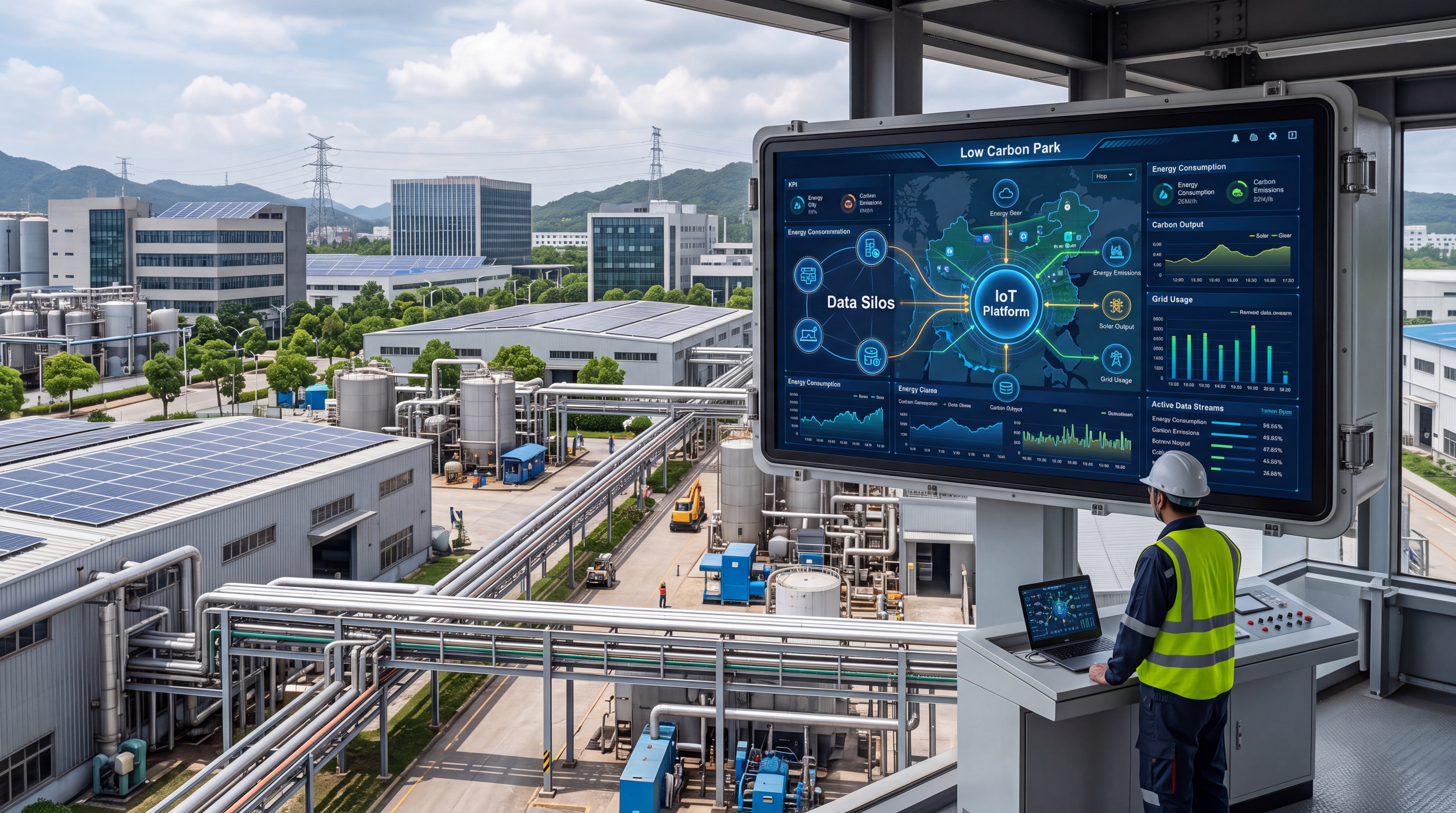
Park carbon reduction is no longer limited to replacing high-efficiency equipment or installing rooftop photovoltaics, but now covers the energy mix, production processes, building energy consumption, transportation and logistics, and digital management. The construction of low-carbon parks is a systematic project that requires long-term operation, dynamic optimization, and multi-party collaboration.
Market Trends: The Shift to Existing Parks
From a market trend perspective, the focus of demand is shifting from newly built parks to existing ones. Parks in manufacturing, chemicals, logistics, and data centers face pressures from energy costs, compliance constraints, and green supply chains, making energy-saving retrofits a more practical choice. Compared to new projects, retrofits of existing parks place greater emphasis on return on investment and feasibility.
The market focus has shifted from "whether to reduce carbon" to "how to achieve verifiable carbon reduction at a reasonable cost." Project evaluation, energy savings estimation, and risk control have become critical.
Technical Evolution: Comprehensive Optimization
At the technical level, low-carbon parks are shifting from single-point equipment upgrades to comprehensive energy system optimization. Photovoltaics, energy storage, heat pumps, waste heat recovery, and smart lighting remain fundamental, but standalone applications struggle to unlock overall potential.
- Integration: Microgrids, coordination of source, grid, load, and storage, flexible load control, and energy and carbon management platforms are being integrated into more park projects.
- Data-Driven: Achieving dynamic matching of energy supply and demand through data integration and model analysis.
- Future Tech: Digital twins, AI scheduling, and edge computing will enhance system prediction and optimization capabilities.
The Prerequisite: Energy Efficiency Diagnosis
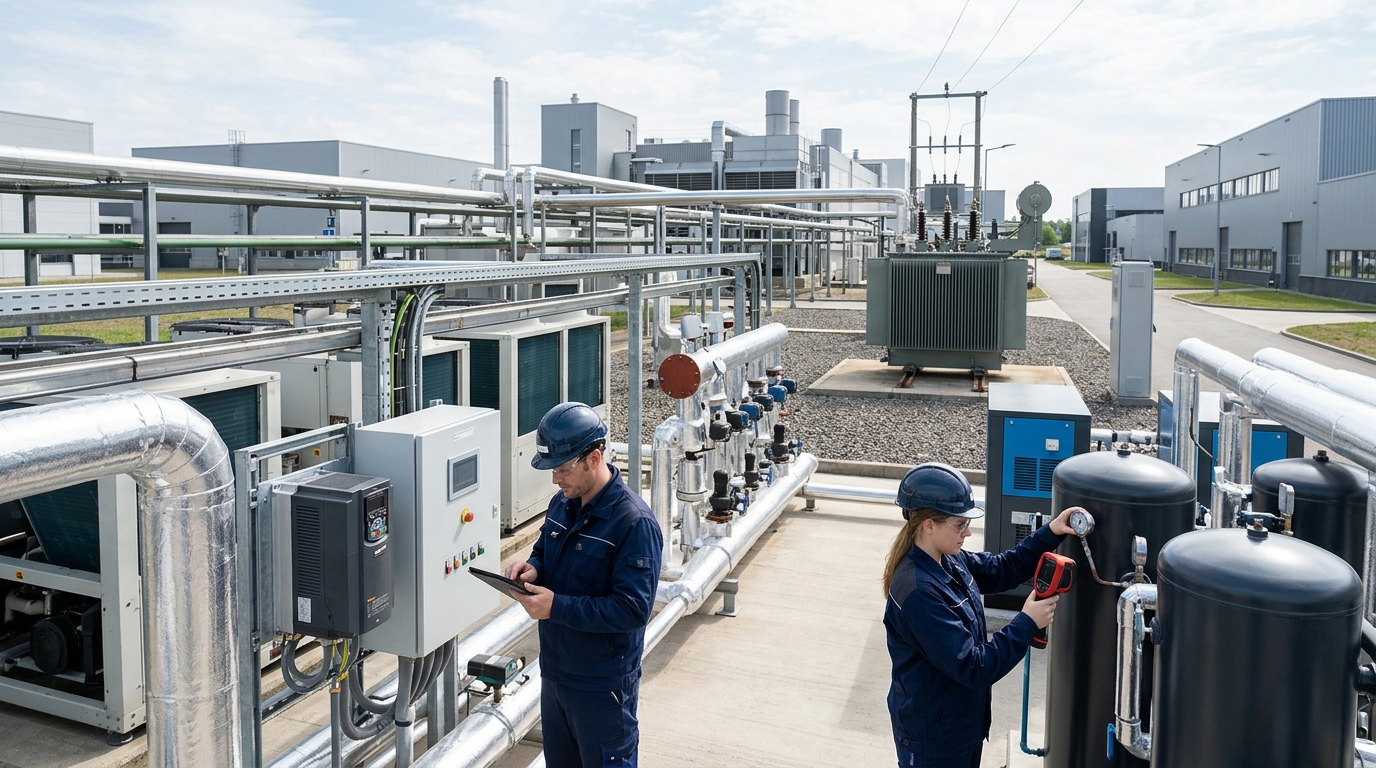
In this process, energy efficiency diagnosis is becoming a prerequisite for low-carbon park construction. In the past, some projects were retrofitted without systematic diagnosis, leading to energy-saving effects falling short of expectations. The industry now emphasizes a sequence of diagnosis first, retrofit second, and verification third.
The New Workflow:
- Map Structure: Analyze energy consumption structure, load curves, equipment efficiency, and process energy consumption.
- Identify Potential: Form a list of issues, potentials, and projects.
- Data Support: Provide data for green power procurement, carbon asset management, and green finance disclosure.
Business Models & Policy Environment
In terms of business models, Energy Management Contracting (EMC) remains an important tool for marketizing energy-saving retrofits. Through models such as energy savings sharing, energy cost trusteeship, or guaranteed energy savings, parks and enterprises can reduce investment pressure. However, the industry also faces issues such as unclear metering boundaries, complex baseline year confirmation, and disputes over energy savings.
The policy environment is strengthening the construction of low-carbon parks. As the dual control of energy consumption gradually transitions to the dual control of carbon emissions, the focus of park management is shifting from total energy consumption control to indicators such as carbon emission intensity, the proportion of green power usage, and carbon productivity. Evaluation systems for green parks, zero-carbon parks, and green factories are continuously improving.
Future Outlook: Three Major Trends
Looking ahead, low-carbon parks will exhibit three major trends:
1. Collaborative Reduction
Expanding carbon reduction from the energy side to collaborative carbon reduction on the production side and across the supply chain.
2. Platform-Based Operation
Shifting from project-based construction to platform-based operation, integrating energy/carbon management, equipment O&M, and services.
3. Market-Driven
Transitioning from policy-driven to market-driven, where retrofits are increasingly driven by cost reduction, order fulfillment, financing, and risk management.
Those equipped with system integration, data governance, and long-term operation capabilities will secure a more advantageous position.
Conclusion
Yicai Technology observes that the next stage of competition in low-carbon parks lies not in whether a single technology is advanced, but in the ability to form a complete closed loop of "diagnosis—retrofit—operation—verification—financing."
Parks should establish a normalized energy efficiency diagnosis mechanism and a project pipeline to identify low-cost energy-saving opportunities. Service enterprises need to enhance their energy savings measurement and verification capabilities to increase transparency. As standards and market mechanisms mature, low-carbon parks are expected to move from pilot projects to large-scale replication, becoming a vital vehicle for industrial green transformation.