Digital Transformation of Low-Carbon Parks: Data Silos and IoT Platforms
Driven by the "Dual Carbon" goals, the construction of a new power system, and the green transformation of the manufacturing sector, low-carbon parks are moving from proof of concept to large-scale implementation. In the past, park decarbonization was often understood merely as installing rooftop PV, replacing LED lighting, or carrying out point-specific energy efficiency retrofits; today, the industry's focus has shifted to the comprehensive optimization of energy systems, industrial structure, digital governance, and asset operations.
Industrial parks concentrate energy-consuming equipment, production processes, logistics and transportation, and building loads. Their energy efficiency levels and carbon emission intensities are becoming key indicators of regional green competitiveness. The news editorial department of Yicai Technology has observed that keywords such as energy efficiency retrofits, energy performance contracting, and energy efficiency diagnosis are shifting from the project level to the park governance level.
From a market perspective, the green power and green certificate trading mechanism is continuously improving, the dual control of energy consumption is gradually shifting to the dual control of carbon emissions, and local pilot programs for zero-carbon parks, near-zero carbon parks, and green industrial parks are increasing. Park operators, tenant enterprises, and energy service providers are no longer solely focused on one-time investment subsidies; instead, they place greater emphasis on long-term energy costs, power supply reliability, traceability of carbon data, and return on assets. A new consensus is forming in the industry: low-carbon parks are not merely technical engineering projects, but systematic engineering endeavors involving energy, industry, finance, and governance mechanisms.
Market Trends: From Point-Specific Energy Efficiency Retrofits to Comprehensive Park Energy Services
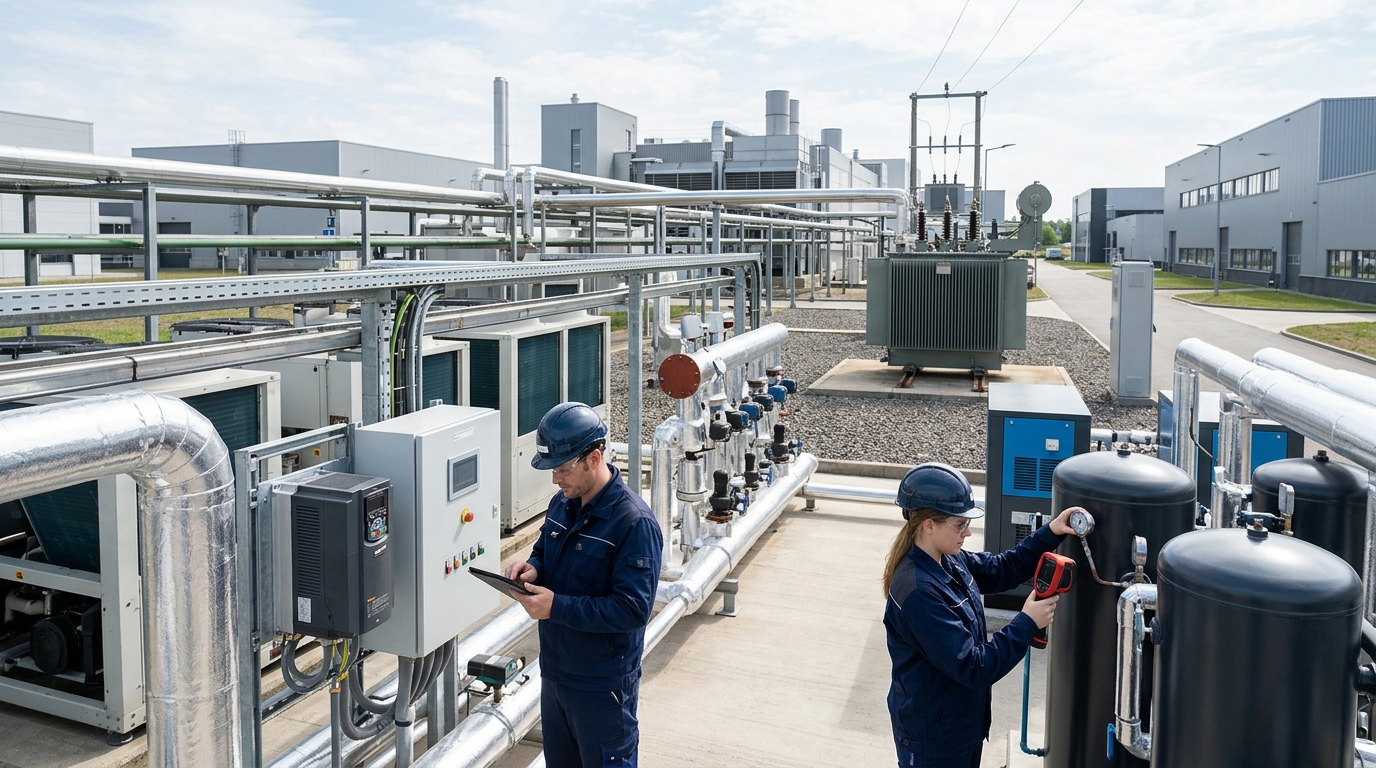
The first main thread in the low-carbon park market is the shift of energy efficiency retrofits from point-specific equipment upgrades to systemic energy efficiency improvements. Traditional projects mostly focused on end-use equipment such as lighting, motors, fans, and water pumps, with relatively clear returns. However, as the energy consumption structure of parks becomes more complex, the industry is beginning to focus on the coordinated optimization of air compressor stations, chiller plants, circulating water systems, steam networks, waste heat and residual pressure, power distribution systems, and building envelopes. Industry calculations show that in manufacturing parks, the energy-saving potential of compressed air systems, central air conditioning systems, circulating water systems, and industrial lighting can typically reach 10% to 30%. If operational strategy optimization and load management are integrated, the room for comprehensive energy efficiency improvement will further expand.
The second main thread is the shift in park energy services from "selling equipment" to "selling operations." An increasing number of park owners wish to introduce professional energy service providers to uniformly plan, invest in, construct, and operate and maintain PV, energy storage, EV chargers, chiller plants, air compressor stations, and heating systems. Comprehensive energy services can integrate scattered energy-saving projects into quantifiable, assessable, and sustainably operable energy assets. In this process, energy efficiency diagnosis serves as the project entry point, energy efficiency retrofits act as the implementation lever, energy performance contracting becomes the revenue organization method, and digital platforms undertake the functions of monitoring, verification, and optimization.
The third main thread is the establishment of green power and energy storage as standard park configurations. With the decline in distributed PV costs, the large-scale application of commercial and industrial energy storage, and changes in the peak-valley electricity pricing mechanism, parks are beginning to enhance their energy self-sufficiency through approaches such as "self-generation and self-consumption with surplus power fed to the grid," "integrated PV-storage-charging," and "coordination of source, grid, load, and storage." For parks with stable electricity loads, abundant rooftop resources, and large electricity price differentials, the economics of PV-storage systems are no longer solely driven by policy but are gradually acquiring market-based investment logic. Export-oriented parks also face pressures from the EU Carbon Border Adjustment Mechanism, battery regulations, and product carbon footprint disclosure requirements. Green power consumption certificates, carbon emission accounting, and traceable energy data are becoming part of investment attraction and supply chain compliance capabilities.
Policy Impacts: Dual Control of Carbon Emissions, Green Power and Certificates, and Changes in Park Assessments
Policy remains a critical variable in the development of low-carbon parks. In recent years, China has built a relatively complete policy framework around carbon peaking and carbon neutrality. The "Action Plan for Carbon Peaking Before 2030" clarifies the medium- and long-term emission reduction pathways; the "Action Plan for Industrial Energy Efficiency Improvement" proposes elevating energy efficiency levels in key industrial sectors; and the "Opinions on Accelerating the Comprehensive Green Transformation of Economic and Social Development" further emphasizes improving the dual control system for carbon emissions. For parks, the policy focus is shifting from total energy consumption control to the assessment of carbon emission intensity, green power consumption, and carbon management capabilities.
The shift from dual control of energy consumption to dual control of carbon emissions will significantly alter park energy decision-making. In the past, parks and enterprises focused more on whether total energy consumption was constrained; in the future, low-carbon power, renewable energy, and carbon emission reduction capabilities will become more critical evaluation dimensions.
If a park can increase its proportion of green power through rooftop PV, green power trading, green certificate purchases, and energy storage optimization, it may gain greater leeway in carbon emission accounting, project approval, and green evaluations. Policy orientation is also prompting local competent authorities to place greater emphasis on park-level carbon accounting, energy metering, and the construction of third-party energy efficiency diagnosis capabilities.
The improvement of the green power and green certificate mechanism provides a clearer path for value realization in low-carbon parks. As the scope of green certificate issuance expands and the trading system gradually integrates, the certification methods for enterprises using renewable energy power are becoming more explicit. Parks can achieve self-consumption by building their own distributed PV, purchase green power through green power trading, or supplement proof of green power consumption through green certificates. It should be noted that boundary management and double-counting risks still exist among green power, green certificates, and carbon emission accounting; parks need to establish unified data calibers. Local zero-carbon park pilots, green finance, and carbon inclusion mechanisms will provide support, but long-term sustainability still depends on market-based revenue mechanisms.
Technological Directions: Energy Efficiency Diagnosis, Digital Platforms, and Scenario-Based Retrofits
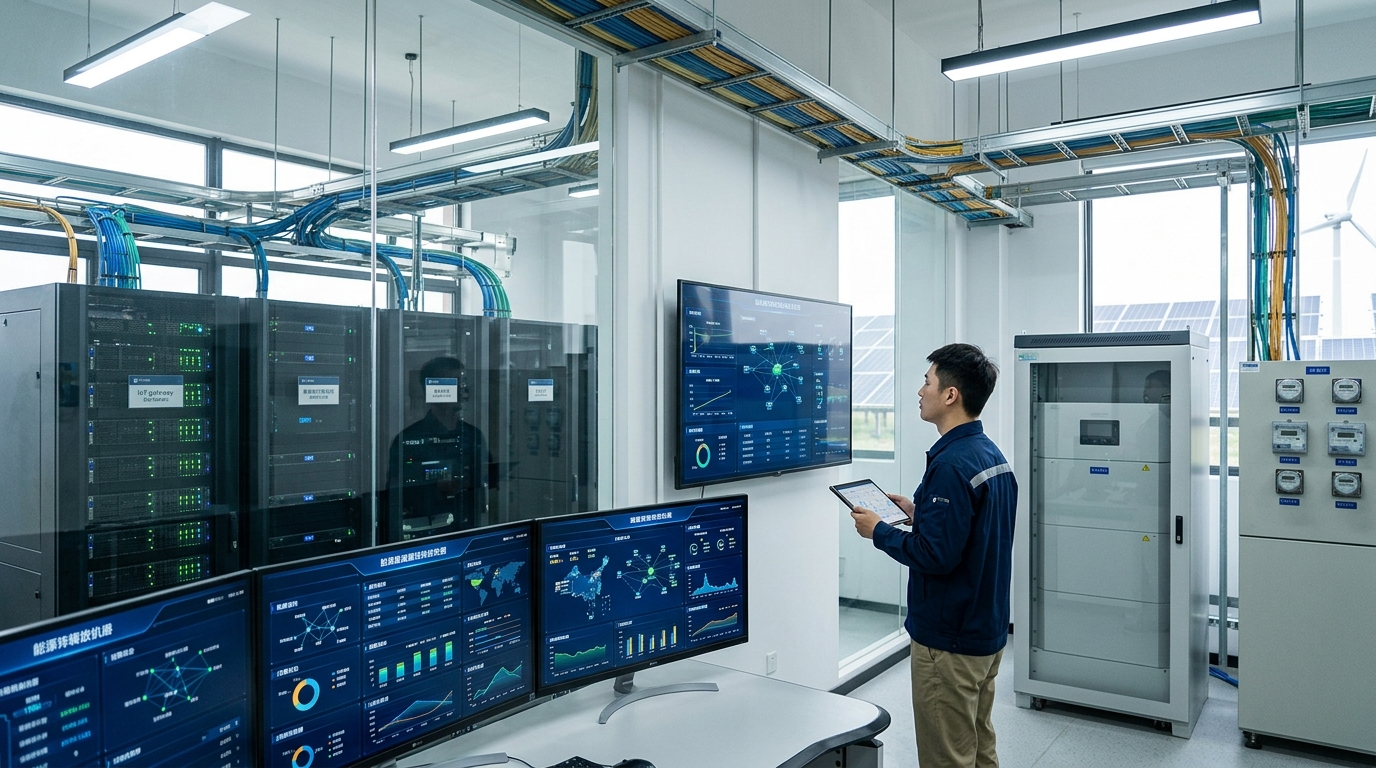
At the technical level, energy efficiency diagnosis is shifting from empirical judgment to data-driven approaches. Traditional diagnosis relies on manual inspections, meter reading, and empirical evaluation, making it difficult to identify systemic inefficiencies. Currently, parks are deploying sub-item metering, smart meters, temperature and humidity sensors, flow meters, pressure sensors, and edge computing gateways to continuously monitor key parameters such as transformer load rate, power factor, motor efficiency, specific power of air compressors, COP of chillers, steam trap status, and compressed air leakage rate. Industry experience shows that for every 5 percentage point reduction in the compressed air system leakage rate, the comprehensive power consumption of the air compressor station typically decreases by about 3% to 6%; variable frequency retrofits for chilled water pumps and cooling water pumps in central air conditioning systems commonly achieve electricity savings of 20% to 40%.
Industrial Manufacturing Parks
- High-efficiency & permanent magnet synchronous motors
- Group control of air compressors
- Waste heat recovery systems
- Circulating water system optimization
Commercial & R&D Parks
- Smart lighting controls
- HVAC optimization
- Building envelope retrofits
- Elevator energy regeneration
Energy efficiency retrofits are forming clearer scenario-based pathways. In industrial manufacturing parks, high-efficiency motors, permanent magnet synchronous motors, group control of air compressors, waste heat recovery, and circulating water system optimization are high-frequency scenarios; in commercial and R&D parks, smart lighting, HVAC optimization, building envelope retrofits, and elevator energy regeneration are more universally applicable; in data centers and computing power parks, natural cold sources, cold aisle containment, liquid cooling technology, AI temperature control, and pump and fan optimization have become crucial means to lower PUE. Taking motor systems as an example, although high-efficiency motors meeting higher energy efficiency grades require higher initial investments, they can significantly reduce electricity and O&M costs over their full lifecycle, making them particularly suitable for continuous production scenarios with annual operating hours exceeding 5,000.
Park energy systems are shifting from single power supply to multi-energy complementation. Distributed PV, energy storage, heat pumps, cold and heat storage, industrial waste heat, ground-source or water-source heat pumps, EV chargers, and microgrids jointly form the comprehensive energy foundation of the park. Energy stations are no longer just boiler rooms or chiller plants, but asset portfolios integrating cooling, heating, power, storage, and control. The introduction of virtual power plants and demand response mechanisms enables park loads to participate in grid peak shaving, frequency regulation, and reserve services, further expanding revenue sources. Energy and carbon management platforms need to realize energy metering, carbon emission accounting, green power and certificate management, carbon footprint tracking, and energy-saving effect verification, forming a closed loop of "diagnosis—retrofit—verification—O&M—re-optimization," rather than remaining at the level of visual display.
Energy Performance Contracting: Verification of Energy Savings and Upgrading of Revenue Models
Energy performance contracting is a vital tool for the commercialization of low-carbon parks. Common models include the shared savings model, the guaranteed savings model, and the energy charge trusteeship model. In the shared savings model, the service provider invests in the retrofit, and both parties share the energy-saving benefits according to an agreed ratio; in the guaranteed savings model, the service provider guarantees the energy-saving effect and assumes compensation if the target is not met; in the energy charge trusteeship model, the service provider is responsible for the operation of the park's energy system and settles based on agreed energy charges or service fees. Different models are suitable for parks with varying property rights structures, load stability, and data foundations.
In park scenarios, the difficulty of energy performance contracting lies not in individual equipment, but in the baseline and the measurement and verification of energy savings. Energy savings are not simply the difference in electricity bills before and after the retrofit; rather, the impacts of production volume changes, weather variations, operating rate fluctuations, and electricity price adjustments must be excluded. The industry generally refers to the International Performance Measurement and Verification Protocol, combined with the actual conditions of Chinese parks, to establish baseline models. For manufacturing parks with significant production load fluctuations, sub-item metering devices need to be installed, and key loads must be normalized; for multi-tenant parks, it is also necessary to clarify public areas, tenant boundaries, and cost-sharing mechanisms.
Business models are shifting from single energy-saving revenues to comprehensive revenue operations. In the past, energy-saving service projects primarily relied on electricity bill savings to recover investments; in the future, park energy projects can simultaneously obtain revenues from peak-valley arbitrage, demand optimization, demand response subsidies, green power and certificate revenues, carbon asset revenues, and O&M service revenues. Diversified revenue sources help mitigate risks from single policy or electricity price changes and also increase the willingness of financial institutions to participate. Meanwhile, project risk governance is equally critical. Mature low-carbon park projects should introduce third-party energy efficiency diagnosis in the early stages, clarify metering plans, data interfaces, acceptance criteria, and dynamic adjustment mechanisms, enabling energy performance contracting to transition from engineering delivery to a bankable, auditable, and replicable operational model.
Cases and Economics: Parameter Samples for Retrofits in Three Types of Parks
Case 1 Electronic Manufacturing Park (Yangtze River Delta)
Annual electricity consumption: ~32 million kWh | Peak load: ~6.5 MW
- Interventions: 6.8 MW rooftop PV, 2 MW/4 MWh behind-the-meter storage, air compressor group control, VFD for central AC, smart lighting.
- Results: Annual PV generation ~7.2M kWh (85% self-consumption); Systemic energy savings ~3.8M kWh; Total purchased electricity reduction ~11M kWh.
- Economics: Investment ~48M RMB; Annual revenue ~7.6M RMB; Payback ~6.3 years; Overall efficiency improvement ~14%.
Case 2 Northern China Park (High Heating/Steam Loads)
Focus: Steam system comprehensive governance
- Interventions: High-efficiency steam traps, condensate recovery system, low-grade waste heat recovery, boiler group control optimization.
- Results: Steam network losses reduced by ~18%; Condensate recovery rate increased from 62% to 88%; Natural gas saved ~1.6M cubic meters/year.
- Economics: CO2 reduction ~3,450 tons/year; Investment ~19M RMB; Payback ~3.8 years.
Case 3 Computing Power Park (Data Center/R&D)
Focus: PUE optimization and green power substitution
- Interventions: Cold aisle containment, natural cooling, VFD pumps/fans, AI temperature control, server load scheduling.
- Results: PUE reduced from 1.48 to ~1.26; Direct electricity savings ~9M kWh/year (approx. 6.3M RMB savings).
- Economics: Green power share >60% via trading and rooftop PV.
Forward Outlook: Three Main Threads for Low-Carbon Parks from 2026 to 2030
Looking ahead to the next five years, low-carbon parks will deepen along three main threads. The first thread is the shift from energy efficiency improvement to zero-carbon supply. As technologies for direct green power connection, distributed energy storage, virtual power plants, and microgrids mature, parks will no longer be passive electricity-consuming units but may become flexible resources in the regional power system. Parks with the right conditions can achieve higher proportions of renewable energy consumption through the integration of source, grid, load, and storage, and generate revenues in the electricity spot market, demand response, and ancillary services. Zero-carbon and near-zero carbon parks will transition from demonstrations to standardized products.
The second thread is the shift from project-based to continuous operations. Energy efficiency diagnosis will no longer be a one-time report but will become a routine service for park energy governance; energy performance contracting will no longer be limited to engineering delivery but will extend to O&M optimization, carbon asset management, green power and certificate services, and performance auditing. Park energy data will gradually become assetized, forming a traceable, verifiable, and tradable data foundation. Whoever can continuously provide high-quality data, stable energy savings, and credible carbon accounting will establish long-term competitiveness in the low-carbon park market.
The third thread is the shift from park boundaries to industrial chain collaboration. Future low-carbon evaluations of parks will not stop at internal energy consumption and emissions but will extend to product carbon footprints, supply chain carbon management, circular economy, green logistics, and renewable resource utilization. Parks may centrally build shared energy stations, reclaimed water systems, waste resource recovery facilities, and green warehousing and logistics systems to reduce the decarbonization costs of individual enterprises. Overall, low-carbon parks are evolving from policy demonstration projects into new types of industrial infrastructure. Their competitive focus will shift from point-specific equipment efficiency to system integration capabilities, data governance capabilities, financial design capabilities, and long-term operational capabilities.