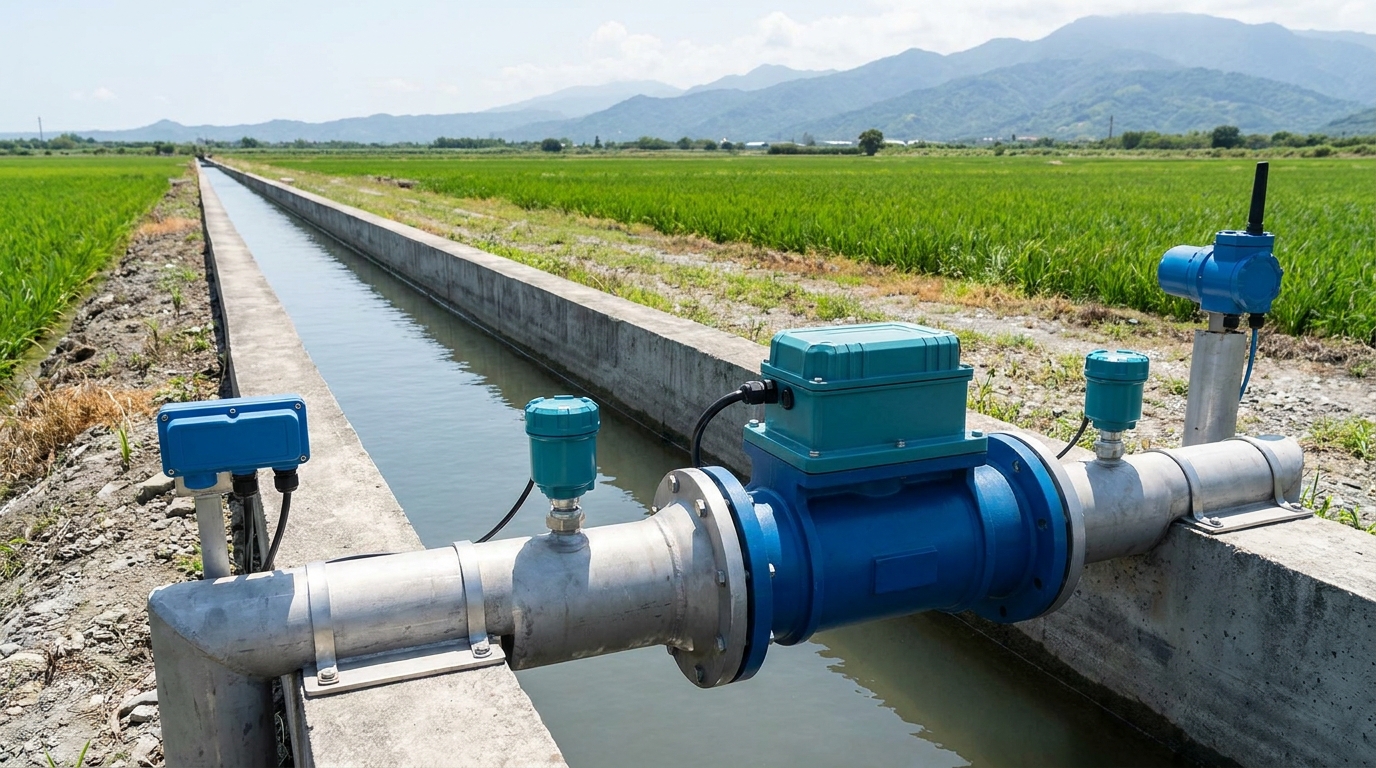
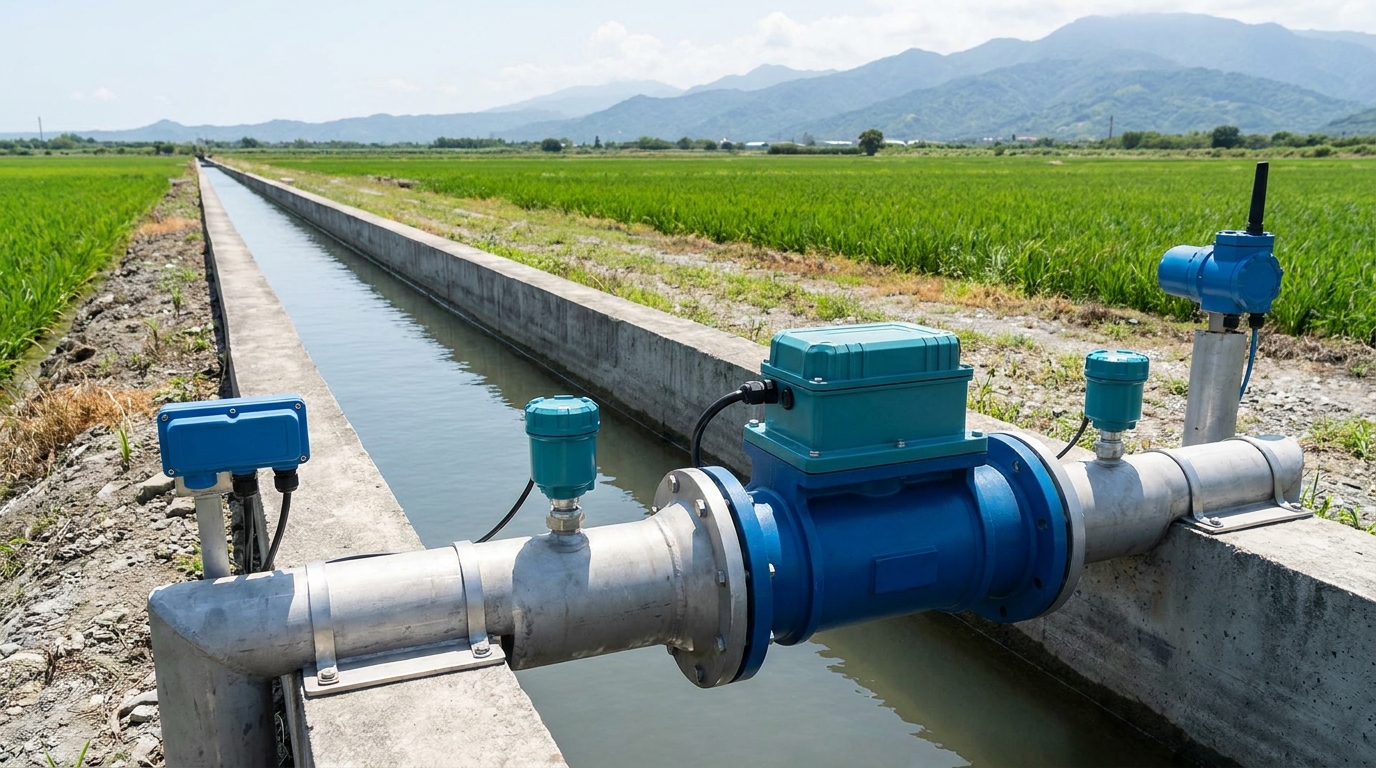
LGF Injection-Molded Electromagnetic Flow Meter in Smart Irrigation District Flow Monitoring: A Field Implementation Guide
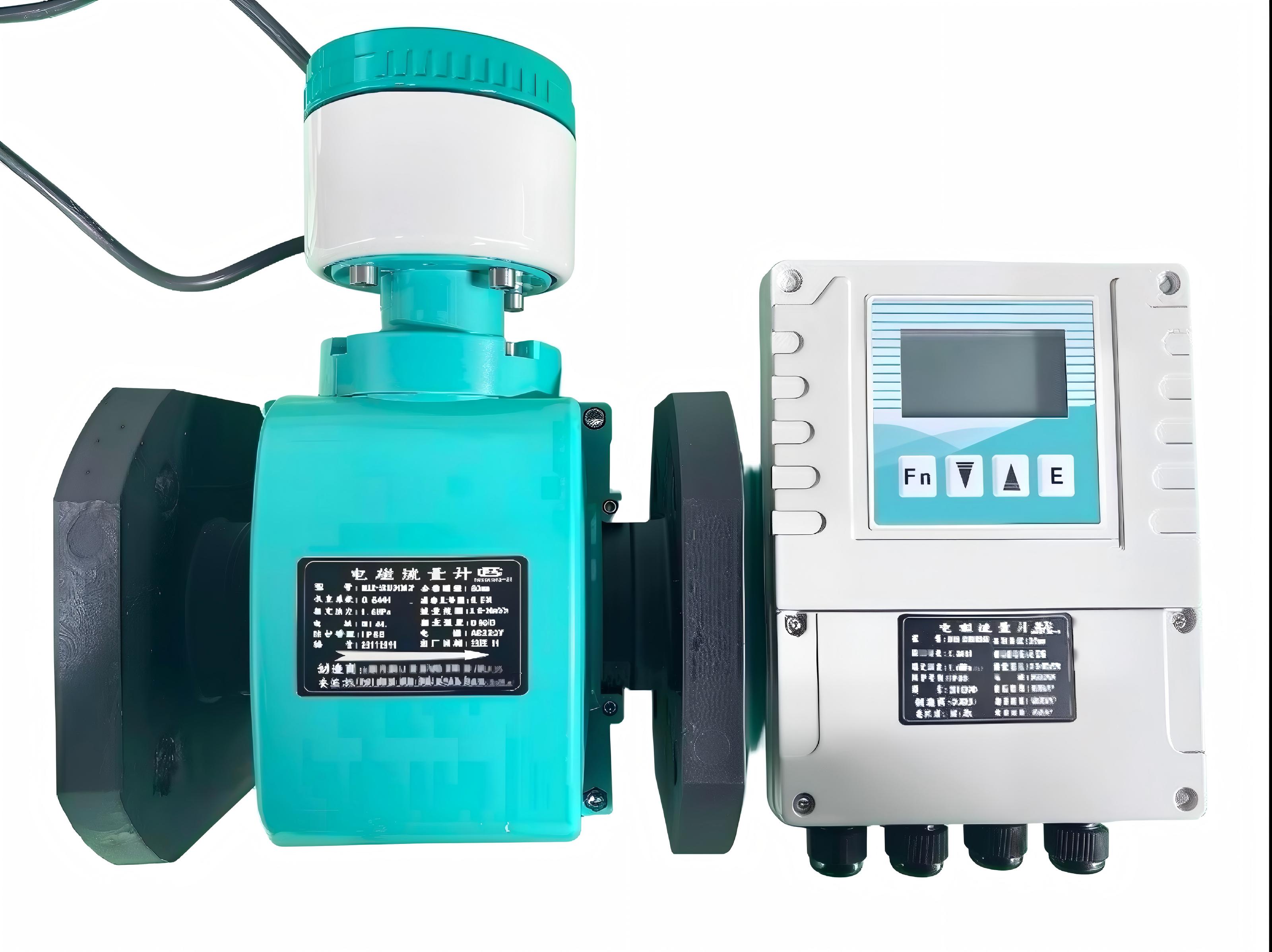
The LGF injection-molded electromagnetic flow meter has emerged as the preferred solution for large-scale smart irrigation district projects, offering a compelling combination of high accuracy (±0.2%), IP68 protection, and a starting price of ¥850. This guide details its successful implementation in a Zhejiang irrigation district, providing a complete technical roadmap from selection to operation.
Project Background: From "Flood Irrigation" to "Precision Metering"
In 2024, China's Ministry of Water Resources mandated comprehensive water extraction metering for all large and medium-sized irrigation districts. This created a need for tens of thousands of cost-effective, durable flow monitoring devices.
Traditional irrigation flow monitoring faces a contradiction: broad coverage, low per-point budgets, and harsh installation environments. The LGF electromagnetic flow meter addresses this with its affordability and robust design, making smart irrigation district modernization feasible.
1. Project Overview and Requirements Analysis
Irrigation District Basic Information & Core Technical Requirements
The case study involved an irrigated area of approximately 120,000 mu with over 180 canals. The first phase required 320 monitoring points across pipe diameters from DN50 to DN300, with water containing seasonal silt and suspended solids.
Core requirements included strict cost control (under ¥1,500 per unit), harsh environment adaptability (including flood-prone areas), unattended remote data collection, long-term stability (8+ year lifespan), and reliable performance in sandy water conditions.
Key Requirement: Cost Control
Per-unit cost must stay below ¥1,500 for large-scale deployment across hundreds of points.
Key Requirement: Harsh Environment
IP68 protection is mandatory for points in low-lying canal areas prone to seasonal flooding.
2. Why Choose the LGF Injection-Molded Electromagnetic Flow Meter
The project team compared ultrasonic, traditional metal electromagnetic, and the LGF injection-molded electromagnetic flow meter. The decision was based on critical factors for irrigation district flow monitoring.
| Comparison Item | Ultrasonic Flow Meter | Traditional Metal Electromagnetic | LGF Injection-Molded Electromagnetic |
|---|---|---|---|
| Unit cost | ¥1,200–3,000 | ¥2,000–5,000 | ¥850–1,500 |
| Sandy water measurement | Severely affected | Essentially unaffected | Essentially unaffected |
| Protection rating | IP65–IP67 | IP65–IP67 | IP68 |
| Measurement accuracy | ±1.0%–±2.0% | ±0.5% | ±0.2% |
Key Decision Factors for Smart Irrigation Projects
Sandy water adaptability was paramount. Electromagnetic flow meters are inherently unaffected by suspended solids, while ultrasonic solutions suffer severe signal attenuation. The IP68 protection rating of the LGF meter was mandatory for flood-prone installation sites.
The significant cost advantage saved approximately ¥500,000–800,000 for 320 points. Furthermore, the lightweight design (6–8 kg vs. 18–25 kg for traditional meters) proved crucial for manual transport in hard-to-access irrigation district environments.
3. System Architecture and Integration
Three-Tier Smart Irrigation Flow Monitoring Architecture
The system employs an "Edge Sensing + Edge Computing + Cloud Management" architecture. The sensing layer features the LGF flow meter and HERO V9 RTU terminal, powered by solar systems.
Data is transmitted via 4G/NB-IoT using the hydrological protocol SL651-2014 to an irrigation water resource management platform for real-time monitoring, statistics, and O&M management.
Seamless LGF Flow Meter and RTU Integration
The LGF meter outputs RS485 digital signals (Modbus RTU protocol) for seamless integration: LGF Flow Meter → RS485 → HERO V9 RTU → 4G/NB-IoT → Management Platform.
The RTU collects data every 15 minutes. It features store-and-forward capability, ensuring data integrity by locally storing over 30 days of data during network outages and auto-syncing upon recovery.
4. Installation Best Practices for Irrigation Pipelines
Measurement Point Site Selection Principles
For accurate electromagnetic flow meter measurement, ensure upstream straight pipe ≥5D and downstream ≥3D (D = pipe diameter). Avoid locations near pump outlets or valves.
The measurement section must always operate full-pipe. Install the sensor at the pipeline's lowest point or a rising section to prevent air bubble accumulation, which is critical for irrigation flow monitoring accuracy.
Key Field Construction Experience
Full-pipe verification is essential. For partially filled irrigation pipelines, use a "V-installation method" with gradual slopes upstream/downstream to ensure full-pipe conditions via hydraulic head differential.
Lightning protection grounding is critical in open irrigation areas. Ground resistance should be <10Ω at each point. The lightweight design of the LGF flow meter enabled high efficiency, with a 2-person crew completing 8–10 point installations per day.
5. Commissioning, Verification, and Operational Results
Accuracy Verification and Long-Term Stability
Post-installation spot-checks at 10 points using a portable ultrasonic flow meter showed a mean absolute deviation of 0.12%, well within the LGF meter's ±0.2% specification. After 6 months, zero-point drift was <0.02%, exceeding the 0.1% requirement.
Transforming Irrigation Water Management
System deployment enabled precise water usage metering. Data-backed transparency reduced water disputes by 80%, and the irrigation water utilization coefficient improved from 0.52 to 0.68. Flow differential analysis also identified 12 pipeline leaks.
Failure Rate
0%
Across 320 units over 8+ months
Data Completeness
99.7%
Gaps were due to network fluctuations, not equipment
Annual Maintenance Cost
<¥10,000
Extremely low O&M for the entire system
6. Project Summary and Economic Benefits
| Item | Traditional Solution (Estimated) | LGF Solution (Actual) | Savings |
|---|---|---|---|
| Equipment procurement (320 units) | ¥960,000 | ¥380,000 | ¥580,000 (60%) |
| 5-year total cost | ¥1,680,000 | ¥590,000 | ¥1,090,000 (65%) |
Recommendations for Smart Irrigation District Projects
Prioritize solving full-pipe conditions through pre-installation hydraulic analysis. Select RTU terminals compatible with hydrological protocol SL651 (like the HERO V9 series) to simplify platform integration.
Negotiate volume pricing for the LGF injection-molded electromagnetic flow meter and ensure RTUs have spare channels for future expansion into water quality or pressure monitoring.
Conclusion
The flow meter is the starting point of the irrigation data chain — inaccurate data undermines the entire system. The LGF injection-molded electromagnetic flow meter, with its exceptional price-performance ratio, reliability, and ±0.2% accuracy, provides a proven, practical solution for large-scale smart irrigation district flow monitoring.
For detailed LGF electromagnetic flow meter technical specifications, selection guides, or smart irrigation solution whitepapers, visit www.cssoc.com or call the service hotline at 400-808-9114.
Ecolor Technology (Hangzhou) | Situman Sensor Manufacturing | HuaYu ZhongNeng System Integration
Recommended Products
Ecolor Technology provides professional instruments for smart water, environmental monitoring & industrial automation: