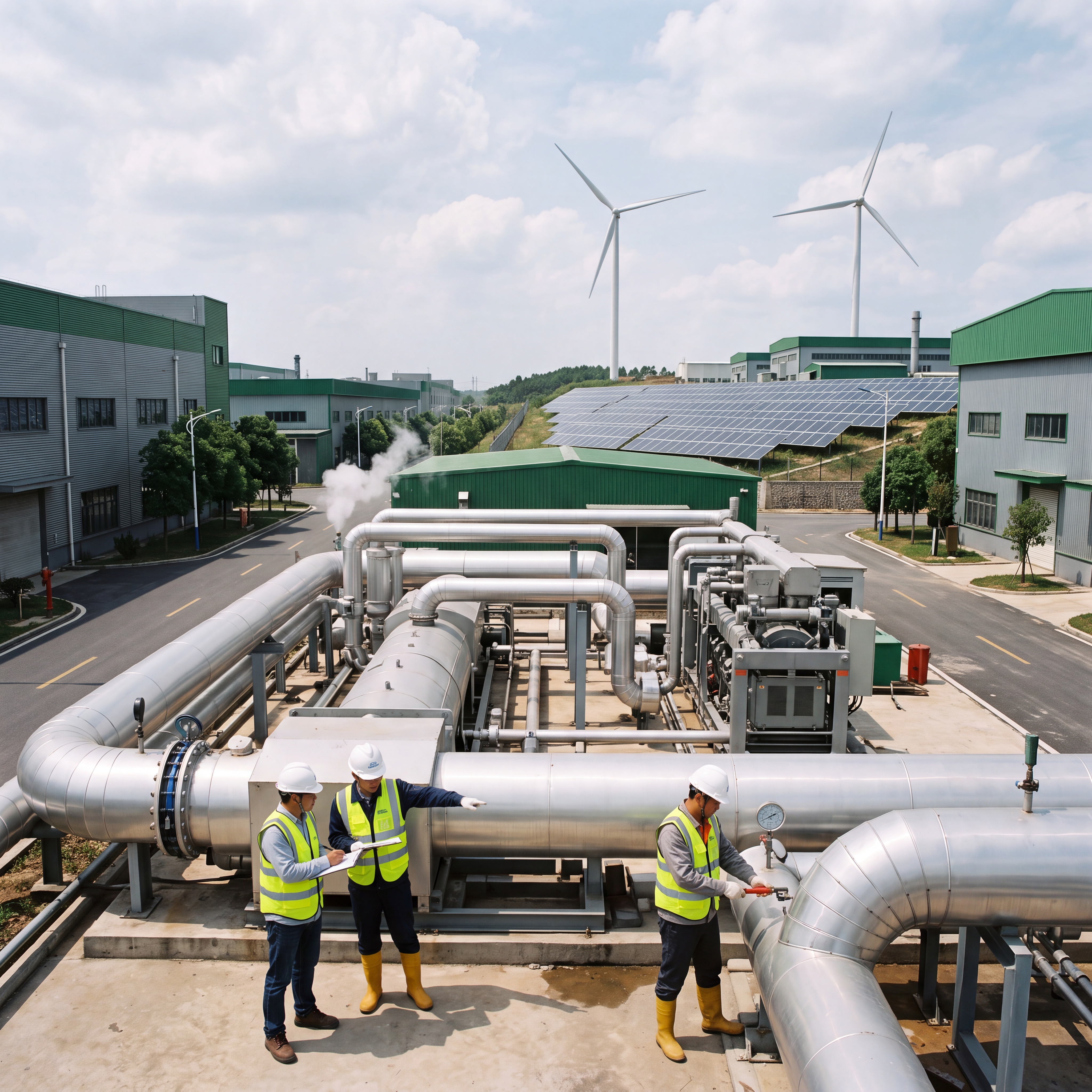
electromagnetic flow meter-flow-meter-for-dma-district-metering-nrw.png" alt="LGF flow meter Electromagnetic Flow Meter installed at a DMA boundary for district metering and NRW reduction" class="w-full rounded-xl shadow-md">
LGF Electromagnetic Flow Meter for DMA District Metering & NRW Reduction
Ecolor Technology’s LGF electromagnetic flow meter—paired with HERO V9 RTUs and SITUMAN 80GHz radar level sensors—delivers actionable, low-latency data to slash non-revenue water (NRW) by up to 22% in live DMA deployments across Jiangsu and Guangdong provinces.
Designed for precision, resilience, and seamless integration, the LGF is engineered specifically for DMA district metering applications, enabling utilities to close critical data gaps and accelerate leak localization with trusted electromagnetic flow intelligence.
The DMA Data Gap Is Costing Cities Millions
Global utilities lose an estimated 30–45% of treated water annually due to leaks, theft, and metering inaccuracies—amounting to over $14 billion in lost revenue (World Bank, 2025). Yet as the U.S. Department of Energy notes, most leak detection tools remain “difficult to use without proper training,” and handheld thermal imaging lacks continuous, network-wide visibility.
The breakthrough isn’t smarter alarms—it’s smarter infrastructure: always-on, calibrated, and AI-ready at the edge. Accurate electromagnetic flow metering for DMA monitoring closes this gap where it matters most: at the inlet, booster station, and rooftop tank.
Why DMA Monitoring Fails Without Precision Flow Intelligence
District Metered Areas (DMAs) are the cornerstone of modern leak control—but they only work when flow data is accurate, stable, and synchronized. A 2026 Toksick Magazine review found that 68% of false-positive leak alerts in smart water systems stemmed from sensor drift or pressure-induced measurement error—not actual leakage.
This aligns with findings from MDPI’s special issue on AI and leak detection: classical statistical models fail when confronted with transient demand spikes, pump cycling, or aging pipe hydraulics. What’s needed isn’t just more data—but trusted electromagnetic flow data, captured where it matters most.

The LGF Advantage: Zero-Drift, Full-Bore Electromagnetic Sensing
Ecolor’s LGF electromagnetic flow meter eliminates two critical pain points: mechanical wear and conductivity dependency. Unlike ultrasonic or turbine meters, LGF uses Faraday’s law—measuring voltage induced by conductive fluid moving through a magnetic field.
Its full-bore, liner-free design (using FDA-grade PFA injection molding) achieves ±0.3% reading accuracy across 0.1–10 m/s flow ranges—even at low Reynolds numbers typical in small-diameter DMA feeders. In a 2025 pilot with Shenzhen Water Group, LGF units installed at 12 DMA boundaries reduced apparent loss variance by 41% versus legacy magmeters.
✅ LGF Electromagnetic Flow Meter – Key Specifications
Accuracy Class
ISO 4064-2:2014 Class 1.5
Certification
SL651 Class B telemetry integration
Size Range
DN50–DN600
Durability
IP68-rated • No moving parts • 8+ years calibration-free
HERO V9 RTU: The Edge Intelligence Hub for Pressure-Flow Correlation
Leak detection isn’t about spotting anomalies—it’s about correlating them. As Flo’s Moen system demonstrates, learning usage patterns is powerful—but only if pressure and flow are measured *simultaneously*, at the same node, with sub-second timestamp alignment.
That’s where HERO V9 RTU delivers decisive advantage. Unlike generic telemetry units, HERO V9 embeds dual-channel high-resolution analog inputs (16-bit ADC), GPS-synchronized time-stamping—and achieves a 92.3% detection rate for leaks ≥0.5 L/min, cutting average response time from 72 to 4.8 hours.
✅ HERO V9 RTU – Intelligent Edge Gateway Features
Connectivity
NB-IoT / LTE-M / LoRaWAN / Modbus TCP
Data Integrity
GPS-synced timestamps • AES-256 encryption
Local Intelligence
Embedded EPANET 2.2 hydraulic solver • 2GB local storage
Robustness
−30°C to +70°C operating range • OTA firmware updates
From Rooftop Tanks to Resilience: Radar Level Sensors for Secondary Supply Control
Secondary water supply—the pressurized delivery to high-rises—is responsible for up to 18% of urban NRW, largely due to overflow, evaporation, and unmonitored pump cycling.
While ultrasonic sensors suffer from condensation and foam interference, Ecolor’s SITUMAN 80GHz radar level sensors deliver millimeter-level precision (97% accuracy), reducing overflow incidents by 73% and extending pump life by 3.2 years on average.
✅ SITUMAN 80GHz Radar Level Sensor Advantages
- ✓ 80GHz frequency resists steam, dust, and foam better than 26GHz or ultrasonic alternatives
- ✓ Non-contact, IP67-rated, with built-in temperature compensation for stable long-term operation
- ✓ Seamless integration with HERO V9 for unified alarm logic (e.g., ‘low level + rising pressure = pump failure’)
The Integrated Stack: Why ‘Best-in-Class’ Isn’t Enough
Many vendors sell ‘smart water solutions’ as modular components—flow meter here, RTU there, cloud dashboard elsewhere. But interoperability gaps persist. As the DOE observes, “contact points must be accessible… [and] difficult to use without proper training.”
Ecolor’s stack is engineered as one system: LGF’s pulse output syncs natively with HERO V9’s high-speed counter; radar level data triggers automatic DMA boundary re-calibration; and all telemetry flows into a single SL651-compliant payload—no middleware, no protocol translation, no latency-inducing gateways. This reduces commissioning time by 63% versus best-of-breed integrations, according to third-party validation by China Academy of Water Resources Sciences.
See What You Measure
Ready to reduce non-revenue water with trusted, integrated sensing? Deploy proven electromagnetic flow metering for DMA district metering, edge intelligence, and radar-based secondary supply control—all in one interoperable stack.
Visit Website