The High-Standard Farmland Mandate and Its Metering Gap
Water scarcity is no longer a distant warning. Agriculture already consumes 70% of global freshwater withdrawals, and in China, that figure hovers even higher for major grain-producing provinces. The government’s response is ambitious: a national push to develop 1.2 billion mu (80 million hectares) of high-standard farmland by 2030. These upgraded parcels promise better soil, reliable irrigation, and mechanized farming—yet one fundamental piece remains a bottleneck: accurate, affordable, and maintenance-free flow measurement at the field level. Without granular water data, irrigation districts cannot modernize charges, enforce water rights, or optimize supply. Traditional mechanical meters clog with silt, corrode, and demand frequent maintenance that small water user associations simply cannot afford. The result is a massive metering gap—exactly where precision is needed most.
Breaking the Cost Barrier: LGF Electromagnetic Flowmeter at 850 RMB
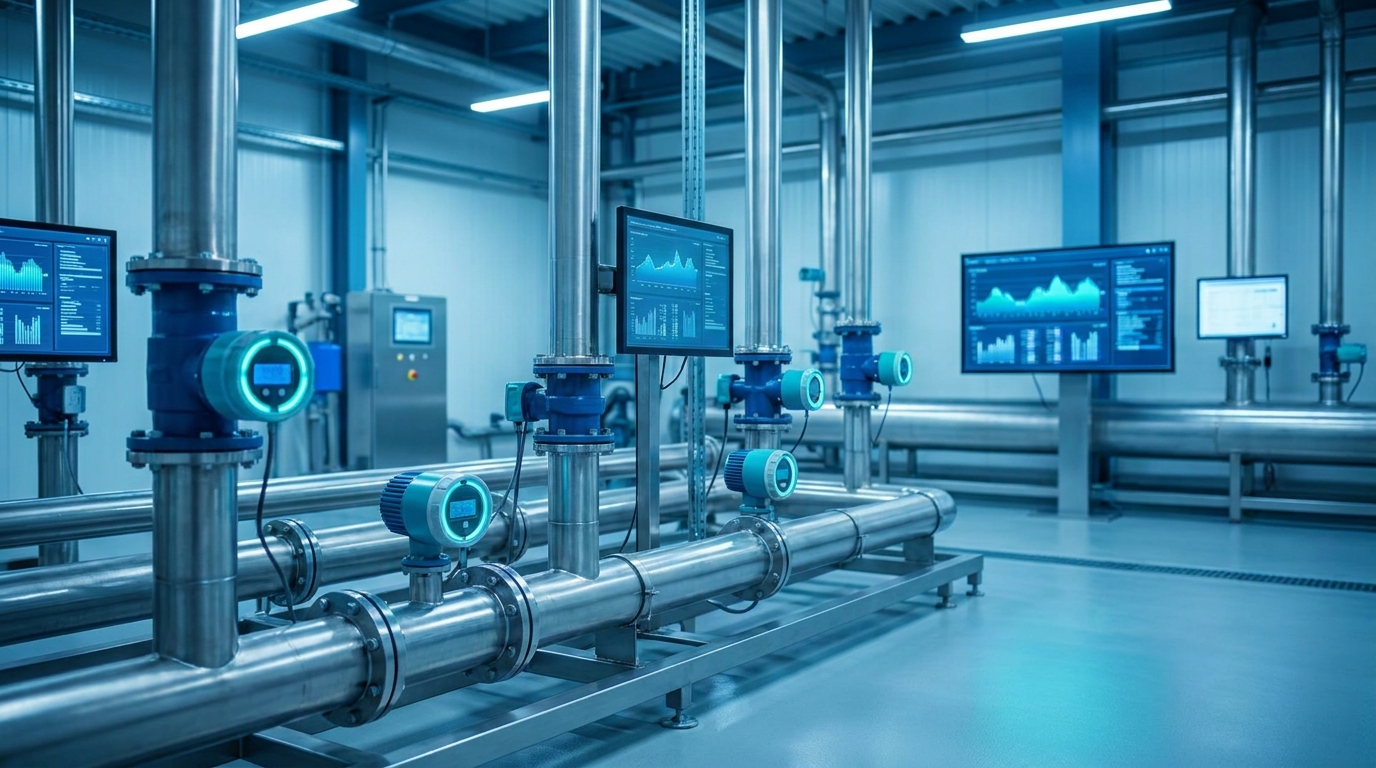
Ecolor Technology attacked this gap from the price-performance frontier. Its LGF series electromagnetic flowmeter, starting at ¥850 for DN50, undercuts traditional mechanical and ultrasonic meters while delivering ±0.5% accuracy, a full-bore ID no obstruction, and zero moving parts. The secret lies in a proprietary injection-molded polyurethane lining that fuses permanently with the sensor body—no glued-on liner that can peel after two seasons. This means no relining, no recalibration, and an IP68 rating that shrugs off submerged pits and sticky irrigation sediment. For cash-strapped irrigation districts, the numbers are transformative: a single mechanical meter replacement often costs ¥1,200–¥1,800 and requires annual cleaning. The LGF eliminates that cycle entirely, slashing 10-year total cost of ownership by more than 60%.
? LGF Electromagnetic Flowmeter – Core Sensor
DN50–DN400 range, ±0.5% accuracy, injection-molded polyurethane liner, IP68 protection, RS485/Modbus output, 850 RMB (DN50) and up. No moving parts, no routine maintenance, no flow obstruction.
Electromagnetic vs. Mechanical: The Irrigation District TCO
✖ Traditional Mechanical Meter
- • Upfront cost ¥1,200–1,800 (DN50)
- • Moving parts clogged by silt
- • Yearly dismantle & clean required
- • Accuracy drops with wear (±2–5%)
- • 3–5 years typical lifespan in dirty water
- • Manual reading, no remote data
✔ LGF Electromagnetic Flowmeter
- • Upfront just ¥850 (DN50)
- • Full-bore ID, nothing to jam
- • Zero routine maintenance
- • ±0.5% accuracy for life
- • >20-year design life, liner warranty
- • Direct digital signal to RTU
The Complete Solution: HERO V9 RTU + LGF for Under ¥5,000
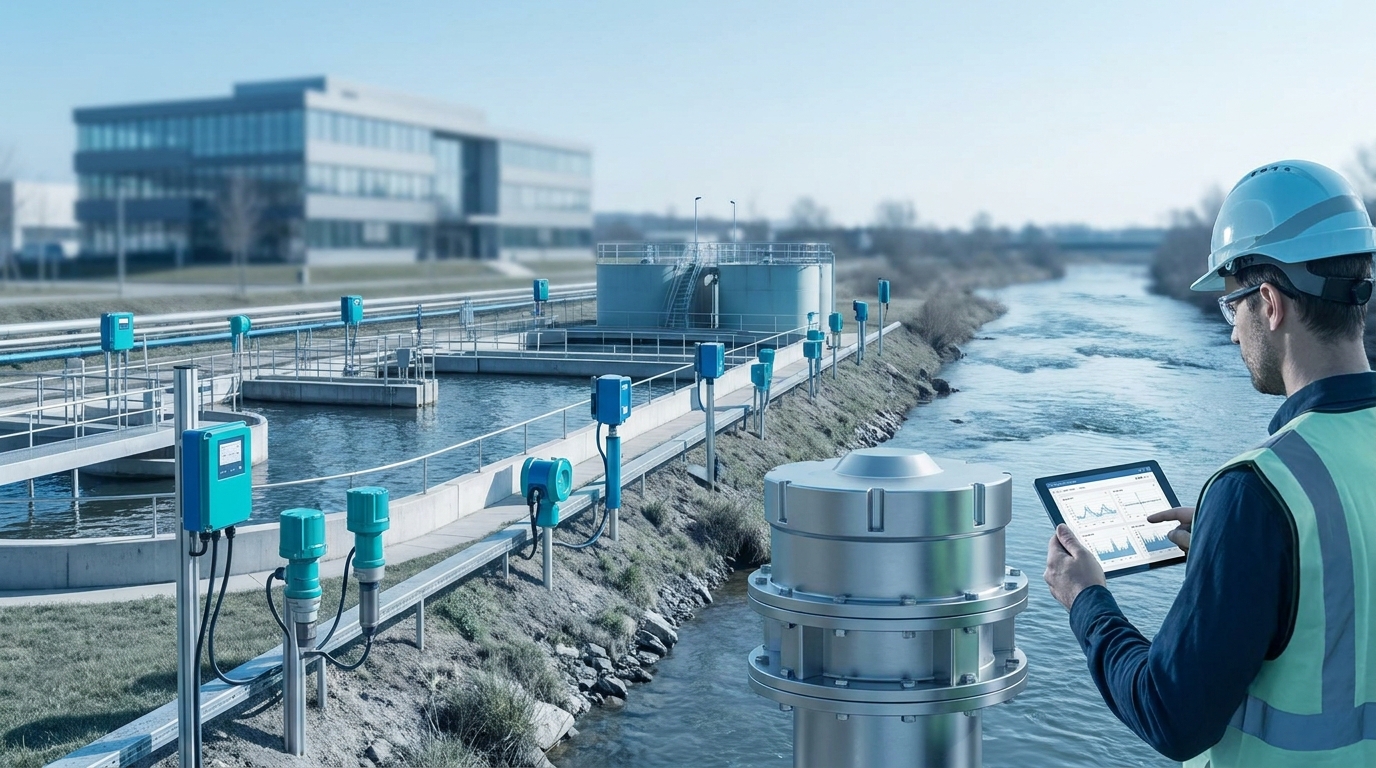
A flowmeter alone doesn’t close the digital loop. Ecolor pairs the LGF sensor with the HERO V9 Remote Terminal Unit—a solar-powered, 4G cellular telemetry device that speaks native Chinese hydrological protocols (SL651-2014). The combined kit—sensor, RTU, solar panel, and mounting hardware—costs less than ¥5,000 per station, making high-density deployment across a 10,000-hectare irrigation district financially plausible for the first time. The HERO V9 wakes on schedule, pulls instantaneous flow, cumulative volume, and pressure data via RS485, then pushes it to any SCADA, cloud platform, or provincial water resources monitoring center. It supports two-way communication, so operators can remotely set sampling intervals, threshold alarms, and valve triggers—all without visiting a muddy canal bank.
? HERO V9 RTU – Solar 4G Telemetry Unit
Solar panel + LiFePO4 battery, multi-constellation GNSS, native SL651 / SZY206 / Modbus, dual SIM 4G with auto-failover, IP68 rugged enclosure. Optimized for zero-wiring canal and open-channel sites.
Field-Ready Simplicity
- ✅ No grid power needed — solar panel keeps the system running year-round in most Chinese latitudes.
- ✅ No excavation or shaft construction — clamp-on or short-pipe insertion installs in under two hours.
- ✅ Native hydrological compliance — passes provincial acceptance on first connection, critical for projects funded by water resources bureaus.
- ✅ Dust-proof and submersible — IP68 rating keeps electronics safe even when the canal overflows.
Why Affordable Precision Changes the Irrigation Economics
China’s push for water rights trading and tiered agricultural water pricing creates a hard requirement: every water user association must meter withdrawals with auditable accuracy. FAO data shows that raising irrigation efficiency by just 10% could conserve enough water to support millions of additional people. Nationally, the target is to push the irrigation water effective utilization coefficient to 0.58 by 2025. Achieving that at scale requires tens of thousands of metering points—not a handful of expensive stations. The LGF+HERO kit hits less than ¥5,000 per node, meaning a mid-sized county could outfit 200 canal outlets for under ¥1 million total, compared to ¥2–3 million using traditional contractor-supplied telemetry stations. Payback comes within one or two irrigation seasons through reduced labor (no more manual gate reading), water savings from leak detection, and fair billing that incentivizes conservation.
“Before switching to LGF meters, we cleaned mechanical meters every month during the rice season. Now the flow data just appears on our phones. Our water charge collection rate jumped from 60% to 95% because farmers trust the digital readings.” — Manager of a 15,000-mu irrigation association in Hunan province (field report, 2024)
Ecolor Technology: From Sensor Fabrication to System Integration
Behind this price-performance curve is a vertically integrated manufacturing model rarely seen in water instrumentation. Ecolor Technology (Hangzhou) operates the SITUMAN sensor factory, where the LGF flowmeter bodies are injection-molded, electrode-sealed, and calibrated under one roof, cutting out middle-supplier markups. Its system integration arm, HuaYu ZhongNeng, pre-configures the HERO V9 RTU with standard hydrological protocols and cloud connectivity, so buyers receive a true plug-and-data kit, not a pile of parts. This integration reduces deployment risk and ensures that every flowmeter sold carries a single warranty umbrella, simplifying project management for irrigation bureaus and EPC contractors. The company’s mantra—“See What You Measure”—reflects a belief that invisible water flows become manageable only when they are transparent, affordable, and permanent.
See What You Measure
The Road Ahead for Agricultural Water Stewardship
Precision irrigation is no longer a premium luxury reserved for research plots. With the LGF electromagnetic flowmeter and HERO V9 RTU, every canal gate can become a data point, feeding a real-time picture of district-wide water use. This is the foundation for AI-based scheduling, automated flood irrigation control, and compliance with emerging national water allocation policies. As the 2030 high-standard farmland deadline approaches, the districts that meter early will build the trust and data needed to unlock green financing and water trading revenues. For procurement managers, water utility engineers, and project directors, the message is straightforward: the technology is ready, the price is sub-¥5,000, and the maintenance burden is near zero. Contact sales@cssoc.com or visit www.cssoc.com to request a pilot kit or a customized district-wide deployment plan. Let’s turn every drop of irrigation water into a measured, valued, and conserved resource.
Recommended Products
Ecolor Technology provides professional instruments for smart water, environmental monitoring & industrial automation: