Radar Water Level Sensor for Urban Flood Defense: Visual-Integrated Telemetry
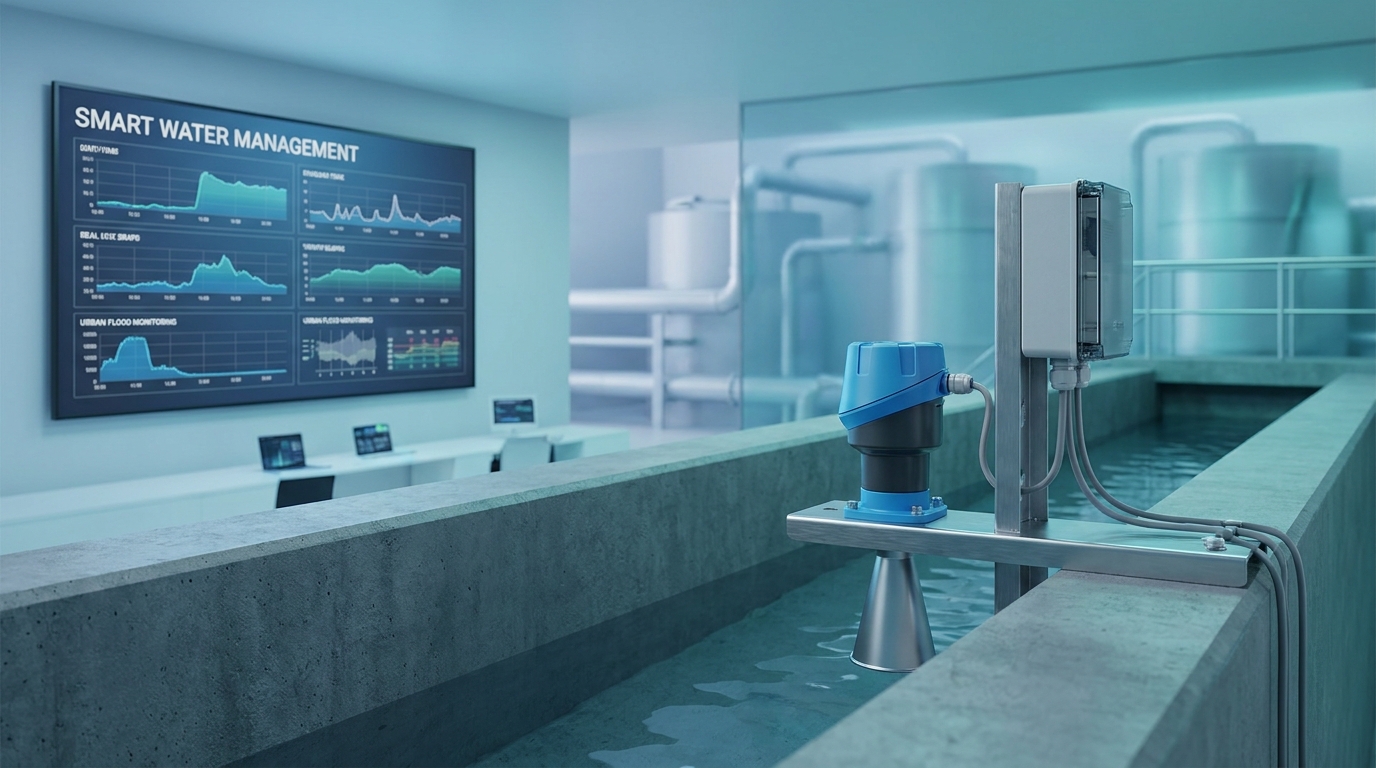
Integrating 80GHz FMCW radar with edge-processed HD imagery transforms reactive flood response into predictive urban water management. This advanced solution addresses the escalating threat of urban waterlogging by providing precise, non-contact monitoring essential for modern infrastructure protection.
The Escalating Threat of Urban Waterlogging & Infrastructure Gaps
Climate volatility and rapid urbanization have fundamentally altered hydrological baselines across metropolitan zones. Impervious surface coverage now exceeds 70% in many tier-1 cities, severely limiting natural infiltration during extreme precipitation events. Municipal water authorities report that flash flooding incidents in low-lying corridors, underpasses, and transit hubs have increased by approximately 34% over the past decade.
Traditional drainage infrastructure, often designed for 1-in-10-year storm events, is routinely overwhelmed. The operational gap is no longer about drainage capacity alone; it is about early detection, precise quantification, and automated alert routing. Procurement teams and engineering directors must prioritize non-contact, self-sustaining telemetry architectures that deliver actionable hydrological intelligence before water breaches critical thresholds.
Why Traditional Contact Sensors Fail in Complex Urban Hydrology
Legacy waterlogging monitoring networks have historically relied on float gauges, submersible pressure transducers, or ultrasonic sensors mounted on bridge piers and drainage culverts. While functional in controlled environments, these technologies exhibit critical vulnerabilities in dynamic urban flood scenarios. Submersible units require direct immersion, exposing wiring and seals to abrasive debris, chemical runoff, and prolonged saturation.
Maintenance crews frequently encounter fouled diaphragms and biofilm accumulation, which introduce measurement drift and necessitate quarterly calibration cycles. Ultrasonic alternatives suffer from beam divergence and acoustic scattering in heavy rain or high-wind conditions, producing erratic readings that trigger false alarms. From a procurement and lifecycle management perspective, the total cost of ownership (TCO) for contact-based systems escalates rapidly due to frequent site visits, part replacements, and service disruptions.
Non-Contact Measurement
Eliminates corrosion risks and reduces maintenance frequency by over 60%.
High Precision Accuracy
Delivers ±2mm measurement accuracy even under dynamic flow conditions and turbulent surface agitation.
AI Image Validation
Real-time AI image validation suppresses false alarms caused by passing vehicles or temporary foam.
Rugged Environmental Sealing
IP68-rated enclosure with self-cleaning optical domes ensures uninterrupted operation during 72-hour storm cycles.
Visual-Radar Fusion: The New Standard for Non-Contact Monitoring
The convergence of millimeter-wave radar and optical imaging represents a paradigm shift in hydrological sensing. Modern 80GHz FMCW (Frequency-Modulated Continuous Wave) radar systems emit highly directional electromagnetic pulses with a beam angle typically narrower than 4°. This precision allows the sensor to isolate the water surface reflection even when mounted on narrow gantries or confined bridge soffits.
Unlike ultrasonic waves, radar frequencies penetrate fog, heavy precipitation, and airborne debris without attenuation or signal degradation. When paired with an integrated high-definition camera, the telemetry node achieves a dual-validation architecture: the radar provides continuous, sub-millimeter water elevation data, while the camera delivers visual context and AI-assisted surface verification.
This fusion eliminates phantom readings caused by floating debris or turbulent eddies, ensuring that dispatch teams respond only to verified inundation events. The Ecolor Technology ecosystem leverages this architecture through the SITUMAN 80GHz radar module, engineered specifically for harsh outdoor deployment, and integrates it with edge-computing platforms that process imagery locally before transmitting structured alerts via cellular networks.
Deployment Architecture for Critical Urban Nodes
Urban flood defense requires strategic placement at hydrological choke points where water accumulation directly threatens public safety and transit continuity. Subway entrances, grade-separated underpasses, and depressed arterial roadways represent high-consequence zones that demand autonomous, self-sustaining monitoring nodes. Solar-powered telemetry stations equipped with high-capacity lithium-iron-phosphate (LiFePO4) battery banks provide uninterrupted operation even during prolonged grid outages.
Edge processing units, such as the HERO V9 visual-telemetry RTU, execute local data compression, threshold evaluation, and image cropping before transmitting payloads via 4G/5G or NB-IoT networks. This architecture minimizes bandwidth consumption and ensures alert delivery within 3 seconds of threshold breach. System integrators and project managers can standardize mounting brackets for existing streetlight poles or bridge abutments, eliminating the need for costly civil excavation.
The modular design allows procurement teams to scale networks incrementally, prioritizing historically flood-prone corridors while maintaining interoperability with municipal SCADA and emergency response platforms through standardized MQTT and RESTful APIs.
Procurement & Integration Considerations for Utility Managers
Selecting a waterlogging warning system extends beyond sensor specifications; it requires evaluating the entire telemetry lifecycle, vendor support infrastructure, and long-term data governance. Procurement directors should prioritize manufacturers that provide comprehensive calibration certificates, open-protocol documentation, and localized technical support. Integration with existing drainage control systems demands seamless compatibility with PLC networks and cloud-based dashboards.
The HuaYu ZhongNeng system integration framework bridges this gap by offering pre-configured data pipelines that align radar elevation data with municipal warning thresholds. Field deployments across multiple metropolitan zones demonstrate that transitioning from legacy contact sensors to visual-radar fusion architecture reduces false-alarm dispatch costs by approximately 40% while improving public notification lead times by an average of 18 minutes.
These metrics directly translate to reduced emergency response expenditures and enhanced urban resilience. Furthermore, non-contact telemetry eliminates confined-space entry requirements for maintenance personnel, aligning with modern occupational safety standards and reducing liability exposure for municipal operators.
Ecolor SITUMAN + HERO V9 Integrated Station
A turnkey visual-radar waterlogging monitoring unit featuring 80GHz FMCW non-contact sensing, 4K optical verification, solar autonomy, and edge-processed telemetry. Designed for rapid deployment at underpasses, subway entrances, and depressed roadways with ±2mm accuracy and IP68 environmental sealing.
Future-Proofing Urban Hydrology Through Standardized Telemetry
As climate models project increasingly volatile precipitation patterns, municipal water authorities must transition from fragmented monitoring to unified, data-driven flood defense networks. The standardization of 80GHz radar telemetry across urban basins enables hydrological modeling at unprecedented spatial resolutions. When combined with machine learning algorithms trained on historical inundation patterns, these networks can predict water accumulation trajectories hours before physical thresholds are breached.
Procurement strategies should emphasize interoperable architectures that allow incremental network expansion without vendor lock-in. Open data formats, secure edge computing, and automated calibration routines form the foundation of next-generation urban resilience. Engineering teams that adopt visual-radar fusion today will position their municipalities at the forefront of smart hydrological management, ensuring that drainage infrastructure, emergency routing, and public safety protocols operate in synchronized harmony.
The transition from reactive patching to proactive defense is not merely technological; it is an institutional imperative that demands precision instrumentation, reliable integration, and unwavering operational visibility.
See What You Measure
Ready to deploy precise, non-contact waterlogging monitoring for your city? Explore Ecolor Technology's integrated radar-camera solutions and request a technical specification package.
Visit WebsiteSources:
- World Bank Urban Resilience Report: Climate-Driven Flood Economics (2023)
- ASCE Journal of Hydrologic Engineering: Non-Contact Telemetry Performance Metrics
- Chinese Ministry of Housing and Urban-Rural Development: Urban Waterlogging Prevention Guidelines (GB/T 50905)
- Ecolor Technology Field Deployment Data & Technical Whitepaper (2024)

