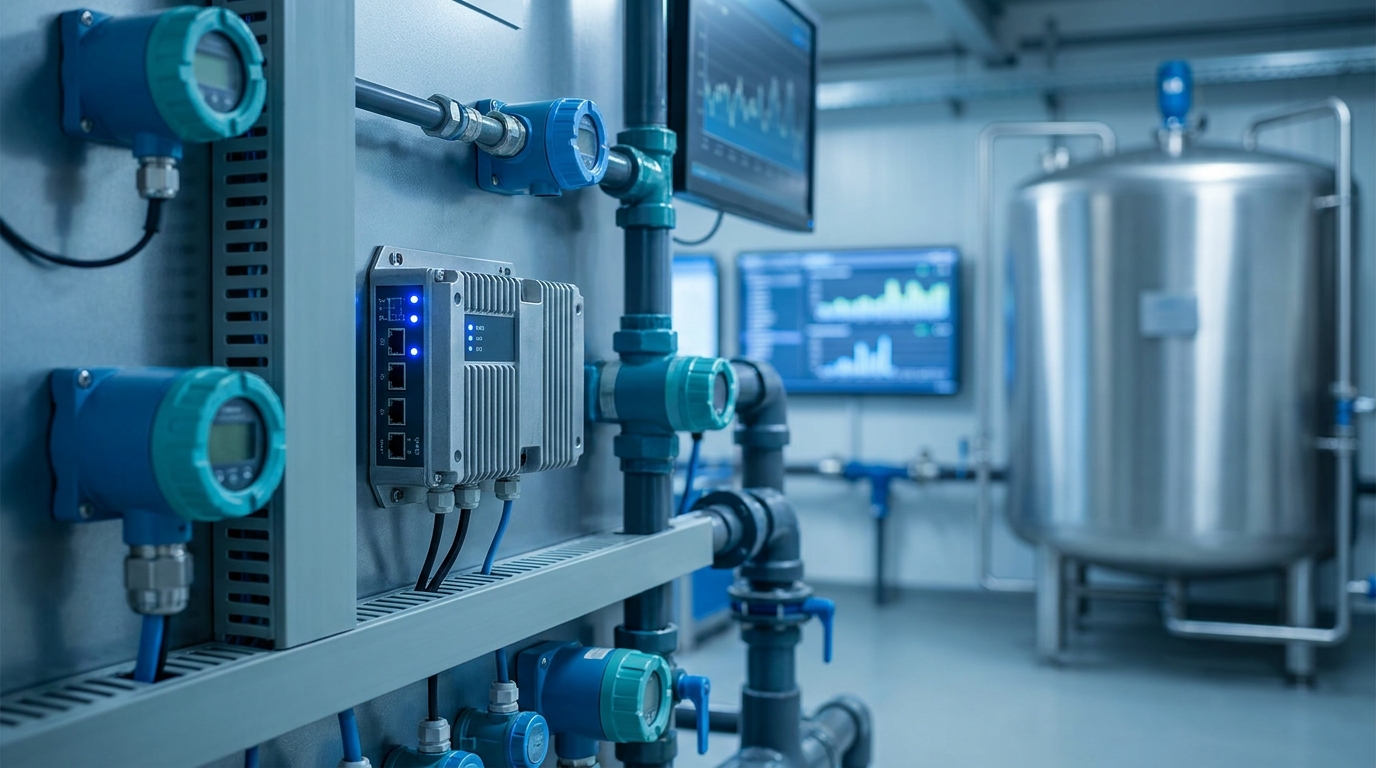
RTU Selection Guide — Comprehensive 2026 Buying Guide for Water Conservancy, Hydrological, and Industrial Monitoring
Professionals working on smart water conservancy, flash flood early warning, and industrial IoT all understand one thing clearly: while certain components may be omitted from a project site, a reliable RTU (Remote Terminal Unit) is absolutely indispensable. Think of the RTU as the central nervous system bridging field sensors and cloud platforms—if selected correctly, it becomes an anchor of stability; if chosen poorly, it turns into a bottomless pit—triggering endless maintenance headaches and delivering chaotic, unreliable data.
With over two decades of hands-on experience in water conservancy and industrial IoT, I’ve witnessed countless “RTU-related failures”: during southern China’s plum rain season, condensation inside enclosures caused short circuits that burned through motherboards; in northern winters, LCD screens cracked and batteries failed due to extreme cold; during mountainous flood seasons, cellular base stations went offline—and without satellite backup, critical data vanished downstream; and some projects spent hundreds of thousands of RMB on internationally renowned brands only to face fully English configuration interfaces incompatible with domestic protocols—sending integration and commissioning teams into despair. I’ve personally encountered—and fixed—every single one of these pitfalls.
Today, drawing upon Yicai Technology (Hangzhou)’s 23 years of practical expertise in the water conservancy sector—and backed by teardown evaluations of dozens of mainstream RTUs worldwide—I’m sharing this definitive “Complete RTU Selection Guide”. Whether you’re an integrator, project manager, or technical lead at an owner entity, reading this guide will help you avoid 90% of common RTU selection pitfalls.
I. What Is a Remote Terminal Unit (RTU)?
If sensors are likened to human nerve endings and cloud platforms to the brain, then the RTU serves as the central nervous system connecting the two. Originating from remote control systems for oil & gas pipelines, RTUs are inherently engineered for rugged outdoor deployment. Stationed beside rivers, lakes, reservoirs, underground pipelines, or deep in mountain gorges, RTUs collect analog, digital, and pulse signals from water level gauges, flow meters, rain gauges, and water quality probes—perform local format conversion and data storage—then package and transmit them via industry-standard communication protocols (e.g., SL651 for hydrology) over 4G, BeiDou, LoRa, or other channels to remote central servers. Simultaneously, RTUs receive and execute commands from the platform—for instance, opening/closing gates or switching pumps on/off.
Many people struggle to distinguish RTUs from PLCs—but the difference can be summed up in one sentence: A PLC is a logic master in the factory; an RTU is a survival expert in the wilderness.
PLC: Optimized for millisecond-level high-speed logic control—ideal for driving motors or interlocking production lines inside factories. However, its communication protocols are limited, and its power consumption and ingress protection ratings often fall short in off-grid, high-humidity, high-temperature, or strong electromagnetic interference environments.
RTU: Inherently low-power, excels at wide-area network communications, and delivers top-tier lightning, moisture, and UV resistance. It also embeds domain-specific protocols for hydrology, water resources, environmental monitoring, and more. For remote water monitoring sections or oil & gas pipeline valve rooms spanning tens of kilometers without grid power, the RTU remains irreplaceable.
II. First, Clarify Your Application Scenario
Discussing specifications without context is like a blind man feeling an elephant. China now operates over 100,000 hydrological monitoring stations nationwide, with flash flood prevention zones scattered across the country. Urban waterlogging monitoring, industrial park discharge outlets, and smart pumping stations have also surged in recent years. Each scenario imposes vastly different requirements on RTUs. Before selecting an RTU, answer these three key questions: Where will the device be installed? How will it be powered? And who will receive the data?
Hydrological & Water Resources Monitoring (Rivers, Lakes, Reservoirs, Groundwater)
Characteristics: Most sites are remote and lack AC grid power—relying instead on solar panels plus battery banks. Mobile signal coverage may be weak in certain regions.
Core Requirements: Ultra-low power consumption (standby current ideally at the µA level); mandatory support for BeiDou short-message service as primary/backup communication channel; full native compatibility with Ministry of Water Resources protocols such as SL651 and SZY203; minimum IP65 enclosure rating; isolated I/O interfaces.
Flash Flood & Small/Medium River Early Warning
Characteristics: During flood season, rainfall and water level data must be reported frequently; during dry periods, reporting frequency may drop—or the unit may enter sleep mode.
Core Requirements: Event-triggered reporting (e.g., automatic switch to encrypted reporting mode when rainfall exceeds threshold); breakpoint resume transmission capability (upon mobile network recovery, automatically back-fills cached historical data to the platform—ensuring no gaps in flood event records).
Urban Flood Prevention & Waterlogging Monitoring
Characteristics: Devices are commonly installed inside manholes, under overpasses, or beside pumping stations—subject to high humidity or even temporary submersion. Some underground pipelines may accumulate flammable gases.
Core Requirements: Exceptional waterproofing and moisture resistance (IP68 immersion rating required); explosion-proof certification for select locations; protocol support beyond hydrological standards—including native MQTT and HTTP—to enable direct data push to smart city big-data platforms.
Industrial IoT & Environmental Discharge Monitoring
Characteristics: Grid power is typically available onsite, but sensor types are highly diverse—electromagnetic flowmeters, multi-parameter water quality analyzers, pressure transmitters, temperature/humidity probes, etc.
Core Requirements: Rich interface options—multiple isolated RS485 ports, ample analog/digital I/O channels; robust edge computing capabilities; seamless interoperability with Modbus RTU, HJ 212 (China’s environmental monitoring protocol), and others.
III. Deep Dive: Eight Core RTU Technical Specifications (Hard-Hitting Insights)
Once your application scenario is clear, thoroughly examine these eight critical specifications to truly master RTU selection.
1. Channels & Interfaces (How Many Devices Can It Connect?)
Selecting an RTU is much like buying a power strip—if the number or type of ports doesn’t match your needs, the device becomes useless.
- AI (Analog Input): Accepts 4–20 mA or 0–5 V signals—used for legacy pressure transmitters and level transmitters.
- DI/DO (Digital Input / Digital Output): DI monitors gate open/close status or pump on/off signals; DO outputs dry-contact signals for remote pump start/valve closure.
- PI (Pulse Input): Designed specifically for tipping-bucket rain gauges and pulse-output water meters—each bucket tip increments the count.
- Communication Interfaces (RS485 / RS232 / Ethernet): Modern intelligent sensors predominantly use RS485 buses with Modbus RTU commands. We recommend reserving at least two isolated RS485 ports—if one sensor suffers a lightning strike, isolation protects both the RTU and other connected devices.
2. Communication Methods (How Does Data Get Transmitted?)
4G/5G Full-Band Support: Standard requirement—no further explanation needed. Ensure support for Cat.1 or Cat.4 modules, as many regions have already decommissioned 2G/3G networks.
BeiDou Satellite Communication: The final safety net for water conservancy applications. When cellular base stations fail due to extreme storms or cable damage in remote mountain valleys, BeiDou short-message service remains the sole reliable channel capable of transmitting water level data through heavy clouds.
LoRa / Self-Organizing Networks: Ideal for large reservoirs or irrigation districts—where multiple sensor nodes communicate via LoRa to a central RTU, which then uploads consolidated data via 4G—significantly reducing data plan costs and eliminating complex cabling.
Ethernet / WiFi: Commonly used indoors—for pumping stations, gatehouses, etc.
Life-saving feature: Dual-link automatic failover—uses 4G when online, seamlessly switches to BeiDou upon 4G failure, and reverts automatically once connectivity resumes—fully transparent to users.
3. Environmental Adaptability (Temperature & Protection)
Outdoor enclosures routinely exceed 65°C in summer heat; temperatures of –35°C are commonplace in northeastern China during winter.
- Operating Temperature Range: Industrial-grade minimum is –40°C to +85°C. Using commercial-grade components invites frequent summer crashes, winter LCD ghosting, and frozen battery failure.
- Protection: PCBs must be fully coated with conformal coating for moisture, salt fog, and corrosion resistance; outdoor-mounted enclosures require at minimum IP65 rating—and sun-shading covers should be considered to prevent direct solar exposure.
4. Power Supply System (How Much Energy Does It Consume?)
Off-grid sites rely entirely on solar energy—typically one solar panel plus a battery bank powering the entire system year-round. An RTU’s power consumption directly determines required solar panel and battery size—and dictates how long the system survives consecutive cloudy days.
- Wide-Voltage Input: Typically requires support for DC 9–36 V, accommodating voltage fluctuations inherent in solar power systems.
- Standby Power Consumption: Top-tier RTUs achieve standby currents down to the µA range and average power draw in the mW range. This means—with the same 50 W solar panel—a low-power RTU paired with a radar water level gauge can easily survive two weeks of continuous rain, whereas a conventional unit may shut down within a week.
- Controlled Power Output: The RTU intelligently powers sensors only when needed—energizing them before measurement and cutting power immediately afterward. This seemingly minor feature can double overall system battery life.
5. Protocol Support (Does It Speak the Industry “Language”?)
Mismatched protocols render data useless. In recent years, numerous projects incurred costly delays—or outright returns—due to protocol incompatibility.
- Water Conservancy Protocols: SL651-2014 (Hydrological Monitoring Data Communication Protocol), SL180-2015 (Hydrological Information Exchange Standard), SZY203-2016 (Water Resources Monitoring Protocol). For any water conservancy project, all three must be natively supported in the RTU’s firmware—not converted externally by upper-layer software.
- Internet / IoT Protocols: MQTT, HTTP, JSON. Today, many water utility platforms run on Alibaba Cloud or Huawei Cloud—requiring RTUs to push structured data directly via MQTT for immediate backend consumption. Native support for these standard protocols eliminates the cost and reliability risks associated with external protocol-conversion gateways.
- Industrial Protocols: Modbus RTU/TCP—the universal language for integrating PLCs and HMIs in wastewater treatment plants and pumping stations.
6. Edge Computing Capability (Is Its “Brain” Smart Enough?)
An RTU shouldn’t just act as a dumb relay—it must possess local intelligence.
- Data Caching & Breakpoint Resume Transmission: Built-in high-capacity Flash memory (capable of storing several years’ worth of historical data) ensures zero data loss during network outages; upon restoration, missing data is automatically and completely retransmitted to the platform—a non-negotiable requirement for flood-season performance evaluation.
- Local Logic Interlocking: For example, “if water level exceeds alert threshold, trigger local audible/visual alarm and capture photo”—executed instantly by the RTU itself without waiting for round-trip cloud processing. The RTU directly controls DO outputs to activate sirens or drive cameras—response time measured in seconds.
7. Explosion-Proof Certification (Life-Saving for Specific Environments)
In urban underground utility tunnels or near petrochemical parks, methane and other flammable gas concentrations may exceed safe thresholds. Even a tiny spark generated by a standard RTU’s relay coil could ignite a catastrophic explosion. Such scenarios demand RTUs certified to national explosion-proof standards (e.g., Ex d IIB T4 or intrinsically safe designs), rigorously evaluated for circuit design, enclosure sealing, and surface temperature limits.
8. Remote Maintenance (Saving Thousands by Avoiding One Field Visit)
OTA Firmware Updates: Push new firmware remotely for protocol upgrades or bug fixes—eliminating the need to travel to remote sites with laptops.
Remote Diagnostics: Monitor signal strength, solar charging current, battery voltage, and internal temperature—all from your office desk. Adjust sampling intervals and reporting strategies remotely. For large-scale deployments, this capability is a game-changer for cost reduction and operational efficiency.
IV. Pitfall Avoidance Guide: Common RTU Selection Mistakes
Twenty-plus years of on-site troubleshooting distilled into three most frequent traps.
❌ Mistake #1: Blindly Trusting Expensive International Brands
Some research projects insist exclusively on U.S.-based Campbell or Sutron RTUs. Indeed, these brands excel in polar expeditions or ultra-high-precision meteorological gradient towers. Yet for most routine reservoirs or small-to-medium river monitoring stations, spending $3,000–$5,000 on an imported RTU far exceeds actual requirements—and introduces serious complications: fully English configuration tools, foreign protocols requiring custom development to interface with domestic water conservancy platforms, and spare parts delivery timelines measured in months. Domestic substitution and cost optimization aren’t about lowering standards—they’re about eliminating unjustified premium pricing while maintaining full performance integrity.
❌ Mistake #2: Prioritizing Connectivity Over Lightning Protection & Isolation
Some integrators cut corners—using generic transparent serial modules instead of professional RTUs to save a few hundred RMB. Then, during summer thunderstorms, lightning surges travel along sensor cables. Without optical isolation on interfaces, not only does the RTU burn out, but batteries, solar charge controllers, and even water level gauges are destroyed—wiping out the entire monitoring station. The resulting losses dwarf the initial savings by orders of magnitude.
❌ Mistake #3: Overlooking Sleep/Wake Mechanisms
Some industrial RTUs are essentially repurposed industrial routers lacking true deep-sleep capability. During prolonged rainy seasons—like southern China’s plum rains—solar charging becomes minimal. These units drain batteries in days, going offline precisely when flood data is most urgently needed. Always verify documented standby power consumption and controlled power output capability during RTU selection.
V. Comparative Analysis of Leading Brands (Who Offers the Best Value?)
Based on our market tracking and hands-on evaluations over the past few years, here’s a side-by-side comparison of representative brands. Domestic specialized manufacturers now hold overwhelming advantages in protocol alignment, environmental hardening, and cost control.
Brand Tier
Representative Brand/Model
Reference Price
Advantages
Disadvantages
Recommended Applications
International Premium
Campbell CR1000X (USA)
$3000 – $5000
Research-grade accuracy, exceptional reliability, powerful programmability
High price, difficult domestic protocol integration, lengthy after-sales turnaround
National key scientific research projects, extreme-environment meteorological stations
International High-End
Sutron XLink (USA)
$2000 – $4000
Purpose-built for hydrology, excellent stability, multi-protocol support
Premium pricing, limited local support, increasing pressure from domestic alternatives
International hydrological projects, well-funded demonstration projects
Established Domestic Brands
Domestic Brand A, Domestic Brand B, etc.
$200 – $600
High market share, broad model portfolio, comprehensive domestic protocol support
Overly fragmented product lines; some budget models exhibit compromised build quality and severe homogenization
Conventional water conservancy and municipal projects
Rising Domestic Challenger
Yicai Technology Hero V9 Series
¥800 – ¥1500
Natively supports SL651; optional visual fusion; IP68-rated enclosure; 4G full-band support; standby current as low as 0.5 mA
Brand recognition still growing
Smart water conservancy, hydrological monitoring, irrigation district modernization, small-to-medium projects
Overall, for budget-conscious projects demanding high data reliability, emerging domestic brands currently offer the best value proposition. Take the Yicai Technology Hero V9 series as an example: its core specifications fully match international benchmarks—at just 1/10 the price—while offering 7×24 technical support and customized development services.
VI. Conclusion: A Good RTU Is Field-Tested—Not Marketed
RTU selection cannot rely solely on glossy spec sheets. Real-world field conditions are the ultimate examiners. Continuous rainy spells during the plum rain season, extreme freezing in winter, scorching heat and thunderstorms in summer—these are the true litmus tests for RTU reliability.
Choosing an RTU is fundamentally about choosing certainty—and certainty stems from solid hardware design, rigorous testing procedures, and extensive field experience.
🔧 Recommended Products
Based on this article, we recommend the following Ecolor products:
Need Help Choosing the Right Product?
Our engineering team is ready to provide free technical consultation and quotes