Hero V9 vs. Data Acquisition: A Selection Guide for Smart Water Conservancy Scenarios
Having worked on water conservancy sites for 15 years, my biggest fear is receiving phone calls in the middle of the night during flood season. In the early years, if a hydrological station in a mountain gully lost communication, dozens of people had to grab flashlights and dig through debris-flow deposits. Things are much better now: field data can “run” to the cloud platform by itself. What makes that possible? It relies on that metal box mounted on a utility pole or hidden inside a metal cabinet.
This metal box is formally called an RTU telemetry terminal. Put simply, it is the “steward” of the site. In the past, this kind of device was called a data logger and could only dumbly store a few numbers. Water authority systems have grown increasingly large, and field sensors vary widely. A standard station may need to connect three analog inputs and two RS485 interfaces.
The RTU must aggregate these mixed signals, convert them into a unified protocol, and package them for transmission to the cloud. How well this job is done directly determines the success or failure of the entire project. There are many technology routes on the market, and project owners often become dazzled by the choices. Where is the problem? Mainly in failing to understand the inherent characteristics of different technologies.
Today, let’s break down and dissect these mainstream technology routes. Ignore the manufacturers’ exaggerated claims; in muddy fields, only what works is good.
1 Old Soldiers Never Die: The Survival Logic of Traditional Embedded RTUs
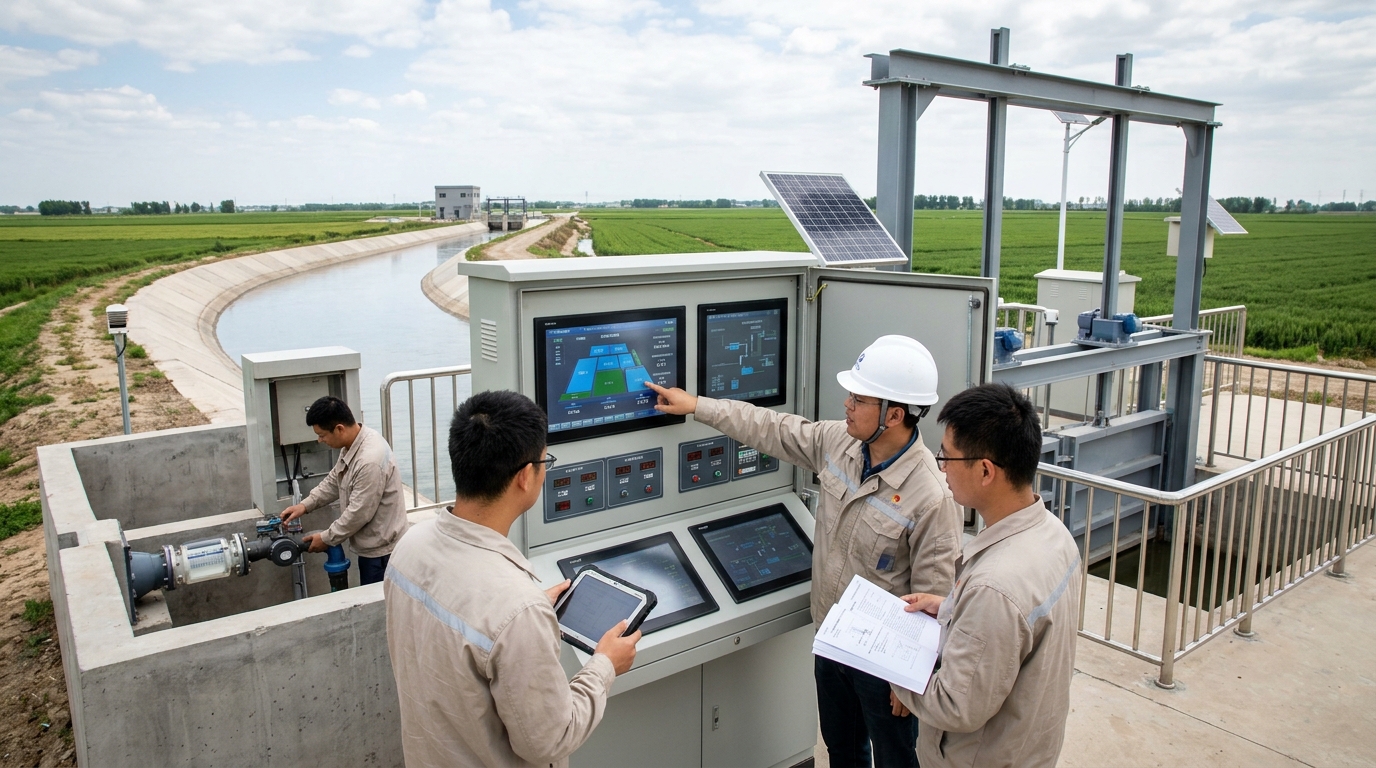
Let’s first look at the oldest foundation. Traditional embedded RTUs usually use an MCU chip as their core. They handle the most basic workloads. For example, beside an 8-meter-wide dry canal, workers drive a few expansion bolts and fix the equipment in a weatherproof enclosure.
At the bottom, they connect a radar water level sensor, run RS485 cabling, and use standard Modbus or the hydrological specification SL651. The advantage of these veterans is ruggedness. The architecture has been running for more than a decade, and hardware costs have been pushed very low. For routine rainfall, water level, and gate opening monitoring, using one is definitely a cost-effective choice.
- Pros: Rugged, low cost, proven stability.
- Cons: Extremely limited computing power. Transmitting site photos or performing remote firmware upgrades is difficult. It is like an old feature phone: fine for calls/text, but crashes with apps.
Many old hydrological station upgrades still replace equipment with the same type, unchanged. Why? For stability above all. As long as the protocol matches, connect the wires and it runs. There is no need to worry about freezes and reboots.
2 Extreme Frugality: Field Survival of Low-Power Wide-Area Networks (LPWAN)
What if there is no grid power in remote mountainous areas or underground pipe networks? The LPWAN route becomes useful. The most typical examples are NB-IoT and LoRa. These two focus on one core word: power saving.
For dispersed sites that transmit data only once every ten to fifteen days, this technology is a lifesaver. Attach a small 10 Ah lithium battery, or pair it with a palm-sized solar panel, and leave it in the wild for two or three years. For example, at a water quality monitoring station beside a remote reservoir, personnel may not visit for months. With NB-IoT, it can directly use the base stations of the three major telecom operators; insert a SIM card and it works.
What about LoRa? It is more suitable for building your own private local area network in remote valleys without cellular signal. Deploy a gateway several kilometers away, and the end nodes form their own network. There is no free lunch. The price of power saving is snail-slow data rates. Transmission latency can easily reach several seconds or even more than ten seconds. Want to use it for video? Or issue complex gate control commands? It will absolutely refuse to work. This route is suitable for non-time-critical status data such as pipeline pressure and farmland soil moisture.
3 Bandwidth Workhorses: The Head-to-Head of 4G Cat.1 and Cat.4 Smart Terminals
In recent years, cellular communication module prices have plummeted, and the water sector has rushed to adopt 4G smart devices. This category is divided into two tiers: Cat.1 and Cat.4. Cat.1 is an all-rounder, with a good balance between power consumption and online availability. For most conventional telemetry stations, it is just right.
If you face tougher requirements, such as image capture or short-video backhaul, then Cat.4 is needed. Its bandwidth is high, and data transmission is fast. The advantage of this kind of 4G RTU telemetry terminal is strong real-time performance. It maintains a persistent connection with the cloud platform, allowing remote troubleshooting from the office with a few mouse clicks.
Cost Warning: Field construction crews will have to bear extra hardship. Power consumption rises, and the original small solar panel cannot supply enough power. You must carry 60 W or even 100 W solar panels up the mountain, and dig a pit to bury a large 65 Ah battery. In areas with frequent thunderstorms, lightning-protection grounding must be driven at least two meters deep. Otherwise, a lightning strike can instantly destroy equipment worth thousands of yuan.
4 Top Students Go to the Field: The Higher-Dimensional Advantage of Edge-Computing RTUs
Looking further upward, we reach edge-computing RTUs for complex operations. These are the “top students” among terminals. For flood discharge from large reservoirs and dispatching of core pump stations, data at these sites cannot tolerate even a second of interruption. Edge-computing devices not only collect data, but also process quickly.
They have built-in rule engines and can parse protocols directly at the edge. What if the network suddenly disconnects? Don’t panic. They can cache all data locally and resume transmission from breakpoints as soon as the network returns. For example, in a main river channel with extremely fast flow, a Doppler flow meter is deployed underwater to measure flow velocity.
The hydraulic conditions are complex, with significant noise. An edge-computing RTU can directly filter out grossly erroneous data locally and report only clean data. This can save substantial computing resources for cloud servers. Good things are expensive. The upfront procurement cost is high, and the software proficiency required of operation and maintenance personnel is extremely demanding. Ordinary electricians looking at the configuration interface of such equipment may find it like reading a foreign language. Without a professional IT background, such advanced equipment can only gather dust on site.
5 Seeing the Bottom Line: Industry Product Evolution and Hidden Costs
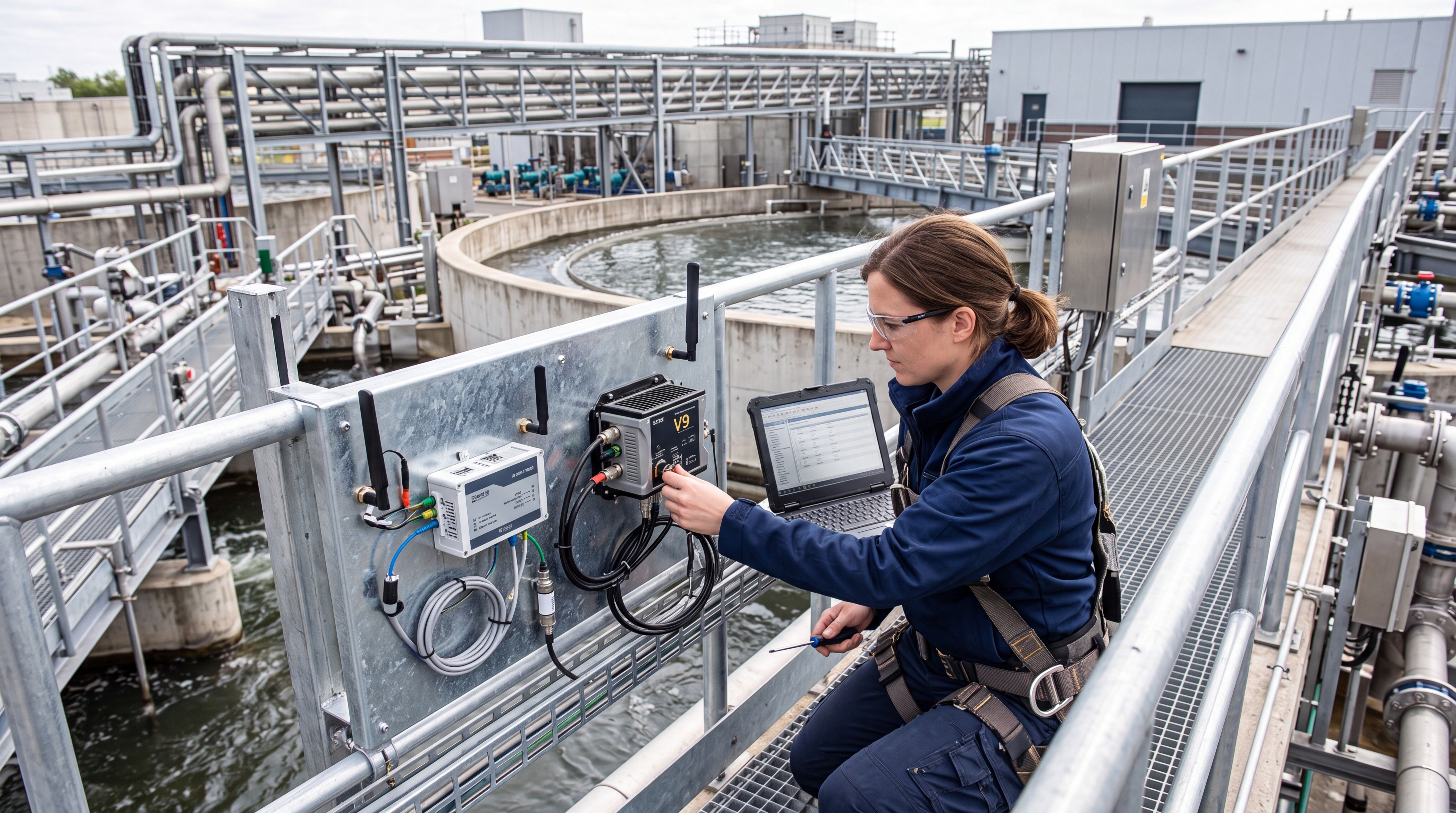
After visiting so many manufacturers, I have found that current devices are competing on “internal strength.” Take commonly available terminals such as the Hero V9 as an example; the direction of evolution is very clear. First, interfaces must be comprehensive and protocols must be broadly compatible. Second, local caching must be available, addressing the pain point of field network outages head-on.
Today, for river water level and gate position monitoring, merely transmitting data back is only a passing grade. Project owners demand survivability in harsh environments. Here is a real-cost example. An industrial park sewage outlet has a pipe diameter of DN50. If equipped with a conventional electromagnetic flow meter, the hardware cost may be only about 850 yuan. If you choose a cheap RTU that frequently disconnects, the travel and labor cost of sending someone to the site for a single restart may be enough to buy two new devices. Evaluating configuration limits is actually evaluating later hidden operation and maintenance costs.
Never dig a deep pit for yourself to save a few hundred yuan on equipment. After enough time in the field, you will understand that flashy features are superficial. Not crashing during torrential rain is what makes a true workhorse.
Before Paying: Focus Strictly on These Five Hard Metrics
With all that said, how should you choose when it is time to pay? Do not listen to sales hype; focus strictly on these five hard metrics.
-
1
Sampling & Reporting Frequency: If reporting once per day, decisively adopt low-power solutions. If reporting once per minute, honestly deploy 4G plus solar power.
-
2
Power Supply: Where there is no grid power, do not force high-power equipment; sleep strategies must be optimized to the microampere level.
-
3
Network: For public-network dead zones, deploy a LoRa self-organizing network; if that still fails, use BeiDou short messages as a fallback.
-
4
Compatibility: The Ministry of Water Resources SL651 specification and industrial MQTT protocol must be supported directly by the device manufacturer; do not rely on middleware conversion.
-
5
O&M Capability: Equipment that cannot receive remote configuration or perform OTA upgrades should not be accepted even for free.
Don't Seek the Optimal Solution; Seek the Best Fit
After years in the field, my biggest insight is: there is no “most powerful” technology, only the “best-fitting” solution. For basic rain and water information, mature embedded systems are the most reliable. For large-area farmland pipe networks, LPWAN is an excellent match. For core hubs and multi-service stations, 4G smart terminals and edge computing must take the lead.
The broader strategy of water conservancy digitalization has long moved beyond the stage of merely seeing data. The current non-negotiable requirement is being able to maintain control. Whether data is accurate, whether transmission is stable, and whether systems can coordinate—these are the only standards for judging whether a product is scrap iron or an effective tool. Do not just sit in the office reading parameter sheets. Put on rain boots and walk a few steps in the mud; the answers are all in the field.
Need Help Selecting Equipment?
If you are selecting equipment for water resources/hydrological monitoring or water data acquisition scenarios, please visit our website to view product parameters, or call us to obtain a free selection plan and quotation.