The Unseen Revolution in Our Fields: Modernizing Agricultural Water Management
Water, as the Irrigation Department of Kerala rightly states, is our most precious resource. Yet, for centuries, its application in agriculture—the world's single largest consumer of freshwater—has been more of an art than a science. From the vast canal networks of Idaho to the micro-irrigation systems in India, a quiet but powerful transformation is underway. The global push for agricultural modernization is no longer just about building bigger dams or longer canals; it's about making every drop count through intelligence and precision. This shift is evident in projects like the Ridenbaugh Canal headworks modernization in Boise, a multi-year effort funded by bodies like the U.S. Bureau of Reclamation to improve water management before the 2027 irrigation season. These initiatives signal a fundamental change in philosophy: moving away from simply delivering more water to delivering water more smartly.
This new paradigm is often called precision irrigation. At its most advanced, it involves technologies like the Low Energy Precision Application (LEPA) systems and GPS-guided center pivots mentioned in historical overviews of irrigation. However, the true foundation of any precision strategy isn't the sprinkler or the software; it's the data. Without accurate, real-time information on water flow, even the most sophisticated management platforms are flying blind. The challenge for irrigation districts, from Nampa, Idaho to New South Wales, Australia, is obtaining this critical data reliably and, most importantly, affordably across thousands of acres and countless offtake points.
The Data Bottleneck: Why Accurate Measurement is the Foundation of Smart Irrigation
For many irrigation districts, the operational reality is a complex dance of tradition and necessity. As described by the Nampa & Meridian Irrigation District (NMID), the start of the season involves planning rotation schedules, electing a Watermaster, and asking residents to prepare their systems. This system, while functional for generations, is inherently inefficient. It relies on estimates, manual gate adjustments, and a significant amount of fieldwork to ensure water is distributed. It's a system that struggles to account for variables like soil moisture, evaporation rates, or unauthorized water use, leading to significant water loss and potential disputes over allocation.
Modern software solutions, like those offered by SWAN Systems, promise a way out. By bringing all irrigation data into one place, they empower farm managers like Kevin Ruble at Tachi Farms to work more efficiently across hundreds of acres, leading to better planning and clearer decision-making. The results are tangible: reduced water use while maintaining high-quality output. However, the effectiveness of these powerful analytical tools is entirely dependent on the quality of the data they are fed. If the flow data from the field is inaccurate, intermittent, or non-existent, the entire system breaks down. The principle of 'garbage in, garbage out' has never been more relevant. This is the data bottleneck: the gap between the desire for data-driven management and the practical difficulty of collecting that data from the field. To truly manage water, you must first be able to measure it. It’s the core principle behind our philosophy at Ecolor Technology: See What You Measure.
Bridging the Gap: The Role of Robust and Affordable Agricultural Water Metering
Closing this data gap requires field instrumentation that can meet the unique demands of large-scale agriculture. Irrigation canals, ditches, and pipes are not sterile laboratory environments. They are exposed to extreme temperatures, UV radiation, sediment, and potential tampering. Furthermore, the sheer scale of irrigation networks means that modernizing every measurement point can be a staggering financial undertaking, even with grants and public funding. Any viable solution must therefore satisfy three core criteria: durability, affordability, and low maintenance.
- Durability: Equipment installed in a remote canal in Idaho or a field in California must be built to last. A flowmeter that fails after two seasons due to liner delamination or electronic failure creates more problems than it solves, requiring costly replacement and creating data gaps.
- Affordability: When a project involves upgrading hundreds or even thousands of metering points, the per-unit cost is paramount. A solution that costs tens of thousands of dollars per point is a non-starter for most public irrigation districts and private farms. Cost-effectiveness is what allows grant funding, like that used for the Ridenbaugh Headworks, to have the maximum possible impact.
- Low Maintenance: The operational budget for an irrigation district is just as important as the capital budget. Sending technicians to remote, often hard-to-reach locations to service, calibrate, or repair a flowmeter is a recurring expense that drains resources. A true 'set it and forget it' solution with no moving parts and a robust design is the ideal.
For too long, the market has forced a compromise between these three factors. Highly accurate and durable meters were expensive, while cheap meters were unreliable. This is the exact challenge Ecolor Technology set out to solve.
Ecolor's Solution: The LGF Smart Irrigation Flowmeter
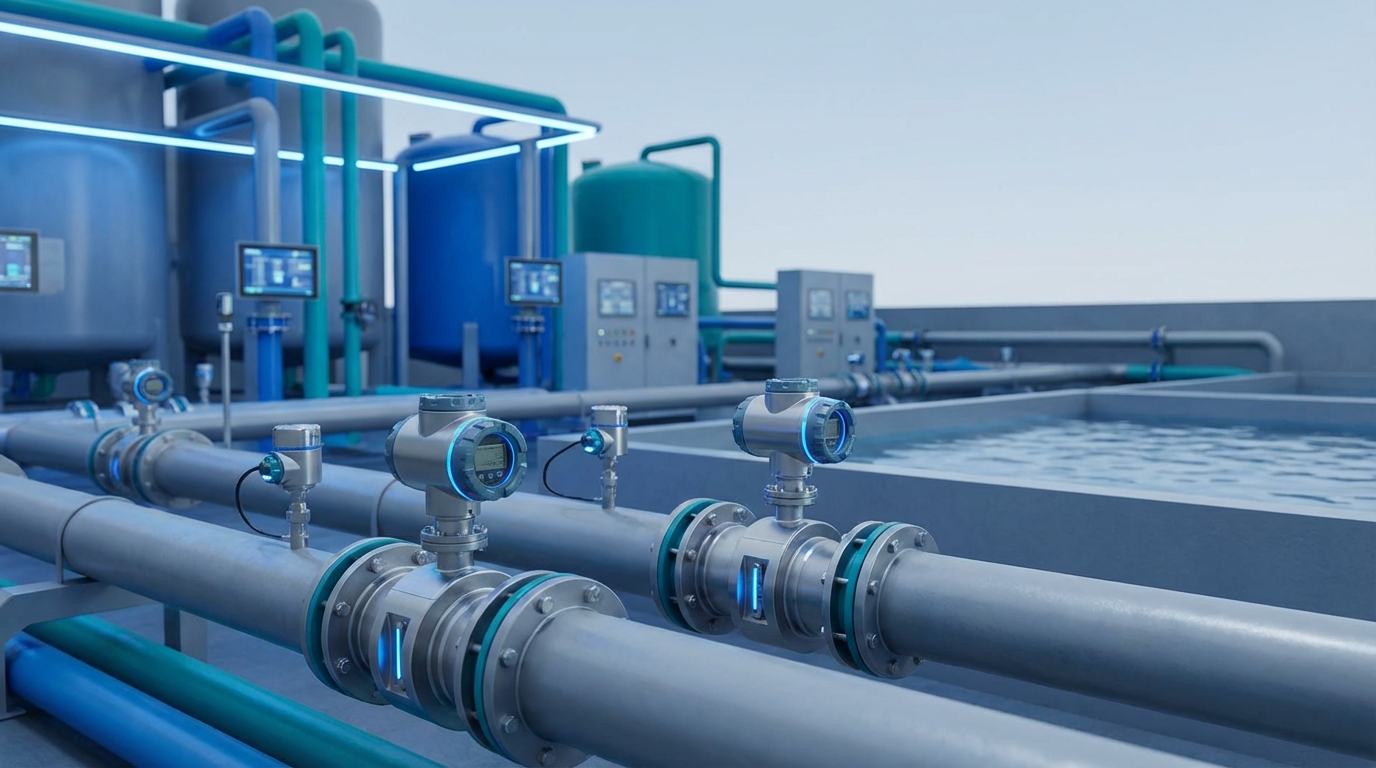
Recognizing the need for a purpose-built solution for high-standard agricultural irrigation, Ecolor Technology developed the LGF series electromagnetic flowmeter. It was designed from the ground up to break the compromise between cost and performance. At its core is a revolutionary injection-molding manufacturing process. Unlike traditional electromagnetic flowmeters that rely on a separate liner (like PTFE or rubber) bonded to the inside of a metal tube, the LGF's entire sensor body is created in a single PFA/PPS injection-molding process. This unibody construction completely eliminates the risk of liner delamination or blistering—one of the most common failure points for flowmeters in harsh agricultural and industrial applications. This innovative design ensures exceptional durability and stable, long-term performance without the premium price tag. With pricing for a DN50 model starting around $120 USD (¥850), the LGF flowmeter makes large-scale deployments financially feasible for the first time.
From Data Point to Decision: The HERO V9 RTU
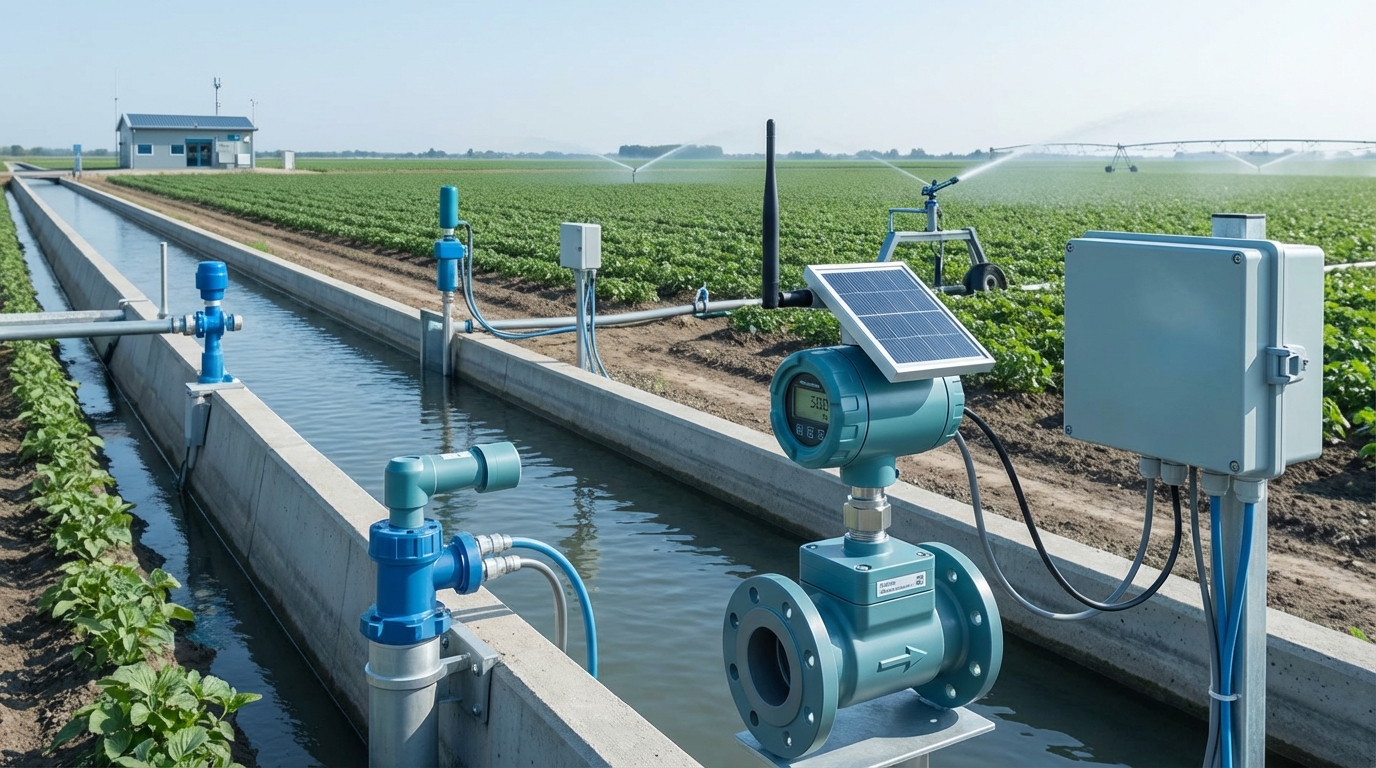
Of course, a flowmeter is only one half of the solution. The data it collects must be transmitted reliably to a central management platform. This is the role of the HERO V9 RTU (Remote Telemetry Unit). This robust, low-power terminal connects directly to the LGF flowmeter and provides a complete data acquisition and communication package. Equipped with 4G connectivity and designed to be powered by a small solar panel, the HERO V9 can be deployed anywhere, regardless of power grid access. This combination of the LGF flowmeter and HERO V9 RTU creates a complete, autonomous, solar-powered agricultural water metering station for a total cost of less than $700 USD (under ¥5000). This turnkey solution provides the essential hardware foundation that enables the powerful analytics offered by platforms like SWAN, turning a remote canal into a live node on a smart water grid.
Case in Point: Reimagining Canal and Ditch Management
Let's revisit the scenario faced by an organization like the Nampa & Meridian Irrigation District. They manage a complex network of canals and laterals, and their staff must ensure equitable water distribution while also reminding the public that these canals are dangerous private property. Now, imagine a modernization project where 200 key offtakes are retrofitted with Ecolor's LGF flowmeter and HERO V9 RTU solution.
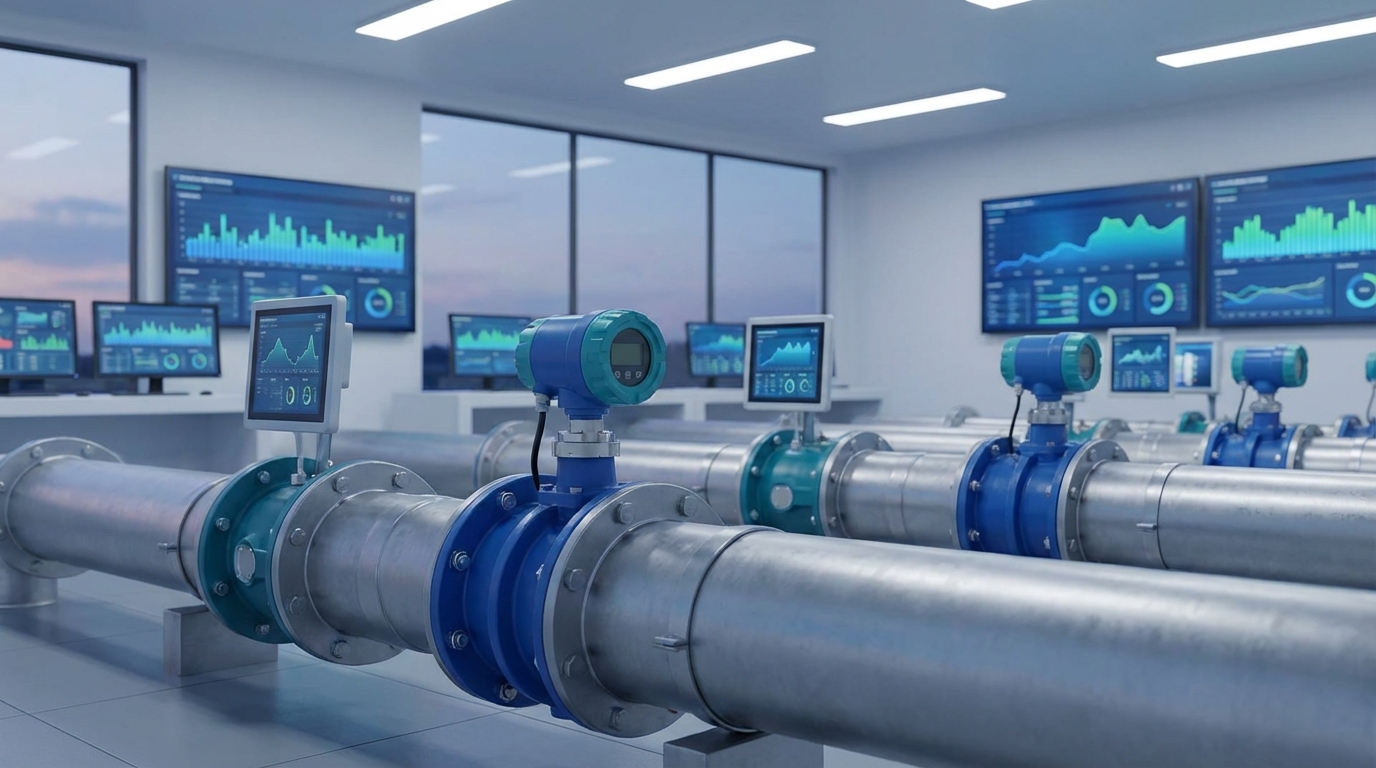
Instantly, the entire dynamic of water management changes. The 'Watermaster' and central office staff no longer rely on rotation schedules and manual checks. Instead, they have a real-time dashboard showing the precise flow rate at every critical junction. This data-driven approach yields immediate benefits:
- Equitable and Accountable Distribution: Water allocation becomes a matter of verifiable data, not estimation. This reduces disputes between users and ensures everyone receives their fair share.
- Operational Efficiency: Anomalies like a sudden drop in flow (indicating a blockage) or an unexpected spike (indicating a leak or unauthorized use) can be detected and addressed in minutes, not days.
- Labor and Safety Improvements: The need for staff to patrol vast stretches of canal banks is dramatically reduced. This not only saves fuel and time but also enhances worker safety by keeping them away from potentially hazardous waterways.
- Enhanced Planning: The historical data collected over a season provides an invaluable resource for future planning. Just as Tachi Farms uses data for better crop management, an irrigation district can use flow data to optimize its entire network, plan for maintenance, and justify infrastructure investments.
This is the tangible impact of deploying affordable, durable, and maintenance-free agricultural water metering technology. It transforms the management of a centuries-old resource from a reactive, labor-intensive process into a proactive, data-driven science.
The Future of Agricultural Water is Measured and Managed
The global transition to smart irrigation is accelerating, driven by the undeniable pressures of water scarcity, climate change, and the need to feed a growing population. From government-led modernization initiatives in India and the United States to the adoption of precision software by individual farms, the direction is clear. However, this future can only be realized if it is built on a foundation of solid, reliable data from the field. For procurement managers, water utility engineers, and project managers, the challenge is to find solutions that deliver this data without breaking the budget or creating a long-term maintenance burden.
Ecolor Technology is committed to providing this foundation. By leveraging innovative manufacturing and focusing on the core needs of the agricultural sector, our LGF electromagnetic flowmeters and HERO V9 RTUs are making precision irrigation scalable and economically viable. We believe that by making it easier and more affordable to measure water, we can empower communities around the world to manage it more effectively. The future of farming depends on it.
To learn more about how Ecolor's durable and cost-effective solutions can support your irrigation modernization projects, we invite you to explore the detailed specifications and case studies on our website at www.cssoc.com.
Sources
- Irrigation - Wikipedia
- SWAN Systems | Water, Nutrient & Precision Irrigation Software
- SW Idaho irrigation district readies for season start | Capital Press
- OFFICIAL WEBSITE OF IRRIGATION DEPARTMENT KERALA | Irrigation-kerala
- Nampa & Meridian Irrigation District to start 2026 water flows in early April - NewsBreak
Recommended Products
Ecolor Technology provides professional instruments for smart water, environmental monitoring & industrial automation: