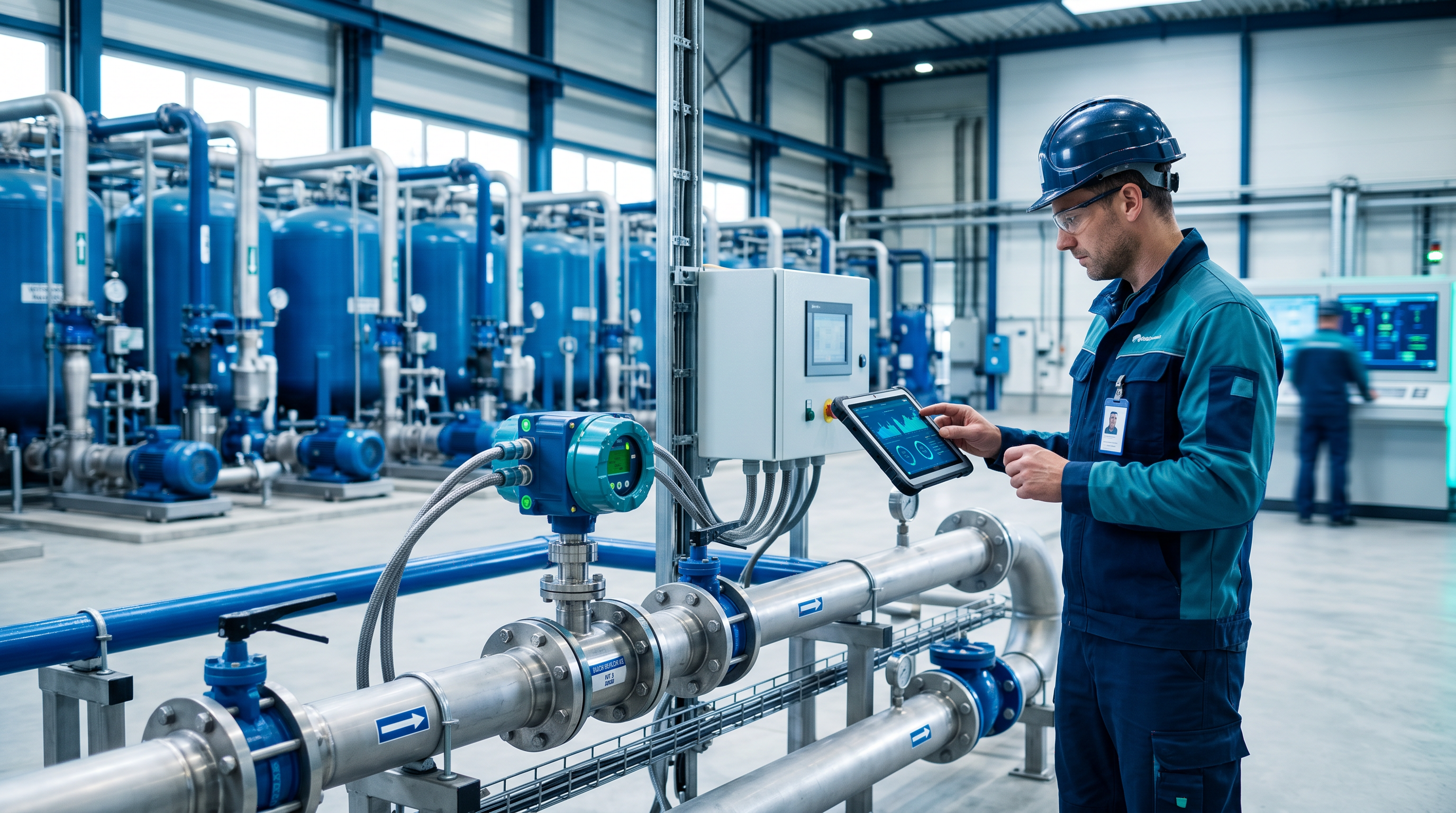
Smart Flow Meter & RTU Integration for DMA Leak Control
How integrated telemetry, precision flow sensing, and automated pressure management drive measurable non-revenue water reduction in modern urban supply networks.
The Hidden Cost of Non-Revenue Water in Urban Infrastructure
Global water utilities face unprecedented pressure as aging infrastructure, rapid urbanization, and climate volatility converge. The International Water Association reports that average non-revenue water levels hover around 30% worldwide, representing billions of cubic meters of treated water lost annually before reaching consumers. Traditional reactive maintenance models are financially unsustainable. Modern utilities must transition toward predictive, data-driven architectures that isolate leak sources, optimize pressure zones, and automate distribution monitoring. This shift requires precise instrumentation, robust telemetry, and seamless integration across primary and secondary supply networks.
Why DMA District Metering is the Operational Backbone
District Metered Areas (DMA) have become the industry standard for leak detection water network management. By hydraulically isolating pipe segments and installing boundary meters, engineers can calculate mass balance differentials between inflow and consumption. The true power of DMA lies in continuous night-flow analysis. When residential demand drops to baseline levels, any residual flow indicates physical leakage or unauthorized connections. However, implementing DMA requires high-accuracy sensing at critical junctions. Standard mechanical meters fail under fluctuating pressures and low-flow conditions, leading to data gaps that compromise leak localization.
To close this gap, utilities are deploying electromagnetic flow meters paired with industrial-grade remote telemetry units. The LGF electromagnetic flow meter delivers ±0.5% measurement accuracy across wide turndown ratios, capturing micro-leaks that traditional ultrasonic devices miss. When integrated with the HERO V9 RTU, flow data is transmitted via 4G/NB-IoT to centralized SCADA platforms in real time. This architecture enables dynamic pressure management, reducing pipe stress and extending asset lifecycles while providing procurement managers with transparent, auditable consumption metrics.
LGF Electromagnetic Flow Meter & HERO V9 RTU
Engineered for harsh underground environments, the LGF series features IP68 sealing, corrosion-resistant PFA liners, and zero-pressure-loss design. Paired with the HERO V9 RTU, it supports multi-protocol transmission, edge computing for anomaly detection, and remote firmware updates. Ideal for DMA boundary metering, pump station monitoring, and industrial water auditing.
Secondary Water Supply: Securing the Final Distribution Mile
While primary networks receive significant attention, secondary water supply systems in high-rise residential and commercial zones represent a critical vulnerability. Rooftop storage tanks and underground booster stations operate under highly variable demand cycles. Traditional float switches and manual inspections cannot prevent overflow, dry-run pump failures, or contamination risks. Modern smart water supply frameworks require non-contact level monitoring that withstands foam, turbulence, and temperature fluctuations.
Advanced radar technology has replaced legacy ultrasonic sensors in demanding applications. The SITUMAN 80GHz radar level sensor utilizes millimeter-wave frequency to penetrate condensation and vapor, delivering ±2mm accuracy regardless of tank geometry or fluid properties. When deployed alongside the HERO V9 RTU, tank level data synchronizes with pump activation cycles, enabling automated pressure regulation and predictive maintenance alerts. This closed-loop control eliminates manual intervention, reduces energy consumption by up to 18%, and ensures compliance with municipal drinking water standards.
Critical Deployment Advantages for Engineers
- ✅ Zero-calibration electromagnetic sensing eliminates drift over extended operational cycles
- ✅ Multi-frequency radar penetration ensures reliable tank monitoring in humid environments
- ✅ Edge-processed telemetry reduces bandwidth costs while maintaining 15-second sampling intervals
- ✅ Modular RTU architecture supports seamless integration with legacy PLC and cloud SCADA systems
Traditional Approach vs. Smart DMA Architecture
Traditional Approach
Quarterly manual inspections, mechanical flow meters with ±3% error, reactive leak repairs, unmonitored secondary tanks, high pump energy waste.
Smart DMA Architecture
Continuous real-time telemetry, ±0.5% flow accuracy, predictive pressure zoning, automated tank level control, 30% reduction in operational expenditure.
"In a recent municipal retrofit across 12 DMA zones, utilities achieved a non-revenue water reduction from 34% to 11% within 14 months. The integration of precision flow sensing, automated pressure control, and real-time telemetry transformed reactive maintenance into a proactive, data-driven operation."
Strategic Implementation for Procurement and Project Delivery
For procurement managers and project engineers, the transition to smart water supply infrastructure requires careful lifecycle analysis. Initial capital expenditure is quickly offset by reduced water loss, lower energy consumption, and extended pipe asset longevity. When selecting instrumentation, prioritize devices with open communication protocols, certified environmental protection ratings, and localized technical support. Avoid proprietary lock-in by adopting modular architectures that allow incremental upgrades without full system replacement.
Successful deployment follows a phased methodology: baseline hydraulic modeling, boundary meter installation, pressure zone optimization, and continuous data validation. Utilities leveraging integrated platforms report 40-60% faster leak localization times and a 25% decrease in emergency repair dispatches. By standardizing on proven hardware and scalable telemetry, project teams can deliver compliant, future-ready networks that meet regulatory mandates while optimizing municipal budgets.
Future-Proofing Urban Water Networks
The convergence of IoT instrumentation, edge analytics, and predictive modeling is redefining urban water management. As climate resilience and resource efficiency become regulatory priorities, utilities must embed intelligence at the physical layer. High-precision flow meters, robust RTUs, and advanced radar sensors form the foundational nervous system of modern distribution networks. By capturing granular operational data, engineers can simulate hydraulic stress, forecast demand surges, and automate corrective actions before failures occur.
Ecolor Technology, through its SITUMAN sensor manufacturing division and HuaYu ZhongNeng integration platform, delivers end-to-end solutions tailored for complex municipal environments. From primary DMA zoning to secondary tank automation, our architecture ensures seamless data continuity, regulatory compliance, and measurable operational savings. The future of water infrastructure is not just connected—it is intelligently responsive, economically sustainable, and engineered for long-term resilience.
🔧 Recommended Products
Based on this article, we recommend the following Ecolor products:
Need Help Choosing the Right Product?
Our engineering team is ready to provide free technical consultation and quotes

