The Dawn of a New Water Era: Navigating Scarcity and Innovation
The global conversation around water is reaching a fever pitch. We find ourselves in a peculiar paradox: as a recent CGIAR policy webinar highlighted, we largely understand the resource crisis, yet we struggle to enact the solutions at scale. This gap between knowledge and action is where the true challenge of our time lies. Climate change is systematically rendering obsolete the hydrological models and fixed allocation quotas our water infrastructure was built upon. As total water volumes in entire systems decline, the old rulebooks no longer apply. This forces us to look toward a new frontier, one defined by a dual-pronged strategy: creating new sources of fresh water and radically improving how we manage and purify our existing resources.
In the past week, headlines have been dominated by groundbreaking developments in both areas, from strategic advancements in desalination to grassroots innovations in microplastic filtration. However, these exciting physical technologies, often hailed as 'black tech' saviors, are only half of the equation. Their viability, efficiency, and scalability depend entirely on a less visible but equally critical foundation: a robust digital backbone powered by smart water technology. This is the frontier where measurement, data, and visualization transform ambitious concepts into operational realities.
Frontier 1: Manufacturing Water to Quench a Thirsty World
For decades, desalination was often viewed as an expensive, energy-intensive last resort. Today, that perception is shifting dramatically. For countries without significant rivers or rainfall, desalination is no longer a luxury; it is the core technology that enables modern existence and ensures national water security. This strategic pivot is driving a renaissance in desalination technology, with a sharp focus on overcoming its primary hurdle: energy consumption.
Desalination's Strategic and Sustainable Comeback
As reported by PBS News, the industry is innovating on multiple fronts. Some companies are decoupling plants from fossil-fuel grids by powering them with renewable energy. Others are engineering next-generation membrane technologies that are far more efficient, reducing the pressure and energy required for reverse osmosis. There are even experimental concepts to move the process into the deep sea, leveraging natural oceanic pressure to do much of the work. These are not just incremental improvements; they are fundamental redesigns aimed at making desalination both economically and environmentally sustainable.
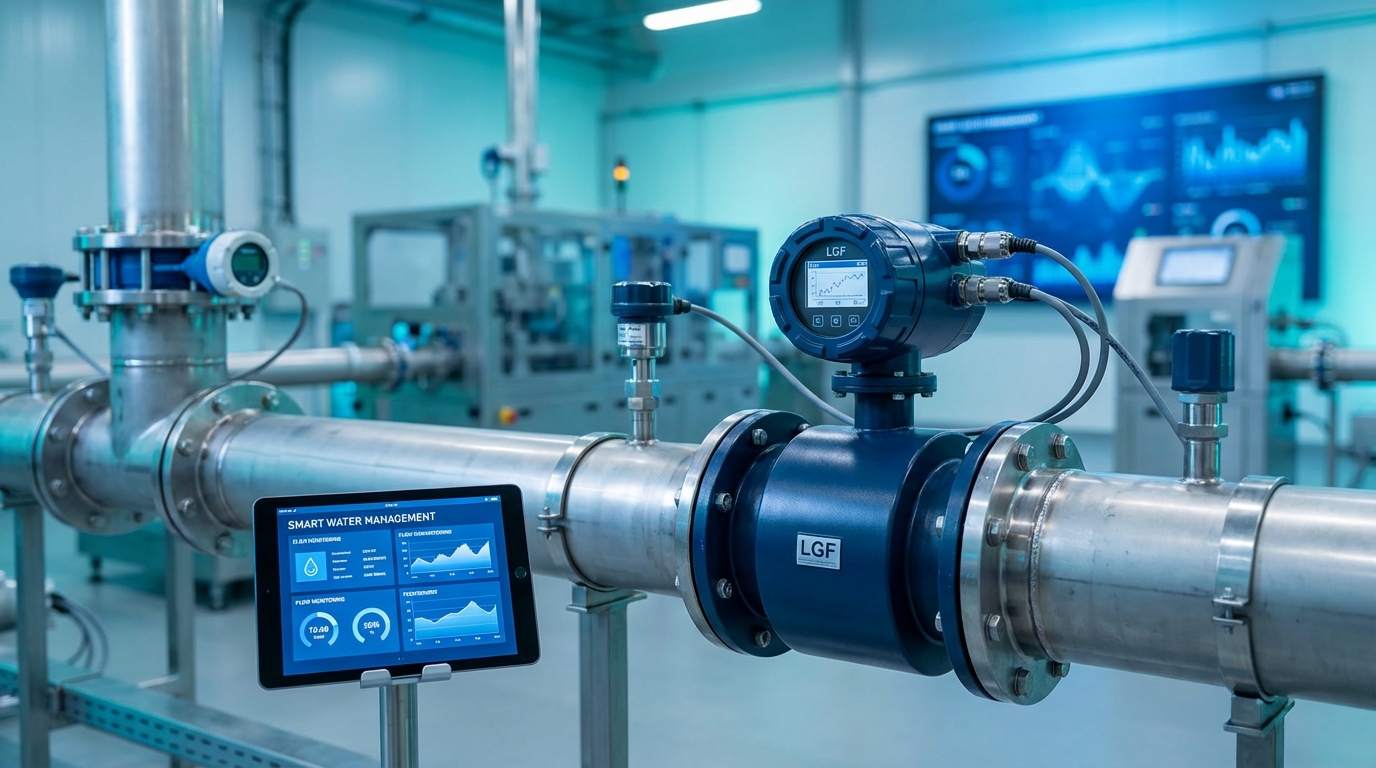
However, running a modern, efficient desalination plant is a complex ballet of pressures, flows, and chemical balances. Optimizing the process to minimize energy use while maximizing freshwater output requires a constant stream of precise, reliable data. This is where advanced instrumentation becomes non-negotiable. For desalination plants grappling with the highly corrosive nature of seawater and brine, Ecolor Technology's LGF series electromagnetic flowmeters provide a critical advantage. Manufactured using an advanced injection-molding process, their PFA/FEP liners offer superior corrosion resistance and are chemically bonded to the pipe, preventing the delamination and blistering that plague traditional rubber-lined meters in saline applications. Accurately measuring the flow of intake seawater, high-pressure feed, permeate (freshwater), and brine concentrate is essential for optimizing the reverse osmosis process and controlling energy consumption—the single largest operational cost. Furthermore, precise monitoring of brine discharge is critical for meeting stringent environmental compliance regulations.
Frontier 2: The Purity Offensive Against Invisible Contaminants
While some innovators focus on creating new water, others are tackling the escalating problem of contamination in our existing supplies. The fight for water security is not just about quantity; it is increasingly about quality, as we face a growing list of pollutants, from legacy chemicals to emerging threats like microplastics.
The Microplastic Menace and Grassroots Genius
A recent feel-good news story that captured global attention involved an 18-year-old high school student who invented a low-cost water filter capable of removing an astonishing 95.5% of microplastics. This breakthrough is significant for two reasons. First, it offers a tangible, hopeful solution to a pervasive and insidious form of pollution. Second, it exemplifies a powerful trend: the democratization of innovation, where brilliant solutions can emerge from anywhere, not just from large corporate R&D labs. As we develop new methods to filter out these microscopic threats, a new challenge arises: how do we verify performance and ensure the quality of water being discharged back into the environment?
Seeing is Believing: Monitoring Post-Treatment Discharge
This is where Ecolor Technology's brand slogan, "See What You Measure," transitions from a marketing phrase to an operational philosophy. Proving the effectiveness of a new filtration system requires more than just a lab test; it demands continuous, real-world monitoring. Our globally unique Visual Doppler Flow Radar is engineered for precisely these challenging applications, such as urban drainage manholes and ecological discharge points from wastewater treatment plants. It brilliantly combines non-contact Doppler radar for highly accurate flow measurement (even in low-flow or turbulent conditions) with an integrated high-definition camera. This allows water utility engineers and environmental managers to not only receive precise, real-time flow data but also to visually inspect the water for changes in turbidity, color, or floating debris. This dual-data approach provides irrefutable, time-stamped evidence of water quality, transforming compliance monitoring from a periodic, manual chore into a continuous, automated, and transparent process.
The Digital Backbone: Turning Breakthroughs into Bankable Solutions
The most brilliant desalination plant or the most effective microplastic filter remains an isolated solution until it is integrated into a managed system. This brings us back to the "critical bottleneck" identified by experts: the gap between innovation and implementation, between policy and practice. This is the ultimate frontier where the water digital transformation must occur, powered by a comprehensive water IoT strategy.
Building the Water IoT with a Unified Data Strategy
You cannot govern what you cannot measure. The reason old water allocation quotas are failing is that they are based on historical data that no longer reflects the real-time reality of a river basin or reservoir. A successful water IoT strategy closes this information gap with a three-tiered approach: sensing, transmitting, and analyzing.
1. Comprehensive Sensing: To gain true situational awareness, you need a diverse array of reliable sensors. Ecolor's Visual Radar Level Meter, which pairs a high-frequency 80GHz radar for millimeter-level accuracy with an integrated camera, provides unparalleled data for managing reservoirs, rivers, and urban flood-prone areas. It tells you not just *how much* water there is, but provides visual context for *what is happening* on the surface—detecting ice, debris, or illegal discharge. When deployed alongside LGF flowmeters in the pipes and Visual Doppler radars at the outfalls, you create a complete, multi-parameter view of your entire water network.
2. Reliable Transmission: Raw sensor data is worthless if it remains stranded in the field. The HERO V9 RTU (Remote Terminal Unit) is the workhorse of the digital water network, serving as a rugged field data logger and gateway. It expertly aggregates data from various sensors (both Ecolor's and third-party devices) and transmits it securely and efficiently to a central SCADA system or cloud platform. Crucially for procurement managers and project engineers, its compliance with industry-standard protocols like SL651 ensures seamless integration into existing infrastructure, de-risking digital upgrade projects and ensuring interoperability.
3. Actionable Analysis: With a steady stream of high-quality, multi-parameter data, water utilities can finally break free from a reactive operational model. They can implement predictive maintenance on their assets, optimize water allocation based on real-time availability rather than outdated schedules, and build resilient, responsive systems that can better withstand the shocks of climate change.
Conclusion: The Future of Water is Measured, Visualized, and Optimized
The journey across the new frontiers of water technology is exhilarating. From manufacturing fresh water out of the sea to filtering invisible plastics, human ingenuity is rising to meet our greatest challenge. Yet, these headline-grabbing breakthroughs will only succeed when supported by the foundational work of measurement, monitoring, and data management.
The true smart water technology revolution is not about a single invention; it is about building a digital nervous system for our global water infrastructure. It’s about giving operators the ability to see, understand, and control every drop. As we confront a future of increasing uncertainty, the ability to "See What You Measure" is no longer a simple advantage—it is the very foundation of resilient and sustainable water management.
To explore how Ecolor Technology's integrated smart water monitoring solutions can empower your projects and help you navigate the new frontiers of water management, visit us at www.cssoc.com.
Sources
- What you need to know about desalination, a growing source of drinking water as scarcity deepens | PBS News
- Manufacturing Water, a Solution to Tackle the Water Crisis: Technological Innovation Inspired by Nature - Noticias Ambientales
- We Understand The Global Resource Crisis. So Why Aren’t We Enacting The Solutions?
- Water as a Strategic Resource: Which Countries Control ...
- High School Student Invents Water Filter That Can Eliminate 95.5% of Microplastics
Recommended Products
Ecolor Technology provides professional instruments for smart water, environmental monitoring & industrial automation: