The Hidden Cost of a Single Blister: Rethinking Flowmeter Reliability in Water Management
In the world of water and wastewater management, data is the new currency. For engineers and procurement managers, the electromagnetic flowmeter is a trusted workhorse, the frontline soldier in the battle for accurate measurement, process control, and regulatory compliance. For decades, it has reliably measured the flow of everything from potable water to corrosive industrial effluent. Yet, within this trusted technology lies a critical vulnerability, a hidden Achilles’ heel that costs utilities and industrial plants millions in maintenance, downtime, and lost revenue: the liner.
Traditional electromagnetic flowmeters rely on a non-conductive liner—typically made of Polytetrafluoroethylene (PTFE) or hard and soft rubber—to protect the meter’s carbon or stainless steel body from the process fluid. This liner is the sole barrier against corrosion and abrasion. When it fails, the meter fails. The industry has long accepted this as a necessary evil, a maintenance problem to be managed. But what if the problem isn’t the maintenance schedule, but the fundamental design itself? What if we could eliminate the liner completely?
The Achilles' Heel: Understanding Liner Failure and Its Domino Effect
The operational life of a lined flowmeter is a constant battle against physics and chemistry. The bond between the liner and the meter body is under perpetual assault from multiple angles, leading to two primary failure modes: degradation and delamination.
Degradation is a slow, insidious process. Abrasive particles in slurries physically wear down the liner material. Aggressive chemicals, including disinfectants like chlorine or industrial acids and alkalis, can cause the liner to become brittle, swell, or soften. Over time, the liner simply loses its integrity, exposing the meter body to the corrosive media it was meant to protect.
Delamination is a more catastrophic and often sudden failure. It occurs when the liner separates from the inner wall of the flow tube. This can be triggered by:
- Thermal Cycling: Drastic temperature fluctuations cause the liner and the metal body to expand and contract at different rates, stressing the adhesive bond until it breaks.
- Pressure Differentials: Sudden pressure changes or vacuum conditions can literally suck the liner away from the wall, creating a blister or bubble.
- Fluid Permeation: Microscopic gas or liquid molecules can permeate the liner over time, accumulating at the bond interface and forcing it apart from within.
The consequences of a single delaminated “blister” are severe. It obstructs the flow path, creating turbulence and altering the magnetic field, which leads to wildly inaccurate readings. A maintenance team might chase phantom leaks or process imbalances for weeks, unaware that their trusted sensor is lying to them. In the worst-case scenario, the liner tears completely, causing a catastrophic leak, forcing a full plant shutdown, and risking environmental and safety incidents. For a procurement manager, this translates into a nightmare of escalating Total Cost of Ownership (TCO), where the initial purchase price of the meter is dwarfed by the recurring costs of inspection, repair, replacement, and unplanned downtime.
A Material Science Revolution: The Rise of the Liner-Free LGF Polymer Flowmeter
The solution to liner failure isn't a better adhesive or a thicker rubber; it's a paradigm shift in material science and manufacturing. Drawing inspiration from the aerospace and automotive industries, where reliability is non-negotiable, a new class of materials is poised to redefine the industrial flowmeter. The innovation lies in Long Glass Fiber (LGF) reinforced composites.
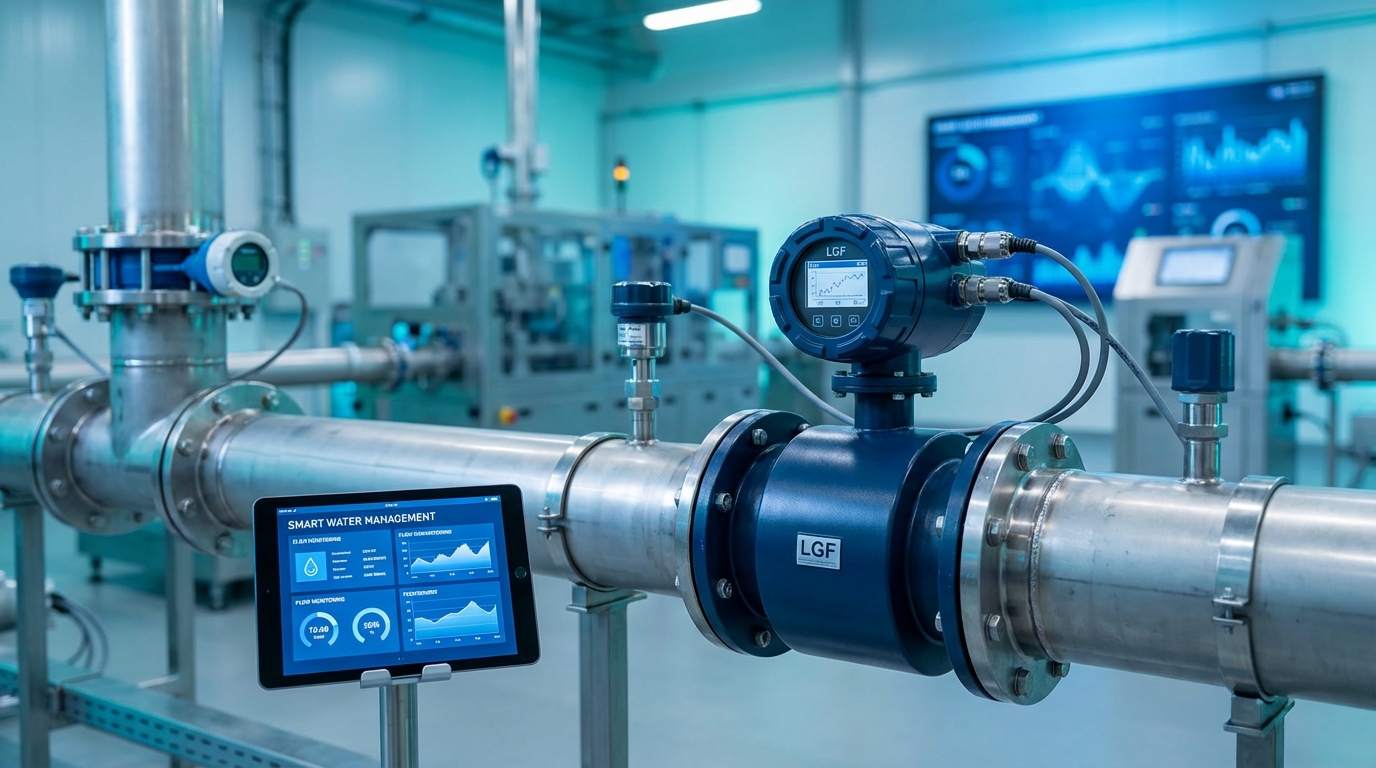
Ecolor Technology, through its SITUMAN sensor brand, is pioneering this revolution with its LGF polymer flowmeter. Instead of bonding a separate liner into a metal tube, Ecolor utilizes a high-pressure, one-piece injection molding process with an advanced aerospace-grade polymer: LGF-PA66 (Long Glass Fiber reinforced Polyamide 66).
This isn't just a minor change; it's a complete re-engineering from the ground up. The LGF-PA66 composite isn't a liner—it is the flow body. This monolithic, seamless construction inherently eliminates the root cause of failure. With no liner, there is zero risk of delamination.
Why LGF-PA66 is the Ideal Material for an Anti-Corrosion Flowmeter
The exceptional performance of this liner-free electromagnetic flowmeter stems from the remarkable properties of the LGF-PA66 composite:
- Superior Structural Integrity: The long glass fibers form an interlocking, three-dimensional skeleton within the polyamide matrix. This gives the material a strength and rigidity comparable to metals like aluminum but at a fraction of the weight, making installation faster, safer, and less costly.
- Exceptional Chemical Resistance: The PA66 polymer base is inherently resistant to a wide range of chemicals, oils, and solvents found in water treatment, desalination, and industrial effluent. The material doesn't just coat the flow path; it constitutes the entire wetted structure, ensuring uniform, long-term protection.
- Dimensional Stability: Unlike traditional liner-metal combinations, the one-piece LGF body expands and contracts uniformly, eliminating the internal stresses caused by thermal cycling. It maintains its precise cylindrical shape under pressure and temperature changes, ensuring consistent measurement accuracy.
- 20-Year Maintenance-Free Design Life: By eliminating the primary failure mode of traditional meters, Ecolor's LGF flowmeters are engineered for longevity. This transforms the TCO calculation, shifting the focus from short-term purchase price to long-term, predictable operational value. A 20-year design life dramatically reduces the frequency of replacement cycles, slashes maintenance budgets, and provides unparalleled operational peace of mind.
Recalibrating the Total Cost of Ownership (TCO)
For the modern water utility engineer or project manager, purchasing decisions are increasingly driven by TCO, not just initial CapEx. The LGF polymer flowmeter fundamentally alters this calculation.
Consider a typical wastewater treatment plant with hundreds of flowmeters. Industry data suggests that O&M can account for over 60% of total expenditure in water utilities. A significant portion of this is reactive maintenance—responding to failures. If a plant experiences a conservative 3% annual failure rate on its lined flowmeters, the costs quickly multiply. Each failure incurs not only the cost of a new meter but also technician labor, specialized equipment for large-diameter pipes, and, most critically, the cost of process downtime or environmental non-compliance fines.
The Ecolor SITUMAN LGF flowmeter presents a compelling business case. While the initial investment may be comparable to a high-end lined meter, the OpEx savings are substantial and immediate. The risk of delamination is reduced from a persistent threat to zero. The need for periodic liner inspections is eliminated. The replacement cycle is extended from a typical 5-10 years in harsh applications to a reliable 20 years. This allows for predictable budgeting and frees up skilled maintenance teams to focus on proactive optimization rather than reactive repairs.
This innovative anti-corrosion flowmeter is ideal for the most demanding applications:
- Desalination Plants: Perfectly suited for measuring corrosive seawater and high-salinity brine without fear of degradation.
- Chemical Dosing Systems: Reliably measures aggressive chemicals used in water purification and industrial processes.
- Mining and Slurry Transport: The tough, abrasion-resistant surface can handle abrasive media better than many soft liners.
- Wastewater Treatment: Unaffected by the corrosive gases and chemicals present in raw sewage and treated effluent.
Conclusion: See What You Measure, Trust What You Build
Ecolor Technology's slogan, "See What You Measure," speaks to the core promise of instrumentation: providing a clear, accurate view of a process. For too long, the industry has had to view that data through a lens clouded by the uncertainty of potential liner failure. The one-piece, injection-molded LGF polymer flowmeter removes that uncertainty.
This is more than just a new product; it's a new philosophy for building resilient, efficient, and cost-effective water infrastructure. It replaces a component prone to failure with an integrated, seamless material solution. For procurement managers and engineers planning projects for the next two decades, the choice is clear. You can continue to manage the inherent risks of a century-old design, or you can build for the future with technology that eliminates the risk altogether.
To build a more durable and financially sustainable water management system, it's time to look beyond traditional designs. Explore how next-generation materials are shaping the future of flow measurement by visiting www.cssoc.com to learn more about the advantages of liner-free technology.
Sources
Recommended Products
Ecolor Technology provides professional instruments for smart water, environmental monitoring & industrial automation: