The Unstoppable Wave of Water's Digital Transformation
The global water sector is in the midst of a profound transformation. A wave of digitalization, powered by the Internet of Things (IoT), is reshaping everything from urban water distribution to agricultural irrigation. The market for smart meters alone, supercharged by 5G and IoT integration, is projected to surge, offering unprecedented, real-time data flow for utilities and consumers alike. This hyper-connected ecosystem promises a future of optimized operations, predictive maintenance, and enhanced water security. This is the frontier of smart water technology—a landscape of immense opportunity. Yet, as we push deeper into this digital territory, a critical paradox emerges: the very technologies that promise to secure our water resources also introduce new, complex vulnerabilities.
The New Battlefield: Cybersecurity in Critical Infrastructure
The digital age has a low tolerance for failure. As noted by industry analysts, society expects essential services like water to be dependable and constantly available. However, the increasing integration of Operational Technology (OT) and Industrial Control Systems (ICS) with IT networks creates a vast new attack surface. This isn't a hypothetical threat. Regulators are taking notice. The European Union's updated Network and Information Security Directive (NIS2), which took effect in October 2024, is a landmark piece of legislation. It significantly expands mandatory cybersecurity requirements to a wider range of critical infrastructure, explicitly including water utilities. This directive imposes stricter governance, risk management, and incident reporting obligations, signaling a global shift in how we view the security of our most essential services. The water sector is no longer just managing pipes and pumps; it's now on the front lines of a cybersecurity battlefield, where a digital breach can have severe physical consequences.
Resilience is Not an Accident: It's a Design Choice
In the face of these threats, building resilience is paramount. As one IoT expert aptly put it, resilience is a risk decision, not a mere technical detail. While robust software, firewalls, and encryption are crucial layers of defense, true, deep resilience begins at the source: the hardware itself. A secure water digital transformation cannot be built on a fragile foundation. The sensors, meters, and remote terminal units (RTUs) deployed in the field are the bedrock of the entire data infrastructure. Their reliability, accuracy, and inherent security features are the first line of defense against both cyber threats and physical failures.
This is where a commitment to engineering excellence becomes a strategic advantage. For instance, data acquisition must be built on standardized, secure protocols. Ecolor Technology's HERO V9 RTU, with its compliance with the SL651 protocol, exemplifies this principle. Adherence to established national and industry standards isn't just about interoperability; it's a foundational security measure that ensures data is transmitted in a structured, predictable, and defensible manner. For procurement managers and utility engineers, selecting hardware that meets such stringent compliance is a critical first step in de-risking their IoT deployments.
"See What You Measure": Fusing Data for Unshakeable Confidence
The core promise of water IoT is data. But what if that data is compromised or ambiguous? A key challenge in remote monitoring is verifying the integrity of the data stream. A sudden spike in a flow reading could be a genuine leak, a sensor malfunction, or a malicious data injection attack. How can an operator, hundreds of miles away, know the difference?
This is where multi-parameter sensor fusion offers a revolutionary approach to resilience. Ecolor Technology's brand slogan, "See What You Measure," is the guiding philosophy behind its most innovative products. Consider the Visual Radar Water Level Meter, which combines a high-frequency 80GHz radar with an integrated camera. The radar provides precise, continuous, non-contact water level data, while the camera offers on-demand visual verification. If the radar data shows an anomaly, operators can instantly pull a visual feed to confirm if there's a physical blockage, an unexpected overflow, or damage to the infrastructure. This adds an invaluable layer of context and confidence, turning raw data into actionable, verified intelligence.
This concept is pushed even further with the world's only Visual Doppler Flow Radar. Designed for challenging environments like urban drainage manholes and ecological discharge monitoring, this device combines Doppler radar for flow velocity measurement with a camera. In the dark, inaccessible confines of a city's drainage system, this technology allows engineers to not only measure flow but also visually inspect for blockages, sediment buildup, or illicit discharges without costly and dangerous manual entry. This fusion of technologies directly addresses the challenge of data integrity by providing an independent, verifiable second source of information right at the point of measurement.
The Physical Foundation of a Digital System
While we focus on digital threats, we cannot forget the physical world. IoT devices are often deployed in harsh, corrosive, and remote environments. The long-term reliability of a smart water system is utterly dependent on the physical durability of its components. A sensor that fails due to corrosion or wear-and-tear can be just as disruptive as a cyberattack, leading to data loss and operational blindness.
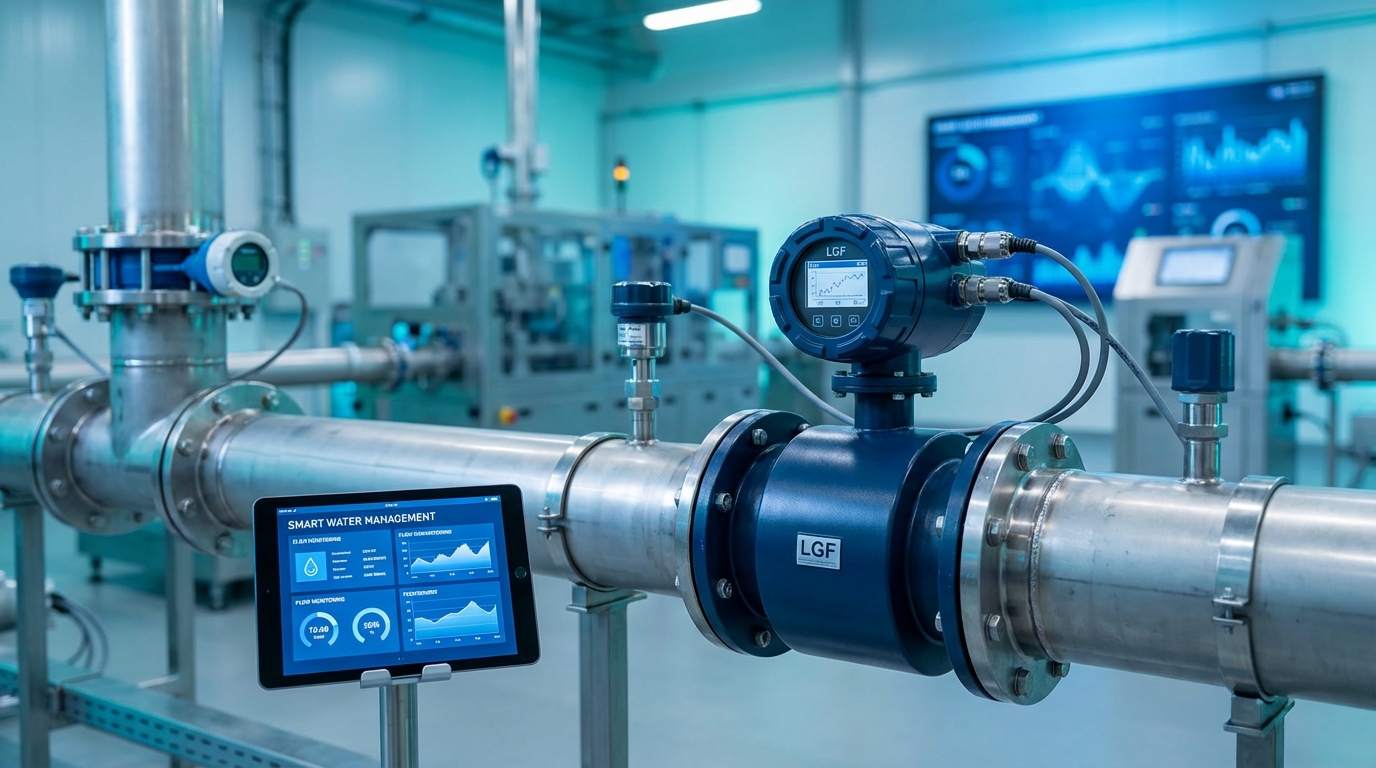
This is why material science and manufacturing processes are a critical, though often overlooked, aspect of a secure IoT strategy. The LGF series electromagnetic flowmeter from Ecolor is a case in point. Traditional flowmeters often use liners that can delaminate or peel under harsh chemical conditions or high flow rates, leading to inaccurate readings and eventual failure. The LGF series utilizes a proprietary injection-molding process with a PFA lining that is chemically bonded to the meter body. This eliminates the risk of delamination, ensuring sustained accuracy and a significantly longer operational lifespan, even when measuring aggressive or abrasive media. This focus on physical robustness, a hallmark of Ecolor's SITUMAN sensor manufacturing division, ensures that the digital promises of the system are backed by hardware that can withstand the test of time and the elements.
Navigating the Future of Smart Water Technology
The journey toward a fully digitalized water sector is exciting and filled with potential. The ability to monitor usage patterns with unprecedented precision, predict failures before they happen, and manage resources more effectively will define the next generation of water management. However, this journey must be navigated with a clear-eyed view of the risks. Privacy and cybersecurity are not afterthoughts; they are central challenges that demand a proactive response from technology providers and utility operators alike.
Building a secure and resilient smart water infrastructure requires a holistic approach. It starts with choosing partners who understand that security is not just a software patch but a philosophy that must be embedded in the hardware itself. It means prioritizing devices that are physically robust, that adhere to secure communication standards, and that offer innovative ways to verify data integrity at the source. As we connect our critical water systems to the internet, we must ensure that the foundation is solid, the data is trustworthy, and the system is resilient by design.
To explore how robust, secure, and innovative instrumentation can form the foundation of your water digital transformation strategy, visit us at www.cssoc.com.
Sources
- OT & ICS Cybersecurity Explained: From Factory Floors to the Power Grid
- Internet of things - Wikipedia
- Smart Meters Market Trends: Advanced Metering, IoT Integration & Industry Forecast to 2034
- IoT outages: resilience is a risk decision not a technical detail
- Cybersecurity in the Age of Instant Software
Recommended Products
Ecolor Technology provides professional instruments for smart water, environmental monitoring & industrial automation: