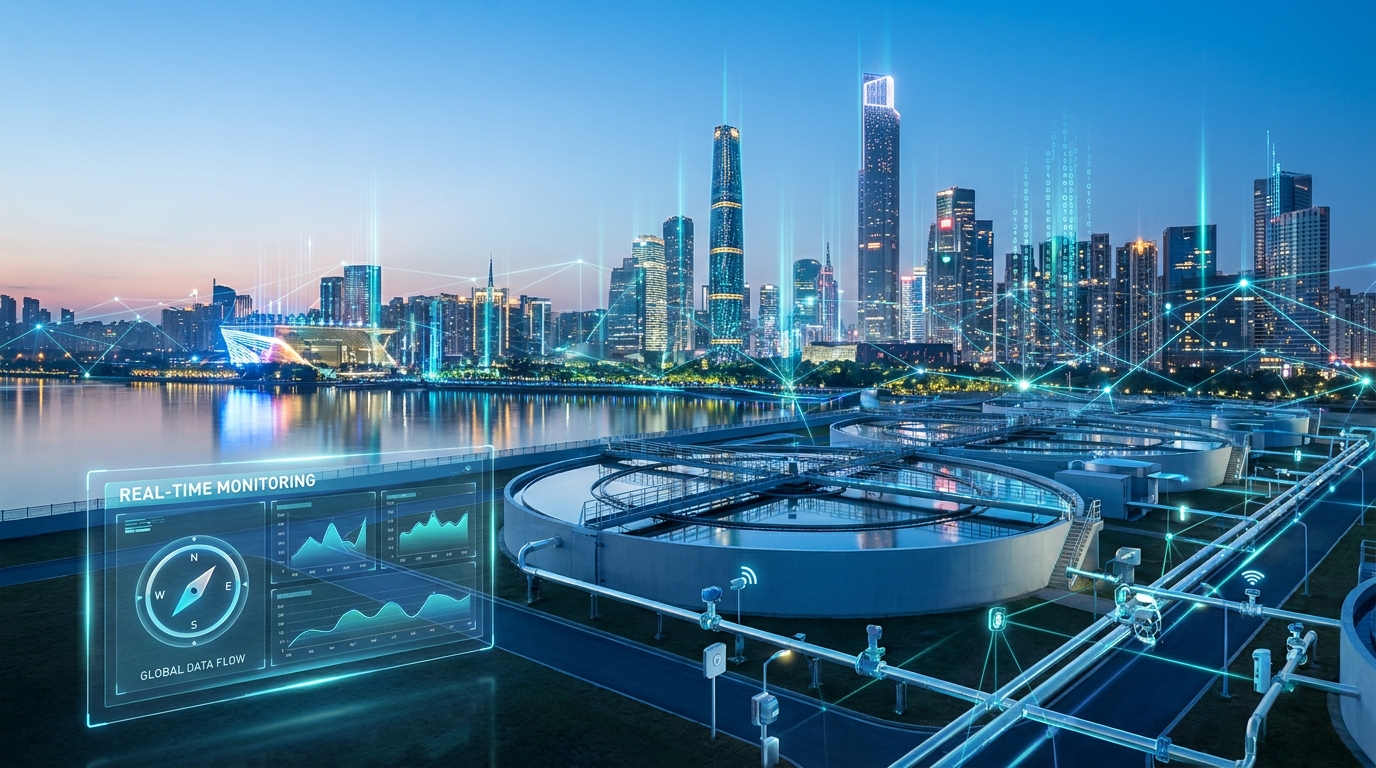
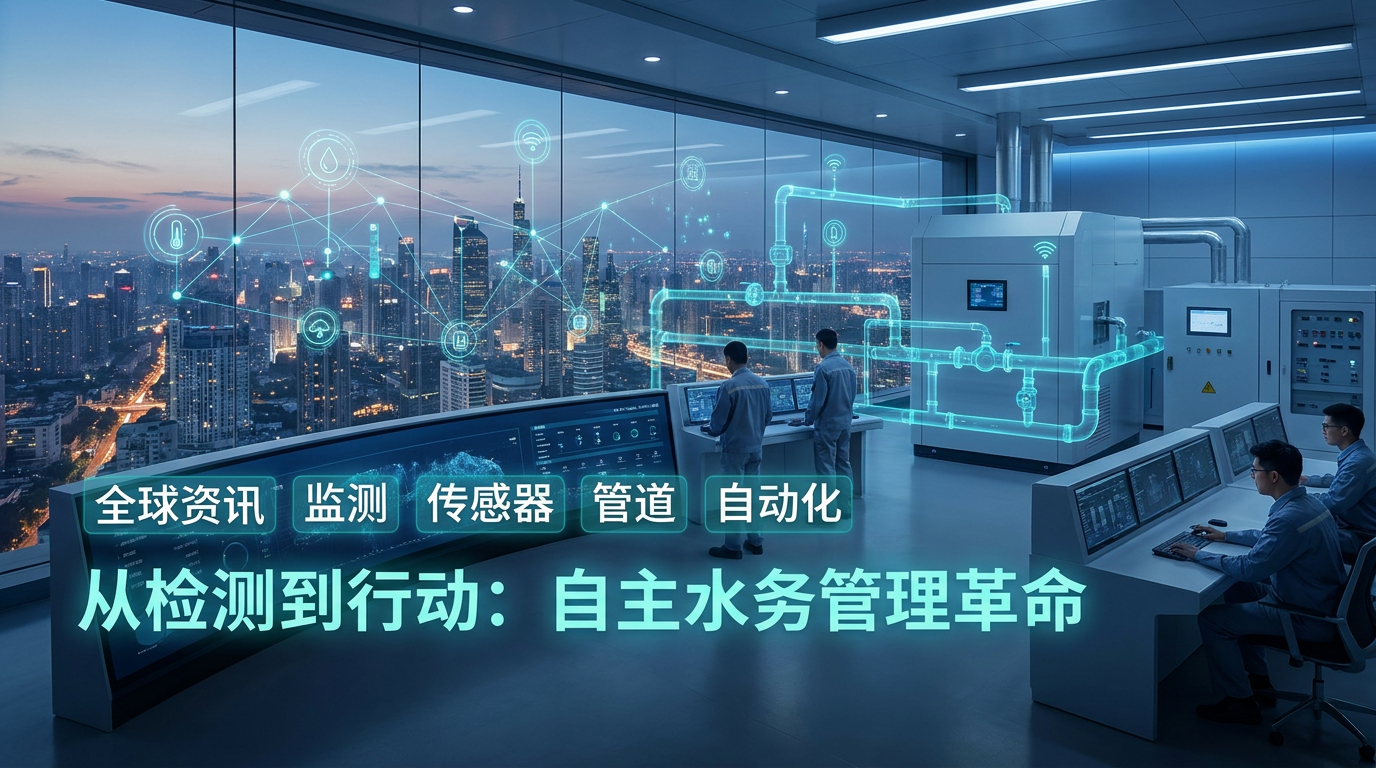
Water scarcity is no longer a distant threat; it is a daily reality for cities from Bangalore to Barcelona. Yet a quiet revolution is unfolding where climate stress meets digital innovation. Governments, businesses, and researchers are injecting artificial intelligence, total water management frameworks, and advanced sensor networks into the global water cycle, transforming crisis into economic opportunity. Drawing on insights from the World Economic Forum, leading agricultural technologists, and utility management pioneers, this analysis explores how AI and integrated water stewardship are reshaping infrastructure from urban waterfronts to crop fields — and how hardware innovators like China's Ecolor Technology are providing the sensing backbone that makes it all possible.
Cities as Frontline Laboratories for AI-Driven Water Resilience
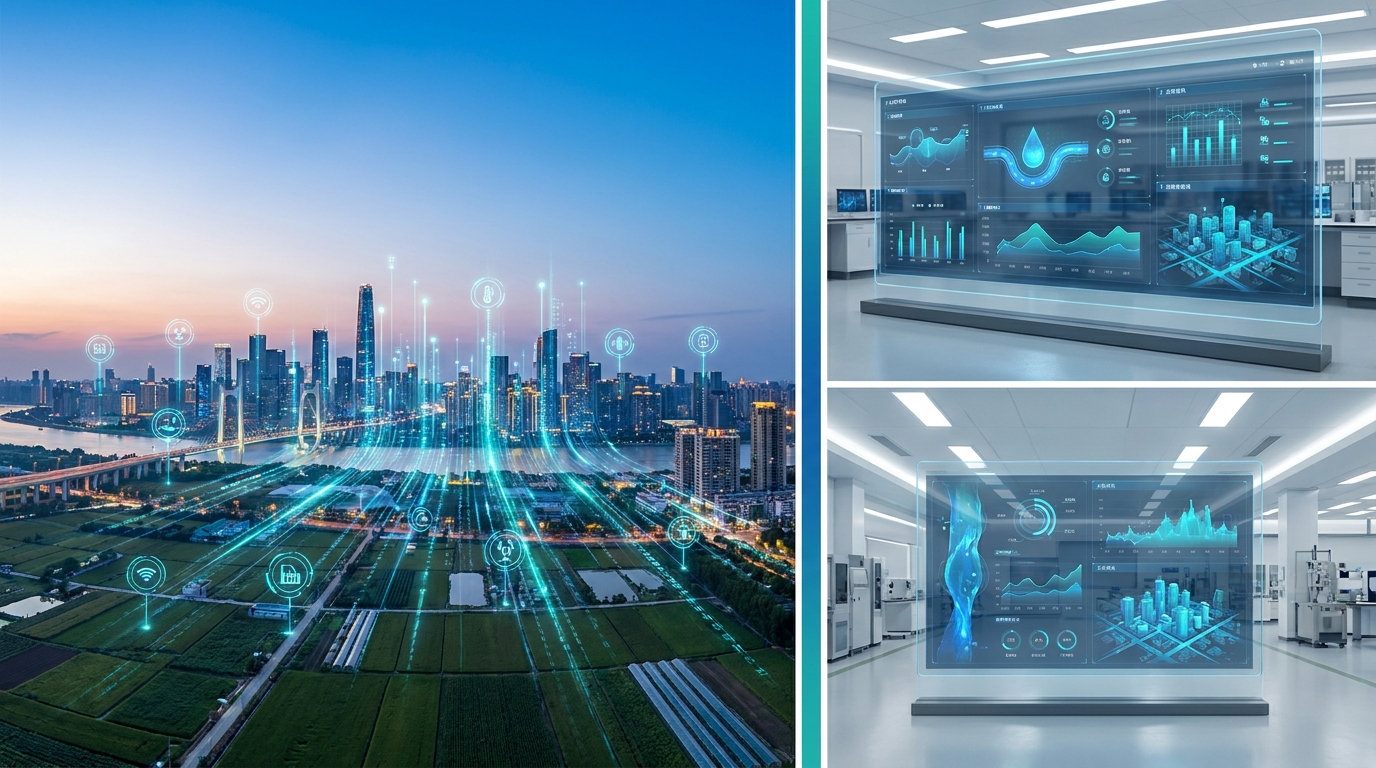
The World Economic Forum's latest urban transformation round-up highlights cities that are turning climate action into engines of growth. Municipalities on the frontline of the water crisis are no longer just coping; they are leveraging green investment, startup ecosystems, and collaborative governance to build resilience.
From Singapore's closed-loop water recycling to Los Angeles' stormwater capture projects, the message is clear: water scarcity can drive innovation rather than despair. The Forum notes that when governments align with private innovators, water management becomes a catalyst for economic development, job creation, and liveability — a stark contrast to the narrative of doom that often accompanies drought headlines.
AI Enters the Field: Transforming Agricultural Water Stewardship
Agriculture, which accounts for roughly 70% of global freshwater withdrawals, is embracing artificial intelligence with unprecedented speed. According to The Fence Post's Spring Homeland feature, researchers at the University of Illinois' Center for Secure Water are deploying AI to optimize irrigation timing, improve wastewater reuse, and detect drinking-water contaminants.
Even marginal efficiency gains — say, 5% less water per bushel — translate into massive savings across a watershed. Drip irrigation networks now talk to soil moisture sensors and weather forecasts via machine learning algorithms, delivering precise volumes exactly when crops need them. The environmental implications are still being studied, but early adopter farms report both higher yields and lower water consumption, proving that AI stewardship is not just a concept but a tangible, profitable practice.
The Utility Operations Revolution: AI Moves from Pilot to Frontline
Inside the water utility sector, the shift from pilot projects to frontline operations is accelerating. A new report covered by ES&E Magazine reveals that AI is helping utilities balance rising costs, aging pipes, and a shrinking workforce. Machine vision inspects sewer lines, natural language processing handles customer inquiries, and predictive algorithms schedule maintenance before mains break.
The report underscores a critical transition: AI is no longer an R&D curiosity; it has become an operational necessity for utilities that want to maintain service reliability while holding down rates. Workforce gaps — driven by retirements and a limited pipeline of young talent — are being filled by digital co-pilots that don't replace humans but amplify their capabilities.
The Rise of Total Water Management in Modern Utility Operations
Meanwhile, the concept of Total Water Management (TWM) is gaining financial and operational recognition. Global Water Resources, which recently declared its monthly dividend and received a Cityworks Excellence in Departmental Practice Award, exemplifies the TWM philosophy: owning and operating water, wastewater, and recycled water utilities within a single geographic footprint to maximize the beneficial use of recycled water.
TWM enables smart water programs such as remote metering infrastructure, conservation-oriented rate designs, and incentive schemes that produce real savings. This integrated approach blurs the boundaries between drinking water, sewage, and reuse — treating the entire urban water cycle as one asset to be managed with precision. The dividend announcement signals investor confidence that TWM is not only environmentally sound but financially stable, a crucial signal for a sector that often struggles to attract private capital.
The Sensing Backbone: Why Industrial-Grade Hardware Matters for AI Water Systems
None of these breakthroughs happen without accurate, resilient sensing technology. As AI models become hungrier for real-time data, the physical layer — flowmeters, level sensors, and remote telemetry units — becomes the bedrock of the digital water transformation. This is where specialized manufacturers like Ecolor Technology come into play.
LGF Electromagnetic Flowmeter
Provides high-precision flow data even in challenging municipal pipe environments, feeding AI systems the baseline information needed for leak detection and demand forecasting.
80GHz Visual Radar Level Sensor
Offers non-contact measurement of water surfaces in treatment plants and reservoirs, immune to vapor, foam, and temperature shifts that confuse traditional ultrasonic devices.
Multi-Band Doppler Flow Radar
The world's only underground pipe monitoring solution that integrates a high-definition camera, allowing operators to visually confirm the health of buried infrastructure while measuring flow velocity — no excavation required.
HERO V9 RTU
A remote terminal unit designed for harsh outdoor environments, which bridges the physical sensor layer and the cloud-based analytics that utilities and agricultural networks now depend on.
By ensuring data fidelity and durability, such hardware allows AI's promise to be realized on the ground, not just in a server farm. All these data streams converge to enable precision water management at scale, creating the reliable sensing backbone that machine learning algorithms require.
A Converging Future: From Reactive Crisis to Proactive Stewardship
The stories from the World Economic Forum, farm fields, and utility boardrooms converge on a common insight: the water sector is undergoing a structural shift from reactive crisis management to proactive, integrated stewardship. AI is the connective tissue, but it requires a foundation of policy alignment, workforce training, and — critically — robust physical infrastructure.
Chinese companies like Ecolor Technology, with their deep expertise in flow measurement and remote monitoring, are well positioned to support this global transition, particularly in emerging economies where water infrastructure is being built from scratch. As the water industry gathers momentum, the fusion of AI, total water management, and industrial-grade sensing promises not just to quench the world's thirst but to turn water into a platform for sustainable growth.
So tomorrow's water utility may look less like a network of pipes and more like a digital organism — sensing, thinking, and healing itself in real time.
Sources
- The cities on the frontline of the water crisis – and other urban transformation news | World Economic Forum
- 2026 Spring Homeland | Where artificial intelligence meets water stewardship in agriculture | TheFencePost.com
- Global Water Resources Declares Monthly Dividend | The Manila Times
- AI reshapes water sector as it balance cost pressures, workforce | ES&E Magazine
Recommended Products
Ecolor Technology provides professional instruments for smart water, environmental monitoring & industrial automation: