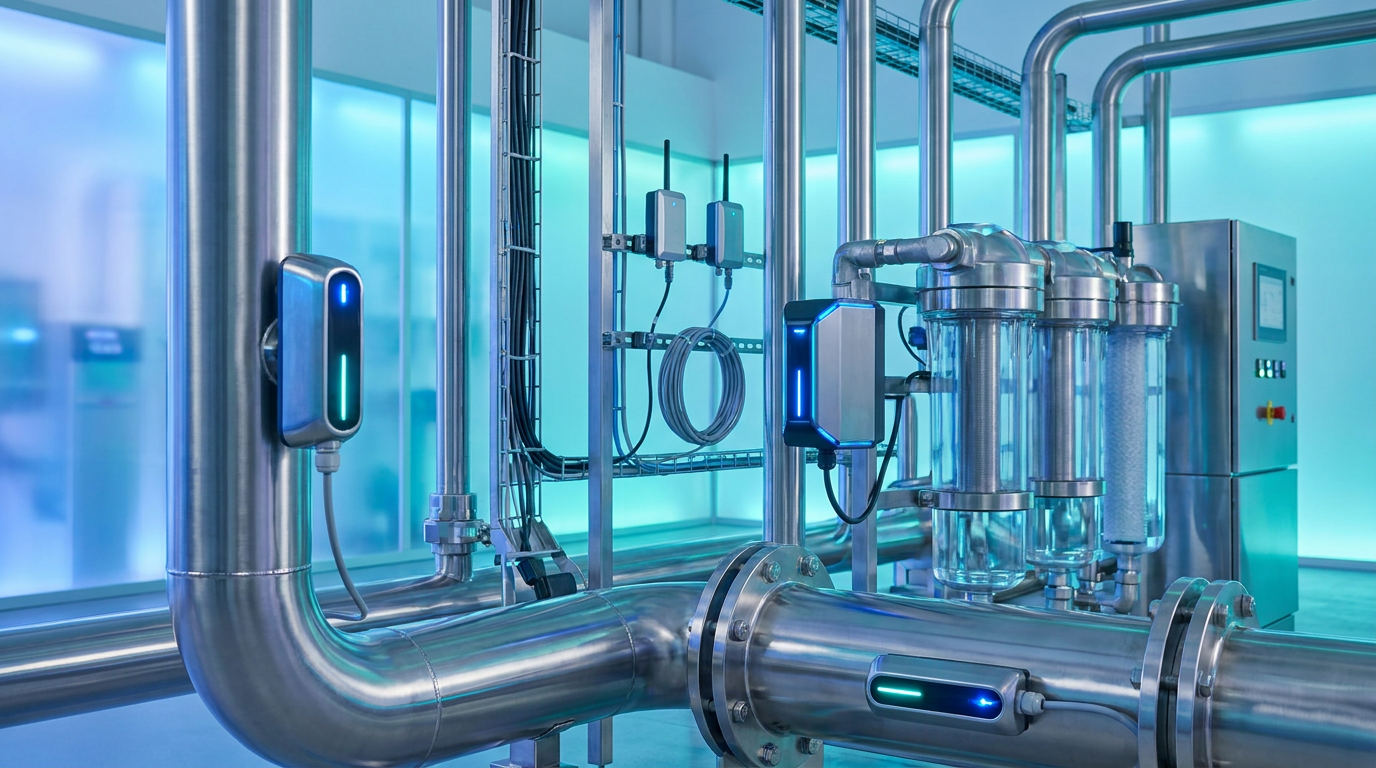
Urban Drainage Network Monitoring: Radar Level Sensors & RTU
Real-time telemetry, high-precision flow measurement, and visual verification are critical for managing inflow, infiltration, and combined sewer overflow events in modernizing municipal infrastructure.
The Hidden Crisis: Inflow, Infiltration, and Hydraulic Overload
As urbanization accelerates globally, municipal drainage systems face unprecedented hydraulic stress. Traditional infrastructure, originally designed for historical rainfall patterns and static population densities, now struggles with compounded wet-weather volumes. Inflow and infiltration (I/I) have emerged as critical failure points, where stormwater breaches aging manholes and pipe joints, triggering volume spikes that overwhelm treatment capacity. Without continuous underground pipeline monitoring, utilities operate blindly, risking permit violations and environmental non-compliance.
The Hidden Crisis: Inflow, Infiltration, and Hydraulic Overload
The fundamental challenge in modern municipal drainage management lies in the disconnect between design capacity and operational reality. When intense precipitation events occur, surface water rapidly penetrates compromised infrastructure through poorly sealed manholes, cracked joints, and degraded service laterals. This phenomenon, known as inflow and infiltration (I/I), introduces massive volumes of clean stormwater into wastewater conveyance networks. While treatment facilities may possess the physical hydraulic capacity to process these sudden surges, their environmental operating permits are typically calibrated around average daily flow (ADF) baselines. The resulting discrepancy creates a compliance paradox: the plant can handle the water physically, but legally and chemically, the diluted effluent and disrupted hydraulic retention times trigger regulatory violations.
Engineering teams frequently encounter scenarios where dry-weather baseflow appears normal, yet wet-weather conditions cause immediate hydraulic overloading. Without granular, real-time data capturing the exact timing and magnitude of these spikes, operators cannot distinguish between legitimate sewage increases and extraneous stormwater intrusion. This blind spot forces utilities into reactive maintenance cycles, where pump stations are either overworked or underutilized, and combined sewer overflow (CSO) events release untreated mixtures into local waterways. The economic and ecological toll of unmonitored I/I is substantial, driving up energy costs for pumping and aeration while exposing municipalities to heavy environmental fines.
Regulatory Evolution and the 24/7 Data Imperative
Global regulatory frameworks are rapidly shifting from periodic manual sampling to mandatory continuous telemetry. Public health authorities now recognize wastewater networks as critical epidemiological and environmental surveillance channels. Programs tracking pathogen loads and chemical markers rely on synchronized, network-wide data aggregation to identify contamination sources and track public health trends. This paradigm demonstrates that drainage infrastructure is no longer merely a conveyance system; it is a dynamic data pipeline requiring constant digital oversight.
Simultaneously, environmental compliance mandates are tightening across industrial and municipal sectors. Facilities processing wastewater volumes exceeding 1 MLD (equivalent to 1,000 KLD) are now required to deploy Online Continuous Effluent Monitoring Systems (OCEMS). These systems must transmit real-time parameters including biochemical oxygen demand (BOD), chemical oxygen demand (COD), total suspended solids (TSS), pH, and volumetric flow directly to central regulatory servers 24 hours a day, 7 days a week. This regulatory threshold eliminates the feasibility of manual data logging and demands automated, fail-safe telemetry architectures capable of surviving harsh underground environments while maintaining uninterrupted data transmission.
The transition to continuous compliance monitoring represents a fundamental infrastructure upgrade. Utilities must replace isolated analog instruments with integrated IoT networks that guarantee data integrity, automated calibration alerts, and secure cloud synchronization without manual intervention.
Engineering the Modern Municipal Drainage System
Deploying reliable instrumentation in subterranean drainage environments presents severe engineering challenges. Sensors must operate continuously in conditions characterized by high humidity, corrosive hydrogen sulfide (H₂S) atmospheres, fluctuating temperatures, and unpredictable debris accumulation. Traditional ultrasonic level sensors frequently fail in these settings due to foam interference, condensation on transducer faces, and acoustic scattering from turbulent water surfaces. Similarly, conventional mechanical flow meters suffer from fouling and moving-part degradation when exposed to sewage containing rags, grit, and organic solids.
Modern drainage network monitoring demands a multi-parameter approach. Accurate stormwater sewer separation requires simultaneous measurement of liquid level, flow velocity, and cross-sectional area. During partial pipe flow conditions typical in gravity sewers, flow calculation relies on precise level-to-flow algorithms calibrated to specific pipe geometries. Any sensor drift or installation misalignment compounds errors exponentially, rendering hydraulic models useless for predictive management. Furthermore, communication infrastructure must incorporate network redundancy. Cellular dead zones, underground concrete attenuation, and storm-related signal degradation necessitate RTUs with multi-band cellular fallback, local data buffering, and low-power sleep modes to maintain operational continuity during extreme weather events.
Ecolor Technology’s Integrated Sensing Architecture
Ecolor Technology addresses these engineering complexities through a unified telemetry ecosystem designed specifically for harsh urban drainage environments. The architecture integrates three core components that operate synergistically to deliver actionable hydraulic intelligence. At the sensing layer, the SITUMAN-manufactured Visual Fusion Radar Level Gauge combines non-contact 80GHz radar technology with an integrated optical camera. Unlike traditional radar units that rely solely on algorithmic signal processing, the visual component allows operators to remotely verify actual field conditions, identifying foam layers, floating debris, or sediment buildup that could otherwise skew measurements. This visual confirmation capability dramatically reduces false alarms and eliminates costly maintenance dispatches.
Complementing level measurement, the LGF Electromagnetic Flowmeter delivers 0.5-grade accuracy (±0.5% of measured value) across variable flow regimes. Utilizing Faraday’s law of electromagnetic induction, the LGF series operates with no moving parts, making it highly resistant to clogging and wear from abrasive sewage constituents. Its full-bore design ensures minimal pressure drop and accurate mass balance calculations essential for identifying illicit stormwater connections or infiltration sources. Both sensors communicate directly with the HERO V9 RTU, an industrial-grade telemetry controller engineered for 4G and NB-IoT cellular networks.
Ecolor HERO V9 RTU & Integrated Sensor Suite
The HERO V9 RTU aggregates multi-sensor data, executes edge-computing algorithms for anomaly detection, and transmits encrypted telemetry to central SCADA platforms. Featuring local SD logging, dual-SIM failover, and programmable alarm thresholds, it ensures zero data loss during network outages. Paired with LGF flow meters and SITUMAN radar level sensors, it forms a complete underground pipeline monitoring solution compliant with modern OCEMS requirements.
The HERO V9 RTU serves as the intelligent edge gateway, executing local data validation, performing unit conversions, and triggering automated alerts when hydraulic parameters exceed predefined CSO thresholds. Its low-power architecture supports extended battery backup, ensuring continuous monitoring during grid failures or severe storm events. The integrated system enables utilities to implement proactive combined sewer overflow control strategies, dynamically adjusting pump schedules and storage tank operations based on real-time network conditions rather than historical averages.
Quantifying the ROI of Precision Instrumentation
For procurement managers and project directors, the business case for advanced drainage instrumentation hinges on operational efficiency, regulatory compliance, and capital expenditure optimization. Deploying a coordinated monitoring network transforms underground pipeline monitoring from a maintenance burden into a strategic asset. Utilities that implement continuous level and flow tracking typically report a 30% to 40% reduction in emergency response costs, as predictive analytics identify structural degradation before catastrophic failures occur. Furthermore, accurate flow data enables precise stormwater sewer separation planning, allowing engineers to isolate infiltration zones and prioritize rehabilitation budgets effectively.
✅ Elimination of permit violations through continuous 24/7 compliance reporting
✅ Optimized energy consumption via data-driven pump scheduling and storage management
✅ Reduced field maintenance trips through remote visual verification and self-diagnostic alerts
✅ Extended infrastructure lifespan through early detection of hydraulic stress and sedimentation
The integration of high-precision instrumentation directly impacts long-term asset management strategies. By correlating flow patterns with rainfall data, utilities can develop digital twins of their drainage networks, simulating flood scenarios and evaluating the effectiveness of green infrastructure interventions. This data-driven approach aligns with global sustainability initiatives, reducing carbon footprints associated with over-pumping and unnecessary chemical dosing. As municipal drainage systems face increasing climate volatility, the transition from reactive repair to predictive resilience becomes not merely an engineering preference, but an operational necessity.
See What You Measure
Ready to transform your drainage network into a resilient, data-driven asset?
Visit Website
🔧 Recommended Products
Based on this article, we recommend the following Ecolor products:
Need Help Choosing the Right Product?
Our engineering team is ready to provide free technical consultation and quotes

