Urban Waterlogging Warning Market Trends: 2026 Price Analysis & Selection Guide
Analysis of the shift from simple equipment procurement to systematic flood prevention capacity building.
With the increasing frequency of extreme rainfall events, urban waterlogging management is expanding from traditional engineering drainage towards an integrated approach encompassing "monitoring, warning, dispatch, and response." Market demand continues to grow around water accumulation monitoring, risk warning, radar sensing, and flood control command. Industry consensus holds that the urban waterlogging warning sector has entered a stage of refined development, where procurers are no longer solely focused on hardware quantities, but rather place greater emphasis on data accuracy, system stability, and long-term operation and maintenance capabilities.
Key Application Scenarios & System Architecture
From the demand side perspective, key scenarios for current warning system construction include urban low-lying road sections, underpasses, bridges and culverts, underground spaces, river discharge outlets, flood-prone residential communities, and key nodes of the municipal pipe network. Relevant projects are typically promoted collaboratively by multiple departments, including water affairs, housing and urban-rural development, emergency management, and traffic management.
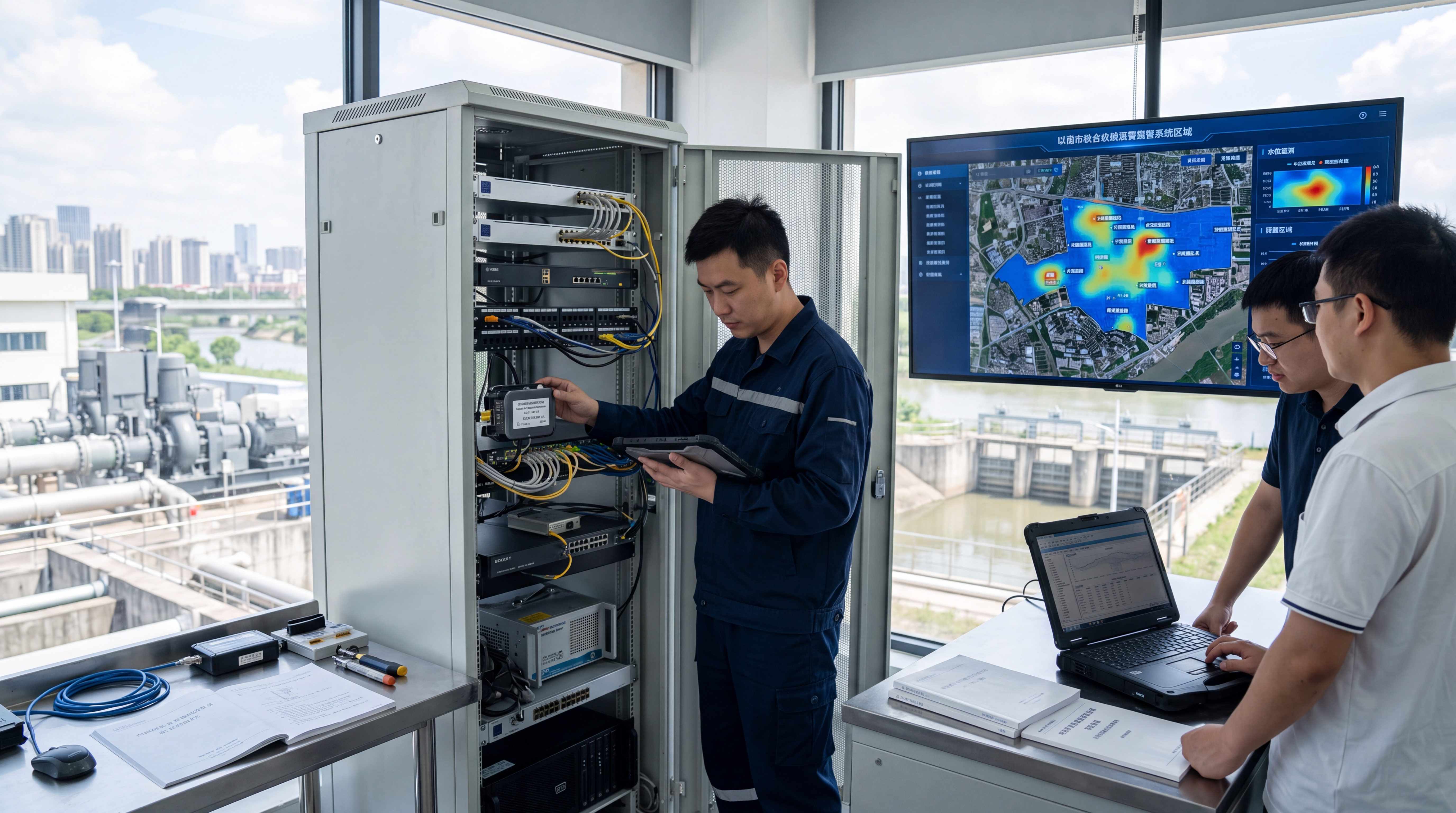
Given that urban waterlogging is characterized by high suddenness, significant spatial variation, and stringent requirements for coordinated action, a single device is insufficient to form a closed loop. Consequently, the market is gradually shifting towards comprehensive solutions integrating "front-end sensing + communication transmission + model analysis + warning dissemination + on-site response."
Cost Structure & Pricing Analysis
In terms of price ranges, urban waterlogging warning projects vary significantly, primarily influenced by monitoring density, equipment type, construction conditions, communication methods, and platform functions. Looking at common procurement structures, the pricing breakdown is as follows:
Single-Point Monitoring Devices
¥10k - ¥80k
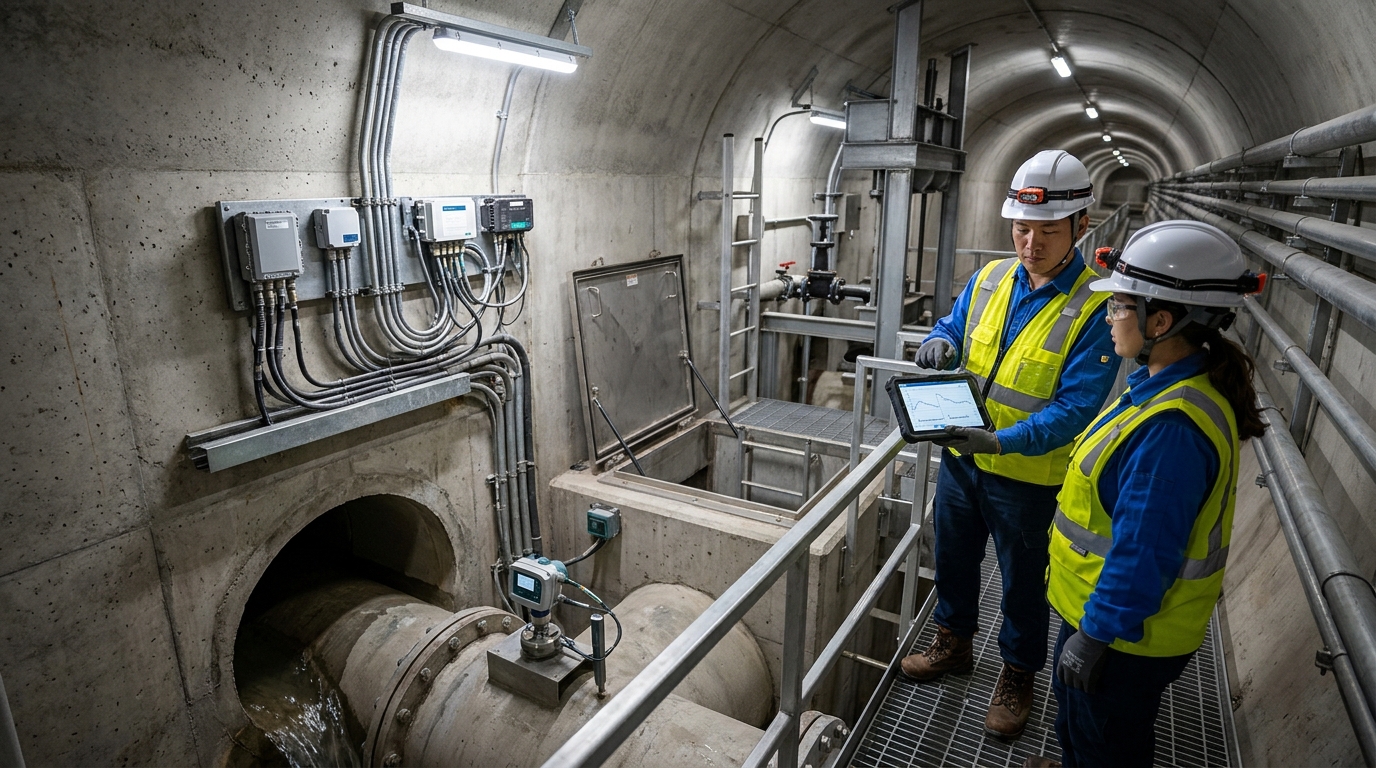
Simple electronic staff gauges or ultrasonic level devices fall in the low-to-medium range. Costs increase significantly if road excavation, difficult power access, lightning protection reinforcement, or high ingress protection (IP) ratings are required.
Radar Monitoring Equipment
¥50k - ¥200k+
Millimeter-wave, water level, and flow velocity radars for non-contact measurement. Prices rise with measurement range, accuracy class, anti-interference capability, and edge computing requirements.
The industry believes that the advantage of radar equipment lies in its relatively low susceptibility to sewage, floating debris, and lighting conditions; however, its actual performance remains closely related to the installation angle, surrounding environmental obstructions, and algorithm calibration.
Platform Construction Costs
- Regional Warning System: Typically costs between ¥500,000 and ¥3 million. This covers data integration, geographic information display, threshold management, warning dissemination, device management, and basic model analysis.
- City-Level Comprehensive Command Platform: Costs range from ¥3 million to over ¥10 million. These systems require the integration of rainfall, ponding, pipe network, river, pump station, video, meteorological nowcasting, and multi-departmental business systems.
The price of such large-scale projects is not solely determined by software licenses but depends more on the difficulty of data governance, model complexity, coordinated dispatch processes, and whether customized development is required.
Strategic Procurement Recommendations
Regarding procurement recommendations, the industry generally emphasizes the principle of "scenario first, then equipment, and finally platform." Procurers should first sort out the risk levels of flood-prone points, distinguishing between key monitoring points, general monitoring points, and temporary emergency monitoring needs.
Selection Guidelines by Scenario
- ? Underpasses & Traffic Arterials: Priority on high reliability, rapid response, and coordinated warning capabilities.
- ? Rivers & Discharge Outlets: Combine radar, water level, and flow monitoring for comprehensive judgments.
- ? Underground Spaces: Focus on emergency reporting capabilities under conditions of power and communication outages.
Technical Specifications & O&M Considerations
In terms of equipment selection, focus should be placed on measurement range, accuracy, ingress protection rating, lightning protection capability, power supply method, and communication stability. Due to the complex urban water accumulation environment, equipment typically requires a high IP rating and corrosion resistance. For communication, multiple methods such as cellular networks, low-power wide-area networks, and satellite communication can be used as mutual backups.
Regarding maintenance costs, urban waterlogging warning systems exhibit distinct long-term operational characteristics. Hardware maintenance includes routine inspections, cleaning, calibration, and battery replacement; software maintenance involves platform upgrades, data backup, and security hardening. Industry estimates show that the annual O&M cost usually accounts for about 10% to 20% of the initial construction investment.
| Equipment Type | Annual O&M Cost Range | Key Maintenance Factors |
|---|---|---|
| Ordinary Monitoring Points | ¥2,000 - ¥8,000 | Routine inspection, cleaning, cable check |
| Radar Equipment | ¥3,000 - ¥15,000 | Higher calibration requirements, on-site maintenance |
From a full life-cycle perspective, low-price procurement does not necessarily result in low total costs. An increasing number of procurers are beginning to include three- or five-year O&M requirements in their bidding documents, clearly defining metrics such as device uptime, fault response time, data integrity rate, and warning accuracy rate.
Conclusion
Overall, the urban waterlogging warning market is shifting from single-point equipment procurement to systematic capacity building. In the future, water accumulation monitoring, radar sensing, meteorological warning, and flood control dispatch will be further integrated, and the focus of industry competition will shift from hardware parameters to data quality, model capabilities, and O&M services.
For urban managers, rationally assessing risk scenarios, reasonably configuring monitoring density, and planning O&M budgets in advance will be key to improving the actual effectiveness of waterlogging warnings. As the standards system is gradually refined, urban flood control warning systems are expected to continuously upgrade from merely "being visible" to achieving "accurate judgment, rapid response, and post-event traceability."